
WarBrief Live | November 3, 2026 | Energy Markets
| $104.77 Brent, down 7.63% | $96.46 WTI, down 7.36% | $4.12 US gasoline per gallon | $6.28 US diesel per gallon |
Oil prices plunged more than 7% on November 2, 2026, after signs of progress in United States-Iran talks eased fears of prolonged Middle East supply disruption. But no deal has been signed, and pump prices will fall more slowly than crude — if they fall at all.
Key Takeaways
- Brent crude settled at $104.77 a barrel, down 7.63%, and West Texas Intermediate (WTI) settled at $96.46, down 7.36% — the steepest one-day falls for both benchmarks since July 27.
- The selloff was driven by diplomacy, not demand: Qatar-mediated talks, a conditional Iranian offer to reopen the Strait of Hormuz within two days, and signals from both Washington and Tehran that a deal “could happen”.
- US pump prices had already eased before the crude drop — gasoline averaged $4.12 a gallon on November 2 — but analysts say any further relief lags crude by two to four days, and diesel is unlikely to fall as fast.
- Nothing is signed. Analysts warn of repeated “false dawns”, Goldman Sachs still raised its December Brent forecast to $105, and shipping through Hormuz has not returned to normal.
Why did oil prices fall 7% on November 2?
The trigger was a cluster of diplomatic signals, not a single announcement. Iranian President Masoud Pezeshkian said Supreme Leader Ayatollah Mojtaba Khamenei had granted the government “certain authorities” for peace negotiations, according to the state-run IRNA news agency. On the evening of November 2, Qatari mediators travelled to Tehran to meet Iranian Foreign Minister Abbas Araghchi over a potential agreement between Iran and the United States. US President Donald Trump said on the same day that Iran wants a deal to end the war and that one “could happen”.
Traders read that as a lower risk of a wider, longer war — and unwound part of the war premium built up during October. Brent had spiked to about $118 on October 30, its highest level in six months, and had risen more than 10% during October on concern that fighting could intensify again after the US midterm elections on November 3. Reuters reported that Trump wanted to give diplomacy more time before deciding whether to resume major strikes on Iran after the midterms — another reason the market trimmed its risk premium.
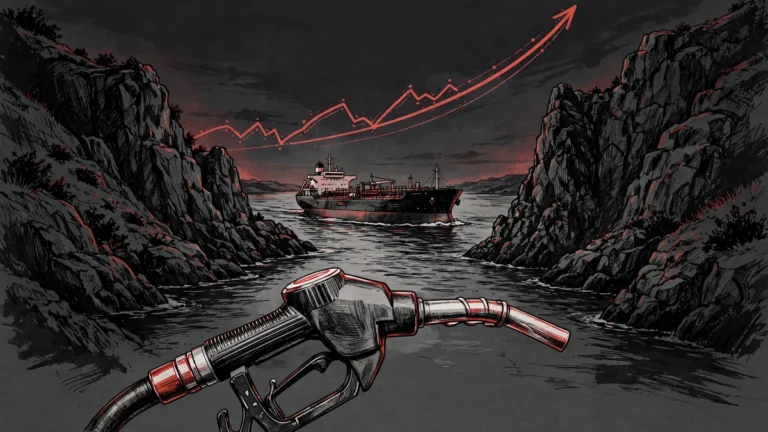
Iran also put a concrete, conditional offer on the table. Foreign Ministry spokesman Esmail Baghaei said the basis for talks remained Iran’s “seven-step proposal”, presented to the United States at the UN General Assembly in September, and that its timeline had been compressed: Tehran would reopen the Strait of Hormuz within two days if Washington met its conditions, including changes to sanctions and maritime restrictions. That two-day figure is reported, not confirmed by Washington, and it is conditional — but it gave traders a visible path back to normal shipping through the waterway that carries a large share of the world’s seaborne oil.
Brent and WTI: what the November 2 settle actually shows
The settled closes matter because they strip out intraday noise. Brent crude futures settled $8.66 lower at $104.77 a barrel, a fall of 7.63%, while WTI crude for December delivery settled $7.66 lower at $96.46, a fall of 7.36%, according to Reuters settlement data. During the session, Brent touched $103.28 and WTI reached $95.15, and WTI’s break below $100 a barrel added a psychological jolt to the move. Both benchmarks recorded their biggest daily percentage declines since July 27.
| Metric | Figure | Source |
|---|---|---|
| Brent crude, November 2 settle | $104.77 a barrel, down 7.63% (-$8.66) | Reuters |
| WTI crude (December), November 2 settle | $96.46 a barrel, down 7.36% (-$7.66) | Reuters |
| Intraday lows, November 2 | Brent $103.28; WTI $95.15 | Reuters |
| US gasoline, national average, November 2 | $4.12 a gallon, down 17.1 cents on the week | GasBuddy |
| US diesel, national average, November 2 | $6.281 a gallon, down 5.9 cents on the week | GasBuddy |
| Goldman Sachs December Brent forecast | $105 a barrel | Goldman Sachs, via EBC |
| Iran Hormuz reopening offer | Within two days, if US accepts conditions (REPORTED) | Iranian Foreign Ministry, via Seoul Economic Daily |
Caveat: settlement prices, pump averages and analyst forecasts above are confirmed by at least two outlets each; the two-day Hormuz reopening offer is reported from Iranian officials and is conditional on US acceptance — it is not a confirmed agreement.
Two other facts frame the selloff. First, seven OPEC+ producers, including Saudi Arabia and Russia, agreed on November 1 to keep their December production targets unchanged, extending a pause in output increases — so the market cannot count on extra OPEC+ barrels to cap prices. Second, Goldman Sachs raised its December 2026 Brent forecast to $105 and its 2027 average forecast to $88 on November 2, even as spot prices fell — a reminder that banks see the diplomatic opening and the physical supply risk pulling in opposite directions. Goldman also outlined a conditional scenario in which Brent could reach $140 in 2027 if Gulf oil production remains 3.5 million barrels a day below its 2025 average.
When will pump prices fall — and by how much?
More slowly than crude, and by less. US gasoline already averaged $4.12 a gallon on November 2, according to GasBuddy data compiled from more than 11 million weekly price reports covering over 150,000 stations — down 17.1 cents on the week, the biggest weekly decline since the week ending June 21, and down 24.7 cents on the month. But that average is still $1.13, or about 38%, higher than a year ago. The most common price encountered by US motorists was $3.99 a gallon, and the median was also $3.99.
Patrick De Haan, head of petroleum analysis at GasBuddy, told MarketWatch that any drop in fuel prices may lag the decline in oil by two to four days: “If oil keeps plummeting, gas and diesel prices will follow.” The lag exists because service stations sell fuel bought earlier at higher wholesale prices, and because refiners and retailers adjust prices in stages rather than matching every crude tick. The November 2 crude plunge therefore points to cheaper pump prices later in the week — not to an immediate nationwide cut — and only if crude holds its fall rather than rebounding on the next headline.
Context matters for how far relief can go. The day before the United States and Israel attacked Iran on February 28, the average US gasoline price was $2.98 a gallon, according to GasBuddy. Even a full pass-through of the November 2 crude drop would leave pump prices far above pre-war levels, because refining margins, transport costs and taxes sit between the crude price and the pump — and because inventories remain tight.
Why is diesel still so expensive when crude has fallen?
Diesel is the exception that proves the rule. The US average diesel price was $6.281 a gallon on November 2, down just 5.9 cents on the week but still more than 70% higher than a year ago, when it stood at $3.67, according to GasBuddy. Three structural reasons explain the gap.
First, distillate stocks are thin. The US Energy Information Administration’s Weekly Petroleum Status Report for the week ending October 23, 2026, showed distillate inventories fell by 1.5 million barrels and are about 10% below the five-year seasonal average, while crude inventories fell 1.9 million barrels to about 4% below the average and gasoline inventories rose 3.9 million barrels. When stocks are that tight, any supply scare hits diesel first and hardest.
Second, diesel is the workhorse fuel of freight, farming, construction and heating, so demand is less flexible than gasoline demand — buyers cannot easily postpone a delivery or a harvest. Third, the war’s shipping disruption has kept refined-product trade constrained, which keeps diesel and jet fuel expensive even when crude eases. ADNOC chief executive Sultan Al Jaber estimated that the interruption to shipping had reduced inventories by almost 1 billion barrels, according to Reuters — a reported figure that underlines how much physical tightness sits behind the price.
Alex Jacquez, senior vice president at the Groundwork Collaborative, told MarketWatch that both gasoline and diesel sit at “structurally high” levels that will not revert to more typical levels until the Iran conflict ends and global inventories and production recover. That is the honest version of the pump-price story: a 7% crude fall helps at the margin, but it does not unwind eight months of war premium in a week.

Why analysts warn this could be another false dawn
The most quoted caution on November 2 came from Raymond James analyst Pavel Molchanov, who attributed the decline to signs of progress towards US-Iran talks but warned that the many “false dawns” of recent months gave investors reason to remain sceptical. UBS analyst Giovanni Staunovo made the same point from the other side: the market’s direction continues to depend heavily on developments in the region, not on any single day’s diplomacy. ING strategist Francesco Pesole added that oil prices still include a substantial geopolitical risk premium, and softer rhetoric from both sides helped push crude lower — rhetoric, not a signed deal.
The reporting backs that caution. Iranian and Qatari officials held days of talks, but the Iranian negotiating team left the Doha venue over the weekend and no agreement had been reached, with a draft agreement circulating instead. Iran’s own statements did not announce a deal or set a date for another meeting. And shipping through the Strait of Hormuz had not returned to normal as of November 2. A market that falls 7% on hope can rise just as fast on a failed round of talks, a resumed strike campaign, or a Hormuz incident — which is why Goldman Sachs could raise its price forecasts on the same day prices plunged.
What the oil plunge means for US, UK and EU readers
For US readers, the practical read is timing: watch pump prices from midweek onwards, not on the day of the crude drop, and expect diesel to lag gasoline. A sustained crude price near $105 rather than $113 would eventually shave cents — not dollars — off the weekly fuel bill, and the saving only sticks if diplomacy holds past the midterm elections. For households, the more meaningful number is the year-on-year gap: gasoline $1.13 above a year ago and diesel more than 70% higher, which is why fuel still dominates cost-of-living pressure even after a good day for crude.
For UK and EU readers, the mechanics are the same but the dials differ. Pump prices there track Brent rather than WTI, move with a lag of days rather than hours, and are cushioned — in both directions — by a much larger tax share per litre, so a 7% crude fall translates into a smaller percentage move at the forecourt. Diesel deserves the closest watch in Europe too: it powers most freight and a large share of cars, and tight distillate stocks mean diesel prices typically correct last and slowest. Airfares and freight surcharges follow the same lag, so cheaper crude this week would show up in transport costs only if it survives the next round of headlines.
For markets more broadly, the selloff eased one inflation input while leaving the underlying risk untouched. Oil is both a household cost and a geopolitical barometer: a 7% fall on unconfirmed diplomacy is a relief rally, not a resolution, and readers should treat it that way until a signed agreement — or a reopened Strait — gives the market something firmer than hope.
What to watch next in the Iran oil story
Five things will decide whether the November 2 drop holds. First, whether Qatari mediation produces a signed text or another round of “draft agreement circulating” reports. Second, whether Iran’s conditional two-day Hormuz offer is accepted, rejected or left hanging — and whether any tankers actually move differently as a result. Third, the US midterm results on November 3 and whether Washington’s post-election posture towards Iran hardens or softens, given reports that Trump wanted diplomacy to have more time before any decision on resuming major strikes. Fourth, weekly US inventory data: another distillate draw would keep diesel elevated regardless of crude. Fifth, OPEC+ discipline — the December freeze holds for now, but any sign of producers breaking ranks would change the supply picture faster than diplomacy.
Educational note: this article explains energy markets and is not financial advice. Oil prices can reverse quickly on geopolitical news, and no forecast cited here is a recommendation to buy, sell or hold any commodity or security.
Frequently asked questions
Why did oil prices fall 7% on November 2, 2026?
Because diplomatic signals from Washington and Tehran — Qatar-mediated talks, Iran’s conditional offer to reopen the Strait of Hormuz within two days, and President Trump’s comment that a deal “could happen” — eased fears of a prolonged Middle East supply disruption, prompting traders to unwind part of October’s war premium. No deal has been signed.
How long does it take for cheaper crude to reach the pump?
Typically two to four days, according to GasBuddy’s Patrick De Haan, because stations sell fuel bought earlier at higher wholesale prices and adjust in stages. A crude plunge on Monday points to cheaper pump prices later in the week, not immediately — and only if crude holds its fall.
Why is diesel still so expensive when crude has fallen?
Because US distillate inventories are about 10% below the five-year seasonal average, diesel demand from freight, farming and heating is inflexible, and refined-product trade remains constrained by the war’s shipping disruption. US diesel averaged $6.281 a gallon on November 2, more than 70% above a year earlier.
Has the US-Iran deal been signed?
No. Negotiators left the Doha venue over the weekend, a draft agreement is reported to be circulating, and Qatari mediators met Iran’s foreign minister in Tehran on the evening of November 2. Iran’s Hormuz offer is conditional on US acceptance of its conditions.
Could oil prices rise again quickly?
Yes. Analysts warn of repeated “false dawns”, Goldman Sachs raised its December Brent forecast to $105 on the same day prices fell, and shipping through Hormuz has not returned to normal. A failed talks round, resumed strikes or a Hormuz incident could reverse the drop fast.
Sources
- Hürriyet Daily News (Reuters): Oil falls over 7 pct on hopes for US-Iran talks
- MarketWatch: How soon gas prices could go down now that oil is tumbling
- GasBuddy: The biggest weekly gas price drop in months arrives, with a warning that it may not last
- The Nation (Reuters): Oil falls over 7% on November 2 amid Iran peace hopes
- Seoul Economic Daily: Oil plunges 7% on US-Iran talks hopes
- EBC: Oil prices post biggest drop since July as US-Iran peace hopes ease supply fears
Further reading on WarBrief Live: Conflict Zones hub · Why Brent Fell but Oil Still Costs More: Hormuz Premium · OPEC+ December Oil Targets Explained · Iran Warns of a Longer War as Doha Talks Enter a Third Day · War Risk Insurance Explained: The Surcharge on Every Hormuz Transit

Discussion 0
Share analysis, corrections, or context. Be civil — comments are moderated.