
WarBrief Live | November 2, 2026 | Energy & Oil
Brent crude fell on November 2, 2026, because talks in Doha eased fears of immediate escalation, but delivered oil stayed expensive because shipping, insurance and diesel costs had not fallen.
At a glance
- Brent: about $110 a barrel on November 2, down roughly 3% in the session.
- WTI: about $101 a barrel, down roughly 3% in the session.
- Friday benchmark: the expiring December Brent contract settled at $117.64 on October 30.
- Shipping: average crude transport cost above $20 a barrel, against about $3 a year earlier.
Key Takeaways
- Brent and WTI both fell about 3% on November 2 as Qatari-mediated talks with Iran entered a third day, even though tanker attacks around the Strait of Hormuz continued.
- The fall looks larger if it is measured from the expired December contract; the like-for-like January contract had closed near $113.43, so Monday’s move was about 3%, not about 7%.
- A lower screen price is not the same as cheaper delivered oil: war-risk, fuel, transshipment and route-change costs still sit on top of the benchmark.
- Goldman Sachs raised its December Brent forecast to $105 a barrel, from $90, citing heightened supply-disruption risk — a sign banks do not read one down day as a return to normal.
- For US, UK and EU readers, the near-term risk is diesel and transport costs, not only the Brent headline, because refined-product supply remains tighter than crude supply.
What happened to Brent crude on November 2, 2026?
Oil prices fell on November 2, 2026, after Iranian and Qatari officials held a third straight day of talks aimed at ending the war between Iran and the United States and Israel. Reuters reported Brent crude futures down $3.68, or 3.2%, to $109.75 a barrel, with US West Texas Intermediate (WTI) at $100.69, down $3.43, or 3.3%. Other snapshots during the same session put Brent at $109.23 and at $111.84 at different times, which is why this article describes Monday’s level as “about $110” rather than pretending one intraday print was the day’s settled price.
The talks are the immediate trigger, not a deal. Iranian Foreign Minister Abbas Araghchi said on November 1 that the consultations in Doha were “ongoing and progressing” and that Tehran was prepared for “both defence and diplomacy”, according to the Reuters report. US Secretary of State Marco Rubio said on November 1 that no decision had been made on fresh strikes and that President Donald Trump preferred a diplomatic resolution, according to Bloomberg’s account of the weekend. WarBrief’s Doha talks analysis covers the Iranian warnings and the two-day Hormuz reopening proposal in full; this post answers a different question, namely why the price that falls on a screen does not fall by the same amount at the pump or in a refinery’s delivered bill.
One technical point matters before any comparison with Friday. The December Brent contract expired on October 30, when it settled at $117.64 a barrel, up 2.4% on the day and about 13.6% across October, according to Reuters. From November 2, the January contract became the nearest-month contract. Its Friday close was near $113.43, so Monday’s fall to about $110 was roughly 3% on a like-for-like basis. Comparing Monday’s January price directly with Friday’s December settlement overstates the fall by about four dollars. Traders watch the contract roll for exactly this reason: a change of contract is not a change in the oil itself.
By the numbers
| Metric | Figure | Source | Status |
|---|---|---|---|
| Brent, November 2 (Reuters snapshot) | $109.75, down $3.68 / 3.2% | Reuters via Aaj English TV | CONFIRMED |
| WTI, November 2 (Reuters snapshot) | $100.69, down $3.43 / 3.3% | Reuters via Aaj English TV | CONFIRMED |
| December Brent settlement, October 30 | $117.64, up 2.4% on the day | Reuters | CONFIRMED |
| January Brent close before November 2 | About $113.43 | Goldman Sachs figures cited in market coverage | REPORTED |
| Goldman Sachs December Brent forecast | $105, raised from $90 | Goldman Sachs via Bloomberg | CONFIRMED |
| JP Morgan Brent fair-value model | $94 | JP Morgan via Wall Street Journal / OilPrice | REPORTED |
| Average crude shipping cost | Above $20 a barrel, from about $3 a year earlier | Goldman Sachs via Izvestia | REPORTED |
| Hormuz passage premium in that shipping cost | About $7 a barrel | Goldman Sachs breakdown via Izvestia | REPORTED |
| Crude delivered to Asia, October average | About $131 a barrel | JP Morgan estimate via Izvestia | REPORTED |
| Global inventory draw since Hormuz disruption began | Nearly 1 billion barrels | ADNOC chief executive at ADIPEC | REPORTED |
Caveat: CONFIRMED means two or more reputable sources agree; REPORTED means the figure rests on a single or secondary source and is attributed, not independently verified by WarBrief. Intraday prices move during the session, so snapshots at different times differ.
Why did the screen price fall if tankers were still being hit?
The short answer is that futures prices trade on the next risk, not on the last incident. A futures contract is a bet on future delivery, so a credible hint that the next escalation may be delayed can move the price even while the physical danger is unchanged. Tim Waterer, chief market analyst at KCM Trade, described Monday as a technical pullback after strong gains, adding that lingering hopes of diplomatic progress, combined with the absence of any meaningful military escalation over the weekend, had taken some of the immediate heat out of prices for now, according to Reuters.
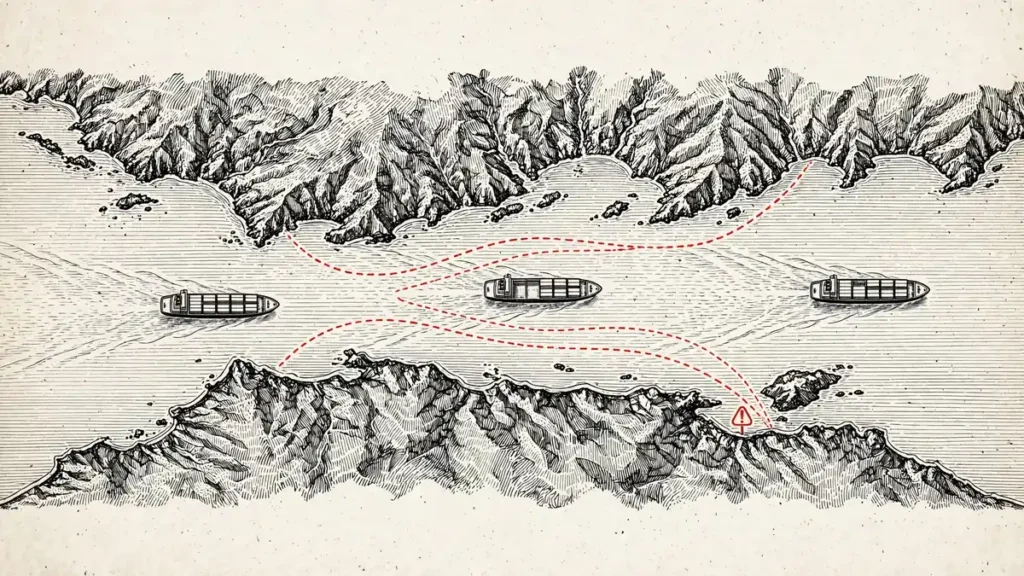
That distinction is visible in the weekend’s shipping news. On November 1, the UK Maritime Trade Operations centre reported a vessel struck by a projectile in the Strait of Hormuz, and another vessel struck east of Ras Al Khafji in Saudi Arabia, according to Bloomberg. On the same weekend, Iran’s Islamic Revolutionary Guard Corps Navy said two tankers, including a supertanker, had hit naval mines in Hormuz. Those are claims and incident reports, not confirmed attributions, and they sit alongside the talks rather than cancelling them out. The market read the two signals together: risk today is still high, but the probability of a much worse outcome this week looked slightly lower.
Florence Schmit, a senior energy strategist at Rabobank, called Monday’s move a temporary pullback and warned that current rhetoric still suggested further escalation was possible and could drive oil higher, according to Bloomberg. ING analysts made the same point in a client note quoted by Reuters: if the US midterm elections on November 3 pass with neither strikes nor a deal, the key question is whether the geopolitical risk premium stays high or gradually unwinds. In other words, Monday’s fall priced in a delay, not a settlement.
How much of the price is shipping, insurance and diesel — not crude itself?
This is where the Brent headline misleads. Izvestia’s November 2 analysis, drawing on Goldman Sachs figures, puts the average cost of shipping crude by sea at above $20 a barrel, against about $3 a year earlier — roughly a sevenfold rise. Within that total, the breakdown attributed to Goldman Sachs is about $7 a barrel for the Hormuz war-risk premium, about $4 for higher marine fuel, about $4 for ship-to-ship transshipment, about $3 for changing the routes of tankers already in transit, and about $2 from restrictions on the use of Iranian vessels. Those components add to about $20, which is consistent with the average, but they are an analyst breakdown, not a published invoice for any single cargo, and they vary sharply by route: Izvestia cites Persian Gulf-to-Asia freight above $37 a barrel in mid-October for some routes.
The delivered-price gap is the clearest illustration. Izvestia reports that oil bound for Asia averaged $93 a barrel before shipment in early October, against $106 in April, yet the delivered cost rose from $116 to $131 over the same period once transport was included. JP Morgan’s estimate, reported in the same analysis, puts crude delivered to Asia at about $131 a barrel in October. That is why a buyer can watch Brent fall $3 and still face a delivered bill that barely moves: the benchmark is only one line in the invoice.
Refined products add a second wedge. Bloomberg reported on November 2 that crude exports from the Persian Gulf were near prewar levels while oil-product shipments remained constrained, and that diesel prices had surged in the US and Europe. The Middle East conflict, together with Ukrainian attacks on Russian refiners, has helped drive fuel prices higher, according to the same report. A refinery does not sell Brent; it sells diesel, petrol and jet fuel made from crude that had to be shipped, insured and, in some cases, transferred between ships off Oman to reduce exposure in Hormuz. When product supply is tight, the product price can stay high even as the crude benchmark eases.
War-risk insurance is the third wedge, and it is the subject of WarBrief’s war-risk insurance explainer. Insurers price the chance of a hit, not the fact of one, so premiums stay elevated after an incident-free weekend if the threat has not been removed. UBS commodity strategist Giovanni Staunovo made the related point, quoted by the Wall Street Journal and OilPrice, that the recovery in Hormuz flows had coincided with a sharp deterioration in maritime security, with vessels still exposed to attacks and insurance and freight costs rising sharply. Flows recovering is therefore not the same as risk falling.
Background and timeline
- February 28, 2026: The war between the United States and Israel on one side and Iran on the other began, according to contemporary reporting summarised in November 2 market coverage.
- October 2026: Brent rose about 13.6% across the month to a six-month high, while WTI gained more than 15%, according to Reuters.
- October 30, 2026: The December Brent contract settled at $117.64 a barrel, up 2.4% on the day, according to Reuters.
- November 1, 2026: OPEC+ agreed to keep December production targets unchanged, as covered in WarBrief’s OPEC+ December targets explainer; UKMTO reported projectile strikes on vessels in Hormuz and east of Ras Al Khafji.
- November 2, 2026: Brent fell about 3% to about $110 and WTI to about $101 as Doha talks entered a third day, according to Reuters snapshots.
- November 3, 2026: US midterm elections, which traders treat as a potential inflection point for any decision on renewed strikes.
What Brent’s fall means for US, UK and EU readers
For readers in the United States, the United Kingdom and the European Union, Monday’s fall is welcome but not yet relief. In the US, the transmission runs through diesel first: freight, farming and heating costs follow diesel more closely than they follow Brent, and diesel supply has been the tighter market. In the UK and the EU, the same logic applies to road fuel and to heating and industrial energy, with the added exposure that much of the crude and product arriving in Europe has travelled through, or around, the same contested waterway.
Two practical effects follow. First, pump and heating prices lag the futures screen by days to weeks, because retailers and suppliers hold stock bought at earlier prices and pass through transport and insurance costs that have not fallen. A single down day in Brent does not rewrite those contracts. Second, volatility itself is a cost: when traders expect a post-midterm decision on strikes, suppliers hedge more expensively and keep larger buffers, which shows up in prices even on calm days. Readers should therefore watch diesel and product prices, and the next UKMTO and shipping-flow reports, more closely than any single Brent print.
This article is educational only and is not financial advice. Futures prices, bank forecasts and fair-value models are estimates that change with new information; none of them is a prediction that Brent will reach a particular level.
Different perspectives
Optimists in the market read Monday as the start of premium unwinding: if Doha produces even a partial Hormuz arrangement, the $7 Hormuz premium and part of the wider shipping surcharge could fade, and inventories could begin to rebuild. Goldman Sachs’ own modelling points the other way on timing — its raised December forecast of $105, rather than a return to $90, suggests the bank expects disruption risk to persist into year-end even if talks continue.
Sceptics read Monday as a pause before a political decision. President Trump has repeatedly threatened to resume strikes after the midterm elections, while also saying he is in no rush for a deal, according to Bloomberg and Reuters reporting. Iran’s leadership has ordered military readiness alongside the talks. In that reading, the premium is not mispricing; it is the market charging for a binary outcome — deal or renewed strikes — that has not yet been resolved.
A third view, from JP Morgan’s fair-value work, is that the market is about $20 above a modelled $94 Brent, with geopolitical risk, rather than freight alone, as the likelier explanation for the gap. That view does not imply Brent must fall to $94: fair value is a model output, not a floor, and past stretches more than 5% above fair value have lasted months on average, according to the same analysis. The honest summary is that three reputable lenses — shipping costs, bank forecasts and fair-value models — all point to elevated prices, but disagree on how much is fear, how much is freight, and how fast either could fade.
What to watch next after the November 3 midterms
The first test is political: whether Washington signals renewed strikes, a longer diplomatic track, or neither, after the November 3 midterm elections. The second test is physical: whether UKMTO incident reports and Hormuz transit data show fewer attacks and steadier flows, or another week of tanker incidents. The third test is the market’s own: whether diesel and product prices follow Brent down, which would show the premium unwinding through the whole chain, or stay elevated, which would show that shipping and product tightness, not the benchmark, is doing the work.
OPEC+ is not the near-term lever. The group kept December targets unchanged on November 1, and Europe’s planned release of 42.6 million barrels by January 2027 is a slower, stock-based response. If a Hormuz deal emerges, the fastest relief would come through lower war-risk and shipping costs, not through a quota change. If fighting resumes, the fastest pain would come through the same channel, in reverse. Readers can follow both through WarBrief’s conflict zones hub, which links the day’s Hormuz and Iran coverage.
Frequently asked questions
Why did Brent fall on November 2, 2026?
Brent fell about 3% to about $110 a barrel because Qatari-mediated talks with Iran entered a third day and traders priced in a lower chance of immediate escalation, even though tanker attacks around Hormuz continued. The fall reflected a delay in the worst-case outcome, not a signed deal.
What is the Hormuz war premium in oil prices?
It is the extra amount buyers pay because supply through the Strait of Hormuz could be disrupted. Goldman Sachs figures cited by Izvestia put the Hormuz passage premium at about $7 a barrel within a wider shipping-cost rise, while JP Morgan’s fair-value model implies a total geopolitical gap of roughly $20 above $94 Brent. The two numbers measure different things and should not be added together.
Why does oil still cost more even when Brent falls?
Because Brent is a benchmark for crude, not a delivered price. Shipping, war-risk insurance, transshipment, route changes and refined-product tightness sit on top of it. In October, crude delivered to Asia averaged about $131 a barrel on JP Morgan’s estimate, well above the Brent screen, because those added costs had risen sharply.
Does a Brent fall mean cheaper petrol and diesel straight away?
No. Pump and heating prices lag the futures screen, because suppliers hold earlier stock and still pay elevated transport and insurance costs. Diesel, which has surged in the US and Europe, is the tighter market to watch, and it may stay high even if Brent eases.
What would make the war premium disappear?
A verifiable Hormuz arrangement that stops tanker attacks, restores safe passage and lets insurance and freight rates fall would unwind it fastest. A renewed round of strikes after the November 3 midterms would do the opposite. Until one of those outcomes is confirmed, the premium is likely to stay volatile.
Sources
- Aaj English TV (Reuters report): Oil prices ease 3% on optimism for Qatari-led talks on ending Iran war
- The Edge Singapore (Bloomberg): Oil falls as report says Trump to give Iran diplomacy more time
- Izvestia: Why Brent no longer reflects the real price of oil
- TradingView / Seeking Alpha: Oil prices retreat ahead of U.S. midterms despite renewed Strait of Hormuz attacks
- OilPrice: Oil Prices No Longer Follow Headlines
Discussion 0
Share analysis, corrections, or context. Be civil — comments are moderated.