
WarBrief Live | November 1, 2026 | Event Preview
| November 9-20, 2026 Dates in Antalya | November 11-12 World Leaders’ Summit | $300 billion a year Climate finance goal by 2035 | 35 by 35 Electricity share target for 2035 |
COP31 opens in Antalya, Türkiye, on November 9, 2026, and runs to November 20. It will test whether climate talks can move from pledges to delivery, with money, fossil fuels and adaptation unresolved.
Key Takeaways
- COP31 is the 31st UN climate conference, held at the Antalya Expo Center from November 9 to 20, 2026, with a World Leaders’ Summit on November 11 and 12.
- Türkiye holds the presidency and leads the Action Agenda, while Australia’s Chris Bowen leads the formal negotiations — an unusual split presidency agreed after both countries sought to host.
- The hardest fights are familiar: climate finance, adaptation, loss and damage, and whether negotiators agree a roadmap for moving away from fossil fuels.
- The United States is not participating as a party after its withdrawal from the Paris Agreement took effect in January 2026, shifting more of the finance burden onto Europe and other donors.
- What is confirmed is the venue, the dates, the split presidency and the unresolved files carried over from COP30 and Bonn. What is not confirmed is any new finance pledge, fossil-fuel roadmap or final text — those are what Antalya must produce.
What is COP31, and why is Antalya hosting it?
COP31 is the 31st session of the Conference of the Parties to the United Nations Framework Convention on Climate Change (UNFCCC), the annual summit where governments negotiate and review global climate action. It also covers the related meetings for the Kyoto Protocol and the Paris Agreement. The UNFCCC describes COP31 as the largest international summit to negotiate and advance global cooperation on climate change, bringing together government, business and civil society representatives.
Türkiye is hosting for the first time. Its environment minister, Murat Kurum, serves as COP31 President, while Australia’s climate and energy minister, Chris Bowen, serves as President of Negotiations. The split followed a compromise after both countries bid to stage the conference: Türkiye hosts and leads the Action Agenda, Australia chairs the formal negotiations. The arrangement is unusual, and it matters because the two roles pull in different directions — the presidency sets the political tone and the action programme, while the negotiations president steers the texts that governments must actually agree.
Antalya was not a neutral backdrop chosen at random. It is Türkiye’s Mediterranean resort city, and the summit extends a tourism season that would otherwise be winding down. That local effect is real, but it is not the story of the summit. The story is whether a conference hosted by a country that is itself balancing energy security, earthquake-rebuilding and industrial growth can push almost 200 governments toward implementation rather than another round of promises.
When and where is COP31 being held?
COP31 runs from Monday, November 9, to Friday, November 20, 2026, at the COP31 Center at the Antalya Expo Center in Aksu, Antalya, according to the Host Country Agreement between the UNFCCC and the Government of Türkiye. Pre-sessional meetings of negotiating groups, including least developed countries, small island developing states, the African Group and the Group of 77 and China, are scheduled for November 3 to 8.
The formal work is split between two zones. The Blue Zone is the official UN area, open only to registered participants, where plenary sessions, negotiations, bilateral meetings and press briefings take place, and where heads of state will meet for the World Leaders’ Summit on November 11 and 12. The Green Zone is the public space for civil society, institutions and businesses. The UNFCCC participant guidance notes that the Green Zone will be closed to visitors during the Leaders’ Summit on November 11 and 12, and that the whole conference premises, including registration, will be closed on Sunday, November 15. Anyone planning travel around those dates should treat them as hard constraints, not soft guidance.
The Leaders’ Summit falling on days three and four, rather than at the opening, is a deliberate scheduling choice. It gives negotiators two days to surface the political blockages before leaders arrive, and it gives leaders a chance to break deadlocks while there is still a week of talks left — if they choose to use it that way.
What is actually on the agenda in Antalya?
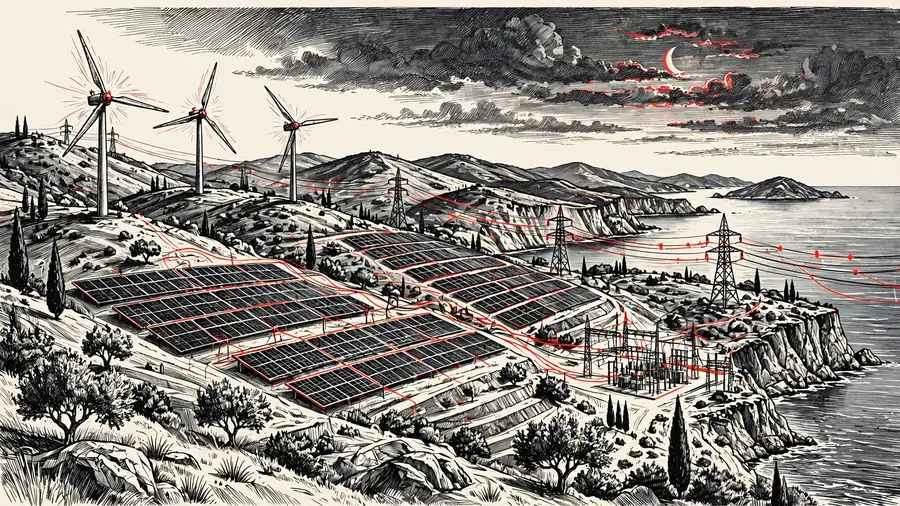
Antalya inherits more than it invents. A briefing prepared for the European Parliament’s environment committee, summarised by 2EU, warns that climate finance, adaptation, the transition away from fossil fuels, international carbon-market rules and funding for loss and damage are among the files returning to negotiations after failing to close at COP30 in Belém and at the Bonn climate meetings in June 2026. Bonn, in particular, failed to produce agreed text on major adaptation and mitigation files, sending those discussions directly to Antalya.
The presidency has framed the summit as the “COP of Implementation”, with the aim of moving from pledges to measurable results. Its Action Agenda, launched at UN Headquarters in New York on September 21, 2026, covers ten priority themes including clean energy transition, electrification, green industrialisation, zero waste and methane reduction, oceans and seas, and a Climate Implementation Bridge. Finance, technology and capacity-building are presented as cross-cutting enablers. The agenda is also expected to cover food security, water efficiency, agriculture, public health, energy security, power grids, the circular economy, disaster risk management, green finance, carbon markets, digitalisation, biodiversity, a just transition and marine ecosystems, according to reporting on the presidency’s programme.
Press reporting on the summit programme describes nearly 100 agenda items organised around 12 thematic days, opening with food, agriculture and health, followed by energy security, transportation and electrification, with later days covering climate finance, education, science, industry, nature and sustainable development. That count is reported, not confirmed in a UNFCCC agenda document reviewed for this preview, and the thematic-day order should be checked against the final programme before travelling.
COP31 also opens the second Global Stocktake, the Paris Agreement’s periodic review of collective progress. The IISD Earth Negotiations Bulletin notes that parties will have to address mitigation, adaptation, finance and just transition in that stocktake, and that a UN Environment Programme report released in September 2026 assessed that exceeding 1.5°C is now widely considered unavoidable under current policies. That assessment does not make the stocktake symbolic — it makes the question of what governments do about overshoot, adaptation and loss and damage more urgent, not less.
What is the 35 by 35 electrification target?
The presidency’s headline energy idea is “35 by 35”: raising electricity’s share of final energy consumption to 35 percent by 2035. The logic, as reported by AFP from Paris on October 7, 2026, is that electrification is one path to reducing emissions and dependency on fossil fuels — replacing gas-fired heating and diesel vehicles with electric alternatives, backed by cleaner power and stronger grids.
Electrification is less divisive than a fossil-fuel phase-out timetable, which is precisely why it is prominent. It lets governments talk about building things — grids, chargers, heat pumps, renewable capacity — rather than only about closing things. But it also raises a question the presidency cannot answer alone: electrification only cuts emissions if the electricity itself gets cleaner. A target for electricity’s share, without parallel commitments on the power mix and on grid investment, could simply move emissions from tailpipes and boilers to power stations.
Türkiye has also launched a voluntary pledge on artificial intelligence and climate, to be unveiled at the summit, arguing that AI can help tackle global warming even as data centres drive up energy use and fossil-fuel pollution. Reporting on the pledge notes that it is not clear which countries will sign up, that signatories would come back at the following year’s summit in Addis Ababa to take stock, and that the United States, the biggest developer of data centres, is no longer part of the COP process. The pledge is voluntary, so its value will depend entirely on who signs and what disclosure commitments they actually make.
Why is climate finance the hardest fight at COP31?
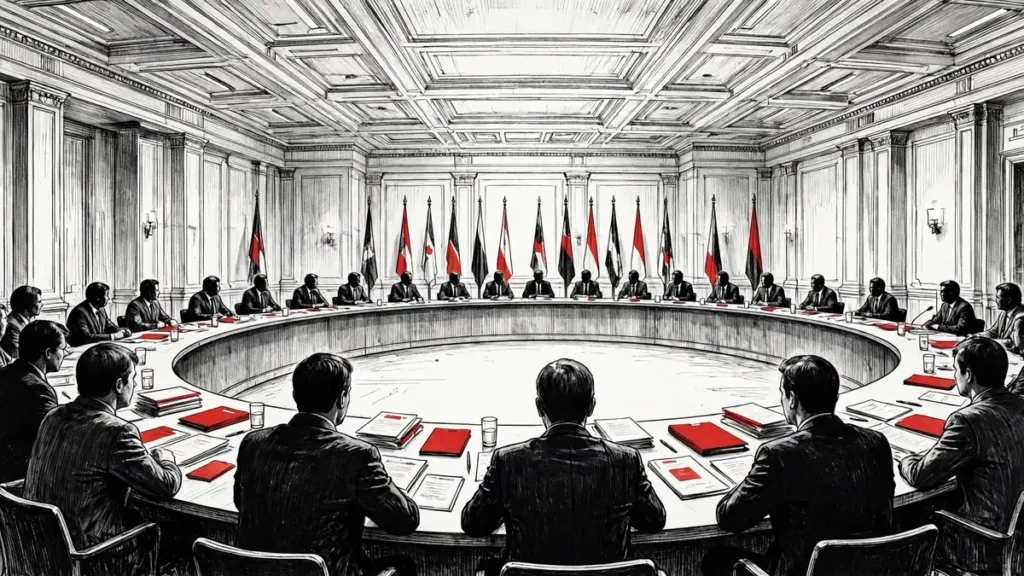
Money is where the trust problem becomes arithmetic. At COP29 in Baku in 2024, developed countries agreed to provide at least $300 billion a year in climate finance for developing countries by 2035. At COP30 in Belém, countries endorsed a wider Baku-to-Belém Roadmap to mobilise $1.3 trillion a year by 2035, including a pledge to triple adaptation finance. Those two figures are not the same commitment and do not cover the same scope — the $300 billion is the public-finance goal, the $1.3 trillion is the wider mobilisation figure including private capital — and confusing them is one of the easiest ways to misread Antalya.
The World Wildlife Fund, in an October 25, 2026 briefing, argues that COP31 must turn the $300 billion promise into real, predictable finance, with developed countries setting out clear, multi-year plans showing how much they will contribute, where the money will go and how access will improve. It also calls for a credible path to at least triple adaptation finance by 2035, with interim milestones including for 2030, and for new contributions to the Fund for Responding to Loss and Damage, with funds that reach affected countries and communities more quickly.
The European Union’s climate chief, Wopke Hoekstra, has ruled out fresh finance pledges at COP31. In an interview reported on October 29, 2026, he said talks on new climate finance commitments are “dead in the water” after two years of stalled progress on cutting emissions, and that the bloc — already the biggest provider of climate finance globally, having increased its spending by 5 billion euros to 33 billion euros in 2025, according to European Commission figures cited in that reporting — should not be the one to provide any new money. That position points the finance argument toward China, Saudi Arabia and other Gulf states, which argue that responsibility should rest with countries that industrialised first. It also means developing countries arriving in Antalya expecting new money are likely to leave disappointed on that specific point, whatever happens on implementation of existing goals.
COP31 by the numbers
| Metric | Figure | Source |
|---|---|---|
| Summit dates | November 9-20, 2026 | UNFCCC Host Country Agreement (CONFIRMED) |
| World Leaders’ Summit | November 11-12, 2026 | UNFCCC (CONFIRMED) |
| Pre-sessional meetings | November 3-8, 2026 | UNFCCC Host Country Agreement (CONFIRMED) |
| Climate finance goal | At least $300 billion a year by 2035 | COP29 agreement, via WWF / European Parliament briefing (CONFIRMED as an agreed goal, not as delivered finance) |
| Wider mobilisation roadmap | $1.3 trillion a year by 2035 | Baku-to-Belém Roadmap, via European Parliament briefing (CONFIRMED as a roadmap objective) |
| Electrification target | 35% of final energy by 2035 (“35 by 35”) | COP31 presidency, via AFP / Bloomberg reporting (CONFIRMED as a presidency target, not an agreed COP decision) |
| Agenda items / thematic days | About 100 items / 12 thematic days | Press reporting on the summit programme (REPORTED) |
| EU climate finance in 2025 | 33 billion euros, up 5 billion euros | European Commission figures cited in Bloomberg interview reporting (REPORTED as stated by the EU) |
Caveat: figures marked CONFIRMED come from UNFCCC documents or agreed COP decisions; figures marked REPORTED come from a single press or secondary source and remain to be confirmed in final COP31 texts.
What will the US absence change?
COP31 will be the first UN climate conference since the United States’ withdrawal from the Paris Agreement took effect in January 2026, according to the IISD Earth Negotiations Bulletin. Reporting on the summit is consistent on the practical consequence: there will be no official US party delegation at COP31, although non-government groups, including US states, local governments, businesses and tribal nations, are attending — for example through a US states pavilion in the Blue Zone organised by The Climate Registry.
The absence changes the politics in three ways. First, it removes the world’s largest historical emitter and a major finance contributor from the formal negotiating room, which is why the EU’s position on new pledges carries extra weight. Second, it shifts attention to whether other major economies — China above all — will step into a leadership or finance role, and on what terms. Third, it creates a two-track American presence: absent as a party, present through states, cities and companies that can make voluntary commitments but cannot sign a COP decision. Readers should be sceptical of any claim that a US state or company pledge at COP31 is equivalent to a US national commitment. It is not.
That scepticism applies more broadly. Voluntary pledges — on AI, on electrification, on action-agenda themes — are only as strong as their follow-up. The test in Antalya is not how many pledges are announced, but whether the final texts contain dates, amounts and review mechanisms that did not exist before.
What does the war in the Middle East have to do with COP31?
War is not on COP31’s formal negotiating agenda, but it is in the room. Analysis published by the SETAV Foundation argues that emissions from armed conflicts are excluded from national reporting obligations, that environmental damage in conflict zones is not systematically monitored, and that pressure from defence spending on climate finance has failed to enter the negotiating agenda. It notes that at COP30 the Brazilian presidency neither placed military emissions on the formal agenda nor organised a thematic peace day, and it argues that COP31 presents an opportunity to take first steps — including a dedicated discussion — toward addressing that gap.
That is analysis, not a COP31 decision, and this preview does not present it as one. But the point connects directly to WarBrief’s conflict-zone coverage: the summit opens while Gulf shipping, energy infrastructure and European winter fuel planning remain exposed to the Iran war, and while the host country sits close to the conflict zone. Electrification, energy security and adaptation are not abstract themes in that context — they are about whether grids, fuel supplies and coastal cities can withstand shocks that are already happening. Readers who follow the security story should watch Antalya not for a peace text, which it will not produce, but for whether climate finance and adaptation language starts to reckon with conflict as a driver of climate vulnerability, or continues to treat war as outside the climate system.
What COP31 means for US/UK/EU readers
For readers in the United States, the most important COP31 fact is the absence itself: the US will not be a party to whatever is agreed in Antalya, and American climate action at the summit will come through states, cities and companies rather than a national delegation. That does not make the summit irrelevant to US readers — finance, technology and trade rules agreed there will still affect US firms, supply chains and state-level programmes — but it does mean US readers should read American announcements from Antalya as voluntary, not governmental.
For readers in the United Kingdom and the European Union, the stakes are more direct. The EU is the largest climate-finance provider, its climate chief has ruled out fresh pledges, and its carbon border levy — which charges imports of certain products from countries with less stringent climate rules — is already a source of tension with China, which has fiercely criticised it. COP31 will therefore test whether Europe can hold its finance and trade positions while still being seen as a credible climate leader by developing countries that want more money, faster access and a fairer just transition. Energy prices are the domestic transmission mechanism: electrification, grid investment and fossil-fuel transition language agreed in Antalya will feed, over years rather than weeks, into the cost and security of heating, transport and electricity at home.
For travellers, the practical COP31 facts are simpler: Antalya will be busy, hotels around the Expo Center are seeing high occupancy during the summit, the Green Zone closes during the Leaders’ Summit, and the whole venue closes on Sunday, November 15. Plan around those dates, not around the hope that the summit will end early. For a parallel energy-diplomacy preview, see WarBrief’s ADIPEC 2026 preview.
Read next: Conflict Zones hub · ADIPEC 2026: What to Expect as the Energy World Gathers in Abu Dhabi · Sanctions hub
Different perspectives on Antalya
Developing countries arrive with a consistent argument: they cannot cut emissions, adapt to worsening floods, droughts and heat, or recover from loss and damage without finance that is predictable, accessible and largely grant-based rather than loan-based. Their negotiators point to the gap between the $300 billion goal and the money actually flowing, and to adaptation needs that dwarf current flows. The WWF briefing makes the same point from the NGO side: the question is not whether promises exist, but where the money to fulfil them will come from.
Developed countries, led in Antalya by the EU’s position, argue that budgets are tight, that private capital must be mobilised alongside public money, and that the contributor base must broaden beyond the countries that industrialised first. That argument is economically coherent and politically difficult: it asks developing countries to accept a wider finance conversation while the existing goals remain unmet.
Civil society is not waiting for the official text. Groups are planning an alternative People’s Climate Summit in Antalya from November 14 to 18, alongside the official negotiations. That parallel gathering is a reminder that COP31’s legitimacy will be judged not only by diplomats, but by activists, scientists and affected communities who measure success in emissions, adaptation funding and loss-and-damage payments, not in communiqués.
What to watch next in Antalya, day by day
- November 3-8: Pre-sessional meetings set the negotiating groups’ positions. Watch for early signals on finance and the fossil-fuel roadmap before the formal opening.
- November 9: Opening plenary and the first thematic days. The tone set by Presidents Kurum and Bowen in their opening statements will show whether “implementation” is a slogan or a work plan.
- November 11-12: World Leaders’ Summit. Watch for any leader-level intervention on finance or fossil fuels — and for its absence, which would itself be a signal.
- November 14-18: The People’s Climate Summit runs alongside the negotiations, and the second week turns to final texts. This is when the fossil-fuel roadmap, adaptation finance milestones and loss-and-damage contributions either appear in draft text or do not.
- November 20: Scheduled close. COPs routinely run past their scheduled close when texts are contested; a clean close on November 20 would suggest either unusual consensus or unusually thin ambition, and readers should judge which by reading the final texts, not the closing press conference.
WarBrief will cover the summit’s security and energy implications as they develop, and will update this preview if the presidency publishes a final programme that changes the thematic-day order or the leaders’ schedule.
Frequently asked questions
When is COP31?
COP31 runs from November 9 to 20, 2026, in Antalya, Türkiye, at the Antalya Expo Center. Pre-sessional meetings run from November 3 to 8, and the World Leaders’ Summit is scheduled for November 11 and 12.
Who leads COP31?
Türkiye’s environment minister Murat Kurum serves as COP31 President and leads the Action Agenda, while Australia’s climate and energy minister Chris Bowen serves as President of Negotiations and leads the formal talks, under a split-presidency compromise agreed after both countries bid to host.
What is the 35 by 35 target?
It is the COP31 presidency’s target to raise electricity’s share of final energy consumption to 35 percent by 2035, as a route to cutting emissions and fossil-fuel dependency. It is a presidency target, not yet an agreed COP decision.
Is the United States attending COP31?
Not as a party. COP31 is the first UN climate conference since the US withdrawal from the Paris Agreement took effect in January 2026. US states, cities, businesses and other non-government groups are attending, but they cannot sign a COP decision on behalf of the United States.
What is the biggest unresolved issue at COP31?
Climate finance: turning the agreed goal of at least $300 billion a year by 2035 into real, predictable money, agreeing a path to triple adaptation finance, and deciding whether negotiators will agree a concrete roadmap for moving away from fossil fuels after COP30 failed to do so.
Sources
- UNFCCC: About COP31
- UNFCCC: Host Country Agreement for COP31
- IISD Earth Negotiations Bulletin: UN Climate Change Conference – Antalya, November 2026
- AFP via Malay Mail: COP31 puts electrification in spotlight as fossil fuel phase-out remains stuck
- Japan Times: AI is part of solution for climate change, COP31 pledge says
- Bloomberg via The Edge Singapore: EU climate chief rules out fresh finance pledges at COP31
- WWF: COP31 climate finance promises need money behind them
- ANews: COP31 Climate Summit in Türkiye to focus on finance and climate action
- Anka English: COP31 aims to shift global climate talks from pledges to implementation
- 2EU / European Parliament briefing summary: COP31 heads to Antalya with climate finance, adaptation and fossil fuels still unresolved
- SETAV: COP31 and the US/Israel-Iran War – The Place of Wars in Climate Negotiations
- TRT World: COP31 likely to boost Türkiye’s tourism season

Discussion 0
Share analysis, corrections, or context. Be civil — comments are moderated.