WarBrief Live | October 5, 2026 | Shipping & Logistics
Middle East crude oil exports have climbed back above pre-war levels — and tankers are being hit faster than at any point in months. The contradiction finally has an explanation, and shipping intelligence analysts have given it a stark name: the Hormuz “kill box.” This hormuz kill box tanker attacks explained briefing walks through what the term means, why attacks are surging even as oil flows recover, and what it costs the people ultimately paying for every risky voyage.
Key Takeaways
- Shipping intelligence firm Marisks reported at least seven tanker incidents in and around the Strait of Hormuz, and assessed that Iran may be firing missiles into a predetermined engagement area — a “kill box” — where weapons lock onto available radar signatures.
- Crude exports from the Middle East exceeded pre-war levels on September 24 and again from September 27 to 29, reaching 19.5–22.5 million barrels per day, according to Kpler data reported by Reuters on October 5.
- The very large crude carrier Kazimah III, owned by Kuwait Oil Tanker Company, was reportedly struck by an unknown projectile on October 1, causing a fire; all crew were reported safe and evacuated.
- Tehran says the strait will stay closed until its seven conditions under the Islamabad Memorandum are met — a standoff that pits Iranian demands against Washington’s position that Iran must give up its highly enriched uranium stockpile.
What is a “kill box” in the Strait of Hormuz?
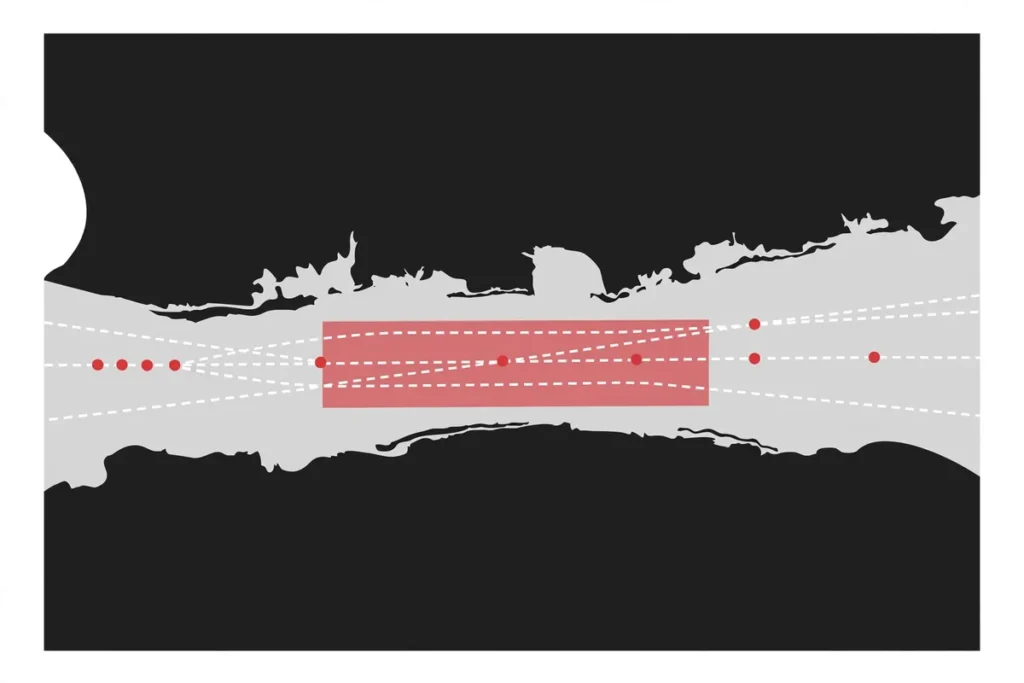
In military doctrine, a kill box is a designated three-dimensional zone — a box drawn over the battlespace — in which weapons can be employed against targets without further coordination. It is a concept built for speed: once the box is open, the shooters do not need to ask permission again. Marisks, the Greece-based maritime intelligence firm, is now applying that language to civilian shipping.
After reviewing the recent pattern of incidents, Marisks told Reuters that the strikes may not be deliberate attacks on individually selected ships at all. Instead, the firm said Iranian forces may be launching missiles into a fixed engagement area — and the weapons then acquire and lock onto whatever radar signatures are available inside it. In that model, the vessel does not matter. Being inside the zone at the wrong time is itself the exposure:
“Current intelligence suggests that the recent pattern of incidents may not necessarily represent deliberate targeting of individually selected merchant vessels. Instead, available information indicates the possibility that Iranian forces are launching missiles into a predetermined engagement area or ‘kill box,’ with weapons potentially acquiring and locking onto available radar signatures within that area.” — Marisks, via Reuters, October 5, 2026
Marisks presents this as an assessment of current intelligence, not a confirmed fact — no official source has confirmed how the missiles are being targeted. But if the assessment is right, it changes how shippers should think about risk: route selection, flag, ownership and compliance no longer protect a ship. Only avoiding the box does.
Why did tanker attacks surge even as oil exports recovered?
The paradox of the past week is real. Kpler ship-tracking data shows Middle East crude exports beating pre-war levels in four of the seven days of the final week of September, rising to between 19.5 and 22.5 million barrels per day against a pre-war baseline of 18 million. The seven-day moving average sat at 18.5 million barrels per day on October 1, and LNG cargoes leaving the strait hit their highest monthly level since February. Yet over the same window, tanker attacks accelerated: at least seven incidents in the Marisks report, with the UK Maritime Trade Operations agency logging at least one attack a day in the strait or the Gulf of Aden since October 2.
The two trends feed each other. Marisks warned that merchant vessels face a “heightened and increasingly unpredictable kinetic threat” precisely because traffic has surged — more ships crowding into the engagement area means more radar signatures for missiles to find. Shippers are making a calculation: freight earnings on the route are extraordinary, insurance can still be bought, and each voyage that gets through keeps oil markets supplied. As our Battle of Hormuz analysis showed, the war over the waterway has become a siege Iran is losing economically — and a kill-box pattern is how a weaker navy keeps bleeding the traffic it cannot stop.
The week of strikes: what actually happened
The current spike began in late September and escalated through the first days of October:
- September 28: A Kuwait-owned very large crude carrier was hit by a projectile in the Strait of Hormuz, breaking a brief lull in attacks on merchant shipping, according to Riviera Maritime Media.
- October 1, 1750 GMT: UKMTO received a third-party report that a tanker had been struck by an unknown projectile while transiting the strait, resulting in a fire. Greece-based Marisks identified the vessel as the Kuwait Oil Tanker Company’s VLCC Kazimah III. All crew were reported safe and evacuated. The strike was the second on a KOTC vessel in four days, and the fifth reported on a tanker in the strait since September 28.
- October 1: The Port of Gulf States Authority (PGSA) said several oil tankers had been struck in recent weeks, and placed the three most recent — the Al Ruwais, Sinbad and Mersin Prosperity, owned or chartered by UAE-linked companies — on a non-compliance list, urging vessels to avoid unauthorized routes.
- October 2: UK-based Ambrey Intelligence reported a strike on an unnamed Panama-flagged tanker, possibly the sixth incident since September 28.
- October 3: Marisks published its report counting at least seven incidents, and introduced the kill-box assessment.
- October 4: Iranian Parliament Speaker Mohammad Bagher Ghalibaf said Tehran would not reopen the strait until its seven conditions were met, LaPresse reported, citing Al Jazeera.
- October 5: Reuters published the Kpler export data showing the recovery above pre-war levels.
Attribution for each strike remains murky. No government has publicly claimed the attacks. Iran’s semi-official Fars News Agency reported that a 2.5-million-barrel supertanker had been hit about 8 kilometers off the Omani coast and was burning — but added that the vessel had been sailing on an “unauthorized route,” a characterization no independent authority has confirmed. Kpler data showed Kazimah III had discharged 2 million barrels of Kuwaiti crude at Oman’s Ras Markaz port on September 17; Kuwait Oil Tanker Company did not respond to requests for comment.
By the numbers
| Metric | Figure | Source |
|---|---|---|
| Middle East crude exports, Sept 24 & 27–29 | 19.5–22.5M bpd (above pre-war levels) | Kpler via Reuters — CONFIRMED |
| Pre-war export baseline (Mar 2025–Feb 2026) | 18.0M bpd | Kpler via Reuters — CONFIRMED |
| Tanker incidents in/near Hormuz (Marisks report, Oct 3) | At least 7 | Marisks via Reuters — CONFIRMED |
| Attack pace in Hormuz or Gulf of Aden since Oct 2 | At least 1 per day | UKMTO via Reuters — CONFIRMED |
| Kazimah III cargo discharged at Ras Markaz, Sept 17 | 2M barrels of Kuwaiti crude | Kpler via Reuters — CONFIRMED |
| Pre-war Hormuz traffic | ~125 large vessels/day (~20% of world crude & LNG) | Reuters — CONFIRMED |
| Supertanker reportedly hit 8km off Oman | 2.5M barrels (vessel on “illegal” route) | Fars News Agency — REPORTED (unconfirmed) |
| Indian nationals rescued from Kazimah III | 5 | Indian reporting via The DeepDraft — REPORTED |
Figures marked CONFIRMED are supported by two or more independent reports. Figures marked REPORTED come from a single outlet and have not been independently verified.
Is the Strait of Hormuz closed right now?
The honest answer is: it depends who you ask. Iran’s IRGC Navy declared the strait closed on October 2, and Tehran’s position has not moved since. Speaking in parliament on October 4, Ghalibaf — Iran’s chief negotiator as well as speaker — said Washington had put forward “some proposals via a mediator” after Tehran presented its roadmap, but dismissed them as outdated unilateral demands. “Our position is clear: the Strait of Hormuz will not reopen until our seven conditions under the Islamabad Memorandum are fulfilled,” he said, adding that Iran would “fight and negotiate at the same time.”
The seven conditions, presented to Washington through Qatari mediators in September, include a cessation of hostilities on all fronts, unfreezing Iranian assets abroad, ending the US naval blockade of Iranian ports, ending US interference in Iran’s internal affairs, ending US cooperation with Iran’s adversaries, and halting all US attacks on Iranian territory. Foreign Minister Abbas Araghchi has said separately that Iran could reopen the waterway within seven days if its terms were accepted.
The Islamabad Memorandum itself — the 14-point US-Iran framework signed on June 17, 2026, with Pakistan mediating — was supposed to settle this: cessation of military operations, reopening of the strait, lifting of the US blockade and a package of economic measures, with a 60-day deadline for a final deal. As the Doha Institute’s assessment noted at the time, the text was a transitional framework, not a final settlement — and it collapsed in July amid mutual accusations of violations. On the other side of the table, Washington’s public position — stated by Vice President Vance in June interviews — is that IAEA inspectors must be allowed back and that the United States and the IAEA should help Iran destroy its highly enriched uranium stockpile. That gap is why the strait stays shut.
And yet: ships keep sailing. The Kpler data is the de facto answer — exports are moving at or above pre-war volumes even while Tehran’s declaration stands. The mechanics of how the US enforces its side of the pressure are worth understanding separately; see our explainer on how naval blockades actually work.
What this means for US/UK/EU readers
The bill for every voyage through the kill box lands, eventually, at the pump. War-risk insurance premiums for a Hormuz transit have multiplied: hull war cover that ran about 0.25 percent of a vessel’s insured value before the crisis has been quoted around 1.0 percent at peaks, according to PropertyCasualty360 figures, and freight analyst Ioannis Papadimitriou of Vortexa told Fortune that total insurance costs have reached about 10 percent of the assets aboard, up from 0.5–1 percent before the war. On a $150 million VLCC hull, even a 1.5 percent rate adds roughly $2.3 million in premium for a single transit — costs that flow into charter rates, then into crude pricing, then into diesel and gasoline.
Markets are pricing the risk as contained rather than catastrophic: Brent crude hovered around the $100-a-barrel mark in the first days of October, and traders have treated the attacks as a persistent background cost rather than an acute supply shock. But the pass-through is lagged and real. Some shipowners are already rerouting around the Cape of Good Hope, adding 10 to 14 days to voyages and tightening the global tanker fleet. For European readers, diesel — the fuel of trucking, agriculture and heating — is the most exposed product: diesel futures were up about 5 percent in a week in mid-September, and further premium widening at the strait will feed retail fuel prices with a delay of weeks, not days.
The bottom line for consumers: as long as the kill-box pattern holds, every gallon of diesel carries a war-risk surcharge, and any escalation — a strike that closes the strait for real, or one that hits an LNG carrier — would move prices far faster than the current slow grind.
Different perspectives
Tehran frames the pressure as legitimate leverage: the strait is Iran’s card at the negotiating table, the seven conditions flow from the Islamabad Memorandum’s unmet promises, and as long as the US blockade of Iranian ports stands, Iran will keep the weapon of maritime disruption ready. The declared closure, in this telling, is retaliation, not aggression.
Washington and its partners frame it as state-sponsored piracy: unclaimed missile strikes on civilian shipping, in waters where a third US aircraft carrier has now deployed, justify continued military pressure and the blockade of Iranian ports. See our explainer on what the third carrier in the region actually means.
Shippers and insurers are agnostic about the politics and brutal about the arithmetic. Some are paying the premiums and sailing — the Kpler recovery shows many still are. Others are going around Africa, switching off transponders, or declining to quote at all. The kill-box assessment, if it sticks, makes the decision simpler and grimmer: in a box, the only defense is not being there.
What to watch next
Four things will decide whether this story escalates or fades. First, whether the attack pace holds at a strike a day or drops off — UKMTO’s daily reports are the scoreboard. Second, whether the US-Iran mediator channel produces anything beyond the proposals Ghalibaf dismissed; a revived Islamabad-framework negotiation would unwind both the kill box and the blockade. Third, LNG: September saw the highest monthly cargo count through the strait since February, and a confirmed strike on a gas carrier would be a step-change for Asian and European energy markets. Fourth, the oil producers’ response — OPEC+ froze November quotas at its October 4 meeting, betting that the Hormuz war keeps Gulf output below target anyway. Our Conflict Zones hub tracks the wider war daily.
Educational note: this article describes market mechanics for information only. It is not financial advice. Commodities and shipping markets are volatile; nothing here is a recommendation to buy or sell any security or contract.
Frequently asked questions
What is a “kill box” in naval warfare?
In military doctrine, a kill box is a defined three-dimensional zone — a box drawn over land or sea — in which forces may fire on targets without further coordination. In the Hormuz context, maritime intelligence firm Marisks uses the term to describe its assessment that missiles may be launched into a predetermined engagement area and then acquire and lock onto available radar signatures inside it. The assessment has not been confirmed by any official source; the key implication is that any vessel inside the zone at the wrong moment could be at risk regardless of flag or ownership.
Is the Strait of Hormuz closed right now?
Iran’s IRGC Navy declared the strait closed on October 2, and Tehran says it will stay closed until seven conditions under the Islamabad Memorandum are fulfilled. In practice, shipping continues: Kpler data shows Middle East crude exports at or above pre-war levels. So the strait is declared closed by Iran but remains physically transited by commercial traffic.
Why are tankers still being attacked if oil exports recovered?
Marisks argues the two trends are linked: surging traffic means more vessels inside the engagement area, giving missiles more radar signatures to acquire. Attacks also serve Iran’s leverage strategy at the negotiating table, tied to the seven conditions. As long as freight earnings and available insurance make voyages profitable, some shippers keep sailing — and the kill-box pattern punishes exactly that traffic.
How do the tanker attacks affect fuel prices in the US and Europe?
War-risk insurance premiums for Hormuz transits have risen several-fold, adding hundreds of thousands to millions of dollars per voyage. Those costs flow through charter rates into crude prices and, with a lag of weeks, into diesel and gasoline at the pump. Diesel is the most exposed fuel for European readers. Brent crude has hovered around $100 a barrel in early October — elevated, but far from a full supply-shock spike.
What is the Islamabad Memorandum?
The Islamabad Memorandum of Understanding is a 14-point US-Iran framework signed on June 17, 2026, with Pakistan mediating. It provided for a cessation of military operations, reopening of the Strait of Hormuz, lifting of the US naval blockade of Iranian ports, and economic measures, with a 60-day deadline for a final deal. The deadline passed amid mutual accusations of violations, and Tehran now conditions reopening the strait on seven demands it says flow from the memorandum’s unmet terms.
Sources
- Reuters: Middle East crude oil exports exceed pre-war levels but tanker attacks increase (Oct 5, 2026)
- Riviera Maritime Media: Kuwait-flagged VLCC, Panama-flagged tanker reported hit in Strait of Hormuz (Oct 1, 2026)
- Balitangmarino: Fresh strike on tanker adds to Hormuz shipping turmoil (Oct 5, 2026)
- LaPresse: Iran, Ghalibaf: “Proposals from the US, but the Strait of Hormuz will be closed if seven conditions are not met” (Oct 4, 2026)
- Heimdallsbrief: Collapse of the Islamabad Memorandum of Understanding
- Doha Institute: The Islamabad Memorandum — Ceasefire or Strategic Pause?
- Canada Inquirer / Fortune: The Iran war is minting new one-day millionaires (Vortexa insurance analysis)
- The DeepDraft: Kazimah III hit near Oman SITREP (Oct 3, 2026)