
WarBrief Live | October 26, 2026 | Energy
ADIPEC 2026 opens in Abu Dhabi on November 2, 2026, bringing the global energy industry together at ADNEC Centre Abu Dhabi for four days of deal-making, ministerial debate and technology showcases. Organisers expect about 239,000 attendees from more than 170 countries, alongside more than 2,250 exhibiting companies and 1,800 speakers, making it the largest energy gathering of the year. This preview explains what ADIPEC 2026 is, who is speaking, what is on the agenda, and what to watch when the energy world meets in Abu Dhabi from November 2 to 5.
Key Takeaways
- ADIPEC 2026 runs from November 2 to 5, 2026, at ADNEC Centre Abu Dhabi, under the patronage of UAE President Sheikh Mohamed bin Zayed Al Nahyan and hosted by ADNOC.
- Organisers expect about 239,000 attendees, more than 2,250 exhibiting companies and more than 1,800 speakers across 13 conference programmes and 380 sessions.
- The agenda centres on energy security, resilient supply, investment, infrastructure and artificial intelligence, with a redesigned Strategic Conference and an expanded AI Zone.
- ADIPEC opens the day after OPEC+ meets on November 1, so any signal from producers will land directly in front of ministers, traders and buyers gathered in Abu Dhabi.
What is ADIPEC 2026?
ADIPEC, the Abu Dhabi International Petroleum Exhibition and Conference, is the energy industry’s largest annual conference and exhibition. The 2026 edition is organised by dmg events and hosted by ADNOC, and it is held under the patronage of UAE President Sheikh Mohamed bin Zayed Al Nahyan in his capacity as Ruler of Abu Dhabi. Unlike OPEC+, which sets production policy for its members, ADIPEC is not a decision-making body: it is where governments, national oil companies, international majors, traders, technology firms and investors meet, announce partnerships and test where capital will flow next.
That distinction matters for how to read the headlines that will come out of Abu Dhabi. Deals and project announcements at ADIPEC are real commercial signals, but they are not quotas, and a ministerial speech is not a production decision. The value of the event is concentration: for four days, the people who produce, buy, ship, finance and insure energy are in the same halls, and the conversations between sessions often matter as much as the panels themselves. According to the official ADIPEC announcement, the 2026 edition aims to mobilise investment in resilient and intelligent energy systems, with an expanded programme focused on growing and diversifying supply, reinforcing infrastructure, scaling AI and accelerating investment and delivery.

ADIPEC 2026 by the numbers
The scale below comes from the organisers’ published expectations for the 2026 edition, repeated across the official announcement and trade coverage. These are expected figures ahead of the event, not final attendance counts, which will only be known after November 5.
| Metric | Figure | Source |
|---|---|---|
| Dates | November 2-5, 2026 | ADIPEC (official) |
| Venue | ADNEC Centre Abu Dhabi | ADIPEC (official) |
| Expected attendees | About 239,000, from more than 170 countries | ADIPEC / Gulf News |
| Exhibiting companies | More than 2,250, across 16 halls and 30 country pavilions | ADIPEC (official) |
| Speakers | More than 1,800 | ADIPEC / Al Etihad |
| Conference programmes | 13, including 11 Strategic Conference programmes | ADIPEC / Al Etihad |
| Sessions | More than 380 | ADIPEC (official) |
| Value generated in 2025 | US$53 billion through more than 49,000 deals | ADIPEC (official) |
Caveat: attendance, exhibitor and speaker counts are organiser expectations published before the event. Dates, venue, patronage and the confirmed speaker names below are confirmed in the official September 2026 announcement.
Who is speaking at ADIPEC 2026?
The confirmed speaker list blends ministers, national oil company chiefs, international majors and technology leaders. From government, the early confirmed names include UAE Minister of Energy and Infrastructure Suhail Mohamed Al Mazrouei, Egypt’s Minister of Petroleum and Mineral Resources Karim Badawi, Jordan’s Minister of Energy and Mineral Resources Saleh Kharabsheh and Nigeria’s Minister of State for Petroleum Resources (Gas) Ekperikpe Ekpo. From industry, the confirmed chief executives include Shell’s Wael Sawan, TotalEnergies’ Patrick Pouyanne, bp’s Meg O’Neill, Eni’s Claudio Descalzi, Oxy’s Richard Jackson and Siemens Energy’s Christian Bruch, alongside leaders from SLB, Baker Hughes, YPF and the World Energy Council.
Technology companies have an unusually large presence this year. Trade coverage of the programme lists senior leaders from Siemens, Honeywell, Schneider Electric, AVEVA, Cognite, AIQ, Siemens Energy and SandboxAQ, reflecting how far the agenda has moved from a pure oil-and-gas showcase toward industrial technology. Asia also features prominently: organisers describe the largest Asian participation to date, with 353 companies and six national pavilions representing China, India, Japan, Malaysia, Singapore and South Korea. For readers tracking the region, that Asian footprint is one of the clearest signs of where new energy demand, and new energy buyers, are coming from.
Why ADIPEC 2026 arrives at a volatile moment
ADIPEC 2026 does not take place in a calm market. Brent crude remains above $100 a barrel, up from about $73 before the Iran war began in late February 2026, according to Reuters reporting on the October OPEC+ decision. WarBrief’s own market update on Monday, October 26, put Brent at $114.60 and WTI at $101.13, after a week in which Brent gained about 6 percent. The war has kept Gulf producers pumping well below their official targets, with exports fluctuating at 60 to 80 percent of normal levels in recent months, the same Reuters-derived reporting noted.
That is the backdrop ADIPEC’s chairman, Abdulmunim Al Kindy, addressed directly in the official announcement:
“Recent volatility has reaffirmed a simple truth: energy security is economic stability. As demand rises and AI transforms both the energy sector and the economies it powers, the world must invest ahead of demand, diversify supply and strengthen the infrastructure, technology and capabilities that keep energy moving.”
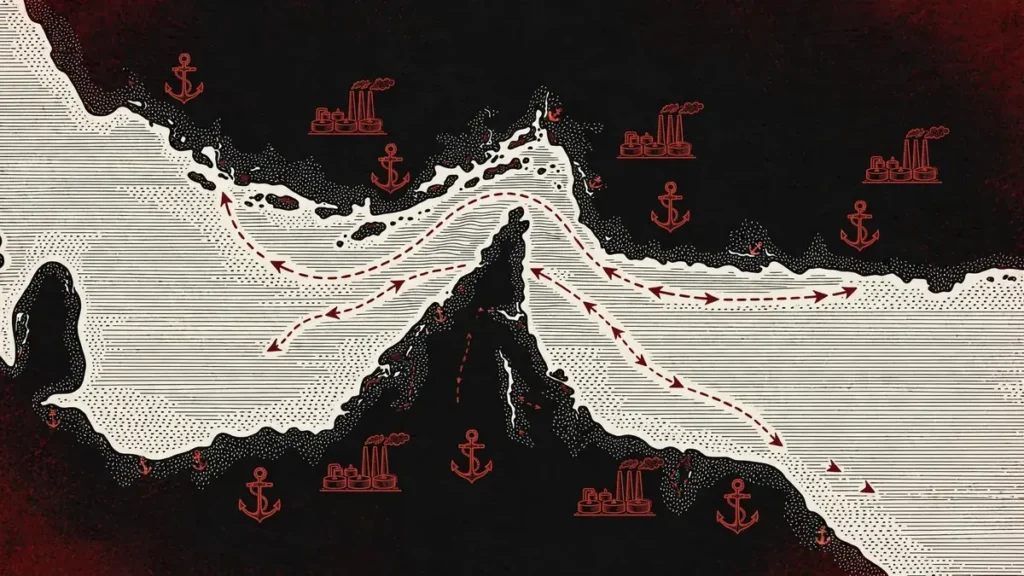
The shipping picture sharpens the point. The Strait of Hormuz, the narrow waterway through which a large share of Gulf oil and liquefied natural gas moves, has been the central chokepoint of the 2026 war, and the shipping standoff around Hormuz has shaped freight, insurance and fuel costs all year. Delegates arriving in Abu Dhabi will therefore be watching two different clocks at once: the commercial calendar of contracts and projects, and the security calendar of a war that has repeatedly moved prices within days. Readers following that story should also read why oil hit $117 on the Iran strike threat, which explains how quickly threat headlines feed into fuel prices, and WarBrief’s conflict zones hub for the wider regional picture.
What to watch in Abu Dhabi
First, the OPEC+ meeting on November 1. The producer group’s seven core members, Saudi Arabia, Russia, Iraq, Kuwait, Algeria, Kazakhstan and Oman, agreed in early October to hold November production targets at September levels, and Reuters reporting on that decision records their next meeting on November 1. ADIPEC opens the following morning, so ministers and executives will be asked about that decision within hours of it being made, in front of the buyers and traders it affects most.
Second, the artificial intelligence programme. The Strategic Conference has been redesigned for 2026 around energy security and resilience, policy and regulation, upstream, clean power and carbon management, grids and infrastructure, and workforce and skills, alongside updated AI, digital and technology and downstream programmes. Trade coverage reports a record 1,296 AI and digital transformation papers and an expanded AI Zone, a sign that the industry’s AI debate has moved from whether to adopt the technology to where it earns a return: upstream productivity, grid resilience, predictive maintenance and cybersecurity.
Third, the deals and the deals data. ADIPEC says the 2025 edition generated US$53 billion in value through more than 49,000 deals. The 2026 test will be whether that pace holds while shipping and supply remain disrupted, and which segments attract the money: liquefied natural gas, chemicals, grid and infrastructure, or AI and digital services. Fourth, the diplomacy around the edges. Abu Dhabi is also the city hosting trilateral Ukraine, Russia and United States talks in November, so energy ministers in town for ADIPEC will be operating in a capital already crowded with parallel negotiations. Finally, the opening ceremony itself moves this year to the Abu Dhabi Energy Centre, a change organisers say creates additional exhibition capacity at ADNEC Centre, a small logistical detail that underlines how large the event has become.
What ADIPEC 2026 means for US/UK/EU readers
For readers in the United States, the United Kingdom and the European Union, ADIPEC matters through three channels: fuel prices, supply security and investment signals. Any hint from producers in Abu Dhabi about December output, spare capacity or shipping conditions will feed into the same crude benchmarks that set petrol, diesel and heating costs at home, with a lag of days to weeks rather than months. European readers should watch liquefied natural gas and diesel most closely, since Europe’s winter supply depends heavily on cargoes that transit or originate in the Gulf. American readers should watch what US shale and service-company executives say about drilling, costs and export capacity, and British readers should watch North Sea and trading-house commentary on how Gulf disruption is repricing cargoes into Europe.
None of this is a reason to trade on a headline. ADIPEC speeches move sentiment; they do not change physical supply overnight, and the gap between what producers are permitted to pump and what they actually export has been wide all year. The useful read for households and businesses is directional: if Abu Dhabi’s message is tight supply and rising investment in resilience, expect fuel-cost pressure to persist into winter; if it is easing logistics and recovering exports, expect some relief, but not an immediate return to pre-war prices. This article is educational only and is not financial advice.
Frequently asked questions
When and where is ADIPEC 2026?
ADIPEC 2026 runs from November 2 to 5, 2026, at ADNEC Centre Abu Dhabi, under the patronage of UAE President Sheikh Mohamed bin Zayed Al Nahyan and hosted by ADNOC. The opening ceremony will be held at the Abu Dhabi Energy Centre.
Who attends ADIPEC 2026?
Organisers expect about 239,000 attendees from more than 170 countries, including energy ministers, chief executives of national and international oil companies, traders, investors, engineers and technology leaders, alongside more than 2,250 exhibiting companies.
What is on the ADIPEC 2026 agenda?
The agenda centres on energy security, resilient and intelligent energy systems, investment, infrastructure, artificial intelligence and workforce capability, across 13 conference programmes and more than 380 sessions, including a redesigned Strategic Conference and an expanded AI Zone.
Will ADIPEC 2026 move oil prices?
ADIPEC can move market sentiment, especially when producers speak the day after the November 1 OPEC+ meeting, but it does not set production quotas. Physical supply, shipping conditions and the state of the Iran war remain the larger drivers of Brent and WTI prices.
Sources
- ADIPEC: ADIPEC 2026 to mobilise investment in resilient, intelligent energy systems that power global growth
- Gulf News: ADIPEC 2026 in Abu Dhabi to attract 239,000 visitors from 170 countries
- Al Etihad (WAM): Energy security, AI and investment top ADIPEC 2026 agenda
- Al Etihad (WAM): Under the patronage of UAE President, ADIPEC 2026 kicks off on November 2
- Reuters via DD India: OPEC+ agrees to keep November oil output targets steady
- Analytics Insight: ADIPEC 2026, how AI is transforming the energy industry in Abu Dhabi


Discussion 0
Share analysis, corrections, or context. Be civil — comments are moderated.