
WarBrief Live | October 31, 2026 | Explainer
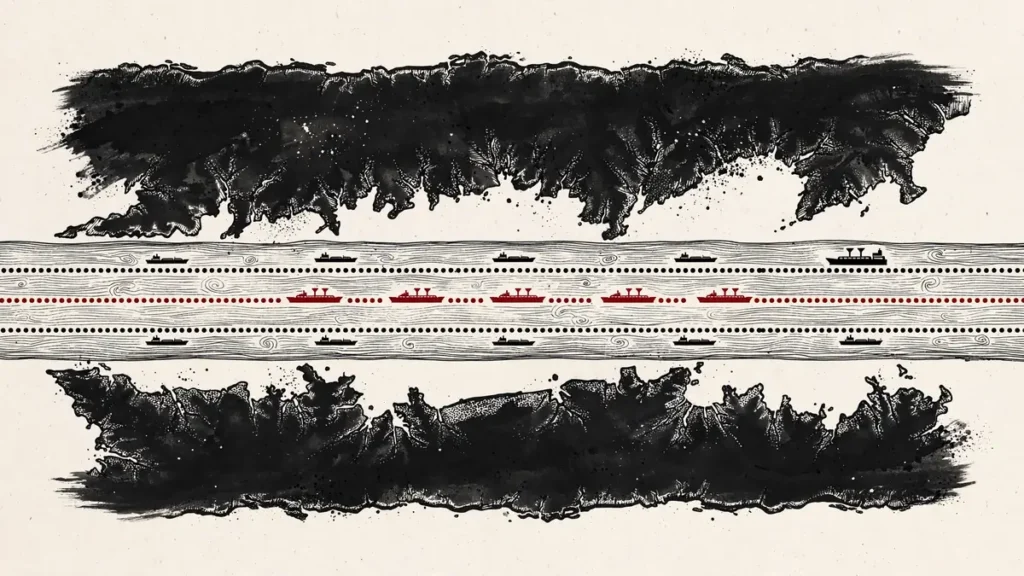
War risk insurance is the extra cover a ship buys for a single voyage through a listed war-risk area, charged on top of its ordinary hull insurance. For the Strait of Hormuz in 2026, that surcharge has gone from a routine fraction of a percent to several percent of a ship’s value per transit.
Key Takeaways
- Standard hull and machinery insurance excludes war risks, so owners buy separate hull war cover and pay an additional premium (AP) each time a ship enters a Joint War Committee listed area.
- Before the war that began on February 28, 2026, Hormuz war-risk cover typically cost 0.15% to 0.25% of hull value; brokers quoted 6% to 10% in early October 2026, according to the Financial Times.
- On a $100 million tanker, that swing turns a roughly $250,000 premium into $6 million to $10 million for one transit, before cargo cover, which is bought separately.
- Quoted rates are not an official index: they vary by ship, flag, ownership links, route and date, and underwriters can reprice or withdraw cover at short notice.
At a glance
- Pre-war rate: 0.15% to 0.25% of hull value (Lloyd’s List, March 11, 2026)
- Early October 2026 quote: 6% to 10% of hull value per voyage (brokers via the Financial Times, reported October 7)
- Worked example: $100 million tanker: about $250,000 before the war, $6 million to $10 million at early-October quotes
- Trigger: entry into a Joint War Committee listed area, usually priced for a seven-day period
What is war risk insurance?
A merchant ship normally carries three separate kinds of insurance, and only one of them covers acts of war. Hull and machinery cover pays for damage from ordinary marine risks such as collision, grounding, fire and heavy weather, but standard hull policies exclude war, so a missile or mine strike is not covered. Hull war insurance fills that gap, covering the ship against war, mines, terrorism, seizure, strikes and riots, under wording widely used in the London market known as the Institute War and Strikes Clauses. Protection and indemnity (P&I) cover is a third, separate layer: it covers the owner’s liability to others, including oil pollution, wreck removal, cargo damage and crew injury, with war-related liabilities handled under separate war P&I terms. Cargo owners buy their own cargo and cargo-war insurance, which is a separate cost from the ship’s insurance.
The structure matters because the headline number in 2026 is not an annual premium. A shipowner usually buys an annual hull war policy, and underwriters then charge an additional premium, or AP, each time the ship enters a high-risk area, usually for a set period such as seven days. Underwriters can charge as much as they think the risk calls for, and sometimes waive the AP for valued clients. That AP, quoted as a percentage of the ship’s insured hull value, is the “war-risk premium” that headlines report. It is incurred afresh on every transit, which is why a tenfold move in the rate feeds straight into routing decisions: pay it, or take a longer, costlier route around the danger.

How does the Joint War Committee listing work?
The Joint War Committee is made up of underwriters from the Lloyd’s Market Association and the International Underwriting Association, and it publishes a list of “Listed Areas” where the risk of war-related perils is increased. Ships entering those waters must tell their insurers, who can then charge an additional premium. The committee does not set prices; each underwriter prices its own risk. Its circular JWLA-033, dated March 3, 2026, added Bahrain, Djibouti, Kuwait, Oman and Qatar to an area that already included Iran and much of the Gulf, and as of mid-October the listed areas still covered the entire Persian Gulf, according to trade-press reporting.
Listing is sticky. It is added quickly when fighting starts and removed only slowly, after underwriters see sustained incident-free passage and, where mines are suspected, verified mine clearance. That is one reason premiums stay high even when no ship has been hit for days: the listing itself, not just the last incident, keeps the surcharge in force. War cover can also be withdrawn quickly. Hull war policies typically include seven-day cancellation clauses, so terms can change in the middle of a voyage. On March 1, P&I insurer Gard told members its reinsurers had cancelled war cover for Iran and the Gulf, and under a clause requiring at least 72 hours’ notice, its fixed-premium covers excluded war risks in those waters from March 5. Other clubs issued similar notices. The London market’s position, as reported at the time, was that cover remained available for a price, and that ships were staying away because of safety concerns rather than a complete absence of insurance.
By the numbers: Hormuz war-risk premiums in 2026
The figures below are broker and press quotes collected through 2026, not an official index. Every war-risk policy is priced separately, and the price depends on the ship’s value, flag and owners, any links to the United States, the United Kingdom or Israel, where it is going and how long it stays. Lloyd’s List reported in March that ships seen as having American, British or Israeli links were being charged about three times as much as other ships.
| Metric | Figure | Source |
|---|---|---|
| Pre-war Hormuz/Gulf rate | 0.15% to 0.25% of hull value | Lloyd’s List, March 11, 2026 (CONFIRMED, 2+ trade sources) |
| Early March 2026 (March 6) | About 1% to 1.5% (Marsh); 3% (Jefferies analysts) | Reuters, March 6, 2026 (CONFIRMED) |
| Mid-March 2026 (March 11) | 2.5% in most cases; 5% for US/UK/Israeli-linked ships; 7.5% quoted the day before | Lloyd’s List, March 11, 2026 (CONFIRMED) |
| Late March 2026 (March 27) | About 1% per seven days | S&P Global, March 27, 2026 (REPORTED) |
| July 22, 2026 | 7.5% to 10% | Marsh via S&P Global (REPORTED) |
| Late August 2026 | 3% to 8% | Insurance Business, August 26, 2026 (REPORTED) |
| Early October 2026 | 6% to 10% of hull value per voyage | Brokers via Financial Times, reported October 7, 2026 (REPORTED) |
| Lockton range for Hormuz transits | About 3% to 5% of vessel value, vs 0.2% to 0.5% before the conflict | Lockton India (REPORTED, different survey period) |
| Worked example, $100m tanker | 0.25% = $250,000; 6% = $6,000,000; 10% = $10,000,000 | Arithmetic from quoted rates (ILLUSTRATION, not a policy) |
Caveat: ranges from different brokers, dates and vessel types are not directly comparable, and no single figure describes the whole market on any given day. Treat every rate above as an attributed quote for its date, not as a live price.
What triggers a repricing?
Underwriters reprice on perception as much as on confirmed events, and they reprice fast. Trade reporting describes rates moving within 24 to 48 hours of attacks, and rising again after claims that were never independently confirmed. That pattern explains why an unverified claim about mines or a projectile can still move the whole market: the underwriter’s question is not only “what happened?” but “what could happen to the next ship, and can we prove the water is clear?” Mine risk is the hardest to retire, because a minefield cannot be declared clear until it has been searched, and searching takes time even after fighting stops.
The October mine claims that moved these quotes are covered in WarBrief’s account of mines in the Strait of Hormuz. Other triggers are contractual rather than military. A cancellation notice, a change in a ship’s flag or ownership, a decision to call at a listed-area port rather than pass through, or a charterparty clause that shifts the AP from owner to charterer can each change who pays and how much. Seafarer rules add a further layer: on March 2, 2026, the International Bargaining Forum designated the Strait of Hormuz and the Persian Gulf a high-risk area, which, as the P&I insurer Gard explained, gives covered seafarers the right to refuse to sail, with repatriation at the company’s cost. A ship that cannot crew a transit cannot sail it at any premium.
Who actually pays the surcharge?
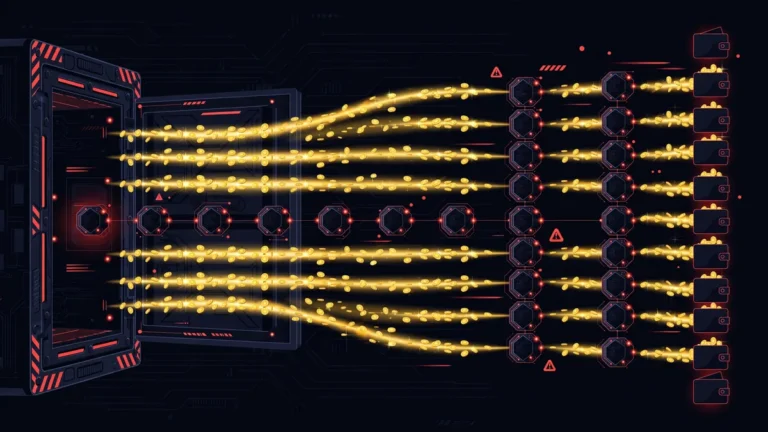
Depending on the charter contract, the shipowner or the charterer pays the additional premium. In its March example of a very large crude carrier chartered by American interests, Lloyd’s List said a $10 million to $14 million premium would fall to the charterer’s rather than the owner’s account. Cargo interests pay separately again: Paul Bradshaw of Emirates National Oil Company told Reuters on September 9, 2026, that cargo insurance had reached “anywhere up to five, six percent” of cargo value, which he said could add about $10 million on cargo insurance and put total transit insurance costs at $10 million to $20 million.
For the parallel world of tankers that move sanctioned oil outside mainstream commercial routes, see WarBrief’s shadow-fleet explainer. Carriers also pass costs on as surcharges, and a surcharge is not the same thing as insurance. Hapag-Lloyd, one of the world’s largest container carriers, imposed a war risk surcharge of $3,500 per container on affected routes from March 2, 2026, according to trade guides. Paying that surcharge compensates the carrier for its elevated costs; it does not insure the cargo. If cargo is damaged or lost because of a war event, the surcharge gives the shipper no claim rights against the carrier and no insurance payout. Shippers who want cargo cover must buy it separately, and that distinction is where smaller importers most often get caught out.
What the Hormuz surcharge means for US/UK/EU readers
For readers in the United States, the United Kingdom and the European Union, the surcharge reaches the economy through energy and freight rather than through any insurance bill they see directly. In 2024, oil moving through Hormuz averaged about 20 million barrels a day, roughly 20% of world oil consumption, according to the US Energy Information Administration, and about 84% of the crude and condensate moving through the strait went to Asia, so the first price effect lands in Asian refining and shipping before it reaches European and American fuel markets. Brent crude’s spot price was $126.55 a barrel on October 14, 2026, up from $71.32 on February 27, according to EIA data compiled in trade reporting, and the insurance surcharge is one of several costs layered into that price alongside freight, risk and rerouting.
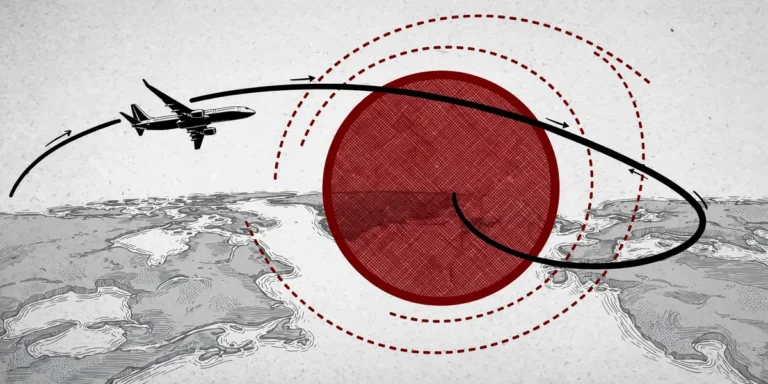
Spread across a full very large crude carrier cargo of about 2 million barrels, a $6 million to $10 million premium adds about $3 to $5 per barrel by simple arithmetic, against about 12.5 cents at the pre-war $250,000 premium. That is not a measure of what drivers pay at the pump, because refining, other shipping costs and market prices all come in between, but it shows why a surcharge that looks like an insurer’s problem becomes a household cost. Containerised goods feel it differently: a war risk surcharge per container, higher freight rates and longer routes around danger zones add days and dollars to durable goods, consumer electronics, some apparel and business inputs that move by container, and those increases eventually show up in inflation data and in a handful of cents per unit on many goods. Travel is affected at one remove: aviation war risk premiums also rose sharply in 2026, with Lockton reporting increases of 50% to 500% for airlines operating across Gulf and West Asian airspace, feeding into route suspensions, diversions and higher fares on Gulf transit hubs, as explained in WarBrief’s account of how airlines reroute around war zones. WarBrief’s Hormuz shipping coverage has tracked how designated routes and rising war-risk costs are reshaping transits in the same period.
The comparison with the Red Sea shows how unusual Hormuz pricing has become. After Houthi attacks began in November 2023, Red Sea premiums rose to 0.5% to 0.7% of a ship’s value by December 18, 2023, up from 0.07% in early December, Reuters reported, and reached about 1% in January 2024, with Marsh putting premiums as high as 2% for a single transit in September 2024. Hormuz quotes in 2026 have repeatedly passed those levels. The 2019 precedent points the same way: after tankers were attacked near Fujairah in May 2019 and in the Gulf of Oman on June 13, 2019, war-risk premiums for supertankers going to the Persian Gulf rose to at least $185,000 per trip, up from $50,000 after the May attacks, Bloomberg reported, and the Joint War Committee had listed the entire Persian Gulf after the May incidents. The market has seen this pattern before; the 2026 version is larger, faster and still unresolved.
What to watch next in Hormuz shipping insurance
Three signals will tell readers whether the surcharge is easing or entrenching. First, the Joint War Committee’s listed areas: removal, even partial, would be the clearest sign underwriters consider the water safe enough to reprice, and the committee has said it wants sustained incident-free passage and verified mine clearance before it acts. Second, transit counts: the UK Maritime Trade Operations agency counted 254 transits in the week to October 16 and said traffic was about 70% below pre-war levels, so a sustained recovery in transits would matter more than any single quiet week. Third, the split between hull war and cargo war quotes: if cargo rates fall while hull rates stay high, the market is saying ships are safer than cargoes, or the reverse, and shippers should read the two together rather than trusting either alone.
WarBrief’s conflict-zones hub tracks the Hormuz shipping picture alongside the wider war. Readers should also watch for government backstops and mandated cover schemes, which change the market without changing the risk. When private cover becomes too expensive or too conditional, states sometimes step in as insurer of last resort or impose their own approved insurance, and either move shifts the price signal that the surcharge is supposed to send. Until one of those signals moves decisively, the honest description of Hormuz shipping is not that the strait is closed or open, but that it is open at a price most voyages cannot justify, and that price is set, voyage by voyage, in London.
This article explains how marine war-risk cover works. It is educational only and is not insurance, investment or legal advice.
Frequently asked questions
What is war risk insurance?
It is separate cover for losses caused by war, mines, terrorism, seizure and similar perils, which standard hull and machinery insurance excludes. Owners buy an annual hull war policy and pay an additional premium each time a ship enters a listed high-risk area.
How much does war risk insurance cost for a Hormuz transit?
There is no single price. Before the war that began on February 28, 2026, cover typically cost 0.15% to 0.25% of hull value; brokers quoted 6% to 10% in early October 2026, according to the Financial Times. On a $100 million tanker that is roughly $250,000 before the war against $6 million to $10 million at early-October quotes.
Who pays the war risk surcharge?
Depending on the charter contract, the shipowner or the charterer pays the ship’s additional premium. Cargo owners pay separately for cargo-war cover, and container shippers may also pay a carrier war risk surcharge, which does not itself insure their cargo.
Does the Joint War Committee set war risk prices?
No. The committee, made up of Lloyd’s Market Association and International Underwriting Association underwriters, publishes listed areas where ships must notify insurers. Each underwriter then sets its own additional premium.
Why do premiums stay high even when no ship has been hit recently?
Because the listing stays in force until underwriters see sustained incident-free passage and, where mines are suspected, verified clearance, and because policies can be cancelled or repriced at short notice. The surcharge prices the risk of the next transit, not only the last incident.
Sources
- Lockton: Marine, Aviation War Risk Premiums Rise As Insurers Reassess Exposure Amid Iran War
- The Boston Report: Hormuz War-Risk Insurance Rates, 2026 Costs Explained (compiling Lloyd’s List, Reuters, Bloomberg, S&P Global and Financial Times broker quotes)
- NATO Association of Canada: The Economics of Maritime Risk and its Impact on Prices
- GetTransport: Cargo War Risk Insurance 2026, A B2B Shipper’s Complete Guide
- WarBrief Live: Mines in the Strait of Hormuz, Why Tankers Are Catching Fire Again
Discussion 0
Share analysis, corrections, or context. Be civil — comments are moderated.