
WarBrief Live | November 2, 2026 | Breaking Analysis
Iran warned on November 1 that any renewed war with the United States would last longer than the previous round of fighting, even as Iranian negotiators spent a third consecutive day in Doha talking to Qatari mediators about a deal that could reopen the Strait of Hormuz within two days. The warning and the talks are happening at the same time, and that tension is the story: Tehran is signalling it is ready for diplomacy, while also insisting it will not accept a settlement on Washington’s terms alone.
What investigators and officials have confirmed so far is narrower than the rhetoric. What is confirmed is that Iran’s military spokesmen issued the longer-war warning, that President Donald Trump named one or two remaining Iranian sites he said could be struck quickly, that a letter from Vice President JD Vance reached Iran’s security chief, and that the Doha discussions had not reached a final conclusion. What remains unverified is whether those talks will produce an agreement before the United States midterm elections, and whether either side will move first after them.
Key Takeaways
- Iran’s army spokesman said a future war “could last longer than previous conflict” and that Trump would not dictate how it ends.
- The Revolutionary Guards spokesman said a conflict with America would have “no geographical limitations”.
- Iranian negotiators were in Doha for a third consecutive day on November 1, discussing a proposal to reopen Hormuz within two days of a deal.
- Foreign Minister Abbas Araghchi said no final conclusion had been reached, and that Iran remains prepared for both defence and diplomacy.
- Iran’s security chief Mohsen Rezaei disclosed a letter from Vice President JD Vance seeking to revive talks, but said he had yet to respond.
What did Iran warn on November 1?
Army spokesman Mohammad Akraminia, quoted by Iranian state television, said: “A potential future war could last longer than previous conflict, and the American president would not be in a position to dictate the timing or the conditions of its conclusion.” The warning was reported by Dawn and by AFP via the Malay Mail, giving the core quote two independent reputable sources.
Revolutionary Guards spokesman Hossein Mohebbi echoed the warning on November 1, also via state television. “In a conflict with America, there are no geographical limitations; a vast theatre has been defined for inflicting damage upon the enemy,” he said. Mohebbi was echoing a written message issued a day earlier by Iran’s supreme leader, Ayatollah Mojtaba Khamenei, who had told commanders that any threat must be met with an immediate, impactful and geographically unrestricted response, according to the Manila Times, reporting AFP.
The language matters because it is deliberately broader than a threat to retaliate inside Iran. Tehran is telling Washington, and the region, that it does not see a renewed war as confined to Iranian territory or to a short exchange. That is a warning, not a confirmed military plan: no verified order of battle, target list or timetable has been published alongside it, and WarBrief is not treating the rhetoric as evidence of an imminent attack.
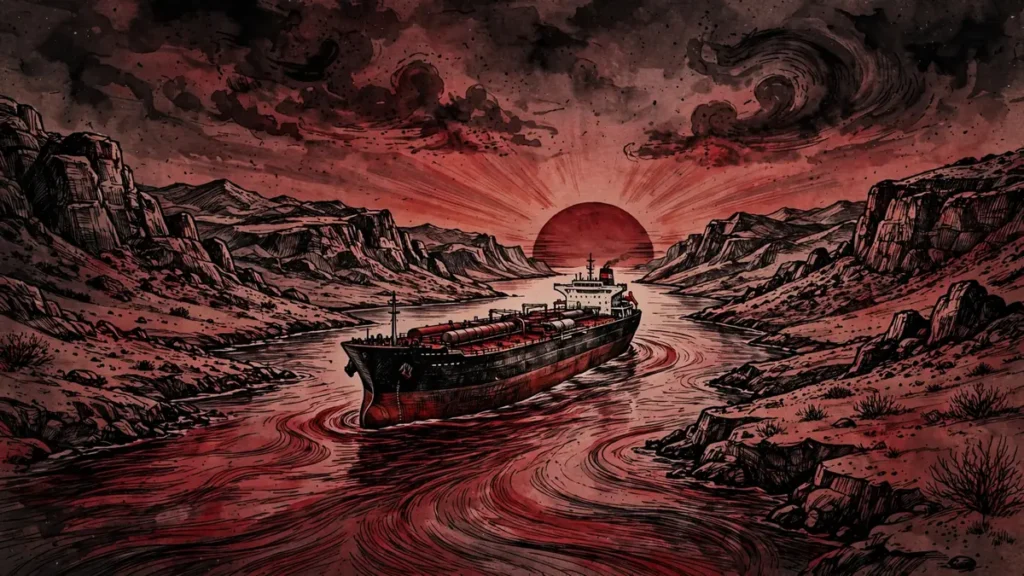
What did Trump say about Pickaxe Mountain?
Trump’s remarks came first in the sequence reported over the weekend. He told reporters at his Florida residence that the United States had already decimated Iran’s military and nuclear programme, but that “we still have to take care of, I would say one or two sites, but we can do that in 10 minutes.” He named Pickaxe Mountain, describing it as a suspected underground nuclear complex, and added: “You probably could look at Pickaxe Mountain, and you have to take care of that. We can do that all very quickly.”
Trump also said the United States was not in a hurry to take offensive action. Secretary of State Marco Rubio, speaking on November 1, said: “If there is a diplomatic solution, we would be open to it,” while adding that Trump had not made a decision on any fresh strikes and that the United States could achieve military objectives if it chose to. That combination — a named remaining target, a claim of speed, and an explicit statement that no decision has been taken — is why the weekend’s statements should be read as pressure and signalling, not as an announcement of an operation.
US media reported that Trump had held a call with Israeli Prime Minister Benjamin Netanyahu on November 1 over whether and when to ramp up combat operations against Iran. Axios, cited by AFP, quoted one US and one Israeli official saying the two leaders discussed the state of negotiations, with Netanyahu pressing for strikes immediately after the US midterm elections and Trump eager to let negotiations play out. Trump confirmed he had discussed Iran with Netanyahu but would not elaborate, and the call was described by the Israeli source as “tough” and by the US source as “direct”. Those characterisations are reported, not confirmed by an official transcript, and they should be read as such.
What happened in Doha on the third day?
Iranian negotiators were in Doha on November 1 for a third consecutive day of talks with Qatari mediators, an official briefed on the discussions told Reuters, as reported by Dawn. The talks are aimed at a deal to end the war that began on February 28 with US-Israeli strikes on Iran, to which Tehran retaliated with missile and drone attacks across the region, with Iran-aligned armed groups joining the fighting in Lebanon and Yemen.
Foreign Minister Abbas Araghchi, speaking to state media, said discussions on a “two-day proposal” were continuing, but that no final conclusion had been reached. Qatari broadcaster Al Jazeera quoted Araghchi as saying in an interview on October 31 that Iranian and Qatari negotiators had developed a proposal to reopen the Strait of Hormuz within two days of a potential agreement with Washington. Araghchi added: “We are doing our best in this process, and we hope that there is rationality on the other side so that they prioritise diplomacy over other paths.”
That two-day figure is a proposal under discussion, not an agreed timetable. It is also conditional in Tehran’s telling: Rezaei said Iran had previously told Washington that unless its conditions were met, “neither would the Strait of Hormuz be reopened nor would there be any negotiations”. Those conditions, as reported by Dawn and AFP, include unfreezing Iranian assets abroad, ending the months-long US naval blockade of Iranian ports, lifting long-standing sanctions and ending the war on all fronts. Araghchi separately told Al Jazeera, via the official IRNA news agency, that there were currently no plans for meetings with US officials, and that Iran’s conditions were clear while consultations among mediators continued.
What does the Vance letter change?
Iran’s security chief Mohsen Rezaei disclosed on November 1 that he had received a letter from Vice President JD Vance seeking to revive talks. “I read the letter,” Rezaei said in a video broadcast on Iranian television. “I haven’t yet responded. Their tone has completely changed,” he added, describing that as “a good sign” without going into more detail.
The letter matters for two reasons, and neither should be overstated. First, it is a direct channel: Vance wrote to Rezaei, head of Iran’s Supreme National Security Council, rather than relying only on Qatari and Pakistani mediators. Second, Tehran is publicly framing the tone as improved while withholding a reply, which keeps pressure on Washington to answer Iran’s conditions before any direct meeting. Qatar and Pakistan have stepped up mediation efforts, but the talks have yet to produce a lasting agreement, and no direct US-Iran meeting has been confirmed.
Rezaei also insisted Iran would continue to blockade the Strait of Hormuz until its conditions, including releasing frozen assets, were met. “We want the war to end in such a way that no one dares to attack Iran anymore,” he said. That links the strait directly to the negotiation: for Tehran, reopening Hormuz is not a goodwill gesture to be given in advance, but part of a sequenced deal. For Washington, the strait is the leverage that makes delay costly for global energy markets.
By the numbers: what is confirmed and what is only reported
| Metric | Figure | Source |
|---|---|---|
| War began | February 28, 2026, with US-Israeli strikes on Iran | Dawn; AFP via Malay Mail (CONFIRMED) |
| Doha talks | Third consecutive day on November 1 | Reuters via Dawn (CONFIRMED) |
| Hormuz reopening proposal | Within two days of a potential agreement | Araghchi via Al Jazeera (REPORTED proposal, no final conclusion) |
| Remaining sites named by Trump | One or two sites, including Pickaxe Mountain | Trump remarks via AFP (CONFIRMED as stated) |
| Trump’s claimed strike time | 10 minutes | Trump remarks via AFP (CONFIRMED as stated, not as a verified capability) |
| Strait’s share of global oil | Around one-fifth of global oil consumption normally passes through Hormuz | Manila Times / AFP (REPORTED context figure) |
Caveat: figures marked CONFIRMED appear in at least two reputable sources or as directly quoted remarks; figures marked REPORTED rest on a single source or on a proposal under discussion and should not be treated as agreed facts.
Why does the midterm calendar matter?
The calendar is not background detail; it is shaping both sides’ timing. Trump had previously warned an attack could come after the US midterm elections this week, and the reported Trump-Netanyahu discussion turned in part on whether strikes should follow Tuesday’s elections. Netanyahu, coming off a general election in Israel, has spoken of a “historic, one-time opportunity” to topple the Iranian government, according to AFP reporting. Israel has voted but has yet to form a new government, which adds a second electoral timetable to the same decision.
That is also why the energy angle is politically sensitive in Washington. The Manila Times, reporting AFP, notes that the blockade has caused a spike in global energy prices, making the war unpopular among the US public ahead of the midterm elections on Tuesday, November 3. WarBrief is not forecasting an election outcome or a market move; the point is narrower and verified: both governments are making public statements with an election week in view, and that timing affects how their warnings should be interpreted.
What Iran’s warning means for US, UK and EU readers
For readers in the United States, the United Kingdom and the European Union, the immediate exposure is not a battlefield decision but energy, shipping and travel risk through a chokepoint that normally carries around one-fifth of global oil consumption. A longer war, or even a longer blockade, would keep pressure on fuel and shipping costs that have already spiked during the Hormuz closure, and it would keep Gulf air routes and maritime insurance under strain. None of that is a prediction: it is the mechanism Tehran is invoking when it links Hormuz reopening to sanctions relief and an end to the naval blockade.
For European readers specifically, the Gulf dimension runs through the United Arab Emirates, whose diplomatic adviser Anwar Gargash said on November 1 that the UAE hoped for a diplomatic breakthrough but was preparing for the worst. “We’re hoping that there is a diplomatic breakthrough,” Gargash told a conference in Manama. “It is not in the interest of the region to go through another round… But I think we’re also, as we’ve shown before, braced for the worst.” That is the regional posture in one sentence: hope for a deal, planning for a failure of talks.
For American readers, the decision point to watch is not the rhetoric but the reply to the Vance letter and the response to the two-day Hormuz proposal. If Washington answers Iran’s conditions — assets, blockade, sanctions, an end to the war on all fronts — the Doha track has something to work with. If it does not, Tehran’s stated position is that neither Hormuz nor negotiations move. That binary is Tehran’s framing, not a verified US position, and Rubio’s statement that the US would be open to a diplomatic solution leaves room on the American side that the coming days will test.
Different perspectives on the November 1 warnings
Tehran’s perspective, as stated by its own officials, is that a renewed war would be longer, wider and not under American control, and that Iran is prepared for both defence and diplomacy. That dual message is aimed at two audiences: Washington, to raise the perceived cost of striking, and domestic and regional audiences, to present negotiation as strength rather than concession. Araghchi’s warning on X that there would no longer be any “red lines” fits the same pattern.
Washington’s perspective, as stated by Trump and Rubio, is that Iran’s military and nuclear programme have already been decimated, that one or two sites remain, and that diplomacy remains open while no strike decision has been taken. That framing presents a short, decisive option alongside a diplomatic one, and it leaves the timing — before or after the midterms — deliberately ambiguous.
The Gulf perspective, voiced by the UAE, is the most cautious of the three: a breakthrough is hoped for, but the region is braced for another round. That caution reflects the geography. A wider war, in Tehran’s own words, would not be confined, and the states between Iran and the open sea would bear the shipping, energy and security consequences first.
What to watch next in Doha and after the midterms
First, whether Rezaei replies to the Vance letter, and whether that reply leads to a direct meeting or remains a mediated exchange. Second, whether Araghchi’s two-day Hormuz proposal moves from discussion to a sequenced agreement, and what Washington offers in return on assets, the naval blockade and sanctions. Third, whether the Trump-Netanyahu discussion hardens into a post-midterm timetable or whether the diplomatic track, with Qatar and Pakistan mediating, produces a pause that outlasts election week.
Fourth, watch the strait itself. The separate tanker incidents reported around Hormuz in recent days — covered in WarBrief’s forthcoming shipping assessment — are the physical counterpart to the diplomatic language: as long as vessels are being hit or halted, the cost of delay rises for everyone, including the negotiators. A deal that reopens Hormuz within two days would be measurable within days of agreement; a failure to agree would be measurable in the same way.
WarBrief will update this analysis if a reply to the Vance letter, a concluded Doha agreement, or a confirmed change in the Hormuz position is reported. Until then, the verified position is the one stated at the top of this article: a longer-war warning, a third day of talks, a proposal without a final conclusion, and a letter awaiting a response.
Frequently asked questions
What did Iran warn on November 1, 2026?
Iran warned that any renewed war with the United States could last longer than the previous round of fighting, and that Trump would not dictate its timing or conditions. The Revolutionary Guards added that a conflict would have no geographical limitations.
What is happening in Doha?
Iranian negotiators spent a third consecutive day in Doha on November 1 talking to Qatari mediators about a deal to end the war. A proposal to reopen the Strait of Hormuz within two days of an agreement was discussed, but Foreign Minister Araghchi said no final conclusion had been reached.
What is the Vance letter?
US Vice President JD Vance wrote to Iran’s security chief Mohsen Rezaei seeking to revive talks. Rezaei confirmed receiving it, described the tone as completely changed and a good sign, and said he had yet to respond.
What did Trump say about Pickaxe Mountain?
Trump said the United States still had one or two Iranian sites to “take care of”, named Pickaxe Mountain as a suspected underground nuclear complex, and said it could be done in 10 minutes, while also saying he was not in a hurry and had not made a decision on fresh strikes.
Why does Hormuz matter for US, UK and EU readers?
The Strait of Hormuz normally carries around one-fifth of global oil consumption, so a continued blockade or a longer war would keep pressure on energy prices, shipping costs and Gulf travel routes, even though no specific price outcome can be predicted from the talks alone.
Sources
- Dawn: Iran warns of prolonged war amid Trump’s threats
- Malay Mail (AFP): Tehran says any renewed war with US would be longer and costlier
- Manila Times (AFP): Iran warns US, Israel against new attacks after Trump, Netanyahu threats
- CGTN: Talks to end US-Iran war continue as military tensions rise
Read next: Conflict Zones hub | Khamenei Orders Unrestricted Response as Doha Talks Open | Khamenei’s Order and the Doha Track: Reading Iran’s Next Round After the Midterms | Intelligence Reports hub

Discussion 0
Share analysis, corrections, or context. Be civil — comments are moderated.