
WarBrief Live | November 1, 2026 | Breaking Analysis
Iran’s Supreme Leader Mojtaba Khamenei has ordered the armed forces to answer any new United States or Israeli attack with an immediate and geographically unrestricted response, even as Iranian negotiators met Qatari mediators in Doha to discuss a way out of the Gulf war. The order, issued on October 31, and the talks running in parallel, frame the most dangerous week of the conflict so far: the United States holds midterm elections on November 3, and regional governments expect Washington could restart strikes once voting ends.
At a glance: 12+ hours of Tehran talks on October 30 | 7-day Qatari trust-building plan | 2 days: Araghchi’s accelerated Hormuz reopening proposal | November 3: US midterm elections
Key Takeaways
- Khamenei ordered an “immediate, impactful, and geographically unrestricted” response to any new attack, and told commanders to widen Iran’s target list to cover American and Israeli assets of every kind.
- Iranian negotiators held talks with Qatari mediators in Doha on October 31, after more than 12 hours of discussions in Tehran the day before, in a diplomatic track coordinated with Washington.
- US Secretary of State Marco Rubio said on October 31 that President Donald Trump has not decided on new strikes and prefers a diplomatic solution, while stressing that the United States retains the military capability to act.
- The competing seven-day plans – Qatar’s trust-building proposal and Iran’s own Hormuz reopening plan – remain far apart, and Tehran has called the Qatari version unsatisfactory.
- What is confirmed and what is only reported matters this weekend: alleged US strikes near Qeshm Island and Jasak have no official confirmation, and must not be treated as fact.
What did Khamenei actually order?
On October 31, Khamenei issued a statement on his official Telegram account ordering the armed forces to be prepared to respond to any attacks, Reuters reported. The wording was unusually sweeping: “Any level or type of threat must be met with an immediate, impactful, and geographically unrestricted response.” The statement followed a meeting with the heads of the Islamic Revolutionary Guard Corps, the army and the general staff of the armed forces, Bloomberg reported.
The order had two operational parts. First, Khamenei directed the military to update its lists of potential targets to bring “all types of material and immaterial assets” of the United States and Israel within the armed forces’ reach. Second, senior commanders reported high readiness along the Gulf coast, in and around the Strait of Hormuz and the Gulf of Oman, and on Iran’s northwestern and southeastern borders. Iran’s military later announced it was taking steps to improve its readiness.
The chief of the general staff, Ali Abdollahi, added a further warning after the meeting: whenever signs of hostile action are confirmed, the armed forces “will not wait for it to begin” before choosing the time and manner of their response, according to the state-run Islamic Republic News Agency. Read literally, that is a doctrine of pre-emption, not only retaliation – and it is one reason Gulf capitals are treating this weekend’s language as more than rhetoric.
Context matters here. Khamenei has not appeared in public since replacing his father, who was slain at the outset of the war the United States and Israel launched in February 2026. A written order carried on his official channel is therefore the primary public evidence of his intentions, and regional analysts will parse its exact words rather than any appearance or speech.
How the Doha talks unfolded: a timeline
The diplomacy moved in three steps over three days, all of it mediated by Qatar and coordinated with Washington, according to a source briefed on the negotiations who spoke to Reuters on condition of anonymity.
- October 30: Iranian and Qatari envoys held more than 12 hours of discussions in Tehran.
- October 31: Iranian negotiators met Qatari mediators in Doha to discuss paths out of the war in the Gulf. No direct US-Iran talks were planned at that stage, but the talks were being coordinated in regular contacts with Washington.
- October 31, Atlanta: Rubio, hosting foreign ministers of the G20 major economies, said “multiple talks” with Iran were under way: “Talks have actually never stopped.” He declined to set a timeframe for the Qatar track.
Two competing seven-day plans sit at the centre of the negotiation. About a week ago, the Qataris brought Tehran a proposal for a seven-day plan under which the United States and Iran would take daily steps to build trust ahead of broader peace talks. A senior Iranian official told Reuters on October 30 that this proposal was not deemed satisfactory by Tehran.
Iran has been pushing its own seven-day plan since September, so far rejected by Trump. Under it, Washington would lift a blockade of Iranian ports, unfreeze assets and approve an Iranian-backed route through the Strait of Hormuz, after which the contested strait would be reopened. Foreign Minister Abbas Araghchi told Al Jazeera on October 31 that Iran was willing to accelerate its proposal so the strait could reopen within two days, and listed Tehran’s conditions: lifting the sanctions imposed following the Islamabad memorandum, reducing US forces in the region, restoring oil waivers and releasing all frozen funds, including those held in Qatar.

What is confirmed, and what is only reported?
This is a weekend when the difference between a verified fact and a circulating claim carries real weight. The table below separates the two, and the article keeps that separation throughout.
| Metric | Figure | Source |
|---|---|---|
| Tehran talks, October 30 | 12+ hours | Reuters (CONFIRMED) |
| Qatari trust-building plan | 7 days | Reuters (CONFIRMED) |
| Araghchi’s accelerated Hormuz reopening | Within 2 days | Al Jazeera via Business Times (CONFIRMED as stated) |
| US midterm elections | November 3, 2026 | Reuters / The Hindu (CONFIRMED) |
| Fishermen injured in alleged drone attack south of Qeshm | 2 | Fars / IRNA (REPORTED) |
| US strikes near Qeshm Island and Jasak port | No official confirmation | Axios (REPORTED only) |
Caveat: figures marked REPORTED rest on single or secondary sources and have no official confirmation. Confirmed figures are corroborated by at least two sources or stated directly by the official concerned.
On the reported side, Axios reported that the United States has been carrying out “self-defense strikes” against Iranian missile launch sites across southern Iran over the past two weeks, and that unofficial Iranian sources reported two targeted American strikes overnight near Qeshm Island and the Jasak port area, aimed at launchers threatening vessels in the Strait of Hormuz. There was no official confirmation. Separately, Iran’s Fars News Agency reported that at least two Iranian fishermen were injured in an “enemy” drone attack on two fishing boats south of Qeshm Island. WarBrief treats both items as reported, not confirmed, and readers should do the same.
On the confirmed side, the Khamenei statement itself, the Doha talks, Rubio’s remarks and Araghchi’s interview are all directly documented. The administration split inside Washington is also reported rather than officially confirmed: according to Axios, Secretary of War Pete Hegseth and Secretary of State Marco Rubio are highly skeptical that a nuclear agreement can be reached with Iran, while Vice President JD Vance, envoy Steve Witkoff and Jared Kushner favour negotiations – and Trump could lean toward a major operation if Republicans “lose badly” in the November 3 midterms.
Why does the November 3 midterm matter?
The election calendar is doing as much work as the diplomacy. Trump has held off on strikes on Iran in recent weeks ahead of midterm elections that will determine whether his Republican Party retains its thin majorities in both houses of Congress, Reuters noted. Countries in the region have been anticipating that he could restart attacks once voting is over, and Iran has repeatedly said it would respond to any new attacks by striking at US and Israeli targets in neighbouring countries.
The Wall Street Journal reported this week that the United States has warned Gulf countries to prepare for renewed strikes against Iran after Tuesday’s midterm elections, and Fox reported that US Central Command briefed Trump on potential military options on October 29. Overnight, Trump himself addressed the possibility of a further strike, claiming the United States is capable of hitting what remains of the Iranian nuclear programme “in just ten minutes”, The Jerusalem Post reported, citing “one or two sites” left to be dealt with, including Pickaxe Mountain. Hours earlier he had spoken by phone with Israeli Prime Minister Benjamin Netanyahu, after discussing options for resuming military operations with senior commanders.
The other new diplomatic thread is the letter Vice President JD Vance wrote earlier this week to Iran’s security chief Mohsen Rezaei. The New York Times and Wall Street Journal described it as an initiative to see whether talks could restart. Trump played it down, saying he approved it only to discuss letting more medical supplies into Iran. Araghchi said Tehran was studying the letter and called Washington’s outreach a “positive step”, while Rezaei claimed the letter showed the United States had “completely shifted tone”. The gap between those two readings – a humanitarian opening versus a diplomatic breakthrough – is itself a measure of how far apart the two sides remain.
Rezaei also disclosed that Tehran is debating whether to lift its longstanding ban on nuclear weapons should hostilities resume, while stressing that no such decision has been taken. He added that there could be no talks on Iran’s nuclear programme unless Washington accepted Iran’s demands. That statement is a warning, not a policy change, and this article reports it as such: debate is not decision.
What the Khamenei order means for US/UK/EU readers
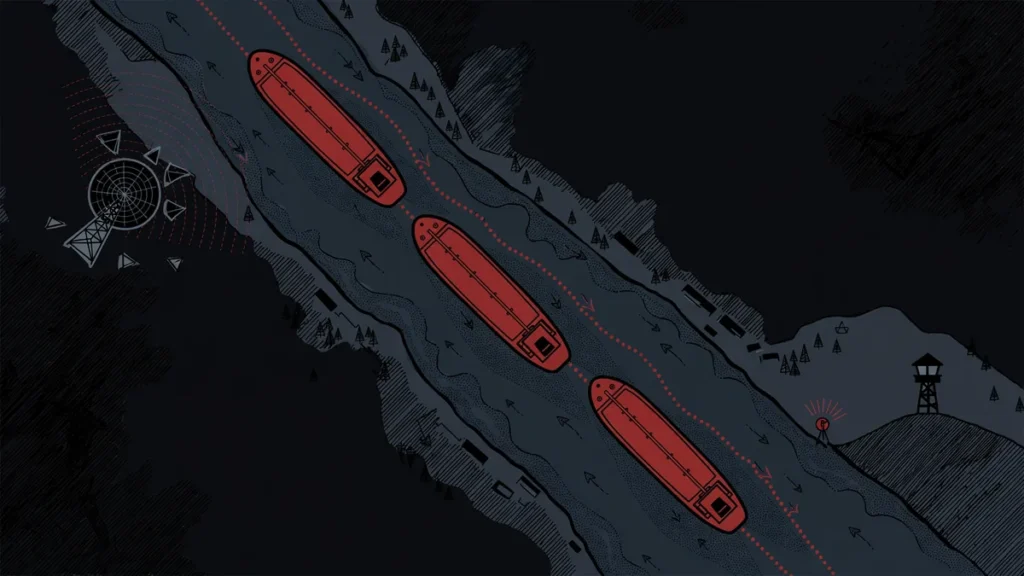
For readers in the United States, Britain and Europe, the immediate exposure runs through energy, shipping and travel rather than any direct military threat. The Strait of Hormuz is the chokepoint through which a large share of the world’s seaborne oil moves, and every escalation in this war has tightened shipping, insurance and fuel costs. Iran’s own proposal makes the linkage explicit: reopening the strait is conditional, in Tehran’s telling, on sanctions relief and the release of frozen funds.
Three practical effects are worth watching this week. First, fuel and heating costs: European gas markets have already been strained by the winter price shock, and a renewed closure scare around Hormuz would feed directly into pump and heating prices. Second, travel and airspace: Gulf routings and regional airspace advisories shift quickly when strikes resume, and travellers with Gulf or South Asia itineraries should check airline advisories before departure. Third, markets: defence and energy stocks have moved on each round of this war, and the post-midterm window is the moment traders are pricing for a decision.
None of this is a prediction that strikes will resume. Rubio’s message on October 31 was deliberately dual: Trump prefers diplomacy, and the United States retains the capability to act. The European position, voiced by EU foreign policy chief Kaja Kallas on October 29, is unambiguous: a diplomatic solution is the only outcome that benefits anyone, and escalation benefits no one. Readers should treat any claim that a decision has already been taken – in either direction – as unconfirmed until an official statement says otherwise.
How Washington, Tehran and Europe read the same weekend
Washington’s public line is split by design: diplomacy is preferred, force is retained, and no decision has been announced. Rubio’s refusal to characterise progress or set a timeframe keeps both tracks alive and avoids boxing the president in before the midterms. The reported internal division – sceptics versus negotiators – suggests the post-election debate is genuinely open, not choreographed.
Tehran’s line is deterrence paired with an open door. The Khamenei order signals that retaliation would be wider than the last round, while Araghchi’s Hormuz offer and the “positive step” language on the Vance letter keep a negotiated exit visible. The nuclear-ban debate, aired publicly by Rezaei, adds pressure without committing Tehran to anything – a classic coercive signal.
Europe’s line is the most consistent of the three: de-escalation first, with no appetite for a wider regional war that would hit energy supplies and migration routes alike. Gulf states, meanwhile, sit in the middle – hosting the mediation, exposed to retaliation, and reportedly warned to prepare for strikes after the election. Qatar’s shuttle diplomacy is the thread holding all three readings together, and its seven-day plan is the only proposal on the table that both sides are still, at least nominally, discussing.
What to watch next after the midterms
The first test comes on November 3 itself: the scale of any Republican losses, and whether Trump’s post-election language tilts toward the negotiators or the sceptics in his administration. The second test is the Doha track’s next session: whether the Qatari seven-day plan is revised into something Tehran can accept, or whether Iran’s own plan – blockade lifted, assets unfrozen, strait reopened – gains traction as the basis for talks.
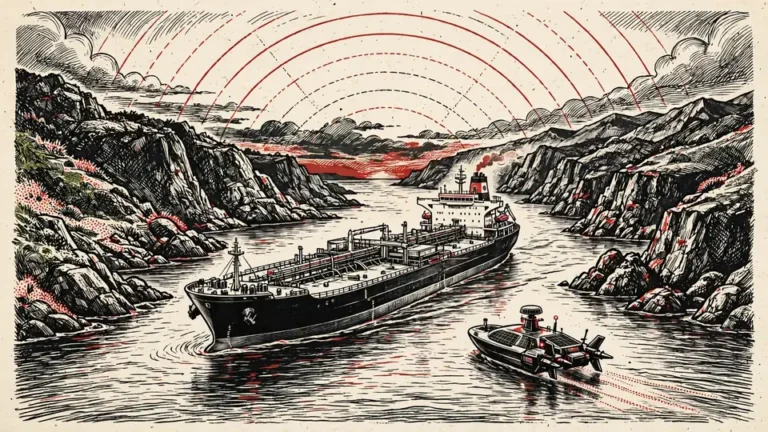
The third test is on the water. Any confirmed strike near Qeshm or Jasak, any attack on commercial shipping, or any Iranian move against regional energy infrastructure would collapse the diplomatic window fast. Conversely, a quiet week after the midterms, with the Doha track still running, would suggest the election was a pause rather than a prelude.
WarBrief will update this analysis as the Doha track develops and as the post-midterm picture clarifies. For the October 29 round of strikes that set this weekend in motion, see our earlier analysis, and for the warning that strikes could follow the midterms, see our report on the US message to Gulf states. Follow the wider war in our conflict zones hub.
Frequently asked questions
What did Khamenei order on October 31?
He ordered Iran’s armed forces to be prepared to respond to any attack with an “immediate, impactful, and geographically unrestricted response”, and directed commanders to update the target list to include American and Israeli assets of every kind, according to his statement on his official Telegram account as reported by Reuters and Bloomberg.
What are the Doha talks trying to achieve?
Iranian negotiators met Qatari mediators in Doha on October 31, after more than 12 hours of talks in Tehran on October 30, to discuss paths out of the Gulf war. Qatar has proposed a seven-day trust-building plan; Iran has its own seven-day plan centred on lifting the port blockade, unfreezing assets and reopening the Strait of Hormuz. The two plans remain far apart.
Has the United States decided to strike Iran again?
No. Secretary of State Marco Rubio said on October 31 that President Donald Trump has not decided on new strikes and prefers a diplomatic solution, while noting the United States retains the military capability to act. Reports that strikes could follow the November 3 midterms are attributed to US officials and media reporting, not to an official decision.
What is confirmed and what is only reported this weekend?
Confirmed: the Khamenei statement, the Doha talks, Rubio’s remarks, Araghchi’s Hormuz proposal and the Vance letter. Reported only: alleged US strikes near Qeshm Island and Jasak, which have no official confirmation, and an alleged drone attack injuring two fishermen south of Qeshm, reported by Fars and IRNA.
What happens after the US midterm elections?
Regional governments expect the post-election period to be the decision window: the Wall Street Journal reported that Gulf states were warned to prepare for renewed strikes after November 3, while Axios reported Trump could lean toward a major operation if Republicans lose badly. Neither outcome is confirmed, and the Doha talks continue in the meantime.
Sources
- Reuters via GMA News: Iranian envoys meet Qatari mediators as threat looms of US strikes after midterms
- Bloomberg via The Business Times: Iran threatens wider US strikes even as talks make progress
- The Hindu: Rubio says US yet to decide on new Iran strikes
- The Jerusalem Post: Trump says US capable of hitting Iran in ten minutes after Netanyahu meeting
- Israel Realtime (Axios reporting): US officials divided on Iran talks; Iran warns of wider war
- The Express Tribune (Reuters): Diplomacy in overdrive as Iran-US war fears mount

Discussion 0
Share analysis, corrections, or context. Be civil — comments are moderated.