
WarBrief Live | November 1, 2026 | Analysis
Last updated: November 1, 2026. We update this guide when major AI-military developments break.
The 2026 war between the United States, Israel, and Iran has become the first large-scale proving ground for AI in Middle Eastern combat — and the whole region is rearming around its lessons. From Israel’s new AI Division and laser interceptors to Gulf states buying Ukrainian counter-drone know-how, ai middle east war is no longer a futurist slogan: it is procurement policy. This article maps AI’s regional footprint — drones, missile defense, intelligence, surveillance, cyber, electronic warfare, and autonomy — while carefully separating what is confirmed from what is claimed. For the deep dive on AI-assisted targeting during Operation Epic Fury specifically, see our companion piece “AI Iran War: Drones, Intel and Cyber Warfare Explained”.
Key Takeaways
- Israel reorganized its military around AI in late 2025, creating a dedicated “Bina” AI Division, a Spectrum Division for electronic warfare, and an ICT Division for satellite warfare.
- Israel’s Iron Beam laser interceptor — with AI-assisted threat discrimination — is reported at initial operational capability in 2026, offering ~$2-per-shot defense against rockets and drones.
- Gulf states are pivoting hard: Saudi Arabia and the UAE are redirecting defense spending toward AI-enabled autonomous systems, with 220+ Ukrainian specialists deployed across the Gulf to transfer counter-drone expertise.
- The US authorized over $8.6 billion in emergency arms sales to Gulf states and Israel in May 2026 alone, including nearly $2 billion in counter-drone systems for Kuwait.
- Iran is struggling to rebuild its missile arsenal after Israeli and US strikes — but is publicly working to improve missile accuracy, range, and speed. Treat all sides’ capability claims with caution.
How is Israel using AI in the current conflict?
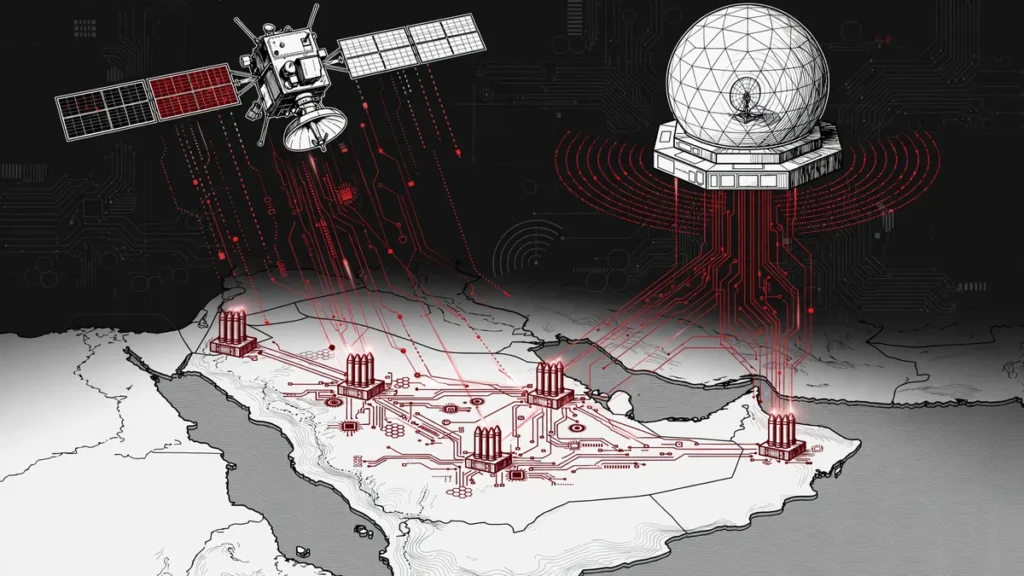
Israel has gone further than any regional military in institutionalizing AI. In December 2025, the IDF announced a sweeping reorganization: it shut down the Lotem technology unit and replaced it with a dedicated Artificial Intelligence Division — “Bina,” the Hebrew word for intelligence — alongside a Spectrum Division focused on communications and electronic warfare (with an explicit emphasis on threats from Iran, China, and Russia) and an ICT Division for satellite warfare. The AI Division absorbed the military’s computing and software units, consolidating development that had been scattered across the force, and aligned with Israel’s Project Nimbus cloud infrastructure.
The most visible fruit of that push is Iron Beam, the 100-kilowatt laser interceptor developed by Rafael. According to 2026 reporting, the system entered limited operational testing in September 2025 and reached initial operational capability in June 2026. Its economics are the point: where an Iron Dome Tamir interceptor costs tens of thousands of dollars, Iron Beam’s “ammunition” is electricity — about $2 per shot — with engagement ranges up to 7 kilometers. Its targeting relies on electro-optical sensors fused with AI algorithms reported to distinguish real threats from decoys within 0.8 seconds. These specifications come from secondary reporting and Rafael timelines, not independently verified combat data.
What is confirmed about AI targeting in the Iran war?
Here the line between confirmed and claimed matters most. What is confirmed: the US military employed the AI-powered Maven Smart System — a data-fusion platform synthesizing satellite reconnaissance, electronic surveillance, and drone feeds — during Operation Epic Fury, and reporting (including the Washington Post) described a dramatic compression of the targeting cycle, with the Pentagon striking on the order of 1,000 targets on the first day of the aerial campaign. The detailed reconstruction belongs to our Epic Fury deep dive; the regional point is that AI-assisted targeting turned the kill chain into a throughput problem, compressing the time available for human review — a development with profound implications for civilian protection and escalation control.
What is claimed but less verifiable: the full extent of AI’s role in battle management and logistics across the coalition. Both sides have incentives to exaggerate — the US and Israel to demonstrate technological dominance, Iran to project resilience. A useful discipline: when a capability is described only in a defense company’s marketing or a single official’s speech, treat it as a plan or a claim, not a fact.
How are Gulf states rearming with AI?
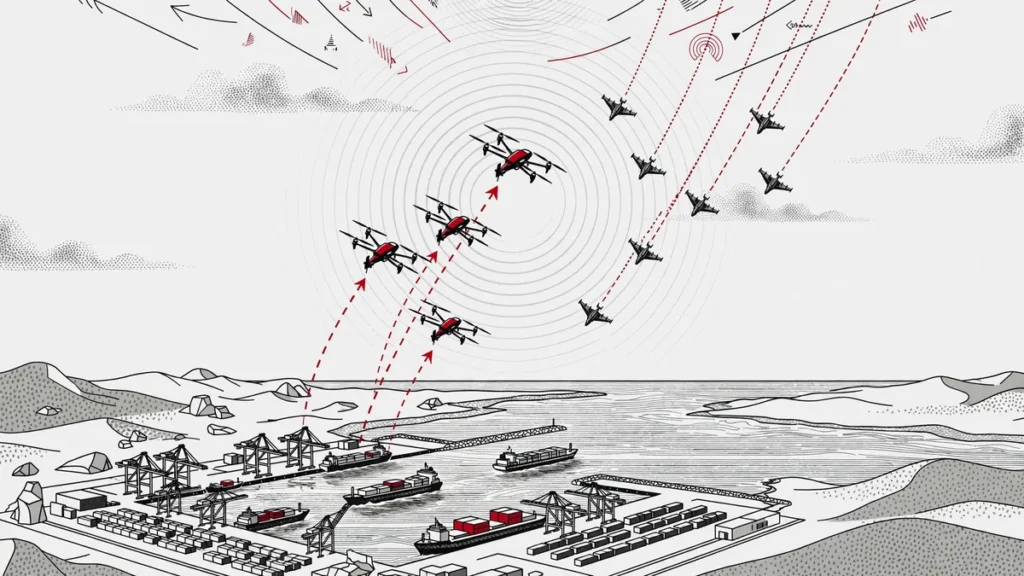
The war exposed a brutal arithmetic for the Gulf monarchies: Iranian-style attack drones costing tens of thousands of dollars were being met with interceptors costing millions. The response has been the region’s fastest military-technological pivot in decades — and AI sits at its center.
Saudi Arabia and the UAE are redirecting defense capital expenditure toward AI-reliant autonomous and intelligent military assets, according to regional analysis. Abu Dhabi has announced a dedicated defense industrial zone focused on manufacturing unmanned aerial vehicles, automated anti-missile systems, and secure locally produced hardware. Saudi Arabia’s General Authority for Military Industries is targeting at least 50% localization of military spending. The logic is industrial as well as tactical: autonomy and AI let Gulf states convert money into mass without matching Iran’s manpower.
The most striking channel is the new Ukrainian-Gulf axis. During President Zelenskyy’s March 2026 visit to the Gulf, Saudi Arabia, the UAE, and Qatar expanded defense cooperation with Kyiv centered on co-production, investment, and technology transfer in counter-drone and missile-defense technologies. More than 220 Ukrainian specialists — air-defense advisers and drone experts — have deployed across Saudi Arabia, the UAE, Qatar, Kuwait, and Jordan for training, vulnerability assessments, and systems integration. Ukrainian interceptor drones costing $1,000–$3,000 per unit, producible at claimed rates above 10,000 a month, offer exactly the cost-exchange ratio the Gulf needs. For the drone-domain background, see our AI drone warfare explainer.
Washington is underwriting the pivot. In May 2026, the Trump administration authorized more than $8.6 billion in arms sales to Qatar, Kuwait, the UAE, and Israel under emergency powers that bypassed normal congressional review — including a $4.01 billion Patriot interceptor replenishment for Qatar. In June, the State Department approved a counter-drone package for Kuwait worth up to $1.98 billion, including Anduril’s Roadrunner-M and Anvil interceptor drones and electronic-warfare equipment. July brought $1.96 billion in APKWS II guidance kits for Saudi Arabia; August, a $4.5 billion aerial-refueling package for Qatar. The direction is unmistakable: layered, increasingly autonomous air defense.
What about Iran’s AI capabilities?
Honesty requires admitting how little is verifiable here. What is confirmed, via the Institute for the Study of War’s October 5, 2026 update: Iran is reconstituting and enhancing its ability to strike distant US regional targets and commercial shipping. Artesh spokesperson Brigadier General Mohammad Akraminia said on October 4 that Iran is improving the accuracy, range, and speed of all its missiles. US officials assessed in July (via the Wall Street Journal) that Iran had deployed advanced Kheybar Shekan medium-range ballistic missile variants against US bases, adapted to evade defenses with varied flight paths, speeds, and terminal maneuvers, plus mobile launchers. And on September 9, Iran used cluster-munition warheads against US forces in Jordan — a compensation, analysts note, for limited accuracy.
What is not confirmed: any specific Iranian military AI program. Open sources offer no verified picture of Iranian AI-enabled targeting, autonomy, or battle management. Iran has demonstrated sophisticated drone operations and missile adaptation — but adaptation is not AI, and conflating the two is exactly the analytical error this series warns against. In the cyber domain, Iranian operations against US critical infrastructure are covered in our reporting on Iranian hackers targeting US water and energy grids; the AI dimensions of regional cyber conflict are explored in our AI cyber warfare explainer.
AI in the Middle East conflict: by the numbers
| Metric | Figure | Source |
|---|---|---|
| Iron Beam laser: power / reported cost per shot | 100 kW / ~$2 | Secondary reporting, Rafael timelines (REPORTED) |
| Iron Beam: reported threat/decoy discrimination time | 0.8 seconds | Secondary reporting (REPORTED) |
| US emergency arms sales to Qatar, Kuwait, UAE, Israel (May 2026) | $8.6B+ | Reuters, Oct 2026 (CONFIRMED) |
| Counter-drone package for Kuwait (Jun 2026) | Up to $1.98B | US State Department via Reuters (CONFIRMED) |
| Ukrainian specialists deployed across the Gulf | 220+ | Regional reporting (REPORTED) |
| Ukrainian interceptor drone unit cost / claimed output | $1,000–$3,000 / 10,000+/month | Ukrainian claims via regional reporting (REPORTED) |
| Saudi military spending localization target | ≥50% | GAMI via regional analysis (CONFIRMED target) |
| Documented pro-Iran AI deepfake artifacts (2-week period) | 100+ | EIGEN/RAC report, Apr 2026 (REPORTED) |
Caveat: weapons-system specifications and production claims come from single secondary sources or official claims and are not independently verified. Figures from state officials on all sides are claims, not confirmed facts.
Why this matters beyond the battlefield
The Middle East is where the AI-warfare future arrives first for ordinary people. AI-assisted targeting compresses the time between detection and strike — raising urgent questions about civilian protection when the review window shrinks. AI-generated disinformation — more than a hundred documented pro-Iran deepfakes in a single two-week period, including fabricated strikes and fake downed aircraft — pollutes the information environment far beyond the combat zone, reaching diaspora communities and global audiences. And the region’s rearmament is reshaping energy security: the same AI-surveilled waterways that carry oil now carry targeting data, as our battlefield intelligence explainer details for the ISR dimension.
For readers in Europe, the US, and Asia, the stakes are energy prices, shipping insurance, and the precedent being set: the first war in which AI targeting, laser defense, and algorithmic disinformation all operated at scale will become the template other militaries copy. The Gulf’s bet — that AI-enabled autonomy can substitute for manpower and absorb drone-age attrition — is the experiment to watch.
Frequently asked questions
Is Iron Beam really operational?
2026 reporting described Iron Beam as having entered limited operational testing in September 2025 and reaching initial operational capability in June 2026 per Rafael timelines, with serial manufacturing underway. Exact combat performance, deployment numbers, and specifications remain classified or single-sourced — treat detailed claims as reported, not confirmed.
How is AI actually being used in the Iran war?
The best-documented use is AI-assisted targeting and data fusion — the Maven Smart System synthesizing satellite, electronic, and drone intelligence to accelerate the kill chain during Operation Epic Fury (detailed in our companion deep dive). Broader claims about AI battle management or autonomous weapons in the conflict are largely unverified.
Why are Gulf states buying Ukrainian weapons technology?
Cost arithmetic. Ukraine’s interceptor drones ($1,000–$3,000 each) and three years of tactics against Iranian-designed Shahed drones offer the Gulf a cheap answer to drone attacks that would otherwise be met with million-dollar interceptors. Over 220 Ukrainian specialists are now deployed across the Gulf transferring that expertise.
Does Iran have military AI programs?
No specific Iranian military AI program is verifiable in open sources as of October 2026. Iran has shown real capability in drone operations, missile adaptation, cyber operations, and AI-amplified disinformation — but those should not be conflated with AI-enabled targeting or autonomy, for which there is no confirmed evidence.
Sources
- Algemeiner: Israel takes global lead on military innovation with new AI Division, Iron Beam laser system
- Institute for the Study of War: Iran Update, October 5, 2026
- Economy Research: U.S. steps up Middle East arms sales amid protracted war against Iran
- MEI Switzerland: The new drone race — how Gulf states are preparing for next-generation airpower
- CyberGeoDigest: Iran struggles to rebuild missile arsenal after Israeli, U.S. strikes (via War on the Rocks)


Discussion 0
Share analysis, corrections, or context. Be civil — comments are moderated.