
WarBrief Live | October 30, 2026 | Breaking Analysis
On October 29, 2026, the United States reportedly struck Iranian naval targets at Qeshm Island and Jask, while the commander of US Central Command briefed President Donald Trump in person on military options for a wider campaign after the November 3 midterm elections. What investigators and reporters have confirmed, and what remains only reported, matters here, because the two tracks, the strikes already described and the campaign still undecided, point in different directions.
At a glance
- $47 billion-plus: reported US cost of the Iran war so far, from Pentagon data obtained by Reuters
- November 3: the US midterm elections that frame the reported post-election campaign window
- 2: Iranian naval sites reported struck on October 29, at Qeshm Island and Jask
- 7: conditions Tehran says must be agreed before peace talks can progress
Key Takeaways
- Reported October 29 strikes hit an Islamic Revolutionary Guard Corps (IRGC) launcher on Qeshm Island and the Iranian Navy’s Jask Naval Base, according to the reporting available so far; they have not been independently confirmed by a second major wire account in the sources reviewed.
- Admiral Brad Cooper, the head of US Central Command, briefed President Trump at the White House on October 29, with Defence Secretary Pete Hegseth and Joint Chiefs Chairman General Dan Caine present, according to The Wall Street Journal, as reported by multiple outlets.
- No final decision on a renewed, larger campaign has been reported: the Journal’s account says Trump could still choose not to launch one, even as Gulf states have been told to prepare for a short, intense operation after the midterms.
- Diplomacy is running in parallel, not instead of the military track: Vice President JD Vance has written to a senior Iranian security official, mediators are pushing a timeout, and Tehran insists its seven conditions come first.
What happened on October 29 in the Strait of Hormuz region?
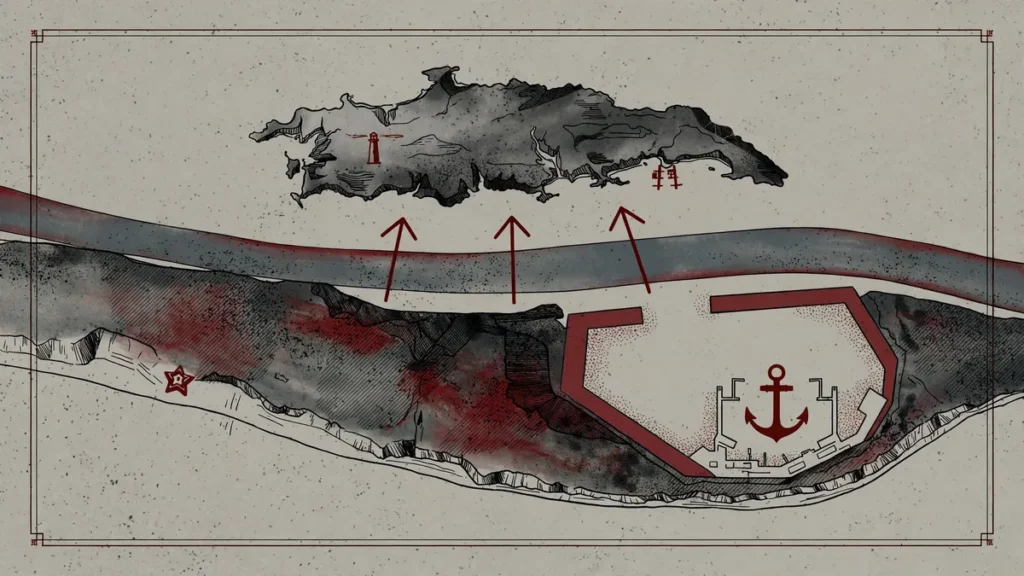
Two distinct things happened on October 29, and keeping them apart is the key to reading the day. First, fresh American strikes on Iranian naval targets were reported in the evening. Market Flux reported that the United States carried out fresh strikes against Iranian military targets on October 29, hitting at least two sites: an IRGC launcher on Qeshm Island and the Iranian Navy’s Jask Naval Base in Bandar-e-Jask in southern Iran. Separately, OSINT613 reported that a CENTCOM official said the US Air Force struck a missile launcher on Qeshm Island earlier that night, following missile launches from the area, quoting the official as telling Faytuks Network: “This is an area we’ve been watching over the last week, and we were prepared to act in a defensive manner.”
That is the full extent of what the available reporting establishes about the strikes themselves. No casualty figures for the October 29 strikes appeared in the sources reviewed for this article, and no official CENTCOM statement confirming the Qeshm and Jask strikes in those terms was among them. WarBrief therefore treats the strikes as reported, not independently confirmed, and readers should treat any social-media claim of a larger October 29 bombardment with the same caution. Qeshm Island sits at the entrance to the Strait of Hormuz, the narrow waterway through which a large share of the world’s seaborne oil moves, which is why even a limited strike there carries weight far beyond the two sites named.
The second October 29 development is better sourced, and it is the one that changes the calendar. Readers following the wider war can track it through WarBrief’s conflict zones hub, which links the Iran-war coverage together. The head of US Central Command briefed the president in person, an uncommon step: Times Now notes that Cooper rarely briefs Trump in person, and that his last meeting with the president was in July, aboard Air Force One in Delaware. The briefing is the clearest public signal yet that the post-midterm option is being weighed at the highest level, not merely rehearsed by planners.
What did the CENTCOM briefing cover?
According to The Wall Street Journal, as reported by Republic World, Outlook India and Times Now, Admiral Brad Cooper met President Trump at the White House on October 29, joined by Defence Secretary Pete Hegseth, Joint Chiefs Chairman General Dan Caine and other cabinet members. The meeting followed a White House meeting on October 28 involving the military officials and Vice President JD Vance. The Journal’s account says the discussion covered the continuing US blockade of Iran and the available military options for resuming major combat operations.
The preparations described alongside the briefing are consistent across the reporting. Washington has increased air defences, munitions and supplies across the Middle East in recent weeks, repositioned some troops away from installations considered vulnerable to Iranian retaliation, and moved cargo aircraft into American bases in Jordan, Saudi Arabia, Qatar and Kuwait. The Journal also reported that the US military was transferring a Patriot missile battery from Texas to reinforce air defences in the region, a move WarBrief reported on October 28 in the context of the warnings already given to Gulf states. A Pentagon spokesperson and a CENTCOM spokesperson both declined to comment when approached by the newspaper, according to Republic World’s account of the Journal report.
What the briefing did not do, on the reporting available, is settle the decision. Outlook India’s summary of the Journal report is explicit: Trump could still choose not to launch an attack. That uncertainty is itself a fact worth holding on to, because much of the commentary around the briefing treats a post-midterm campaign as already ordered. It has not been reported as ordered.
By the numbers: what is confirmed and what is only reported
| Metric | Figure | Source |
|---|---|---|
| US cost of the Iran war so far | More than $47 billion (CONFIRMED as a reported Pentagon figure) | Pentagon data obtained by Reuters |
| Days from October 29 to the US midterms | 5 days, to November 3 (CONFIRMED date) | US election calendar; multiple reports |
| Iranian naval sites reported struck on October 29 | 2: Qeshm Island launcher, Jask Naval Base (REPORTED) | Market Flux; OSINT613 citing a CENTCOM official via Faytuks |
| Tanker confirmed hit near Khasab on October 29 | 1 tanker, struck by an unidentified projectile, no crew injuries (CONFIRMED by UKMTO) | UK Maritime Trade Operations, via Gulf News |
| Tankers Iran claims hit mines in Hormuz | 3 (REPORTED by IRGC, not independently verified) | IRGC claim; Associated Press could not confirm |
| Tehran’s stated conditions for talks | 7 (CONFIRMED as Tehran’s stated position) | Parliament Speaker Mohammad Bagher Ghalibaf, via X |
| Length of the possible US-Israeli operation | About a week (REPORTED) | Axios, via UzDaily |
Caveat: figures marked CONFIRMED are supported by at least two sources or an official body in the reporting reviewed; figures marked REPORTED rest on a single account or on unnamed officials and should be read as claims, not established facts.
Why does the November 3 midterm window matter?
The timing is the story behind the story. Reports last week said Washington and Jerusalem were weighing a “short but intensive operation” involving fresh strikes on Iran after the November 3 US midterm elections, and the Journal reported that Trump administration officials have told Arab Gulf states to prepare for exactly that: a brief but intense military campaign after the vote. WarBrief’s earlier explainer on the post-midterms window set out why that window exists, and the October 29 briefing fits inside it rather than replacing it.
Axios, via UzDaily, reported that the United States and Israel are developing plans for a new military operation if diplomatic efforts fail, potentially beginning after the midterms, with a week-long operation targeting Iranian nuclear facilities, energy infrastructure and senior members of the country’s leadership. CNN, reporting on October 26 and cited by ABP Live, described the potential campaign as a “big effort” that American forces could launch within four days of Trump giving the go-ahead, a significant escalation from the current approach of targeting infrastructure that can be rebuilt relatively quickly. Both accounts remain reports based on unnamed officials, not announced plans, and both sit alongside the Journal’s caution that Trump has not made a final decision.
Domestic politics sharpens the window. ABP Live’s account of the CNN reporting notes that Trump’s approval ratings have fallen ahead of the elections, with public dissatisfaction over the costs of the campaign emerging as a concern, and the Pentagon figure of more than $47 billion, obtained by Reuters, gives that concern a number. Senator Chris Murphy, a Connecticut Democrat who said he had been briefed on some of the classified planning, described the plans as “insane” at a Middle East Institute event, saying: “It will lead to devastating escalation and the likely destruction of our commitment to the rule of law.” That is a political judgment, not a military assessment, but it shows the briefing is already being contested in Washington before any order is given.
What the October 29 strikes mean for US/UK/EU readers
For readers in the United States, Britain and Europe, the immediate effects run through energy, shipping and travel rather than through any direct military exposure. The Strait of Hormuz is the chokepoint for Gulf oil and liquefied natural gas heading to Asian and European buyers, and WarBrief’s October 28 coverage of the $47 billion war bill showed how the costs of protecting that route are already being counted in Washington. A wider campaign that hit Iranian energy infrastructure, one of the target sets named in the Axios reporting, would be expected to push fuel and shipping-insurance costs higher, while a negotiated timeout would be expected to ease them. Neither outcome is priced in as certain, which is why markets and shipping firms are watching the November 3 date as closely as the military reporting.
The maritime picture on October 29 itself underlines the risk to civilian shipping. The IRGC claimed that three oil tankers exploded and caught fire after striking naval mines while trying to leave the Strait of Hormuz through what Tehran called an unauthorised southern route, alleging the vessels had switched off radar and navigation systems and ignored Iranian warnings. That three-tanker claim has not been independently verified, and the Associated Press reported it could not confirm Iran’s account. What the UK Maritime Trade Operations agency did confirm, via Gulf News, is narrower: a tanker was struck by an unidentified projectile near Khasab, Oman, at around 1600 GMT on October 29, with no crew injuries reported. Travellers and businesses with Gulf exposure should therefore expect advisories and insurance surcharges to move on rumour as well as fact in the coming days, and should check carrier and government travel guidance rather than social-media claims before changing plans.
What diplomacy is still running alongside the military track?
The military track is not the only track, and on October 29 the diplomatic one produced its own news. The Wall Street Journal reported that Vice President JD Vance sent a letter to Mohsen Rezaei, secretary of Iran’s Supreme National Security Council and a former longtime IRGC commander, at President Trump’s direction, aimed at finding common ground that could persuade Trump against resuming military operations. According to the Journal, the letter contained no specific peace proposals; the exchanges that followed focused on creating a framework for possible negotiations. Iranian news agencies Tasnim and Fars reported on October 29 that Tehran had received the letter but had not yet replied. WarBrief’s companion diplomacy crossroads analysis covers that track in full; this article covers the military track, and the two should be read together.
Tehran’s public response set a high bar. Parliament Speaker Mohammad Bagher Ghalibaf wrote on X that the United States’ “carrot-and-stick approach” would not influence Tehran, adding: “Progress can only be achieved once Iran’s seven conditions have been agreed upon.” The contents of those seven conditions have not been published in the reporting reviewed, and WarBrief does not speculate about them. Meanwhile US envoy Tom Barrack said late on October 29 that Washington and Tehran were “very close” to agreeing a timeout, citing mediation by Qatar, Pakistan, Saudi Arabia and Turkey. A Qatari draft peace proposal, with a seven-day timeline of confidence-building steps, is reported to be under consideration in Tehran, with a response expected by the end of the week. The gap between “very close” and “seven conditions first” is the space in which the next decision will be made.
Trump himself kept both doors open at a rally last week, saying: “We may do another little Epic Fury,” referring to the major US-Israeli bombing campaign carried out in the spring, “Or they’ll agree.” Operation Epic Fury, which began on February 28 with US-Israeli strikes on Iran, is the reference point for what a renewed campaign could resemble, and for why its costs, now put above $47 billion, are part of the political argument. A separate personnel development also surfaced on October 29: Defence Secretary Hegseth removed Lieutenant General Brett Sylvia as the Pentagon’s top military planner, with Axios reporting, via Gulf News, that an internal investigation found he had disclosed classified information about Iran and Ukraine. That episode is distinct from the briefing and the strikes, but it helps explain the administration’s sensitivity about leaks around Iran planning.
How Tehran, Washington and Gulf capitals are reading the same day differently
Washington’s reading, as presented in the Journal reporting, is that pressure plus preparation creates leverage: show Iran a credible, larger campaign, move the defences and munitions into place, and give diplomacy a deadline in the form of the midterms. Tehran’s reading, as stated by Ghalibaf and the IRGC’s Hormuz claims, is that it can absorb pressure, contest the waterway, and set its own price for talks. Gulf capitals, told to prepare for a short, intense campaign and for retaliation against energy facilities and bases, are reading the same reports as a warning to harden defences and protect shipping, not as a promise of a quick outcome. All three readings can be sincerely held at once, which is why the same October 29 can look like escalation, deterrence and negotiation depending on where it is viewed from.
The honest limit on all three readings is evidence. The briefing is well attested through the Journal’s account carried by three outlets. The post-midterm campaign shape is a reported plan, not an announced one. The October 29 strikes are reported by two accounts, one of them citing a single CENTCOM official through an intermediary network, and have not been independently confirmed in the sources reviewed. Any account that presents all three as equally established is overstating the evidence, and WarBrief will update this article in place if an official statement or a second wire confirmation of the strikes emerges.
What to watch next in the Iran standoff after October 29
Five things will settle what October 29 actually was. First, whether CENTCOM or the Pentagon issues any statement on the Qeshm and Jask strikes, and whether Reuters or the Associated Press independently confirms them. Second, whether Tehran replies to the Vance letter before the end of the week, when a response to the Qatari draft is also expected. Third, whether the reported Patriot battery movement and cargo flights continue into the first days of November, which would signal preparation continuing rather than pausing. Fourth, what UKMTO and commercial shipping sources report about Hormuz transits over the next 72 hours, since the mine and projectile claims will either accumulate corroboration or fade. Fifth, what Trump himself says after the November 3 midterms, when the reported window for a decision opens and the “very close” timeout claim meets its first real test.
Until then, the accurate summary is narrow and worth repeating: a reported limited strike, a confirmed-in-reporting briefing, an undecided larger campaign, and a negotiation that both sides describe in opposite terms. That is enough to explain October 29 without inventing the next chapter.
Frequently asked questions
What happened on October 29, 2026, between the US and Iran?
The United States reportedly struck an IRGC launcher on Qeshm Island and the Iranian Navy’s Jask Naval Base, and Admiral Brad Cooper briefed President Trump on military options for Iran at the White House. The briefing is reported by The Wall Street Journal via multiple outlets; the strikes are reported, not independently confirmed, in the sources reviewed.
Has Trump decided to launch a new campaign against Iran?
No decision has been reported. The Wall Street Journal’s account says Trump could still choose not to launch an attack, even though Gulf states have reportedly been told to prepare for a short, intense operation after the November 3 midterm elections.
What is the post-midterm campaign reportedly being considered?
Reports describe a short, intense operation, with Axios reporting a possible week-long campaign targeting Iranian nuclear facilities, energy infrastructure and senior leadership. Mediators are separately pushing a timeout and a seven-day confidence-building plan.
What are Iran’s seven conditions for peace talks?
Parliament Speaker Mohammad Bagher Ghalibaf has said progress depends on agreement to Iran’s seven conditions, but their contents have not been published in the reporting reviewed, and this article does not speculate about them.
Is shipping through the Strait of Hormuz safe right now?
UKMTO confirmed one tanker was struck by an unidentified projectile near Khasab on October 29, with no crew injuries. Iran’s claim that three tankers hit mines has not been independently verified, so shipping risk is elevated but the full picture is still unclear.
Sources
- Republic World: CENTCOM Chief Briefs Trump on Renewed Iran Strikes as Tehran Sets 7 Conditions for Peace Talks
- Outlook India: Top US Military Commander Briefs Trump on Possible Iran Strikes
- Times Now: Trump Weighs New Iran Strikes as Top US General Rushes to White House
- Market Flux: US Strikes Iranian Naval Targets While Weighing Post-Midterm Military Campaign Against Iran
- OSINT613: US Strikes Missile Launcher on Qeshm
- Gulf News: Middle East Tensions Escalate (live coverage, UKMTO and envoy updates)
- UzDaily: US and Israel Plan Possible New Strikes on Iran (Axios reporting)
- ABP Live: Trump Weighs Major Iran Strikes After US Midterms (CNN reporting)

Discussion 0
Share analysis, corrections, or context. Be civil — comments are moderated.