
WarBrief Live | October 29, 2026 | Breaking Analysis
By the numbers at a glance
- 613 — drones Moscow’s mayor said flew toward the Moscow region overnight (a Russian official claim, not independently verified).
- 231 — drones the mayor said were destroyed on approach to Moscow, with the rest claimed neutralised farther out.
- 3 — Moscow-area airports that temporarily restricted flights: Vnukovo, Domodedovo and Zhukovsky.
- 1,600+ — drones Moscow’s mayor said were reported in a September attack, described as the largest of its kind in the war.
Moscow says 613 drones headed toward its region overnight on October 28-29, 2026, most of them claimed downed, while a Russian strike hit an educational institution in Kharkiv. The exchange shows the drone war escalating even as a small, localised truce holds in Oleshky and diplomats discuss talks in Abu Dhabi.
Key Takeaways
- Moscow Mayor Sergei Sobyanin said 613 drones flew toward the Moscow region between the evening of October 28 and the morning of October 29, 2026, with 231 destroyed on approach to the city and the rest claimed neutralised on distant approaches. Those figures are Russian official claims, not independently verified totals.
- Kharkiv Mayor Ihor Terekhov reported Russian strikes on two districts of Kharkiv overnight, including a hit on an educational institution in the Saltivskyi district and a fire at another impact site in the Kholodnohirskyi district. Initial reports did not confirm casualties from the overnight Kharkiv strikes.
- Flight restrictions were temporarily imposed at Moscow-area airports Vnukovo, Domodedovo and Zhukovsky, with Russian media reporting that two flights from Turkey turned back because of the Vnukovo restrictions.
- The barrage does not break the Oleshky humanitarian truce, because that truce covers one occupied city in the Kherson region, not the wider war. Its significance is political: it tests whether large-scale strikes and a negotiation timetable can move in opposite directions at the same time.
What happened overnight in Moscow and Kharkiv?
According to Reuters, Russia downed most of 613 drones heading toward Moscow overnight, as reported by Mayor Sergei Sobyanin on Telegram on October 29, 2026. Al Jazeera, citing the Russian state news agency TASS, reported the same sequence: Sobyanin said air defence forces destroyed 231 drones on approach to the city, with the remainder neutralised on distant approaches between Wednesday evening and Thursday morning. Ukraine has not, in the reporting reviewed for this article, published its own confirmed account of the scale or the targets of the overnight operation, so the 613 figure should be read as Moscow’s account of what approached its region, not as a jointly confirmed battle damage assessment.
The night was not a single wave. Sobyanin reported interceptions repeatedly through the night, and emergency services were reported working at sites where debris fell. Russian authorities did not report specific consequences of the attack in the capital region in the initial accounts, and no independent verification of the interception totals was available in the sources reviewed. That absence of independent confirmation matters: in drone warfare, a mayor’s running Telegram tally is a claim about defensive performance as much as it is a count, and it is reported here with that attribution intact.
In Kharkiv, Ukraine’s second-largest city, the overnight picture was clearer about location and murkier about damage. Mayor Ihor Terekhov reported a Russian strike on the Kholodnohirskyi district, where a fire broke out at the impact site, and a second strike on the Saltivskyi district. Kyiv Post reported that, according to updated information from the city’s Situation Center, the Saltivskyi strike hit an educational institution, and that the extent of the damage was still being assessed. Ukrinform carried the same mayoral account. The overnight Kharkiv strikes should not be confused with deadly strikes elsewhere in Ukraine on October 28, including a strike on a civilian enterprise in the Rivne region’s Sarny district that killed one man, which Kyiv Post and other outlets reported separately.
How Moscow counted 613 drones, and why the number is unverified
The 613 figure comes from one source chain: Sobyanin’s Telegram posts, relayed by TASS and then by Reuters, Al Jazeera and other outlets. The breakdown inside that claim is 231 destroyed on approach to Moscow and the rest neutralised on distant approaches. A reader who wants to test the claim can ask three questions, and the honest answer to all three, on the evidence available on October 29, is that the evidence is incomplete.
First, was the count independently corroborated? No independent count of launched, intercepted or surviving drones was published in the sources reviewed, and Russian authorities did not publish wreckage inventories or a target list that would let outside analysts check the total. Second, does “neutralised on distant approaches” mean the same thing as “destroyed”? Not necessarily: in Russian official reporting the phrase can cover drones brought down, diverted or otherwise stopped before reaching the capital, and Sobyanin’s own posts do not resolve that distinction for the full 613. Third, does the absence of reported damage in Moscow prove the defence worked? No: it proves only that no specific damage was reported in the initial accounts, which is a different and weaker statement.
That caution does not make the event small. Even a heavily discounted version of Moscow’s claim would still describe one of the largest drone operations directed at the Russian capital region in 2026, and the airport disruption is corroborated by multiple outlets reporting the same restrictions. The right way to hold both facts at once is to say that the scale is claimed, the disruption is reported, and the damage is unconfirmed.
Why did Ukraine target Moscow now?
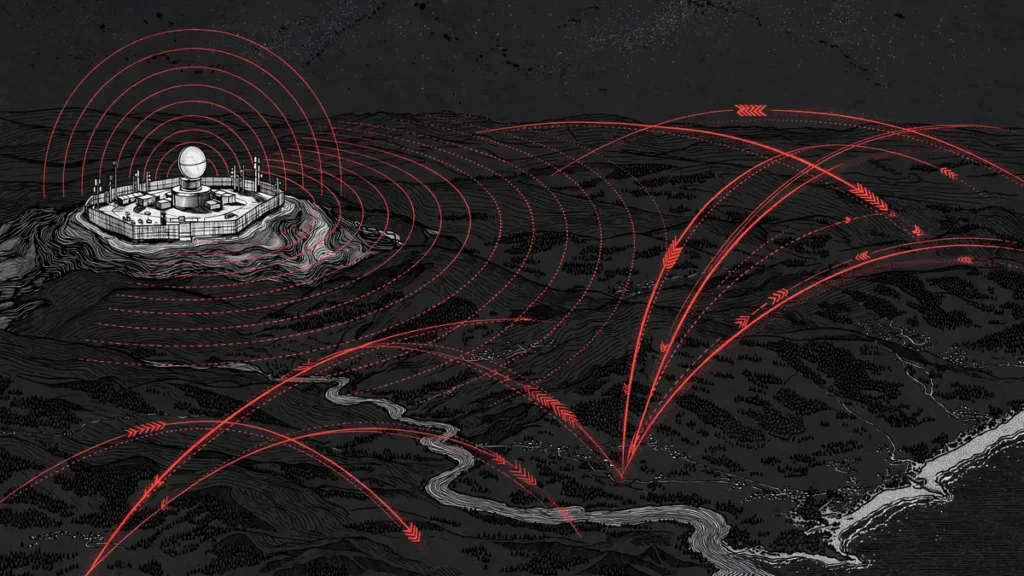
Ukraine has not published a stated objective for this specific overnight operation in the reporting reviewed, so any single motive would be speculation. What can be said from the pattern is that long-range drone operations against the Moscow region have become a recurring instrument of the war, not a one-off gesture. Al Jazeera noted that the October 29 attack followed a record attack in September during which air defence forces reported shooting down more than 1,600 drones, a figure again attributed to Sobyanin. The October 2026 pattern, including an October 23 assault that grounded flights at all four major Moscow airports according to contemporaneous reporting, points to a campaign that pressures Russian air defence, aviation and the sense of distance from the front, rather than a single night’s raid.
The timing also coincides with a diplomatic calendar that makes the symbolism harder to ignore. Moscow was hosting a Russia-Africa summit on October 28-29, 2026, and Free Malaysia Today reported that the leaders of 22 African countries were at the two-day meeting, according to the Kremlin. A large drone operation during a summit week does not need to hit a summit venue to make its point: it demonstrates that the capital’s airspace can be contested while the host government is presenting itself as a stable centre of diplomacy. That is an interpretation of timing, not a confirmed Ukrainian objective, and it should be read as such.
There is also a reciprocal logic that is visible without speculation about intent. Russia struck Kharkiv the same night Ukraine’s drones headed toward Moscow, and both sides have in recent months stepped up drone and missile attacks even as they prepare to resume talks. The overnight exchange is therefore best understood as two parallel pressures: each side demonstrating reach and resolve while diplomats discuss whether, when and where to meet.
What the Oleshky truce does, and does not, cover
The most common misunderstanding about October 29 is that a truce somewhere means a truce everywhere. It does not. The Oleshky arrangement is a localised humanitarian ceasefire in one Russian-occupied city in the southern Kherson region, agreed to allow humanitarian aid in and civilians out. It took effect on October 27, 2026, and reporting on October 29 said it was holding, with demining under way on aid routes and a delivery planned for October 30, according to Ukraine’s human rights commissioner Dmytro Lubinets. The truce was reported to run through the weekend, and it covers Oleshky and its immediate humanitarian operation, not Kharkiv, not Moscow and not the wider front.
That geographic limit is the whole story of October 29. A localised truce can hold for 30 hours, then 54 hours, while the drone war outside its zone intensifies, and both facts can be true at once. The Oleshky arrangement is a test of whether the two sides, with United States involvement, can keep one humanitarian corridor open. It is not evidence of a general ceasefire, and treating it as one would misread both the truce and the overnight strikes. Readers following the proposed Abu Dhabi talks should watch whether the Oleshky model is cited as a precedent for wider de-escalation, or whether it stays confined to one city while the air war continues elsewhere.
What the Moscow drone barrage means for US/UK/EU readers
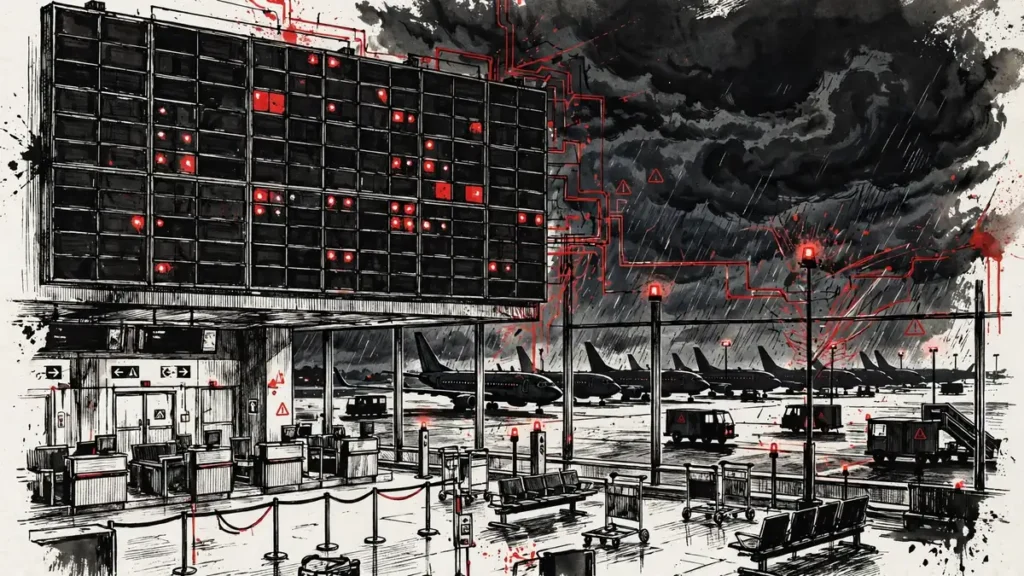
For readers in the United States, the United Kingdom and the European Union, the direct effects of one night’s drone exchange are limited, and the indirect effects are the ones to watch. First, aviation: temporary restrictions at Vnukovo, Domodedovo and Zhukovsky, with two flights from Turkey reported turned back at Vnukovo, are a reminder that Moscow-area airspace can close at short notice during drone alerts. Travellers with itineraries touching Moscow should expect disruption and check with their carrier rather than assuming a published schedule will hold on a night of alerts. This is practical advice, not a travel warning about the wider region, and it applies to the specific airports named.
Second, markets and energy: a single drone night does not set oil or gas prices, and this article makes no price prediction. But the pattern of strikes on both sides has repeatedly intersected with energy infrastructure and shipping risk in 2026, and European gas prices have been under separate upward pressure this week. Readers should therefore treat the drone war as background risk to energy and transport costs, not as a same-day price signal. Third, diplomacy: the United States is mediating the proposed trilateral talks, and European governments have publicly argued for a seat at the table. A night of escalation does not cancel a negotiation, but it does change the atmosphere in which negotiators meet, and it gives both sides a fresh argument about the other side’s good faith.
Fourth, information: the 613 figure will travel quickly on social media, stripped of its attribution. The discipline for readers is simple — ask who counted, who verified it, and what is still unknown. On October 29, the answer is that Moscow counted, nobody independent verified the total, and the damage picture is still unknown. Keeping that distinction is not pedantry; it is how a reader avoids repeating a claim as a fact.
Background and timeline
The October 29 exchange sits inside a war in which long-range drones have become a central weapon for both sides, and in which short, localised humanitarian arrangements have coexisted with continued fighting elsewhere. The timeline below uses only dates and events supported by the sources for this article and by WarBrief’s own prior coverage.
- Mid-September 2026: Moscow’s mayor reported more than 1,600 drones in an attack on the Moscow region, described in contemporaneous reporting as the largest of its kind in a single day since the start of the war.
- October 18, 2026: WarBrief reported a Ukrainian drone swarm hitting St. Petersburg, part of the same pattern of long-range strikes on Russian cities.
- October 23, 2026: An overnight drone assault grounded flights at all four major Moscow airports, according to contemporaneous reporting, with debris reported at Sheremetyevo.
- October 27, 2026: The localised Oleshky humanitarian ceasefire took effect at 03:00 Kyiv time, to allow aid delivery and civilian evacuation.
- October 28, 2026: Ukrainian President Volodymyr Zelenskyy said he hoped trilateral talks with Russia and the United States would take place in Abu Dhabi between November 6 and 10, 2026; Kremlin aide Yury Ushakov said Moscow had not yet proposed a specific date and that timing would depend on the battlefield and the wider situation.
- October 28-29, 2026: Sobyanin reported 613 drones heading toward the Moscow region overnight, with 231 destroyed on approach; Russian strikes hit Kharkiv, including an educational institution in the Saltivskyi district.
Different perspectives
From Moscow’s perspective, as presented through Sobyanin’s posts and state reporting, the night is a defensive success: a very large raid was mostly stopped at a distance, with a smaller number destroyed on approach, and emergency services dealt with falling debris. That framing emphasises the scale of the threat and the effectiveness of the defence, while leaving damage unquantified. From Kyiv’s perspective, as reflected in Ukrainian reporting of the Kharkiv strikes and in the wider pattern of long-range operations, the war’s air campaign is reciprocal: Russian cities are not insulated from a war that Russia is waging against Ukrainian cities. Ukrainian officials have not, in the reporting reviewed, claimed a specific result for the Moscow operation, so the Ukrainian side of the overnight story is best described by what is known — the Kharkiv damage reported by its own mayor — rather than by an assumed victory claim.
From the perspective of the diplomats, the night is an awkward fact. Zelenskyy has proposed November 6-10, 2026, in Abu Dhabi for trilateral talks at a technical level, with a firm United States date expected after the November 3 midterm elections, according to NHK. Ushakov, quoted by Russian news agencies and reported by TBS News carrying Reuters, said there had been no discussion of European negotiators attending, despite European leaders saying Europe would play a role. The gap between those two positions — dates, venue and seats — is now the negotiation before the negotiation, and the drone exchange is the backdrop, not the agenda.
What to watch next before the Abu Dhabi talks
Four things will tell readers whether October 29 was a spike or a step change. First, whether Moscow publishes any damage assessment for the capital region, or whether the absence of reported damage holds. Second, whether Kharkiv’s authorities update the damage assessment for the educational institution and confirm or revise the initial casualty picture for the overnight strikes. Third, whether the Oleshky aid delivery planned for October 30 actually takes place, and whether civilians are able to leave safely — that delivery, not the rhetoric around it, is the test of the localised truce. Fourth, whether the United States proposes a firm date for Abu Dhabi after November 3, and whether Europe is given a seat or a defined role in the format. If the date firms up and the Oleshky delivery succeeds, the talks will have two modest precedents to build on. If either fails, the drone war will look less like background noise and more like the main event.
Readers should also watch the aviation picture. If restrictions at Vnukovo and Domodedovo ease and stay eased, the October 29 disruption will read as a one-night closure. If restrictions recur on successive nights, carriers and insurers will start pricing Moscow-area operations differently, and that commercial response will matter more to travellers than any single night’s drone count.
By the numbers
| Metric | Figure | Source |
|---|---|---|
| Drones said to have flown toward the Moscow region overnight, October 28-29, 2026 | 613 (CLAIMED by Moscow’s mayor) | Sobyanin via Telegram, reported by Reuters and Al Jazeera |
| Drones said to have been destroyed on approach to Moscow | 231 (CLAIMED by Moscow’s mayor) | Sobyanin via Telegram, reported by Al Jazeera and Free Malaysia Today |
| Moscow-area airports with temporary flight restrictions | 3 — Vnukovo, Domodedovo, Zhukovsky (REPORTED) | Censor.NET, AzerNews and The New Voice of Ukraine, reporting Russian aviation restrictions |
| Flights from Turkey reported turned back at Vnukovo | 2 (REPORTED, via Russian media) | Censor.NET and RBC-Ukraine reporting |
| Drones reported in the September Moscow-region attack | More than 1,600 (CLAIMED by Moscow’s mayor) | Al Jazeera and Free Malaysia Today, citing Sobyanin |
Caveat: drone counts in this table are official claims from one side, not independently verified figures. Airport restrictions and the Kharkiv educational-institution strike are reported by multiple outlets citing the respective mayors, but damage and casualty details remain incomplete in initial reporting.
Read next: Conflict Zones hub | Oleshky Ceasefire: What the Localised Ukraine-Russia Truce Covers | Kyiv’s Southern Bridge Hit as the Oleshky Truce Holds
Frequently asked questions
Did 613 drones really attack Moscow on October 29, 2026?
Moscow Mayor Sergei Sobyanin said 613 drones flew toward the Moscow region overnight on October 28-29, 2026, with 231 destroyed on approach and the rest claimed neutralised farther out. Reuters and Al Jazeera reported his account. The total has not been independently verified, so it should be described as Moscow’s claim, not as a confirmed count.
What happened in Kharkiv on the same night?
Kharkiv Mayor Ihor Terekhov reported Russian strikes on the Kholodnohirskyi district, where a fire broke out, and on the Saltivskyi district, where an educational institution was hit according to updated information from the city’s Situation Center. Initial reports did not confirm casualties from the overnight Kharkiv strikes, and the damage was still being assessed.
Does the Oleshky ceasefire cover Moscow or Kharkiv?
No. The Oleshky arrangement is a localised humanitarian ceasefire in one Russian-occupied city in the Kherson region, agreed to allow aid delivery and civilian evacuation. It does not cover the wider war, which is why large-scale strikes elsewhere can continue while the Oleshky truce holds.
Will there be Ukraine-Russia talks in Abu Dhabi in November 2026?
President Zelenskyy has said he hopes trilateral talks with Russia and the United States will take place in Abu Dhabi between November 6 and 10, 2026. Kremlin aide Yury Ushakov has said Moscow has not yet proposed a specific date, that timing depends on the battlefield and the wider situation, and that there has been no discussion of European negotiators attending. A firm date has not been agreed.
Are Moscow airports open after the drone attack?
Temporary restrictions were imposed at Vnukovo, Domodedovo and Zhukovsky airports overnight, with Zhukovsky’s restrictions later lifted and the other two airports operating under special arrangements in initial reporting. Two flights from Turkey were reported turned back at Vnukovo. Travellers should check with their carrier for the latest status.
Sources
- Reuters: Ukraine sends drones towards Moscow, Russia strikes Kharkiv, officials say
- Al Jazeera: Russia says more than 600 drones launched towards Moscow overnight
- Kyiv Post: Russian Drone Attacks Hit Kharkiv Educational Facility and Civilian Sites Across Ukraine
- Ukrinform: Russian forces strike educational institution in Kharkiv
- Free Malaysia Today: Hundreds of drones launched toward Moscow region
- Censor.NET: More than 600 drones over the Moscow Region: Sobyanin’s statement
- NHK: Zelenskyy hopes to hold peace talks with Russia in Nov.
- TBS News (Reuters): Next round of Ukraine talks depends on Middle East, other factors: Kremlin aide


Discussion 0
Share analysis, corrections, or context. Be civil — comments are moderated.