
WarBrief Live | October 27, 2026 | Breaking Analysis
| 01:00 GMT Ceasefire began, October 27, 2026 |
24,000 Prewar population of Oleshky |
~1,700 Residents remaining, per Ukrainian authorities |
Feb 2022 Oleshky seized in the first days of the invasion |
Russia and Ukraine began a localised ceasefire in the Russian-occupied town of Oleshky on October 27, 2026, to allow a humanitarian operation to deliver aid and evacuate civilians. The pause covers a designated area around the town, on the eastern bank of the Dnipro River opposite Ukrainian-held Kherson city — and it stops at the town’s edge. Fighting continued elsewhere in Ukraine on the same morning, including strikes in Kyiv. What investigators and both governments have confirmed is narrow: a halt in shelling around Oleshky, humanitarian corridors, and a brokered deal. What remains unverified is how long the pause will hold, whether evacuations will actually move, and whether either side will treat compliance as a precedent for anything wider.
Key Takeaways
- The Oleshky ceasefire began at 03:00 Kyiv time (04:00 Moscow time, 01:00 GMT) on October 27, 2026, confirmed by both Russia’s defence ministry and Ukraine’s human rights commissioner, Dmytro Lubinets.
- It covers a designated area around Oleshky only, to enable aid deliveries and evacuations from a town suffering acute shortages of food and medicine — not a wider ceasefire.
- The deal was brokered by US First Lady Melania Trump, working with Lubinets and Russia’s human rights commissioner, Yana Lantratova; the agreement was announced on October 23, 2026.
- How long the pause lasts has not been formally published by either side, and strikes continued elsewhere in Ukraine on October 27, including on Kyiv’s Southern Bridge and subway infrastructure.
What is the Oleshky ceasefire?
The Oleshky ceasefire is a local halt in fighting around the Russian-occupied town of Oleshky in southern Ukraine’s Kherson region, agreed so that a humanitarian operation can take place. According to Ukrainian and Russian officials, the arrangement provides for a local halt in fighting, the delivery of humanitarian assistance, and the evacuation of civilians who wish to leave, with humanitarian corridors established to allow aid deliveries and the movement of residents. Russia’s defence ministry said on Telegram that it stopped shelling in the direction of the Ukrainian city of Kherson from 04:00 Moscow time to prepare for the operation, and Lubinets confirmed the same start time in a Facebook post, writing:
“As head of the Ukrainian negotiating team, I confirm that the Ukrainian side is honoring its commitments.”
The Russian statement, as reported by Ukrainska Pravda, reads: “In preparation for a humanitarian operation near the settlement of Oleshky in Kherson Oblast, the Armed Forces of the Russian Federation have ceased fire on the Kherson front and introduced a ‘silence regime’ from 04:00 on 27 October 2026.” The two statements matter because they agree on the time, the place, and the purpose — the three facts a local truce needs to function. Nothing in either statement describes a wider ceasefire, a troop withdrawal, or a political negotiation. The Reuters reporting of the day stresses the same boundary: both sides began the regional ceasefire around Oleshky while continuing strikes elsewhere, including in Kyiv.
Who brokered the Oleshky ceasefire — and why now?
The deal was brokered by US First Lady Melania Trump, who the White House said helped secure the agreement after becoming involved in discussions on the humanitarian situation in Oleshky. Reuters reports that the agreement was announced on October 23, 2026, with the additional involvement of Pope Leo, as Washington seeks to revive broader peace talks between Moscow and Kyiv. Lubinets said the ceasefire is part of a humanitarian mission carried out with the mediation and coordination of Melania Trump, in cooperation with Yana Lantratova, Russia’s commissioner for human rights. The first lady described herself as the “exclusive intermediary” and said in a statement on October 23, 2026: “The people of Oleshky have limited electricity, live amid mined roads, and endure regular military attacks.”
The timing reflects months of deterioration rather than a sudden breakthrough. Residents and officials have reported severe shortages of food, medicine, and other basic supplies, and the town has been effectively cut off, with mined roads and drone strikes making both supply and escape dangerous. A rally in Kyiv on October 6, 2026, demanded a humanitarian corridor to evacuate civilians from Oleshky, a sign of how publicly the town’s plight had registered before the deal. White House envoys have also talked to both sides in recent days as the United States looks to mediate a peace deal to end the war, and a further round of US-mediated negotiations between Moscow and Kyiv is expected next month, according to regional reporting — though that timetable is not confirmed by either government.

Oleshky at a glance: the town behind the truce
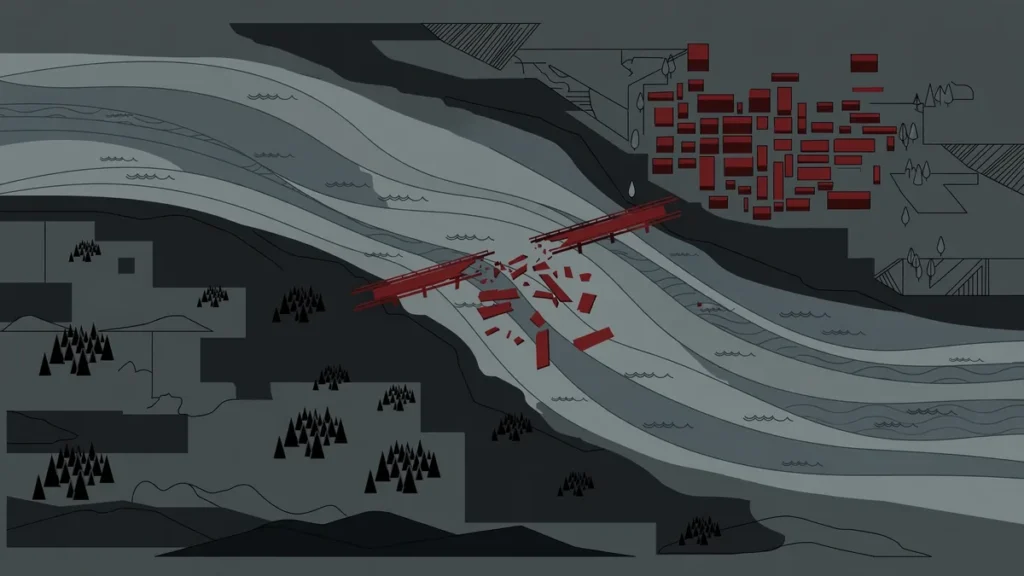
Oleshky lies on the eastern bank of the Dnipro River in Ukraine’s southern Kherson region, directly opposite Kherson city, which is held by Ukrainian forces. Russian troops seized the town during the first days of their February 2022 invasion and have controlled it ever since. The town suffered extensive war damage and was hit hard by flooding after the destruction of the nearby Kakhovka dam in 2023. The United States has said only a few thousand people remain in Oleshky, from a prewar population of 24,000; Ukrainian authorities have put the remaining population at about 1,700, while Russian officials have estimated between 1,500 and 2,000 civilians still trapped there. The spread in those figures is itself a measure of how little verified access outsiders have had to the town.
- February 2022: Russian troops seize Oleshky in the first days of the full-scale invasion.
- June 2023: Flooding after the destruction of the Kakhovka dam devastates the area around Oleshky.
- October 6, 2026: A rally in Kyiv demands a humanitarian corridor to evacuate Oleshky’s civilians.
- October 23, 2026: The localised ceasefire agreement is announced, brokered by US First Lady Melania Trump, who says the people of Oleshky face limited electricity, mined roads, and regular attacks.
- October 27, 2026: The ceasefire begins at 03:00 Kyiv time (04:00 Moscow time, 01:00 GMT) in designated areas around Oleshky.
- October 27, 2026: New strikes hit Kyiv’s Southern Bridge and subway infrastructure on the same morning, forcing a suspension of traffic.
By the numbers: what is confirmed, and what is only reported
| Metric | Figure | Source |
|---|---|---|
| Ceasefire start | 03:00 Kyiv / 04:00 Moscow (01:00 GMT), October 27, 2026 | CONFIRMED — Russia defence ministry; Lubinets |
| Prewar population | 24,000 | CONFIRMED — US statement via Reuters |
| Residents remaining | About 1,700 (Ukrainian authorities); a few thousand (US); 1,500–2,000 (Russian officials) | CONFIRMED as estimates — figures differ by source |
| Ceasefire duration | Not formally published; reported to hold through Saturday, October 31, 2026 | REPORTED — single source; neither side has published an end date |
| Kyiv strikes, October 27 | Southern Bridge and subway infrastructure hit; traffic suspended | CONFIRMED — Kyiv city officials via Reuters |
| Russian drone claim, October 27 | 222 Ukrainian drones intercepted over Russian territory | REPORTED — Russian military claim, unverified |
One-line caveat: figures marked CONFIRMED are corroborated by two or more sources; figures marked REPORTED rest on a single source or an interested party’s claim and should be treated as unverified.
What the Oleshky ceasefire means for US/UK/EU readers
For readers in the US, UK, and EU, the Oleshky pause is not a peace deal and should not be read as one — but it is a test with three practical consequences. First, if aid convoys and evacuations move safely, it gives Western governments a working template for local humanitarian pauses elsewhere along the front, and a rare point of US-brokered agreement between Moscow and Kyiv to build on in next month’s expected talks. Second, if the pause collapses or evacuations stall, it will harden the argument — already visible in European capitals — that only verified, monitored arrangements, not announcements, change facts on the ground. Third, the contrast with the same morning’s strikes on Kyiv is a reminder that local truces do not lower the wider risk picture: airspace, energy infrastructure, and transport routes across Ukraine remain contested, which matters for travel advice, energy prices, and defence planning in Europe. The most useful thing to watch is not the announcement but the convoy: whether trucks enter Oleshky, whether residents leave, and whether both sides publish evidence of compliance.
What each side says — and what remains disputed
Ukraine’s position, as stated by Lubinets, is that Kyiv is honoring its commitments and that the mission is humanitarian, coordinated through the two countries’ human rights commissioners with Melania Trump’s mediation. Russia’s position, as stated by its defence ministry, is that it ceased fire on the Kherson front and introduced a “silence regime” for the operation, and that its military engineers will reconnoitre routes and ensure the safety of the aid convoy — a claim reported by Russian state-aligned outlets and not independently verified. The two sides also disagree on why Oleshky was cut off in the first place: Russian officials say Ukrainian shelling and drone attacks, including drone-dropped mines on access roads, prevented aid deliveries, and cite 18 artillery bombardments and more than 120 drone attacks on the Oleshky area between October 19 and 26, 2026; Ukraine accuses Russia of preventing civilians from leaving the town. Neither claim can be independently verified from the town itself, and both should be read as the parties’ own accounts rather than established fact. What is not disputed is the humanitarian picture both sides now cite: a small, trapped population short of food, medicine, and electricity.
What to watch next in Oleshky
The next 48 hours will show whether the pause is real. Watch for the aid convoy itself: its departure, its route, and whether it reaches Oleshky without incident. Watch for evacuations: how many residents leave, in which direction, and whether either side publishes numbers. Watch for compliance reporting: Lubinets has promised to keep the public informed, prioritising civilian safety and compliance with the agreed arrangements, and any Russian statement on the “silence regime” will be measured against the same test. Watch the end date: neither side has published a formal duration, and a reported horizon of Saturday, October 31, 2026, would make the weekend the first decision point — extension, quiet lapse, or breakdown. And watch Kyiv and the wider front separately: the Oleshky pause was never designed to stop the war, and the strikes on Kyiv on October 27, 2026, show that the wider campaign continues on its own track, including the October drone-numbers race between the two air forces. WarBrief tracks the wider war on our conflict zones hub. If the pause holds and the convoy moves, it becomes a precedent both capitals can cite; if it fails, it joins a long list of local truces that did not survive contact with the front line.
Frequently asked questions
What is the Oleshky ceasefire?
It is a localised ceasefire around the Russian-occupied town of Oleshky in southern Ukraine, which began at 03:00 Kyiv time on October 27, 2026, to allow a humanitarian operation delivering aid and evacuating civilians. It covers a designated area around the town only, not the wider war.
Who brokered the Oleshky ceasefire?
US First Lady Melania Trump brokered the deal, working with Ukraine’s human rights commissioner, Dmytro Lubinets, and Russia’s human rights commissioner, Yana Lantratova. The agreement was announced on October 23, 2026, with the additional involvement of Pope Leo, according to Reuters.
How long will the Oleshky ceasefire last?
Neither side has published a formal end date, so the duration is unconfirmed. One report says the pause is expected to hold through Saturday, October 31, 2026, and could be extended, but that has not been confirmed by either government.
Why is Oleshky so hard to reach with aid?
Oleshky sits on the Russian-occupied eastern bank of the Dnipro, opposite Ukrainian-held Kherson city, in an active frontline sector. Residents face mined roads, regular attacks, and severe shortages of food and medicine, and both sides blame each other for blocking access — claims that cannot be independently verified from inside the town.
Does the Oleshky ceasefire mean the wider war is pausing?
No. Strikes continued elsewhere in Ukraine on October 27, 2026, including on Kyiv’s Southern Bridge and subway infrastructure. The Oleshky arrangement is a bounded humanitarian pause, and its success or failure will be judged on whether aid and evacuations actually move.
Sources
- Reuters: Russia, Ukraine begin localised ceasefire to allow for humanitarian operation in Oleshky
- Reuters: Oleshky — the occupied Ukrainian town for which Melania Trump helped broker a ceasefire
- Ukrainska Pravda: Ceasefire begins near Russian-occupied Oleshky
- CNN: Melania Trump-brokered one-city ceasefire between Russia and Ukraine takes effect
- The Jerusalem Post (Reuters): Russia, Ukraine agree to local ceasefire for humanitarian operation in Oleshky
- Mathrubhumi: Ukraine-Russia ceasefire takes effect in Oleshky for relief mission



Discussion 0
Share analysis, corrections, or context. Be civil — comments are moderated.