WarBrief Live | October 27, 2026 | Intelligence Report
On October 26, 2026, the defence ministers of France, Germany, Italy, Poland and the United Kingdom met in Paris as the E5 group and pledged that Europe must assume greater responsibility for its own security, while insisting that the United States remains an indispensable ally. Hosted by French Defence Minister Catherine Vautrin, the meeting also included European Union foreign policy chief Kaja Kallas, EU Defence Commissioner Andrius Kubilius and NATO Deputy Secretary-General Radmila Sekerinska Jankovska. The ministers adopted a joint statement naming Russia as the most acute and long-term threat to Euro-Atlantic security.
The statement is best read as a direction-setting communique rather than a spending announcement. It reaffirms Hague and Ankara commitments, points to agreed NATO capability targets, and promises closer industrial cooperation, stronger readiness and continued Ukraine support. No new spending figures, delivery timelines or troop commitments were announced.
Key Takeaways
- The E5 pledged greater European responsibility inside NATO, not outside it, with continued United States engagement described as essential.
- The pledge is tied to NATO capability targets, modernised forces, common defence-industrial requirements and stronger readiness.
- Ukraine support runs through the statement: political, military and financial backing, winter aid, air-defence work, shadow-fleet action and conditional security guarantees.
- No new figures or timelines were announced, so implementation will decide its effect.
What the E5 ministers actually agreed in Paris
The E5 is an informal grouping of Europe’s five major NATO defence powers. Its statement opens by saying Russia’s war against Ukraine, airspace violations, sabotage and hybrid attacks strengthen rather than weaken allied unity. From that assessment, the ministers draw one central conclusion:
Europe must assume greater responsibility for its own security. We are determined to work in close coordination with the United States and all Allies in order to implement this concrete ambition.
The statement gives that ambition institutional shape: concrete measures to implement the Hague and Ankara commitments and meet agreed capability targets, greater political and military leadership, modernised forces through closer defence-industrial cooperation on common and standardised requirements, and stronger readiness and resilience in line with NATO-agreed priorities. On the European Union, the language is NATO-first: NATO remains the cornerstone of collective security, EU initiatives should complement NATO and avoid duplication, and the EU’s regulatory and financial capacity is a valuable tool for national efforts. Wider context is tracked in WarBrief’s Intelligence Reports hub and Conflict Zones hub.
What the pledge means for Ukraine’s air defences this winter
The most concrete operational thread concerned Ukraine. The ministers reaffirmed support by all available means, politically, militarily and financially, and said Ukraine’s ability to defend itself is critically important to Euro-Atlantic security. German Defence Minister Boris Pistorius said the five countries have assembled winter aid packages and are working with Ukraine on an air-defence system to supplement existing defences, including United States-made Patriot systems, and would try to ensure Washington continues providing military supplies, intelligence and satellite data. British Defence Secretary Wes Streeting reiterated support for as long as it takes.
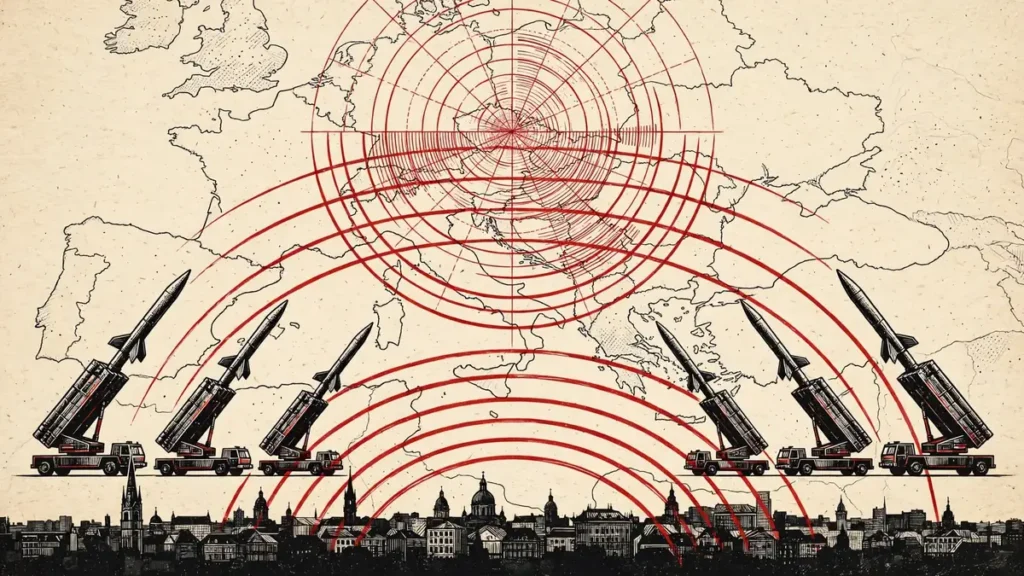
The timing is unforgiving: the pledge came as Russia intensifies strikes on Ukraine’s energy infrastructure ahead of winter, and as a United Nations-appointed commission of inquiry labelled those attacks as war crimes and crimes against humanity, according to Al Jazeera’s reporting of findings released on October 26. The ministers also reaffirmed action against Russia’s shadow fleet, the ships used to circumvent restrictions on Russian oil trade. Looking past the war, the statement says the Coalition of the Willing will contribute to robust security guarantees once a ceasefire or peace agreement is in place, a conditional promise, not a deployment decision. Diplomacy continues in parallel, with Ukraine, Russia and the United States expected to meet in Abu Dhabi in the first half of November (see WarBrief’s Abu Dhabi talks preview).
What the pledge does not yet decide: money, timelines and United States troops
A careful reading separates what was confirmed from what was not announced. No new commitment amounts were reported, and no delivery dates were attached to the capability, industrial or air-defence work described. The pledge cannot yet be scored against budgets or arsenals; its measurable content must come from national implementation plans and the NATO capability-target process.
- Confirmed: greater European responsibility, the indispensable United States role, Russia as the most acute threat, capability targets, defence-industrial cooperation, Ukraine support, shadow-fleet action, conditional security guarantees, and the Rome meeting.
- Not yet announced: new spending figures, procurement quantities, delivery timelines or troop commitments.
The transatlantic context explains why the ministers laboured the Washington point. Reporting framed the pledge as coming amid uncertainty over Washington’s plans to reduce its military presence in Europe. The statement answers in both directions: Europe will do more, and continued United States engagement is essential to a strong and credible NATO. The Middle East featured briefly: Kallas warned that any new escalation between the United States and Iran would only have losers.
Why the stronger Europe, stronger NATO formula matters
Vautrin’s formula, a stronger Europe within an equally stronger NATO, gives European governments a language for taking more responsibility without presenting it as a break with Washington, and gives Washington a European commitment it can cite when pressing allies to carry more of the burden.
The risks are equally clear: common requirements can stall when national industrial interests diverge, readiness is a long build rather than an announcement, and allies outside the E5 will judge the formula on whether European capability actually grows. The shadow-fleet commitment illustrates the test: WarBrief’s explainer on how oil sanctions work sets out why enforcement against sanctions-evading shipping needs sustained coordination, not single statements. For US, UK and EU readers, the stakes are European defence spending, Ukraine’s grid through winter, and the credibility of any settlement guarantees.
Assessment and outlook
WarBrief’s assessment: the Paris pledge is a genuine political signal with unproven material content. The signal is strong, five major powers publicly owning a larger share of European security. The content is unproven because no figures, quantities or dates were announced. Three tests will decide: whether national plans and the Rome meeting attach numbers and timelines; whether winter air-defence work delivers visible systems and sustained US supplies, intelligence and satellite data; and whether guarantee language survives contact with a real ceasefire negotiation, where guarantees must be specified to be credible.
What to watch next: the Rome meeting in March 2027 as the first checkpoint, NATO capability-target reporting, Ukraine winter air-defence announcements, and any clarification of the future United States military presence in Europe.
Frequently asked questions
What is the E5?
An informal group of the defence ministers of France, Germany, Italy, Poland and the United Kingdom, coordinating European defence positions and Ukraine support within NATO.
Did Paris announce new defence spending?
No. No new figures, quantities or timelines were reported; measurable content must come from later implementation steps.
Does the pledge replace the United States in NATO?
No. The statement calls the United States an indispensable ally whose continued engagement is essential to a strong and credible NATO.
What happens next?
The E5 meets again in Rome in March 2027. Before then, watch national plans, capability-target reporting, Ukraine air-defence announcements, and clarification of the US presence in Europe.
Sources
- GOV.UK: E5 Defence Ministers’ Statement: 26 October 2026
- Al Jazeera: European states pledge to boost air defence support for Ukraine
- Türkiye Today: Europe’s NATO powers pledge greater defense role, call US ‘indispensable ally’
- TRT World: Europe’s five NATO powers vow greater defence role while keeping US close
- The National: Europe’s top five defence powers to name Russia as greatest threat