
WarBrief Live | October 27, 2026 | Breaking Analysis
The Mecca Pact Tehran talks on October 26, 2026 marked the first time Saudi Arabia, Turkey and Pakistan visited Iran together since forming their defence alliance in Mecca in August. Senior officials from the three countries met Iranian President Massoud Pezeshkian, Foreign Minister Abbas Araghchi and security chief Mohsen Rezaei in Tehran, with both sides saying the discussions would continue but announcing no concrete agreement.
What was confirmed, and what remains unverified, matters here: Tehran called the talks “very good”, Riyadh framed the visit as de-escalation, and no ceasefire, deal or timetable emerged. The visit is best read as a mediation signal from a bloc that is itself a party to the wider regional conflict, not as a settlement.
Key Takeaways
- On October 26, 2026, Saudi Defence Minister Prince Khalid bin Salman, Pakistan army chief Field Marshal Asim Munir and Turkish intelligence chief Ibrahim Kalin met Iran’s president, foreign minister and security chief in Tehran.
- It was the first joint Tehran visit by the three Mecca pact countries since they formed their defence alliance in August 2026.
- No concrete announcements followed: the parties said only that they agreed to continue discussions, while Iran’s security chief called the talks “very good”.
- The talks unfolded against Israeli elections on October 27, United States midterm elections on November 3, and continued Houthi attacks on Saudi Arabia.
What happened in Tehran on October 26, 2026?
Officials from the three Mecca pact countries flew to Tehran on October 26, 2026, as part of efforts to “de-escalate between the parties to the current crisis”, according to a Saudi foreign ministry statement reported by AFP. The delegations met President Pezeshkian and Foreign Minister Araghchi, and held talks with Supreme National Security Council head Mohsen Rezaei. Photographs released by the Iranian presidency showed the visitors seated with their Iranian counterparts in Tehran.
The meeting ended without concrete announcements. Iranian state media said the various parties “agreed to continue discussions”, a formulation that signals contact rather than conclusion. Rezaei, speaking to state television, went further in tone, calling the discussions “very good” and saying: “I feel that a new atmosphere is emerging in the region… I sensed a very positive atmosphere in the discussions among the gentlemen.” That quotation is attributed to Rezaei via Iranian state television, as reported by AFP; it is a characterisation of the atmosphere, not evidence of an agreement.
Rezaei also said the participants agreed that security in the region “should be achieved by the countries themselves, and that we must prevent any kind of foreign intervention”, with emphasis placed on what he described as the Israeli occupation of southern Lebanon, southern Syria, Gaza and the West Bank. President Pezeshkian, in a statement shared on the presidential website, urged Islamic countries to “stand together and adopt a coordinated position” and said he hoped the presence of representatives of important and influential Islamic countries would help consolidate regional unity.
Background and timeline: from the Mecca pact to the Tehran table
The Tehran visit cannot be understood without the alliance that made it a joint visit. In August 2026, Saudi Arabia, Pakistan and Turkey signed the Mecca Joint Defence Agreement in Mecca. Under that agreement, as reported by The Straits Times, an armed attack on one member is considered an attack on all. WarBrief’s earlier explainer on that pact is here: Mecca Defence Agreement: Saudi-Pakistan-Turkiye Pact (2026).
- February 28, 2026: The United States and Israel launched surprise strikes against Iran while Tehran and Washington were engaged in negotiations over Iran’s nuclear programme, beginning an eight-month war.
- April 2026: A ceasefire halted the initial wave of heavy bombardment, but both sides continued to contest control of the Strait of Hormuz.
- August 2026: Saudi Arabia, Pakistan and Turkey formed the Mecca defence alliance in Mecca.
- October 25, 2026: A Qatari delegation visited Tehran, according to Iran’s foreign ministry spokesman Esmaeil Baqaei. Qatar and Pakistan have led United States-Iran mediation efforts.
- October 26, 2026: The three Mecca pact delegations met Pezeshkian, Araghchi and Rezaei in Tehran, with no concrete announcements and an agreement to continue discussions.
Reuters reported ahead of the meeting that the visit had been requested by Pakistan and that it was initiated during Munir’s visit to Tehran the previous week. That detail matters because it frames the trip as a Pakistani-initiated diplomatic opening, not a spontaneous three-way mission. It is reported by Reuters on the basis of sources with knowledge of the matter, rather than confirmed in an official joint statement.
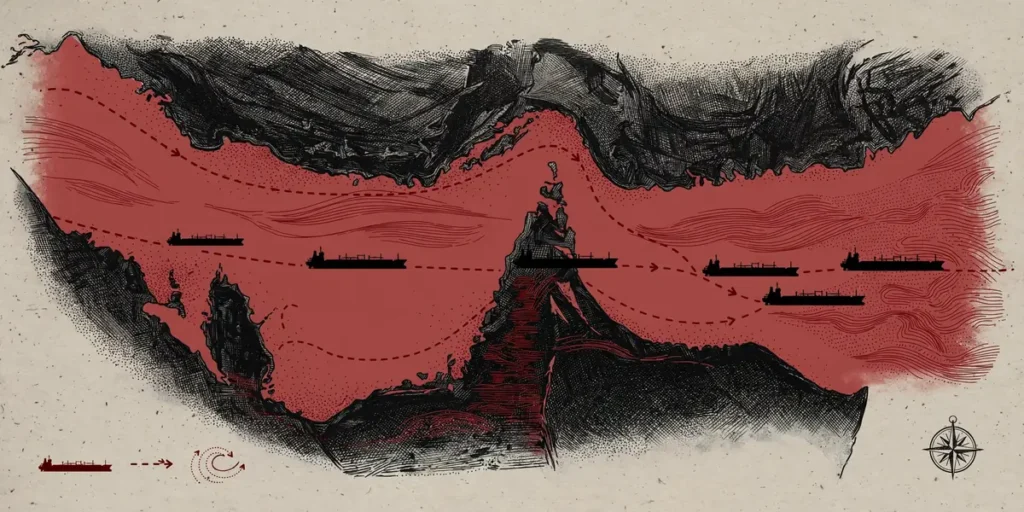
Why is the Mecca pact acting as a mediator when it is a war party?
This is the new angle in the story, and the reason this analysis is published as a new post rather than an update to earlier Iran coverage. Earlier WarBrief reporting covered the Mecca pact as a defence bloc and covered the post-midterms strike window as a risk. The October 26 visit is different: the pact presented itself in Tehran as a de-escalation channel, even though Saudi Arabia is itself under attack from the Iran-backed Houthis and is a central party to the regional confrontation.
That dual role is both the visit’s strength and its limit. On one hand, the presence in Tehran of Prince Khalid, described by London-based analyst Andreas Krieg as “hugely significant” and the “strategic mastermind of Saudi Arabia”, signals that Riyadh is investing political capital in dialogue. Saudi analyst Ali Shihabi, writing on social media, said Riyadh was “seeking to contain escalation and create a credible diplomatic path out of the crisis”. On the other hand, a mediator that is also a combatant-adjacent party cannot offer the neutrality of Qatar, which has mediated between Tehran and Washington for months. The Tehran meeting therefore complements, rather than replaces, the Qatari and Pakistani mediation channels.
There is also a timing logic. Regional tensions have risen ahead of Israel’s elections on October 27, 2026 and the United States midterm elections on November 3, 2026. United States President Donald Trump said on Saturday, October 24, that there was a possibility he would order fresh military action against Iran, while also holding out the prospect of reaching what he called “a nice, big, beautiful agreement” with Tehran. Israeli Prime Minister Benjamin Netanyahu warned on Sunday, October 25, that Iran or its allies could try to disrupt the Israeli elections, saying: “Don’t test us. You will suffer disproportionate blows.” Against that backdrop, the Mecca pact visit reads as an attempt to buy diplomatic time before either election outcome hardens positions.
By the numbers: what the Tehran talks confirmed, and what is only reported
The table below separates figures and claims confirmed by two or more sources from those resting on a single or secondary source. Nothing in it should be read as a verified agreement, because none was announced.
| Metric | Figure | Source |
|---|---|---|
| Joint Tehran visit by Mecca pact countries | First since the August 2026 alliance formed | AFP via Malay Mail; The Straits Times (CONFIRMED) |
| Senior visitors in Tehran, October 26 | 3: Prince Khalid bin Salman, Field Marshal Asim Munir, Ibrahim Kalin | AFP via Malay Mail; Reuters (CONFIRMED) |
| Concrete agreements announced | None; parties agreed to continue discussions | Iranian state media via AFP (CONFIRMED) |
| Brent crude, October 27, 0000 GMT | $115.15 a barrel, down 0.57%, near six-month highs | Reuters (CONFIRMED) |
| United States West Texas Intermediate, October 27, 0000 GMT | $101.32 a barrel, down 0.43% | Reuters (CONFIRMED) |
| Vessel on fire off Iraq, October 27 | 63 nautical miles (117 km) south-east of al-Faw | UKMTO via Al Jazeera live blog (REPORTED) |
| Share of world energy supplies via Hormuz before the war | Around a fifth | Reuters reporting (REPORTED as pre-war context) |
Caveat: figures marked REPORTED rest on a single attribution chain and should not be treated as independently confirmed; the vessel fire is a separate Gulf incident reported the same day, not a confirmed consequence of the Tehran talks.

What the Tehran talks mean for US, UK and EU readers
For readers in the United States, the United Kingdom and the European Union, the most direct signal is in energy prices. Brent crude eased to $115.15 a barrel and United States West Texas Intermediate to $101.32 a barrel as of 0000 GMT on October 27, 2026, according to Reuters, after hopes of a resolution in the United States-Israeli war on Iran eased some supply fears. Brent had touched $117 a barrel on October 26, its highest level since April 2026, after Iranian attacks on tankers around the Strait of Hormuz. The Tehran talks did not end that risk: losses were limited, Reuters reported, because renewed Houthi attacks on Saudi Arabia kept supply worries alive.
Travel and security effects are narrower but real. Houthi attacks have repeatedly hit Saudi airports, including a claimed attack on Riyadh’s international airport on Sunday, October 25, and the Saudi-led coalition reported intercepting three Houthi-launched drones over southern Saudi Arabia and the Riyadh region. Egypt’s parliament on October 26 approved President Abdel Fattah al-Sisi’s request to approve defensive military support for Saudi Arabia if requested, though it was not clear exactly what support was on offer. Travellers to the Gulf should therefore expect continued disruption risk even if the Tehran channel stays open, and should follow official travel advice rather than reading a single diplomatic meeting as a stabilisation.
For markets and policy, the key question is whether the Mecca pact channel can survive the two elections. If the United States midterms on November 3 produce a harder line in Washington, or if Israel’s new government escalates its rhetoric after October 27, the pact’s mediation window narrows. If, instead, the parties use the coming weeks to convert “continue discussions” into a dated next meeting with an agenda, the channel gains credibility. At present, neither outcome is confirmed.
Different perspectives on the Tehran meeting
Tehran’s framing is regional ownership. Rezaei’s line that security “should be achieved by the countries themselves” and Pezeshkian’s call for a coordinated Islamic position present the meeting as proof that regional states can manage their own security without outside intervention. That framing suits Iran, which has argued throughout the war that outside powers, above all the United States and Israel, are the source of escalation.
Riyadh’s framing is de-escalation without concession. The Saudi foreign ministry statement emphasised preventing a return to military escalation and supporting mediation led by Qatar and Pakistan. That language allows Saudi Arabia to talk to Tehran while still absorbing Houthi attacks and preparing defensive support with Egypt. It does not signal a Saudi break with Washington or a softening on the Houthi campaign.
Washington’s and Jerusalem’s framing, by contrast, remains deterrence-first. Trump left a fresh strike on the table while dangling a deal, and Netanyahu warned of disproportionate blows if Iran disrupts Israel’s elections. United Nations Secretary-General Antonio Guterres, speaking in Cairo as the Tehran talks began, warned that it was “essential to stop any escalation” and that a combination of overwhelming attacks in both directions “needs to be avoided at all costs”. The gap between those framings is why the Tehran talks, however welcome as contact, cannot yet be called a breakthrough.
What to watch next in the Iran standoff
First, watch for a date. The parties said they would continue discussions, but no date, venue or agenda was announced. A dated follow-up would be the first concrete evidence that October 26 was more than a signal. Second, watch the Houthi front: fresh attacks on Saudi airports or oil facilities would test whether the Tehran channel can survive the very escalation it was meant to prevent. Third, watch the Hormuz file. Iranian Foreign Minister Araghchi has said navigation arrangements and management of the Strait of Hormuz will no longer operate as they did before, according to state news agency IRNA, while Iran’s foreign ministry spokesman Esmaeil Baghaei told German broadcaster ARD that Tehran has not shut the door to diplomacy and that messages continue to pass to the United States through intermediaries. Fourth, watch the separate Gulf incident reported on October 27, in which UKMTO reported a vessel on fire south-east of al-Faw, Iraq: if that incident is confirmed as an attack, it would underline how little one meeting in Tehran controls events at sea.
WarBrief’s earlier analysis of the post-election risk window remains relevant here: After November 3: What Trump’s Post-Midterms Iran Strike Window Means, and our explainer on the campaign itself: What Is Operation Epic Fury? The Campaign Against Iran Explained. The Conflict Zones hub tracks the wider regional picture.
Frequently asked questions
What was the Mecca Pact Tehran meeting on October 26, 2026?
Senior officials from Saudi Arabia, Turkey and Pakistan met Iranian President Massoud Pezeshkian, Foreign Minister Abbas Araghchi and security chief Mohsen Rezaei in Tehran. It was the first joint visit by the three Mecca pact countries since they formed their defence alliance in August 2026, and it ended with an agreement to continue discussions but no concrete announcements.
Who attended the Tehran talks?
Saudi Defence Minister Prince Khalid bin Salman, Pakistan army chief Field Marshal Asim Munir and Turkish intelligence chief Ibrahim Kalin attended for the Mecca pact countries. They met Pezeshkian, Araghchi and Rezaei for Iran. The meeting was requested by Pakistan, according to Reuters sources.
Did the Tehran talks produce a ceasefire or a deal with Iran?
No. No ceasefire, deal or timetable was announced. Iranian state media said the parties agreed to continue discussions, and Iran’s security chief called the talks “very good”, but that is a description of the atmosphere, not a verified agreement.
What is the Mecca pact?
The Mecca Joint Defence Agreement, signed in August 2026 by Saudi Arabia, Pakistan and Turkey, is a defence alliance under which an armed attack on one member is considered an attack on all, as reported by The Straits Times. The October 26 visit was its first joint diplomatic mission to Tehran.
Why do the Tehran talks matter for oil prices and travel?
The Strait of Hormuz carried around a fifth of the world’s energy supplies before the conflict began in February 2026, according to Reuters reporting. Brent crude was $115.15 a barrel on October 27, 2026, near six-month highs, so any sign of de-escalation moves prices, while continued Houthi attacks on Saudi Arabia keep travel and supply risks elevated.
Sources
- Malay Mail (AFP): Saudi Arabia, Turkey and Pakistan hold talks with Iran to avert renewed regional war
- Reuters: Top officials from Mecca pact countries to meet Iranian officials in Tehran on Monday
- The Straits Times: Iran holds ‘very good’ talks with Mecca pact nations on region’s security
- Al Jazeera: Iran war live – Iran says US ‘not serious’ on talks; ship on fire off Iraq
- China Daily: Iran holds ground as war fears mount

Discussion 0
Share analysis, corrections, or context. Be civil — comments are moderated.