
WarBrief Live | October 24, 2026 | Explainer
| Started | Ceasefire in effect | US end announced | Retaliation described |
|---|---|---|---|
| 28 February 2026 | 8 April 2026 | Early May 2026 | Hundreds of missiles, thousands of drones |
Operation Epic Fury was the United States code name for its joint military campaign with Israel against Iran, which began on February 28, 2026. It is the name that has returned to the news in October 2026, after President Donald Trump warned that the United States could launch “another little Epic Fury” unless Iran agreed to a deal. This explainer answers the question behind that warning: what Operation Epic Fury was, what it set out to do, how its offensive phase ended, and why its name still matters.
What investigators and officials confirmed, and what remains a claim rather than a verified fact, are kept separate below. The distinction matters because the campaign is still argued over: Washington described it as a success, Tehran described it as aggression that failed to break the Islamic Republic, and the wider confrontation around it did not end when the operation’s name was retired.
Key Takeaways
- Operation Epic Fury began on February 28, 2026, as a joint US-Israeli campaign against Iran, targeting its leadership, missile forces, navy and defence industry.
- Supreme Leader Ayatollah Ali Khamenei was killed in the opening strikes, according to multiple contemporaneous reports, but the Iranian state survived and a successor was chosen within days.
- A ceasefire took effect on April 8, 2026, and the United States announced the end of the offensive phase in early May — while warning that it remained on a defensive footing in the Gulf.
- The United States never formally declared war on Iran, and the end of Epic Fury did not end the wider US-Iran confrontation, which has continued through Hormuz shipping tensions and renewed strike threats.
What was Operation Epic Fury?
Operation Epic Fury was the US code name for joint military operations with Israel against Iran that began on February 28, 2026, and concluded on May 5, according to Britannica’s explainer. The opening salvo struck the heart of the Iranian regime, killing Supreme Leader Ali Khamenei, and triggered retaliatory missile and drone attacks across the Middle East. Britannica summarises the human and regional cost in broad terms: thousands of people dead in Iran, Lebanon, Israel and the Gulf Arab states, and millions displaced in the region.
The name itself is worth getting right. “Epic Fury” was the American operation name. It was not a declaration of war, and it was not the whole war: after the offensive phase ended, the United States described its remaining Gulf activity as defensive, including efforts to shepherd commercial vessels through the Strait of Hormuz. Readers who see the name used in October 2026 should therefore ask which thing is being threatened — a repeat of the February campaign, a narrower strike, or political pressure dressed in military language. Those are different possibilities, and the October reporting does not settle which one Trump meant.
Why did the US and Israel launch Operation Epic Fury?
The Trump administration cited Iran’s refusal to accept a nuclear deal within a diplomatic window, its expanding uranium enrichment stockpile, and the International Atomic Energy Agency’s formal censure of Iran’s nuclear non-compliance, as The Defense Watch’s chronology records. Operation Epic Fury was additionally framed as targeting Iran’s missile forces, navy and proxy networks. A White House release issued in April, as reported at the time, put the objectives more bluntly: to destroy Iran’s ballistic missile and drone capabilities, its navy and its defence industrial base.
That stated rationale sat on top of a longer confrontation. The previous June, the United States had already struck three Iranian nuclear facilities — Fordow, Natanz and Isfahan — in Operation Midnight Hammer, using B-2 bombers and submarine-launched Tomahawk missiles. Epic Fury was far larger and broader than that one-night strike: it combined leadership targeting, air-defence suppression, missile and naval strikes, and a regional campaign, rather than a single nuclear-facility mission. Understanding that escalation helps explain why February 2026 is treated as a break point, not just another round of strikes.
What happened after the opening strikes?
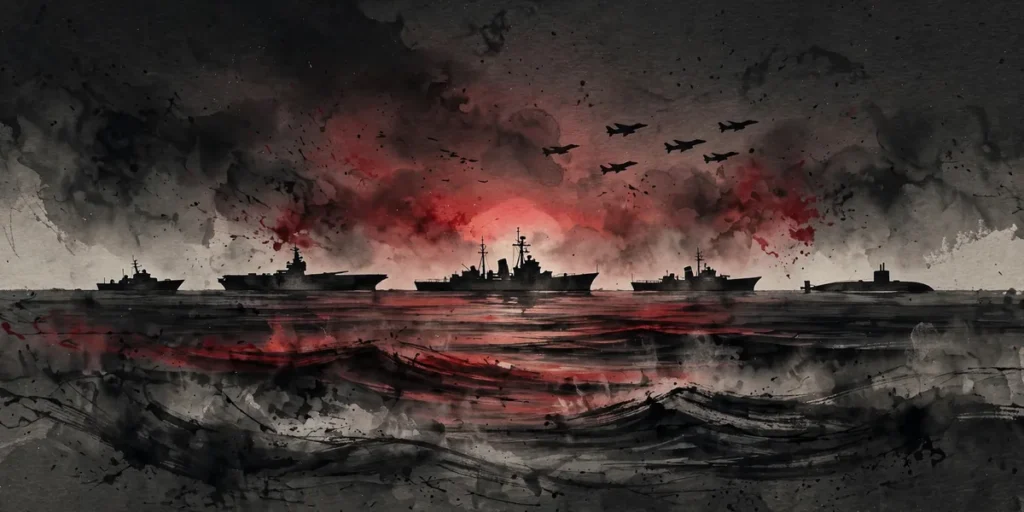
Iran retaliated with missile and drone attacks against Israel and Gulf states hosting US forces, rapidly widening the conflict. The fighting also spilled into Lebanon and placed growing pressure on shipping through the Strait of Hormuz, through which roughly a fifth of the world’s petroleum liquids moved before the conflict, according to Hum English’s October account. Oil prices surged, Gulf airports and airlines were disrupted, and governments around the world called for restraint.
Inside Iran, the decapitation strike did not produce the collapse some in Washington appeared to expect. Khamenei, who had ruled since 1989, was killed in the opening hours, but The Defense Watch reports that his son Mojtaba Khamenei was elected as the new supreme leader on March 8, 2026, and that senior Iranian leaders pledged allegiance to him. The regime survived the opening strikes and reconstituted its leadership within days — a fact that shapes every later argument about whether the campaign achieved its strategic aims or only its tactical ones.
By the numbers: what is confirmed, and what is only reported?
Figures from this campaign vary widely by source, and some of the most quoted numbers come from official US claims rather than independent verification. The table below separates the two.
| Metric | Figure | Source |
|---|---|---|
| Start of Operation Epic Fury (CONFIRMED) | 28 February 2026 | Britannica; Mathrubhumi (AFP inputs) |
| Ceasefire in effect (CONFIRMED) | 8 April 2026 | Mathrubhumi (AFP inputs); Sunday Guardian live account |
| US announcement ending the offensive phase (CONFIRMED) | Early May 2026 (conclusion dated May 5; announced May 6) | Britannica; Mathrubhumi (AFP inputs) |
| Targets struck, US account (REPORTED) | More than 13,000 targets; more than 10,200 air sorties over 38 days | White House release, as reported by Daily Jagran; Joint Base San Antonio account via LegalClarity |
| US claims of destruction (REPORTED) | About 90% of weapons factories and about 80% of air defences, per US officials | US officials via LegalClarity summary of Joint Base San Antonio account |
| Strait of Hormuz share of petroleum liquids (REPORTED estimate) | Roughly one fifth of world petroleum liquids before the conflict | Hum English |
Caveat: CONFIRMED figures above are those corroborated by at least two sources consulted for this article; REPORTED figures are official claims or single-source estimates that have not been independently verified, and should not be quoted as established fact.
How did Operation Epic Fury end — and did the war end with it?
President Donald Trump declared a ceasefire on April 8, 2026, extending it multiple times despite stalled negotiations with Tehran, according to Mathrubhumi’s report, drawing on AFP inputs. On May 6, Secretary of State Marco Rubio announced that the offensive campaign had ended. “The operation is over, Epic Fury, as the president notified Congress. We’re done with that stage of it,” Rubio said.
“This is not an offensive operation; this is a defensive operation. And what that means is very simple, there’s no shooting unless we’re shot at first.” — Secretary of State Marco Rubio, May 6, 2026, on the US posture after Epic Fury, as reported by Mathrubhumi (AFP inputs)
The careful wording matters. Rubio said the offensive stage was over, not that the confrontation was over. Fresh confrontations in the Strait of Hormuz were, in his account, not part of Epic Fury at all. A Pakistan-mediated ceasefire framework in April, and later an Islamabad memorandum in June, tried to turn the pause into a broader agreement covering the nuclear dispute, sanctions and Hormuz navigation — but by July that memorandum was already fraying, according to Hum English’s account, as Washington and Tehran accused each other of violations. The operation ended; the dispute that produced it did not.
There is also a dating nuance readers should know. Britannica dates the conclusion to May 5, while Mathrubhumi reports Rubio’s announcement on May 6. Al Mayadeen, citing CBS News reporting, notes that Rubio publicly said the operation had concluded but did not himself give May 5 as the date — the Pentagon later defended that date. The safe summary is “early May,” not a single undisputed day.
Different perspectives on Operation Epic Fury
Washington’s stated view, as presented by Rubio in May, was that the United States had achieved the strategic goals set at the start of the conflict and now preferred diplomacy. The administration also argued that it remained within its constitutional latitude: Rubio again voiced opposition to the 1973 War Powers Act, while saying the administration complied with elements of it to maintain good relations with Congress. Critically, the United States never formally declared war — only Congress holds that power under Article I, Section 8 of the US Constitution — even though Trump characterised the operations as “major combat operations.”
Tehran’s view, as reflected in Iranian official statements reported in October, is the opposite: that any new attack would be met with an equal or greater response, and that Iran’s red lines include undersea cables and military bases. Regional governments, meanwhile, were caught between the two: Gulf states faced retaliatory strikes and Hormuz disruption, while mediators such as Pakistan tried to convert ceasefires into agreements. The disagreement is not only about facts on the battlefield; it is about what “victory” meant. Destroying targets is verifiable in a different way from settling a nuclear dispute, reopening a strait permanently, or changing a regime’s negotiating position — and on those wider tests, the campaign’s outcome remains contested.
What another Epic Fury warning means for US/UK/EU readers
For readers in the United States, Britain and Europe, the October revival of the name matters for three practical reasons. First, energy: the February campaign showed how quickly a Gulf confrontation can move oil prices, and WarBrief’s own coverage of the October strike threat recorded Brent settling at a six-month high — a reminder that a threat alone, before any shot is fired, can affect pump prices and inflation expectations. Second, travel: Gulf flight cancellations and airspace disruption followed the February and October escalations, so travellers with Gulf or South Asia routes should check airline advisories rather than assume schedules are stable. Third, security policy: a new campaign would raise the same constitutional and alliance questions as the first — congressional notification versus authorisation, and whether European allies would support, oppose or simply absorb the consequences of another round.
None of that means a repeat is certain. Trump’s October remark was made at a campaign rally, not in a formal address announcing operations, and it was paired with a demand for a deal. The envoy Tom Barrack’s separate remark that a strike could come “this weekend” was publicly downplayed by Trump himself. Readers should therefore treat “another little Epic Fury” as a warning and a negotiating signal first, and as a military plan only if concrete movements, orders or strikes follow. For the latest on the October escalation, see WarBrief’s coverage of Iran’s advanced plots against US diplomats and why oil hit $117 on the Iran strike threat, and the wider energy geopolitics of the Iran war.
What to watch next in the Epic Fury story
Watch first for whether the October threats are followed by verifiable military movements — carrier or bomber deployments, embassy drawdowns beyond those already announced, or a formal notification to Congress — rather than rally rhetoric alone. Watch second for the diplomatic track: whether the ceasefire framework and Hormuz navigation talks produce anything durable, or whether the pattern of April to July repeats, with memoranda signed and then frayed. Watch third for Iran’s own signalling: threats against undersea cables and bases, reported by Reuters in October, would mark a widening of the target set if acted on, not merely repeated. Finally, watch the oil market and Gulf aviation as the earliest public indicators: both moved before official statements in February and again in October.
For context on the wider confrontation, see WarBrief’s conflict zones hub, its intelligence hub and its sanctions hub.
Frequently asked questions
What is Operation Epic Fury?
Operation Epic Fury was the US code name for joint US-Israeli military operations against Iran that began on February 28, 2026. It targeted Iranian leadership, ballistic missile and drone capabilities, naval assets and the defence industrial base, and its offensive phase was declared over in early May 2026.
Was Operation Epic Fury a declared war?
No. The United States never formally declared war on Iran; only Congress can do so under the US Constitution. Trump described the operations as major combat operations, but no declaration of war was issued, and the administration notified Congress rather than seeking a war authorisation.
How is Operation Epic Fury different from Operation Midnight Hammer?
Midnight Hammer was the June 21-22, 2025 US strike on three Iranian nuclear facilities — Fordow, Natanz and Isfahan — using B-2 bombers and Tomahawk missiles. Epic Fury, begun in February 2026, was a far larger, multi-week joint campaign against leadership, missiles, naval forces and defence industry across Iran and the wider region.
Did Operation Epic Fury end the Iran war?
No. It ended the offensive phase that carried that code name. A ceasefire took effect in April 2026 and was extended, but the wider US-Iran confrontation continued through Hormuz shipping tensions, a naval blockade dispute and renewed strike threats in October 2026.
Why is Trump talking about Epic Fury again in October 2026?
At a Florida rally on October 23, 2026, Trump said the US could launch “another little Epic Fury” unless Iran agreed to a deal. The remark revived the February campaign’s name as a warning, at a moment of heightened Gulf tensions, embassy drawdowns and surging oil prices — but a rally remark alone is not an order to strike.
Sources
- Britannica: What is Operation Epic Fury?
- Mathrubhumi (AFP inputs): Marco Rubio Announces End of Operation Epic Fury Against Iran
- The Defense Watch: Trump vs. Iran: Sanctions, Midnight Hammer & Epic Fury
- Hum English: Trump says US may launch ‘another little Epic Fury’ against Iran
- Al Mayadeen (citing CBS News): US war on Iran continues as Pentagon buries ‘Epic Fury’ codename
- Daily Jagran: Trump Warns Iran Of Another ‘Epic Fury’
Discussion 0
Share analysis, corrections, or context. Be civil — comments are moderated.