WarBrief Live | October 23, 2026 | Intel Report
Executive summary: The foreign ministers of seven countries — Britain, France, Germany, Türkiye, Egypt, Saudi Arabia and Pakistan — meet in Istanbul on October 23, 2026, for the first-ever R4+E3 talks, a new diplomatic format created at Ankara’s initiative. The agenda spans the Palestinian issue, the Strait of Hormuz, Yemen and the Russia-Ukraine war, with Turkish Foreign Minister Hakan Fidan expected to push for a diplomatic settlement of the US-Iran war, permanent freedom of navigation through Hormuz and the Bab el-Mandeb, and measures to prevent the Russia-Ukraine war from spreading to the Black Sea. The format itself is the story: Europe’s long-established E3 sitting down with the new R4 bloc of Middle Eastern powers.
What the R4+E3 format is — and who sits at the table
The “E3” needs little introduction: Britain, France and Germany have coordinated European diplomacy for more than two decades, a grouping first assembled to handle negotiations over Iran’s nuclear programme. It remains Europe’s most consistent instrument for collective diplomacy outside the EU’s own structures.
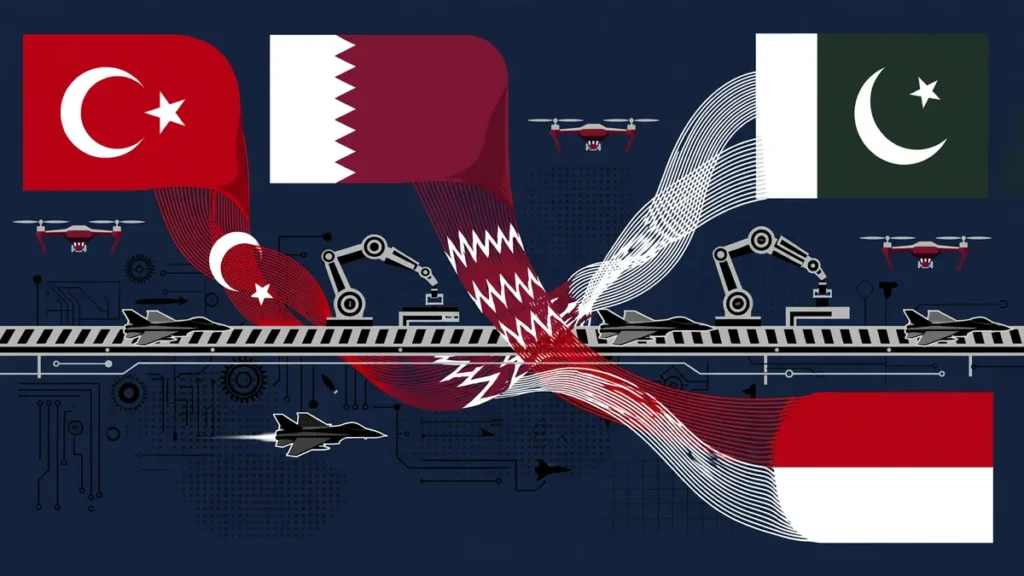
The “R4” is the new arrival. According to TRT World, the bloc brings together Egypt with the three signatories of the Mecca Joint Defence Agreement — Türkiye, Saudi Arabia and Pakistan. That pact, signed on August 7, 2026, in Mecca by Crown Prince Mohammed bin Salman, President Recep Tayyip Erdoğan and Prime Minister Shehbaz Sharif, contains a collective-defence clause modelled on NATO’s Article 5: an armed attack on any one member is regarded as an attack on all three. In its official statement, Pakistan’s Foreign Ministry stressed the accord is defensive in nature and not directed against any country.
Seven foreign ministers are expected around the table in Istanbul: Fidan chairs, joined by German Foreign Minister Johann David Wadephul, British Foreign Minister Ed Miliband, French Foreign Minister Jean-Noel Barrot, Egyptian Foreign Minister Badr Abdelatty, Pakistani Foreign Minister Ishaq Dar and Saudi Foreign Minister Faisal bin Farhan Al Saud, according to Daily Sabah. TRT World reports the meeting will take place at the Hilton Istanbul Bomonti Hotel & Conference Centre, on the sidelines of the 9th Istanbul Mediation Conference (October 23–24).
This is the first time the two groupings have met in the combined R4+E3 format — and the format, not just the agenda, is Ankara’s message. As a Turkish diplomatic source told Reuters, the seven countries will explore “opportunities for cooperation and coordination that could be put into practice … in the coming period.”
Why Istanbul, and why now
Fidan is expected to use the chair to advance what Daily Sabah describes as Türkiye’s doctrine of regional ownership: that countries directly affected by conflicts should carry the primary responsibility for resolving them, and that existing crises must not be allowed to ignite new ones. The backdrop makes the case for him.
In the Gulf, the Mecca pact was activated for the first time on October 5, when the alliance’s strategic committee ordered the rapid deployment of joint military capabilities to Saudi Arabia following Houthi attacks on the Kingdom, as reported by Defense News. The escalation has been severe enough that the United States ordered diplomats out of Saudi Arabia on October 22, while Riyadh presses for international action against the Houthis’ backers.
In the Strait of Hormuz, where seven tankers have been damaged in recent strikes, Fidan is expected to stress the need for permanent freedom of navigation — a point of direct interest to the E3, whose economies depend on energy flows through the strait.
On the US-Iran war, Reuters reports that Fidan will emphasise the need for a diplomatic solution — a position consistent with Washington’s reported veto of an Israeli offensive against Iran in October.
The Palestinian file is likely to be the most contentious in the room. AFP reports that Fidan will press for the international community to “increase pressure on Israel” over settlement expansion and what Ankara calls settler terrorism — a harder line than the E3 governments have been willing to take publicly.
What this means for Ukraine diplomacy
Ukraine sits fourth on a crowded agenda, and realistic expectations should be calibrated accordingly. This is not a Ukraine summit — it is a Middle-East-weighted gathering to which the Russia-Ukraine war has been attached. But the attachment matters, because the E3 is the diplomatic engine room of European support for Kyiv, and the R4 brings three powers with channels the Europeans do not fully control.
The one agenda item with real operational bite is the Black Sea. Reuters reports that Fidan will tell counterparts Türkiye has been working to prevent the war from spreading there, pointing to the regional security risks of the conflict. Türkiye is the Black Sea’s indispensable power, and an R4+E3 consensus on keeping the sea from becoming a new front would carry weight that European communiqués alone do not.
More broadly, the format gives European capitals a new channel to states that deal with Moscow on terms the E3 cannot. Saudi Arabia, Pakistan and Egypt all maintain working relationships with Russia, and Türkiye mediates between the two belligerents. If the meeting’s “opportunities for cooperation” produce even an informal consultation habit on Ukraine, the E3 will have gained something useful: a direct line into the regional diplomacy that increasingly shapes the war’s periphery. Follow the WarBrief Intel archive for continuing coverage as the format develops.
Assessment and outlook
First meetings of new diplomatic formats rarely produce decisions, and Istanbul is unlikely to break that rule. The honest measure of success for the R4+E3 is narrower: a joint statement that names the format as a standing channel, agreement on working-level follow-up, and convergence on at least one of the four agenda items — most plausibly freedom of navigation in the straits, where European and regional interests align most cleanly.
The deeper significance is structural. For two decades, the E3 has been a European answer to crises largely located elsewhere. The R4’s arrival — backed by a mutual-defence pact that entered its first operational phase this month — represents the Middle East’s answer to the same crises, organised on its own terms. If the two groups develop a working habit, Istanbul will be remembered not for what was agreed on October 23, but for who was finally in the same room.
Watch for: the joint statement’s language on Gaza and the straits; any reference to a follow-up meeting or working groups; and whether the format survives contact with its first real disagreement — most likely over the Palestinian file, where Ankara and the E3 start from different positions.
Sources
- Reuters: Turkey to host regional and European foreign ministers for talks on regional conflicts, source says
- AFP via Kuwait Times: Turkey hosts first meeting of European, Mideast ministers
- TRT World: Top European, Middle Eastern diplomats to gather in Istanbul for 9th mediation conference
- Daily Sabah: FM Fidan to chair first-ever R4-E3 talks in Istanbul
- Pakistan Ministry of Foreign Affairs: Message to the Nation on the Signing of the Makkah Joint Defence Agreement
- Defense News: Turkey’s foreign minister says Ankara weighing Saudi defense support, rules out offensive role