
WarBrief Live | October 24, 2026 | International Security
1
page, unclassified — the full length of the Clayton memo
0
specific targets, countries, or methods named in it
7
US posts in the Middle East reducing diplomatic staff
Oct 23
date on the memo — one day before it became public
Washington’s standoff with Tehran took a sharp turn on October 23, 2026, when a one-page US intelligence memo warned that Iranian plots against American diplomats and officials have reached an “advanced” stage. This explainer of the Iran plots against US diplomats breaks down what Director of National Intelligence Jay Clayton told Secretary of State Marco Rubio, which embassies are pulling staff, and what Donald Trump’s warning of “another little Epic Fury” signals about what comes next.
Key Takeaways
- A one-page, unclassified memo dated October 23 from DNI Jay Clayton to Secretary of State Marco Rubio says Iran has “substantially increased efforts to target U.S. personnel,” with lethal plots at “advanced stages” in the Middle East and beyond.
- The memo names no specific targets, no countries outside the Middle East, and no attack methods — it is a warning about a trend, not a list of known attacks.
- The US ordered nonessential staff and families out of its Saudi Arabia posts earlier this week, and Axios and CNN report wider staff reductions at embassies in the UAE, Lebanon, Qatar, and Jordan — a move a US official tied directly to the twin threat of Houthi attacks and Iranian plots.
- Trump said the US “may do another little Epic Fury” if Tehran does not make a deal, hours after his envoy Tom Barrack said a strike this weekend was “absolutely” possible — a remark Trump himself publicly distanced himself from.
What did the Clayton memo to Rubio actually say?
The document is short — a single unclassified page — and its contents were first reported by Axios, which obtained the October 23 memorandum sent by Director of National Intelligence Jay Clayton to Secretary of State Marco Rubio, with a copy to CIA Director John Ratcliffe. A US official subsequently confirmed the memo to The Jerusalem Post, and the Associated Press later obtained the document itself, with three US officials confirming its authenticity.
The memo’s core warning is blunt. According to the document, US intelligence agencies have received information through multiple channels that Iran has substantially intensified its efforts to target American personnel. “The lethal plotting efforts by the Iranians against US citizens have reached advanced stages in both the Middle East and certain other countries,” Clayton wrote.
Equally important is what the memo does not say. It does not identify specific targets, does not name countries outside the Middle East where plots are allegedly being developed, and does not describe attack methods. The intelligence underlying the memo has already been shared with senior, appropriately cleared members of Rubio’s team. Clayton’s concern was reach, not just content: he warned that the information was relevant to a wider group of Americans than those currently authorized to receive it, offered to brief Rubio further, and pledged to downgrade the classification of as much intelligence as possible so warnings could be distributed to State Department personnel who might be at risk — including people without security clearances.
The memo’s release in unclassified form appears designed to let the warning travel fast and far. It landed one day after the State Department began moving people out of the region.

Which US embassies are pulling staff, and why?
The staffing moves happened in two waves. Earlier this week, the State Department ordered family members and nonessential government staff to leave the US Embassy in Riyadh and the consulates in Jeddah and Dhahran, Saudi Arabia, following an escalation in attacks by the Iranian-backed Houthis — including the Houthi air campaign that shut Riyadh’s airport earlier in October.
On Friday, October 23, a second wave followed. Axios reported additional reductions in US diplomatic personnel at embassies in the United Arab Emirates, Lebanon, Qatar, and Jordan. CNN separately reported that the United States was accelerating the departure of diplomats and their families from several regional posts — with some personnel having only recently returned after evacuations earlier in the Iran war — and quoted diplomats describing the process as “chaotic.” CNN also reported the cuts could extend to Bahrain and Kuwait.
A US official tied the two threats together for Axios: “We decided that due to the threat of Houthi attacks and Iranian terror plots we need to reduce our footprint and keep only essential staff.” Another US official, speaking to the IANS news agency, said “the threat of Houthi attacks and of Iranian terror plots targeting U.S. officials are informing our decisions on staffing adjustments for embassies on RO Status in the region.”
One precision note matters. State Department spokesperson Tommy Pigott said on X that the formal ordered departure applied to “Saudi Arabia only.” That distinguishes the official evacuation order (Saudi Arabia) from the wider staffing reductions reported by Axios and CNN at other posts — two related but not identical categories of move.
By the numbers
| Metric | Figure | Source |
|---|---|---|
| Length of the Clayton memo | 1 page, unclassified, dated October 23, 2026 | Axios (via Jerusalem Post) — CONFIRMED |
| Specific targets named in the memo | None disclosed | Jerusalem Post — CONFIRMED |
| Countries outside the Middle East named | None disclosed | Jerusalem Post — CONFIRMED |
| Saudi posts under ordered departure | Embassy in Riyadh; consulates in Jeddah and Dhahran (families + nonessential staff) | US State Department — CONFIRMED |
| Additional embassies reducing staff (Oct 23) | UAE, Lebanon, Qatar, Jordan | Axios / CNN (via Jerusalem Post) — REPORTED |
| Further cuts possibly extending to | Bahrain, Kuwait | CNN (via IANS wire) — REPORTED |
Caveat: figures marked CONFIRMED rest on two or more independent reports or official statements. Figures marked REPORTED come from single or secondary sourcing — in particular the wider embassy reductions, which the State Department has not publicly confirmed beyond the Saudi Arabia ordered departure.
What is Operation Epic Fury?
Epic Fury is the US military’s name for its war against Iran, and on Friday it re-entered the political conversation. Speaking at a rally in Florida, Trump said the United States could launch another operation if Tehran failed to reach an agreement: “We may do another little Epic Fury. Or they’ll agree,” he said. “If they’re smart, they’ll just say, ‘Let’s get down to business.'”
The remark came hours after Tom Barrack — the US ambassador to Turkey and Washington’s point man on Syria — told podcast host Mario Nawfal that a strike against Iran this weekend was possible. “Could there be a strike this weekend? Absolutely,” Barrack said. But before the rally, Trump publicly distanced himself from his own envoy’s comment: “That was my ambassador? He’s a pretty powerful man, I guess. If that’s the case, I don’t know anything about it,” he told reporters in Florida.
Barrack, who has no direct role in Iran policy, also said Washington was not seeking to overthrow Iran’s government. “If you keep threatening the world, our allies, the Gulf, there will be a consequence. The consequence won’t be regime change,” he said. Earlier this month, Trump had said the US would not launch another attack before the November 3 midterm elections, which will determine control of Congress.
Meanwhile, the Jerusalem Post reports that CNN found Israel has pressed Washington to launch renewed strikes against Iran sooner — efforts that have so far been unsuccessful. The memo, the embassy pullbacks, and the strike talk are all pieces of the same escalation cycle: Washington is simultaneously warning of Iranian retaliation, reducing its exposed personnel, and keeping the threat of a new round of strikes in the long-running Iran war on the table.
What the escalation means for US/UK/EU readers
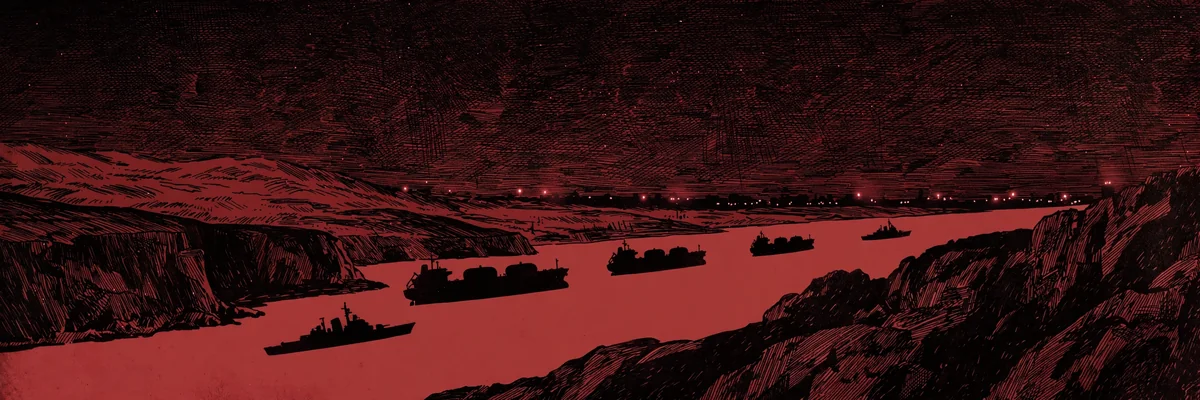
For American, British, and European readers, this story lands in three practical places: travel, fuel prices, and the markets that connect them.
Travel: US government families are leaving Saudi Arabia, and American posts across the Gulf are thinning out. Commercial aviation has already felt the conflict — the Riyadh airport attack in early October killed 12 and triggered cancellations. Anyone traveling to the Gulf in the coming weeks should check their own government’s travel advisories and expect disruption risk around Saudi and UAE airports.
Fuel and prices: News18 reports the confrontation has driven up fuel prices, adding economic pressure ahead of the US midterm elections. For UK and EU readers, any renewed US-Iran exchange threatens the same chokepoints — Hormuz above all — that set global oil and shipping costs. WarBrief’s conflict zones hub tracks how the Iran war is reshaping energy geopolitics, and our sanctions hub follows the economic pressure campaign on Tehran.
Security posture: The memo’s most unusual feature is its distribution push — Clayton explicitly asked for threat warnings to reach Americans without clearances. That is not routine. It signals that US intelligence believes the risk extends beyond embassy compounds to officials and potentially former officials in the region. For readers with family or business ties in the Gulf, the message from Washington is unambiguous: the threat picture is deteriorating, whatever the politics of the strike debate.
What to watch in the next 48 hours
The immediate question is Barrack’s: does anything happen this weekend? His “absolutely” and Trump’s “I don’t know anything about it” cannot both describe the same plan — the gap between envoy signaling and presidential sign-off is the thing to watch. Second, watch whether Clayton follows through on declassifying more of the underlying intelligence; a public release would be a deliberate pressure tactic against Tehran. Third, watch the staffing numbers: if Bahrain and Kuwait reductions are confirmed, the pullback is wider than the State Department has acknowledged. And fourth, watch Israel: CNN’s reporting that Jerusalem is pushing for sooner strikes means the timeline may not be Washington’s alone to set. For the wider intelligence picture, see our intel hub.
Frequently asked questions
What is Operation Epic Fury?
It is the US military’s name for its war against Iran. On October 23, 2026, President Trump said the US “may do another little Epic Fury” if Tehran does not agree to a deal — a threat of renewed strikes rather than a new operation name.
Which US embassies are reducing staff over the Iran threat?
The State Department ordered families and nonessential staff out of its embassy in Riyadh and consulates in Jeddah and Dhahran, Saudi Arabia. Axios and CNN report additional staff reductions at embassies in the UAE, Lebanon, Qatar, and Jordan, possibly extending to Bahrain and Kuwait — though the State Department says the formal ordered departure applies to Saudi Arabia only.
Did the intelligence memo name specific assassination targets?
No. The one-page memo says Iran’s “lethal plotting efforts” against US citizens have reached “advanced stages” in the Middle East and beyond, but it names no specific targets, no countries outside the Middle East, and no attack methods.
Is another US strike on Iran coming this weekend?
Unconfirmed. US envoy Tom Barrack said a strike this weekend was “absolutely” possible; President Trump publicly said he knew nothing about such a plan. Earlier in October, Trump said there would be no new attack before the November 3 midterm elections.
Is it safe to travel to Saudi Arabia or the UAE right now?
The US has ordered nonessential personnel out of Saudi Arabia and is trimming staff at other Gulf posts, which signals elevated risk. Travelers should consult their own government’s current travel advisories, monitor flight status given recent airport attacks, and expect possible disruption.
Sources
- The Jerusalem Post: US intelligence warns of advanced Iranian assassination plots
- News18: ‘May Do Another Epic Fury’ — Trump hints at fresh Iran strikes after envoy’s weekend attack warning
- Newsmax (AP): Iran assassination plots at ‘advanced stages’ — US intel
- Ynet: Report — Iran advancing sophisticated plots to assassinate senior US officials
- The Times of Israel: Trump says US may do another ‘little Epic Fury’ against Iran
Discussion 0
Share analysis, corrections, or context. Be civil — comments are moderated.