
WarBrief Live | October 10, 2026 | Middle East
A Houthi missile strike on Riyadh’s King Khalid International Airport on Saturday, October 10, 2026, killed at least 12 people and wounded more than 300, Saudi authorities said, in the deadliest attack on the kingdom in more than a decade. The strike — the third on the airport this week — prompted US President Donald Trump to say Washington “may” join Saudi strikes on the Houthis, a step that would mark a direct American entry into the widening Yemen campaign.
Key Takeaways
- Saturday’s Houthi missile strike on King Khalid International Airport killed at least 12 people — including one American — and wounded more than 300, per Saudi authorities cited by Reuters.
- The attack came without warning: Saudi Arabia’s threat warning system issued no alert, and all flights were diverted while the airport temporarily suspended operations.
- Asked whether the US would join Saudi strikes on the Houthis, President Trump said: “We may. We’re going to look at it.” Washington had previously declined Riyadh’s requests for direct military action.
- US and UK embassies urged citizens to avoid the airport; Etihad, Qatar Airways, and Kuwait Airways cancelled Riyadh services.
What happened at Riyadh’s King Khalid airport on Saturday?
The missile struck the airport in the afternoon on October 10, 2026, hitting passenger terminals directly. Reuters reported that the dead included four Saudis, two Bangladeshis, and one national each from the United States, Jordan, Palestine, Syria, Sudan, and Egypt. Hospitals were flooded with casualties brought in by ambulance and helicopter, and people briefed on the matter said some of the wounded were in critical condition.
An eyewitness at the airport reported seeing an explosion and then multiple people lying injured on the ground inside, with more than a dozen ambulances racing toward the facility. A Reuters-verified video showed ambulances at the airport; an injured traveler said part of the ceiling near a departure gate had collapsed.
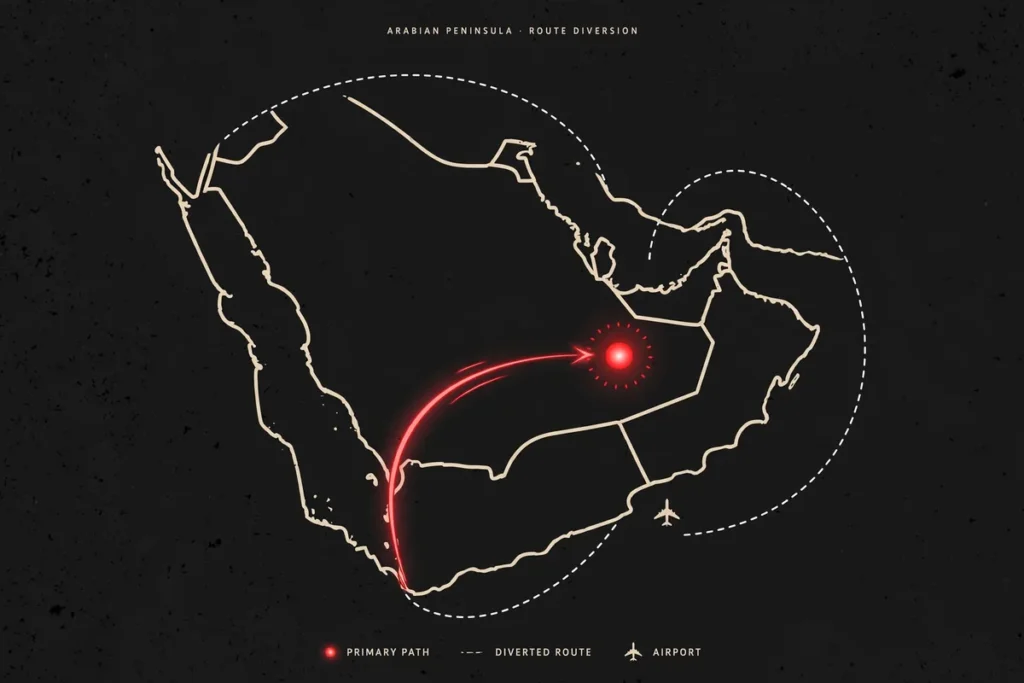
The head of the Houthi media office claimed responsibility in a post on X, saying the group had “shut down Riyadh international airport,” and the Houthis warned airliners to avoid Saudi airspace, declaring it a zone of military operations. Saturday’s was the third attack on the same airport this week: the two earlier strikes killed four people and heavily damaged a Saudia commercial aircraft parked on the tarmac. Thursday’s attacks alone killed three people, Saudi authorities said on Friday, Reuters reported, including one Saudia employee.
Flight-tracking site flightradar24 showed all Riyadh-bound flights either diverted or cancelled at one point, with only a helicopter hovering over the airport. Etihad Airways, Qatar Airways, and Kuwait Airways suspended services to the Saudi capital, days before Riyadh was due to host major energy and investment conferences. Organizers of those events said Saturday they would proceed as planned.
By the numbers: confirmed and reported figures
| Metric | Figure | Source |
|---|---|---|
| Killed in Saturday’s attack (confirmed) | At least 12 | Saudi civil aviation authority, via Reuters (Oct 10, updated 22:40 UTC) |
| Wounded in Saturday’s attack (confirmed) | More than 300 | Saudi civil aviation authority, via Reuters (Oct 10, updated 22:40 UTC) |
| Killed in this week’s two earlier airport attacks (confirmed) | 4 | Saudi authorities, via Reuters (Oct 9) |
| Nationalities among the dead (confirmed) | 4 Saudi, 2 Bangladeshi, 1 each: US, Jordan, Palestine, Syria, Sudan, Egypt | Saudi civil aviation authority, via Reuters |
| Wounded in Saturday’s attack (reported, earlier figure) | 50 | Three officials briefed on the strike, via the New York Times (Oct 10) |
| Saudi airstrikes’ toll in Yemen since Sept 3 (reported) | 91 killed | Houthi-affiliated health ministry (unverified; Reuters notes it could not independently verify) |
Caveat: casualty figures in breaking events evolve as authorities reconcile hospital and morgue counts. The 300+ wounded figure comes from the latest Reuters update citing Saudi authorities; an earlier New York Times report, based on three officials, put the wounded at 50. The table separates the two so readers can see how the reporting moved.
Why are the Houthis targeting Riyadh airport now?
The Houthis describe the airport campaign as retaliation for the Saudi-led air war in Yemen. A Saudi-led coalition backing Yemen’s internationally recognized government has claimed hundreds of strikes on Houthi targets — including 136 targets in a single round covered in our earlier briefing on Saudi coalition strikes on the Houthis — in support of a Yemeni government ground offensive that began on October 5. The Houthis say those strikes have killed civilians, including women and children; Reuters notes it could not independently verify the Houthi-affiliated health ministry’s claim of 91 dead since September 3.
The deeper context is a collapsing truce. Saudi Arabia intervened in Yemen in 2015 at the head of an Arab coalition to push the Houthis out of Sanaa, which the group had seized the previous year. The war ground to a bloody stalemate, and a 2022 deal froze the conflict — until the ceasefire unraveled over the summer of 2026, when a lightning Houthi advance seized the Bab el-Mandeb strait from Saudi-backed forces. The Yemeni government’s October offensive aims to retake that chokepoint; the airport strikes are the Houthis’ answer, aimed at imposing costs on the Saudi capital while the group besieges Taiz, Yemen’s third-largest city.
The airport is also symbolic: Riyadh wants the capital’s aviation hub to anchor its ambitions as a global business center. Senior Houthi official Mohammed al-Bukhaiti told the New York Times the strike was meant to show that civilian facilities in Yemen must enjoy the same protection as civilian facilities anywhere — a framing Riyadh rejects.
Will the US join the Saudi strikes on the Houthis?
Speaking to reporters outside the White House on Saturday, Trump was asked whether Washington would provide military support to Saudi Arabia. “We may. We’re going to look at it. We just found out about the recent attack, so we’ll make a decision. We move very quickly,” he said. The remarks reversed the administration’s earlier posture: Washington had repeatedly declined Riyadh’s requests for direct military action against the Houthis.
The significance is partly in who died. One of the 12 killed was an American — the first known US citizen death in the Houthi campaign against Saudi Arabia — which changes the political calculus in Washington. US officials had already been under pressure after the February US-Israeli war with Iran spilled across the Gulf; American participation in strikes on Yemen would be a further step into a theater where US forces have so far stayed mostly out.

What “joining” would look like is unconfirmed. Options run from intelligence and refueling support — the pattern of earlier US involvement in Yemen — to direct strikes on Houthi missile infrastructure, the kind of assets the Saudi coalition says it has been destroying. No timeline has been announced, and Trump’s “we may” is not a commitment. But the US Embassy in Riyadh’s statement that it was “aware of attacks” and “strongly recommends all US citizens avoid this airport and surrounding areas” signals Washington treats the threat as ongoing.
What this means for US/UK/EU readers
Travel: The US and UK embassies in Saudi Arabia have urged citizens to avoid King Khalid International Airport. Etihad, Qatar Airways, and Kuwait Airways have cancelled or suspended Riyadh services, and flightradar24 showed widespread diversions. Anyone booked through Riyadh — a major connecting hub for South and Southeast Asia — should check flight status before traveling and build in alternatives. Our guide to disrupted shipping and air corridors tracks how these closures compound.
Energy prices: The Houthis’ threats to shipping and Saudi infrastructure land on a market already under strain. Oil pushed past $103 a barrel this month, and the October 9 US decision to license Russian diesel imports through April 2027 was itself a price-calming move. Further escalation in the Gulf would flow directly into pump prices for American, British, and European drivers.
Security: The strike exposed gaps in Saudi air defenses — the attack came with no warning and no alert from the kingdom’s threat-warning system. For Western readers, the key question is whether a US entry into strikes on Yemen escalates or deters: Houthi spokesmen have framed their campaign as open-ended, and the group has shown it can reach the Saudi capital.
Markets: Gulf equity and aviation stocks face immediate pressure, and insurers are repricing war-risk coverage for the region. We track the conflict-economics picture on the Conflict Zones hub.
What to watch next
- Trump’s decision: whether the “we may” becomes actual US strikes, and in what form — the first hard signal of whether Washington is being pulled into Yemen.
- Saudi retaliation: the coalition has already struck 136 targets; expect an intensified response after the deadliest attack on Saudi soil in more than a decade.
- Airport reopening: whether King Khalid returns to normal operations and airlines restore Riyadh services ahead of the upcoming energy and investment conferences.
- The Yemeni ground war: the Saudi-backed offensive toward Bab el-Mandeb and the siege of Taiz — where the Houthis encircle government forces — will shape whether the airport campaign escalates or pauses.
- Air-defense upgrades: whether Riyadh accelerates missile-defense procurement after a no-warning strike penetrated the capital’s shield.
Frequently asked questions
What happened at Riyadh’s King Khalid airport on October 10, 2026?
A Houthi missile struck the airport on Saturday afternoon, killing at least 12 people and wounding more than 300, according to Saudi authorities cited by Reuters. It was the third Houthi attack on the airport that week; the Houthi media office claimed responsibility.
How many people were killed in the Riyadh airport Houthi attack?
At least 12 were killed on Saturday, including four Saudis, two Bangladeshis, and one person each from the US, Jordan, Palestine, Syria, Sudan, and Egypt. Two earlier attacks the same week killed four more people and damaged a Saudia aircraft.
Did Trump say the US will join Saudi strikes on the Houthis?
Not exactly. Asked Saturday whether Washington would provide military support, President Trump said: “We may. We’re going to look at it… we’ll make a decision. We move very quickly.” It is an open door, not a commitment; the US had previously declined Riyadh’s requests for direct action.
Are flights to Riyadh cancelled right now?
Operations at King Khalid International Airport were temporarily suspended on Saturday and all flights were diverted. Etihad, Qatar Airways, and Kuwait Airways cancelled Riyadh services. Check with your airline before traveling.
Why are the Houthis attacking Saudi airports?
The Houthis say the strikes retaliate against Saudi-led airstrikes in Yemen, which back a Yemeni government ground offensive launched October 5. The campaign also pressures Riyadh as the Houthis besiege Taiz and defend their hold on the Bab el-Mandeb strait.
Sources
- Reuters via The Jerusalem Post: Houthi attack on Saudi airport leaves 12 dead, hundreds wounded
- ANews: Trump says US may join Saudi strikes against Houthis in Yemen
- New York Post: Iran-backed Houthis strike Riyadh airport as Trump weighs US role
- Reuters: Houthi strikes on Riyadh airport killed three Saudis as war escalates

Discussion 0
Share analysis, corrections, or context. Be civil — comments are moderated.