WarBrief Live | October 7, 2026 | Breaking Analysis
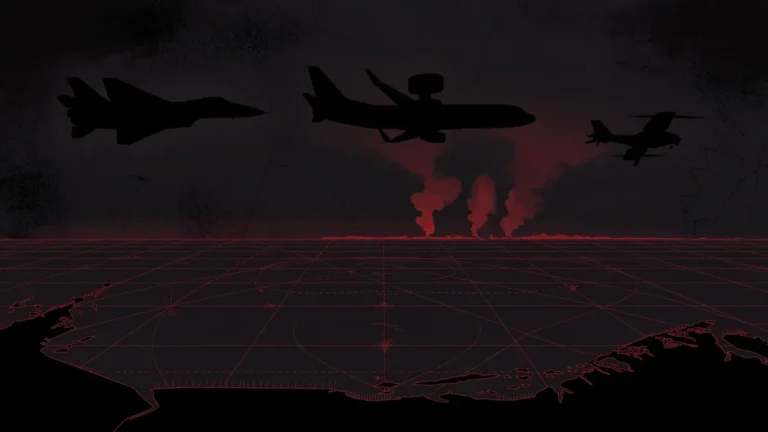
Russia says it carried out a “massive strike” on military-industrial targets in Kyiv and six other Ukrainian regions in the early hours of October 7, 2026, in what Ukrainian officials describe as one of the largest combined missile-and-drone attacks of the year. The strike hit sites Moscow links to Ukraine’s Fire Point company — the maker of the long-range Flamingo cruise missile — as well as port and ship-repair infrastructure in the Odesa region and vessels Russia says were supporting Ukraine’s armed forces.
Key Takeaways
- Russia’s defence ministry said on October 7 it launched a “massive strike” using high-precision land-, sea- and air-launched weapons plus drones against military-industrial targets in Kyiv and six regions.
- The stated targets included Fire Point facilities producing the Flamingo cruise missile — a weapon Ukraine has used to strike deep inside Russia — plus Odesa port and ship-repair infrastructure.
- In Pryluky, a Russian missile flattened a five-storey residential building. The death toll has risen to 13, including four children, with 50 injured, according to the regional governor.
- The attack came a day after Ukraine struck Russian military and energy targets with Flamingo missiles — a retaliation cycle now pushing energy and shipping risk back onto the agenda.
What happened in the October 7 strikes?
In the early hours of Wednesday, October 7, Russian missiles and drones struck Kyiv and cities across Ukraine. Kyiv’s mayor, Vitali Klitschko, said on Telegram that buildings and warehouses across the capital were damaged; a Reuters witness in the city heard explosions. A separate air strike damaged an industrial facility in the southeastern city of Dnipro, the regional governor, Oleksandr Hanzha, said on Telegram.
Hours later, Russia’s defence ministry confirmed the operation, saying its forces had carried out a “massive strike” on military-industrial facilities using what it called high-precision land-, sea- and air-launched weapons, as well as drones. The ministry said the targets included sites where the company Fire Point makes and stores Flamingo cruise missiles and medium- and long-range drones — in Kyiv and in the Kyiv, Chernihiv, Kirovohrad, Dnipropetrovsk, Poltava and Kharkiv regions. It also said the strikes hit port and ship-repair infrastructure in the Odesa region, plus vessels it said were being used in the interests of Ukraine’s armed forces.
“The Russian armed forces carried out a ‘massive strike’ on military-industrial facilities in Kyiv and other Ukrainian regions, using high-precision land-, sea- and air-launched weapons, as well as drones.” — Russia’s defence ministry, via Reuters
The deadliest single impact was in Pryluky, in the northern Chernihiv region, where a missile flattened a five-storey residential building. The death toll has risen to 13, including four children, with 50 more people injured, regional governor Vyacheslav Chaus told national television. Rescue workers were still searching the rubble for survivors at the time of writing.
Why did Russia target Fire Point and the Flamingo missile?
Fire Point is the Ukrainian manufacturer behind the FP-5 Flamingo, a ground-launched cruise missile that entered service in August 2025. According to the manufacturer, the missile can carry a payload of up to 1,150 kg to targets as far as 3,000 km away — enough range to reach deep inside Russia. That range has made it one of Ukraine’s most important long-range strike weapons, and therefore one of Russia’s most tempting targets.
Just a day before the October 7 barrage, President Volodymyr Zelensky confirmed that Ukrainian Flamingo missiles had struck a military plant in Cheboksary, in Russia’s Chuvashia region, which produces components for drones and missiles. The regional governor confirmed that the city had come under rocket attack. The same Ukrainian wave also struck the Kuibyshev oil refinery in the Samara region and two oil infrastructure facilities in the Vladimir region, hundreds of kilometres from the front line.
Moscow’s targeting pattern tells its own story: by hitting the factories that build Ukraine’s long-range weapons — alongside the Odesa ports and vessels it says support the Ukrainian war effort — Russia is trying to throttle the supply chain behind Ukraine’s deep-strike campaign. Whether the strikes actually destroyed Fire Point production lines could not be independently verified; Ukraine has not confirmed damage to its defence industry, and Russia routinely claims hits that are later disputed.

Background and timeline
The October 7 attack did not come out of nowhere. Both sides have spent weeks trading deep strikes against each other’s energy, industrial and logistics infrastructure:
- October 5–6: Ukraine struck targets inside Russia with Flamingo missiles and drones, including a drone-and-missile components plant in Cheboksary, the Kuibyshev oil refinery in the Samara region, and oil facilities in the Vladimir region. Russian authorities said more than 650 Ukrainian drones had been launched toward Russia, with air defences bringing down 185 around the Moscow region alone — figures that could not be independently verified.
- October 6: Zelensky warned on X that Russia was preparing a “massive strike,” according to the Associated Press. Ukrainian air defences went on alert overnight.
- October 7, early hours: Russian missiles and drones hit Kyiv, Pryluky, Dnipro, Kremenchuk and other cities. Klitschko reported damage to buildings and warehouses in Kyiv; Hanzha reported an industrial facility hit in Dnipro; a five-storey residential building was flattened in Pryluky.
- October 7, morning: Russia’s defence ministry confirmed the “massive strike” and listed its targets. Pryluky’s death toll rose to 13. Zelensky renewed his appeal to Western allies for more air-defence systems, particularly Patriot missiles.
By the numbers
| Metric | Figure | Source |
|---|---|---|
| Regions targeted (per Russia’s claim) | Kyiv city + 6 regions (Kyiv, Chernihiv, Kirovohrad, Dnipropetrovsk, Poltava, Kharkiv), plus Odesa port infrastructure | Russia defence ministry via Reuters |
| Dead in Pryluky residential building | 13, including 4 children | Governor Vyacheslav Chaus via Reuters |
| Injured in Pryluky | 50 | Chaus via Reuters |
| Dead across Ukraine (developing) | At least 8 | Associated Press |
| Barrage size | ~70 missiles, many ballistic, plus Shahed drones | Zelensky, via UK media |
| Flamingo missile range / payload | Up to 3,000 km / 1,150 kg | Fire Point, via Defence Blog |
Caveat: figures marked as claimed or reported come from single-source or official statements and could not be independently verified. Casualty totals are developing and were rising through the morning of October 7.

Different perspectives
Moscow frames the strike as a legitimate attack on Ukraine’s military-industrial complex — the factories and supply lines producing the long-range weapons used against Russian territory. Kyiv frames it as a terror attack on civilians, pointing to the flattened apartment block in Pryluky and damaged homes in Kyiv, Dnipro and Kremenchuk. Western analysts cited in the coverage note a pattern: both sides are now waging campaigns against the logistical and economic nervous system of the other, rather than against fielded armies — a strategy that raises civilian risk on both sides without producing decisive battlefield results. For ongoing coverage of the conflict, see our conflict zones hub.
Why it matters
The October 7 strike is significant for three reasons. First, it shows Russia is prioritising Ukraine’s emerging domestic missile industry — a direct attempt to blunt the deep-strike campaign that has been hammering Russian refineries and military plants. Second, the renewed targeting of Odesa’s ports and vessels connects this attack to the Black Sea blockade escalation, where commercial shipping has already come under drone attack in NATO waters. Third, the civilian toll — 13 dead in one apartment block, including four children — will harden Kyiv’s demand for Western air defences and complicate any near-term diplomatic track.
The retaliation cycle is also tightening the energy dimension of the war. Ukraine’s strikes on Russian refineries have already contributed to a Russian fuel crisis and an export ban; Russia’s answer is to strike the factories and ports feeding Ukraine’s war machine. For global markets, every turn of this cycle is another risk premium on oil, diesel and Black Sea shipping.
What this means for US/UK/EU readers
Energy prices: the tit-for-tat on refineries and fuel infrastructure is one reason diesel markets remain tight. Any escalation that takes more refining capacity offline — on either side — feeds through to fuel prices at European pumps within weeks. Travel: Ukrainian airspace remains closed and airlines continue to reroute around the conflict zone; travellers to eastern Europe should expect longer flight times and should check advisories. Security and markets: Zelensky’s renewed plea for Patriot missiles puts fresh pressure on US and European defence budgets and aid packages — expect the strike to feature in NATO discussions this week. European defence stocks and oil prices typically firm on news like this; treat any market move as educational context, not a signal to trade — this is analysis, not financial advice.
What to watch next
Three things will shape the coming days. First, whether Ukraine retaliates with another deep-strike wave — its Flamingo and drone arsenal gives it the reach, and the pattern of the past week suggests it will. Second, the Western response: Zelensky’s air-defence plea will test how quickly allies can move additional Patriot batteries. Third, the Black Sea: with Odesa’s ports and support vessels explicitly targeted again, watch for further incidents involving commercial shipping — including in or near NATO waters, where two ships were hit by drones off Bulgaria earlier this week.
Frequently asked questions
What was Russia’s October 7, 2026 strike on Ukraine?
Russia’s defence ministry said it carried out a “massive strike” with missiles and drones on military-industrial targets in Kyiv and six regions, plus Odesa port infrastructure. Ukrainian officials reported the attack hit residential buildings too — a five-storey apartment block in Pryluky was flattened, killing 13 people including four children.
What is the Flamingo missile and why did Russia target its maker?
The FP-5 Flamingo is a Ukrainian-made ground-launched cruise missile, in service since August 2025, with a claimed range of up to 3,000 km and a payload of up to 1,150 kg. Ukraine has used it to strike military and energy targets deep inside Russia, so Russia targeted its manufacturer, Fire Point, to try to cut off the supply of long-range weapons.
How many people were killed in the October 7 strikes?
In Pryluky, 13 people were killed and 50 injured when a missile hit a five-storey residential building, according to the regional governor. The Associated Press reported at least 8 dead across Ukraine. Totals were still developing on the morning of October 7.
Was the strike retaliation for Ukraine’s attacks inside Russia?
The timing strongly suggests it: the strike came a day after Ukraine hit a Russian military plant in Cheboksary with Flamingo missiles and struck refineries in the Samara and Vladimir regions. Neither side officially frames its strikes as retaliation, but the sequence is consistent with the escalating deep-strike exchange of recent weeks.
Will the strikes affect energy prices in Europe?
Possibly. Ukraine’s campaign against Russian refineries has already tightened diesel markets and contributed to Russia’s fuel export ban; further escalation on either side’s energy infrastructure adds a risk premium to oil and diesel. The effect on European pump prices typically shows up within weeks.
Sources
- Reuters: Russia says it launched ‘massive’ strikes on Kyiv, other areas of Ukraine
- Reuters: Death toll in Ukraine’s Pryluky after Russian strike up to 13, governor says
- Reuters: Russia strikes Ukraine’s Kyiv in fresh wave of attacks
- Defence Blog: Ukraine’s Flamingo cruise missiles hit Russian chemical plant
- Foreign Affairs Forum: Fire on Every Frontier — drones, straits, and warheads redraw the global order