WarBrief Live | November 21, 2026 | Intelligence Report
On November 20, Iraqi government forces entered Jurf al-Sakhar, ending 12 years of Kataib Hezbollah control over the Euphrates town — a negotiated entry, not a battle, triggered by an oil-smuggling investigation. State troops are back in a district closed to the government since 2014, but the militia keeps its weapons, and its fighters remain embedded in the force now policing the town.
Key Takeaways
- Iraqi army, federal police, energy police and two Popular Mobilisation Forces brigades entered Jurf al-Sakhar on November 20 after Kataib Hezbollah agreed to a partial withdrawal.
- The trigger was an intelligence report alleging oil had been illegally extracted from pipelines through the area since 2021; nine senior security and oil officials were dismissed.
- The militia keeps its weapons, and the disarmament deadline for Iran-aligned groups has slipped to June 30, 2027.
- The road to Karbala reopened to civilian traffic on November 21, and about 100,000 displaced residents may finally be able to return.
Jurf al-Sakhar by the numbers
| Metric | Figure | Status | Source |
|---|---|---|---|
| Years beyond state control | 12 (since 2014) | Confirmed | Crisis Group |
| Distance from Baghdad | About 60 km south-west | Confirmed | Al Jazeera |
| Senior officials dismissed | 9 | Confirmed | Crisis Group |
| Pipeline section now guarded | 441 km of Iraq’s 9,000 km network | Confirmed | Arab News |
| Checkpoint spacing | Every 500 metres | Confirmed | Arab News |
| Residents still displaced | About 100,000 | Confirmed | Crisis Group |
| Alleged value of oil stolen | Hundreds of millions of dollars | Reported — government allegation, denied by the group | Al Jazeera |
| Deadline for the militia to withdraw | February 20 | Confirmed | Crisis Group |
| Disarmament deadline | June 30, 2027 | Confirmed | Crisis Group |
Figures marked “Confirmed” are carried by two or more reputable sources. Figures marked “Reported” rest on a single source or an allegation.
What happened in Jurf al-Sakhar on November 20?
In mid-November, an intelligence report alleged that oil had been illegally extracted from pipelines passing through Jurf al-Sakhar and sold in Baghdad, an activity said to have run since 2021. Prime Minister Ali al-Zaidi ordered an investigation; a government committee entered the area on November 13 and reported evidence of oil smuggling and unauthorised refining. The prime minister dismissed nine top security and oil-sector officials for negligence, and his government publicly accused Kataib Hezbollah of involvement — an allegation the group rejects, calling the investigation politically motivated.
On November 19, the prime minister’s spokesperson named the occupying force: an Iraqi army brigade, a federal police battalion, an energy police regiment and two brigades from the Popular Mobilisation Forces (PMF), the state umbrella for armed groups that fought ISIS in 2014. The next morning a joint operations centre opened at 6 a.m., and state forces moved in unopposed; by about 2 p.m., the Iraqi News Agency reported the handover complete, with “no violations recorded during the deployment.” Addressing the troops by radio, al-Zaidi said they were “not waging war” and declared: “The process of establishing state authority throughout Iraq has begun in Jurf al-Sakhar.” The change came through a compromise sealed late on November 19: a partial withdrawal in exchange for a February 20 deadline to leave and a place for PMF units — including some of the group’s own fighters — in the joint command.
The story kept moving on November 21. Iraqi forces announced an illegal oil-smuggling pipeline uncovered in the Haydariya area of Najaf province, a six-inch pipe they said had carried oil continuously since 2021 and earned “tens of millions of dollars” over five years. And at 6 a.m. on November 21, the Al-Fadhiliya Bridge road toward Karbala reopened to civilian vehicles.
Why Jurf al-Sakhar matters — and why the confrontation came now
Jurf al-Sakhar is a sub-district of Babil province, on the Euphrates about 60 km south-west of Baghdad, on an important route to Karbala, one of Iraq’s two Shiite shrine cities. It became an ISIS stronghold in 2014 until state forces and Hashd groups recaptured it that October. The battle displaced the town’s predominantly Sunni population, which was barred from returning; some 100,000 residents remain displaced twelve years later. The Hashd renamed the town Jurf al-Nasr — Victory Cliff — and Kataib Hezbollah became its main authority, turning it into what the International Crisis Group calls “a sort of private militarised haven.” Before the fall of the Assad regime in Syria, the group used the town as a conduit for arms transfers from Iran to Syrian forces, and it began manufacturing its own weapons there, including drones.
The timing reflects Prime Minister al-Zaidi’s state-building push. Since taking office in May, he has sought to bring autonomous armed groups under state command, and after the withdrawal of US-led coalition forces on September 30, he outlined a nine-month disarmament plan. Most factions said they were willing to negotiate; two — Kataib Hezbollah and Harakat al-Nujaba — resisted. The group rejected the prime minister’s plan in October. Washington has repeatedly urged Baghdad to curb Iran-aligned armed groups, and Al Jazeera reported the deployment was understood to have been driven by pressure from the United States and its Gulf allies. The oil-smuggling allegation gave al-Zaidi a legal opening his predecessors lacked: as Crisis Group notes, it let him attack Kataib Hezbollah at its weakest point — public resources and corruption — rather than on weapons, a far more sensitive matter the group would almost certainly have resisted. The framing mattered: this was presented as law enforcement, not a political fight with an armed faction.
What did the deal actually settle — and what did it leave open?
What is settled is the visible part. State forces are in the town, a joint command centre is operating, the energy police are securing the 441-km pipeline section with checkpoints every 500 metres, and the road to Karbala is reopening. The handover happened without a shot fired — no small achievement, given that a clash had looked all but inevitable 24 hours earlier. For a prime minister who has staked his authority on restoring the state’s writ, that is a genuine win.
What is unresolved is nearly everything else. The scope of Kataib Hezbollah’s withdrawal is unclear: it is not known whether the group will leave the central area where the 72nd and 79th Hashd brigades have been deployed, or remain there under Hashd cover. Control of the sub-district has been divided among four bodies — the Iraqi army, federal police, counter-terrorism service and the Hashd — and the chain of command between them is untested. The group keeps its weapons. And the deal was reportedly shaped by mediation from Tehran: Quds Force commander Esmail Qaani arrived in Iraq on November 16, and the Qatari newspaper Al-Araby Al-Jadeed reported that negotiations overseen by Qaani produced the compromise. That claim is reported, not confirmed. Even inside Kataib Hezbollah, the deal exposed divisions between leaders who favoured a negotiated entry and those who opposed any concession.
What this means for Iraq and the region
For Iraq, Jurf al-Sakhar is a precedent — the first time since 2014 that a militia-held enclave has been returned to state forces without a fight. If the model holds, it could be applied to other areas where armed groups exercise de facto control. But the precedents cut both ways. In June 2020, government forces arrested fourteen Kataib Hezbollah members suspected of preparing rocket attacks, yet most were released within days after an armed mobilisation against the government; an attempt to seize weapons from Harakat al-Nujaba in Baghdad in July also failed. And al-Zaidi has already retreated once on disarmament, extending his September 30 pledge to June 30, 2027 after pushback from hardline factions.
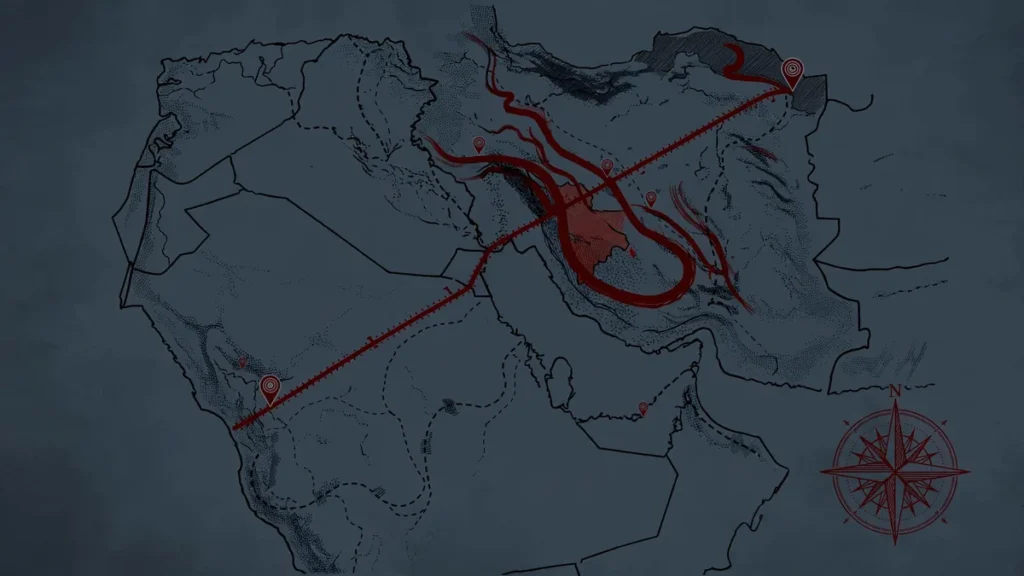
For the region, the episode shows how Iraq’s internal politics intersect with the wider confrontation over Iran. Tehran’s fingerprints are visible in the mediation, Washington’s pressure is visible in the timing, and the outcome — a negotiated compromise rather than a disarmament — suits both external patrons better than a shooting war. The Najaf pipeline discovery on November 21 suggests the investigation is widening rather than closing. Readers following the pressure campaign on Iran’s regional networks should also read our report on Task Force Iron Gate, the effort to choke Iran’s land and Caspian supply routes, and our report on the US-Saudi civilian nuclear deal and why Iran is watching it.
Assessment and outlook
Three things will decide whether the win lasts: whether Kataib Hezbollah fighters actually leave central Jurf al-Sakhar by February 20 or simply change uniforms under Hashd cover; whether the four bodies now sharing the sub-district answer to Baghdad in practice, not just on paper; and whether a prime minister who has already extended the disarmament deadline once can enforce June 30, 2027 against groups that have resisted every previous attempt.
The deeper question is whether Jurf al-Sakhar becomes a template or an exception. If the state can repeat this model — corruption charges, judicial backing, negotiated entry, shared command — it has a workable path to reclaiming territory from armed groups without civil war. If Kataib Hezbollah reasserts control through the Hashd, or the February deadline slips like the September one did, the episode will read as a face-saving compromise that changed the sign on the gate and little else. For now, the state is back in Jurf al-Sakhar. Whether it governs there is still to be decided.
Frequently asked questions
What is Jurf al-Sakhar?
A town in Babil province, about 60 km south-west of Baghdad on the Euphrates, also known as Jurf al-Nasr. Recaptured from ISIS in October 2014, it has been effectively controlled by the Iran-aligned militia Kataib Hezbollah ever since.
Why did Iraqi forces enter Jurf al-Sakhar now?
An intelligence report alleged oil had been illegally extracted from pipelines through the area since 2021. After a government investigation and the dismissal of nine senior officials, a compromise deal was sealed on November 19, allowing a peaceful entry the next morning.
Did Kataib Hezbollah surrender its weapons?
No. Under the deal the group keeps its arms, and some of its fighters remain in the area under the Popular Mobilisation Forces. The wider deadline for disarming Iran-aligned groups is June 30, 2027, after the original September 30 date was extended.
Can displaced residents return to Jurf al-Sakhar?
The road to Karbala reopened to civilian traffic on November 21, and the government says rehabilitation work has begun. About 100,000 residents remain displaced, and returns will depend on security and services being restored.
What role did Iran play in the deal?
Quds Force commander Esmail Qaani visited Iraq on November 16, and his efforts reportedly centred on avoiding a military confrontation. The claim that he personally brokered the compromise comes from Al-Araby Al-Jadeed via Ynet and has not been confirmed by Baghdad or Tehran.
Sources
- Al Jazeera: Iraqi forces deploy to Jurf al-Sakhar after deal with Iran-backed group
- Al Jazeera: Iraq reaches compromise with Kataib Hezbollah over armed group’s stronghold
- International Crisis Group: High Stakes in Iraq’s Push to Reclaim Jurf al-Sakhar
- Arab News: Can Iraq break the grip of Iran-backed militias without triggering a wider confrontation?
- Rudaw: Iraqi forces establish command center in Kata’ib Hezbollah stronghold, road to reopen Saturday
- Ynet: Iraqi forces enter Kataib Hezbollah’s Jurf al-Sakhar stronghold after more than 12 years
- Kurdistan24: Iraqi Forces Uncover Oil Smuggling Pipeline in Najaf Province
Read next: Intelligence Reports — our full archive of deep dives. Also see Task Force Iron Gate: Choking Iran’s Land and Caspian Routes and The US-Saudi Civilian Nuclear Deal.