WarBrief Live | November 19, 2026 | Intelligence Report
The IAEA Board of Governors approved the safeguards text for the planned US-Saudi civilian nuclear deal on November 18, 2026, and Director General Rafael Grossi called its inspection provisions “very satisfactory” — even though the text omits the Additional Protocol, the gold-standard inspection regime. The agreement still needs US congressional approval, and it does not bar Saudi Arabia from enriching uranium or reprocessing spent fuel. That gap is why Iran and nonproliferation experts are watching closely while the Iran war escalates.
Key Takeaways
- The IAEA Board approved the safeguards text on November 18, 2026; Grossi called the inspection provisions “very satisfactory”.
- No Additional Protocol: snap inspections apply only at declared sites, and enrichment and reprocessing are permitted on a “covered site”.
- The 123 agreement still needs US congressional approval, and it does not bar Riyadh from enriching uranium or reprocessing spent fuel.
- Timing: approval landed as the Iran war escalated, with Iran attacking a US base in Kuwait and targets in Bahrain on November 18.
What did the IAEA actually approve on November 18?
On November 18, the IAEA Board of Governors approved the safeguards text for the planned US-Saudi agreement on civil nuclear cooperation, diplomats told Reuters after Director General Rafael Grossi’s press conference in Vienna. The text sets out how the agency will verify a programme that does not yet exist: Saudi Arabia’s nuclear programme is nascent, and the kingdom only recently signed a Comprehensive Safeguards Agreement with the IAEA, covering inspections of declared nuclear facilities.
The underlying deal is a “123 agreement” — civil nuclear cooperation under Section 123 of the US Atomic Energy Act — announced in July 2026 and still awaiting approval by US lawmakers. In October, Washington and Riyadh asked the IAEA “to take the necessary steps to implement safeguards and verification measures”, Grossi told the board. The agency “will be provided with information about, and access to any sites for conversion, enrichment, fuel fabrication and reprocessing” in Saudi Arabia, he said, and Riyadh has agreed to “additional verification measures on a voluntary basis”.
Grossi’s verdict: “I think that for the specific agreement we have, it is a very satisfactory outcome.” The approval came during the IAEA Board of Governors session in Vienna this week, which is also handling Iran’s nuclear file — see our preview on our Intelligence Reports hub.
What inspections does the deal allow — and what does it leave out?
The gap is the Additional Protocol, which would grant the IAEA more intrusive powers, including snap inspections at undeclared sites. Saudi Arabia has not signed it. The safeguards text seen by Reuters allows snap inspections only at declared sites: enrichment and reprocessing will occur only “on a location on a covered site”, with “short notice access” — at least 2 hours when the IAEA is already on site, otherwise 24 hours.
Nonproliferation experts have criticised the deal for not barring Riyadh from enriching uranium or reprocessing spent fuel — two potential pathways to a nuclear weapon. Grossi acknowledged the point: “Obviously, the AP provides more access and it is in this sense considered by many as the standard … We think it’s good that countries have Additional Protocols and perhaps this will be the case in the future.”
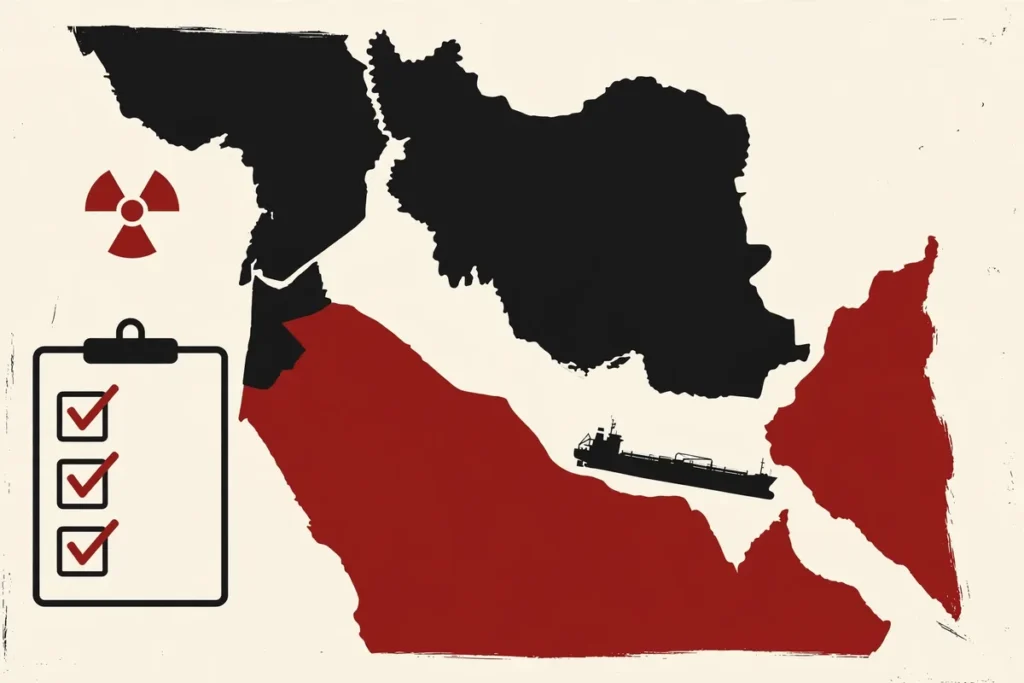
| Provision | What the text provides | Status |
|---|---|---|
| Snap inspections | At declared sites only; 2 hours’ notice if the IAEA is already on site, otherwise 24 hours | CONFIRMED — text seen by Reuters |
| Enrichment and reprocessing | Permitted, but only “on a location on a covered site” | CONFIRMED — text seen by Reuters |
| Additional Protocol | Not included in the agreement | CONFIRMED — Reuters |
| Congressional approval | 123 agreement still awaiting US lawmakers | CONFIRMED — Reuters |
Every entry here is confirmed by at least two sources.
Why is Iran watching this deal so closely?
Crown Prince Mohammed bin Salman has said Saudi Arabia will develop nuclear weapons if regional rival Iran does. Iran agreed to implement the Additional Protocol under the 2015 nuclear deal, then stopped in 2021 after President Donald Trump pulled the United States out in 2018. The asymmetry is the point: Tehran is held to a standard Riyadh has not accepted, and any Saudi move toward enrichment would be read in Tehran as a strategic signal.
The timing sharpens that reading. On November 18, Iran widened its attacks on its Gulf neighbours, targeting a US air base in Kuwait and launching several attacks on Bahrain, in apparent retaliation for an American strike the day before on Qeshm Island. Regional officials told the Associated Press that Gulf states, Pakistan and Turkey are lobbying Washington to avert all-out war, while Prime Minister Benjamin Netanyahu is pressing for a joint US-Israeli campaign on Iran. Saudi Arabia sits at the centre of that escalation — see our profile of its military capabilities.
The deal also carries a political condition: President Trump said just after the agreement was signed in July that it depended on Saudi Arabia recognising Israel. That linkage remains unresolved, and it is one reason the agreement’s path through Congress is uncertain.
Context: Grossi is running to be UN secretary-general and needs the acquiescence of the five permanent Security Council members, including the United States.
Assessment and outlook
The IAEA’s sign-off removes a technical obstacle, not a political one. The safeguards text is real — declared-site inspections, short-notice access, voluntary additional measures — but deliberately narrower than the gold standard, leaving the enrichment question open by design. That makes the agreement a precedent: other states seeking US nuclear cooperation will cite its terms.
Three things to watch: the 123 agreement’s progress through Congress, where nonproliferation critics have a hearing; whether Riyadh ever signs the Additional Protocol — Grossi left the door open; and whether the Iran war’s trajectory changes the calculus, including at today’s first-ever Trump-Putin-Xi trilateral in Shenzhen, where the Iran war and the expiry of New START are on the agenda — see our APEC Shenzhen preview.
For now, the deal’s message is double-edged: Washington and Riyadh can call it a verified civilian programme, and Tehran can call it a door left open. Both readings are true — which is why the IAEA’s verdict will be argued over for months.
Frequently asked questions
Does the US-Saudi deal let Saudi Arabia enrich uranium?
The text does not bar it. Enrichment and reprocessing may take place, but only “on a location on a covered site” subject to IAEA inspections — the core of the nonproliferation criticism.
What is the Additional Protocol?
An agreement giving the IAEA broader inspection powers, including snap inspections at undeclared sites. Saudi Arabia has signed a Comprehensive Safeguards Agreement but not the Protocol; Iran agreed to implement it under the 2015 deal but stopped in 2021.
Has the US Congress approved the deal yet?
No. The 123 agreement has yet to be approved by US lawmakers, and President Trump linked it in July to Saudi Arabia recognising Israel.
Why did the IAEA approve the safeguards text now?
The board approved it on November 18, 2026, after Washington and Riyadh asked the agency in October to implement verification measures.
Sources
- Reuters: IAEA chief says planned US-Saudi nuclear deal ‘very satisfactory’ on inspections
- Gulf News: US-Saudi Nuclear Agreement Praised by IAEA as ‘Satisfactory’
- Associated Press (via The Week): Mideast nations ramp up efforts to avert all-out war as Israel urges Iran strikes, officials say