
WarBrief Live | November 18, 2026 | Breaking Analysis
3
US carrier strike groups now in the Gulf
$92.76
Brent crude per barrel on November 17, up 0.4%
1 missing, 11 injured
Crew of an ADNOC vessel attacked in Hormuz on November 17
5–6
Explosions heard on Qeshm Island on Tuesday evening
US fighter jets struck an Islamic Revolutionary Guard Corps missile launch site on Iran’s Qeshm Island on November 17, 2026, hours after Iran said it had fired drones at a US radar system in Bahrain. By Wednesday morning, Bahrain and Kuwait were intercepting fresh Iranian attacks, and the Gulf was on its highest alert in weeks.
Key Takeaways
- US jets used precision munitions against an IRGC missile launch site on Qeshm Island on November 17, which Washington described as self-defence after Iran targeted a US radar at Sheikh Isa Air Base in Bahrain.
- Iran said the Qeshm strike caused no damage to residential, commercial or infrastructure areas; five to six explosions were heard on the island on Tuesday evening, according to IRNA.
- On the morning of November 18, Bahrain said it had intercepted Iranian attacks for the third time this week, while Kuwait said its air defences were countering hostile drone attacks.
- An ADNOC vessel was attacked in the Strait of Hormuz on November 17, leaving one crew member missing and 11 injured, according to state news agency WAM.
- A third US carrier strike group arrived in the Gulf this week, and mediation talks between Qatar and Iran continued on Tuesday even as the strikes unfolded.
What happened on Qeshm Island on November 17?
On Tuesday, November 17, 2026, US fighter jets struck a missile launch site belonging to Iran’s Islamic Revolutionary Guard Corps on Qeshm Island, the largest island in the Persian Gulf, at the mouth of the Strait of Hormuz. A US military official, speaking on condition of anonymity, told Reuters and AFP that the aircraft used precision munitions and described the strike as a self-defence operation.
“The strike was carried out in response to aggression by the IRGC targeting US service members and US assets,” the official said, referring to the attack on the US radar in Bahrain earlier the same day. US Central Command said it “remains on high alert and fully prepared to defend American civilians and military personnel throughout the region.”
Iranian media reported that an air-defence missile launcher in the Nariman area of Qeshm was targeted and that several projectiles struck the island. Iran’s official IRNA news agency said five to six explosions were heard on Qeshm on Tuesday evening. Ahmad Nafisi, the deputy provincial governor of Hormozgan province, told IRNA: “The American attack on locations on Qeshm Island caused no damage to residential, commercial, or infrastructural areas.” He added that the situation on the island was under control and that relief and service agencies were on full alert.
No casualty figures from the Qeshm strike have been confirmed by either side. The US official did not offer further comment on damage or casualties, and Iranian officials have reported none.
Why did the US strike Qeshm Island?
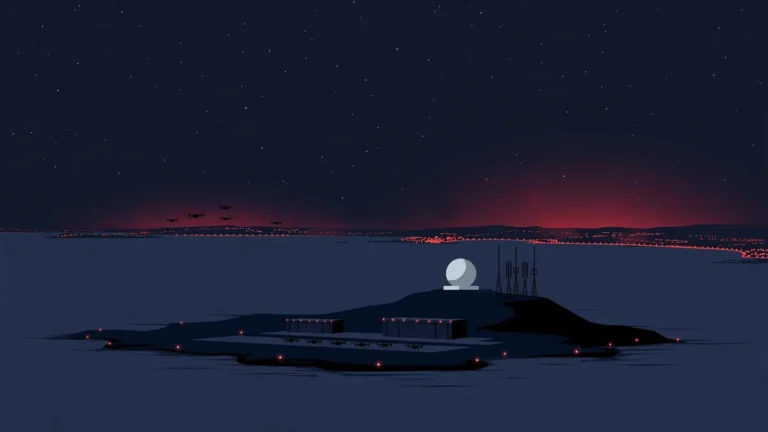
The immediate trigger was an Iranian drone attack on a US radar system in Bahrain earlier on November 17. The IRGC said its combat drones carried out a precision operation against a radar system operated by US forces at Sheikh Isa Air Base, and said the attack was a response to what it called repeated violations of Iranian airspace by US military drones.
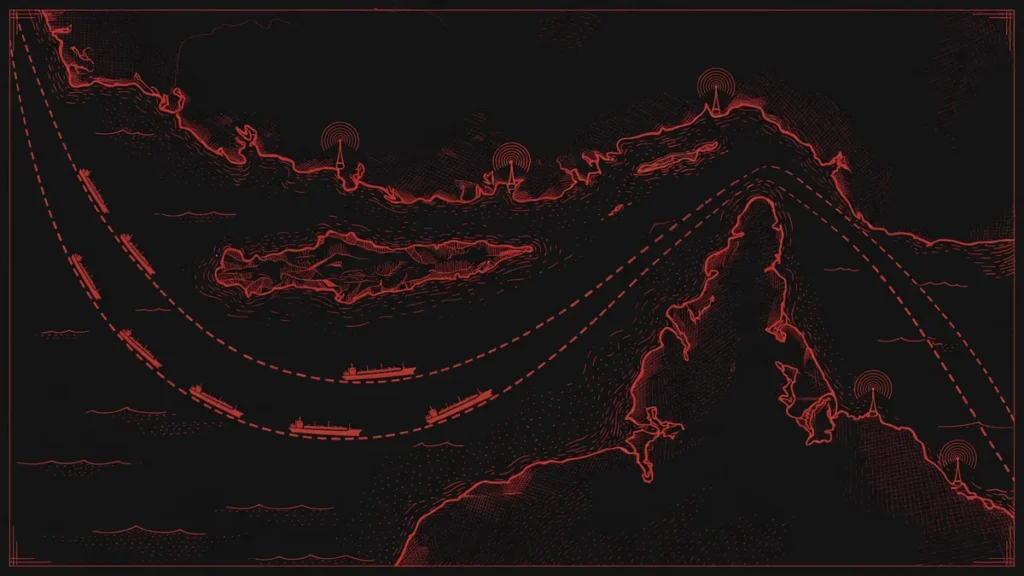
Bahrain’s armed forces said they “confronted, intercepted and destroyed a number of treacherous Iranian aerial attacks” before they could achieve their objectives, and reported no casualties or damage. US Central Command said the Iranian one-way attack drones were intercepted, with no damage to US equipment and no injuries to American personnel.
This was not the first such exchange. The United States carried out limited strikes on Qeshm earlier in November, and Iran’s Revolutionary Guards said on November 16 that they had targeted a US early-warning radar in Bahrain for the second time — an attack WarBrief covered in Iran’s second drone attack on a US radar in Bahrain. The November 17 sequence, however, was the sharpest escalation yet: a direct Iranian attack on a US facility in a Gulf host state, followed within hours by a direct US strike on Iranian territory.
The IRGC also warned Bahrain over its alliance with the United States and its stance towards Shiite clergy. Bahrain, which hosts the headquarters of the US Fifth Fleet, is a Shiite-majority country ruled by a Sunni royal family. The attack followed the sentencing in Bahrain of 64 people, mostly Shiite clerics, to life in prison on charges of colluding with Iran to undermine the state — charges Iran’s foreign ministry called baseless.
What is confirmed and what is still only reported?
The pace of claims in this war makes the distinction matter. Here is where each major claim stands as of the morning of November 18.
Confirmed: US jets struck an IRGC missile launch site on Qeshm Island on November 17 (US military official, via Reuters and AFP; confirmed by Iranian officials). Iran targeted a US radar at Sheikh Isa Air Base in Bahrain on November 17 (IRGC statement; Bahrain and CENTCOM confirmed interceptions). Bahrain intercepted Iranian attacks early on November 18 for the third time this week (Bahrain Defence Force, via Reuters). Kuwait’s military said on November 18 that its air defences were countering hostile drone attacks (Kuwait Army General Staff). An ADNOC vessel was attacked in the Strait of Hormuz on the evening of November 17, with one crew member missing and 11 injured (ADNOC Logistics & Services, via state news agency WAM). A Saudi-led coalition intercepted a Houthi cruise missile launched towards the Riyadh region on November 18. The Gulf Cooperation Council condemned the attacks on Bahrain and called on the UN Security Council to act.
Reported, not independently verified: Iran’s army said on November 18 that its drones targeted Patriot air defence systems and drone and missile launch platforms at Ali Al-Salem Air Base in Kuwait — the claim was carried by Iranian state television, and Kuwait has not confirmed damage to the base. Iran’s IRGC and navy said on November 17 that a ship carrying LNG and two oil tankers had caught fire in the strait; Reuters said it could not independently verify the reports. The IRGC also said it had intercepted and captured a US drone south of Qeshm. The UK Maritime Trade Operations agency said the crew of a tanker passing through the strait was unaccounted for after being attacked north of the Omani port of Khasab — that report is consistent with the ADNOC vessel incident but has not been formally linked to it. Iran’s claim that three tankers were hit by naval mines, first made after the November 15 tanker incidents, also remains unverified by independent sources. Readers should treat Iranian claims about damage to US and allied bases with caution until independent confirmation appears.
By the numbers: the Gulf escalation in figures
| Metric | Figure | Source |
|---|---|---|
| US carrier strike groups in the Gulf | 3 (USS Theodore Roosevelt arrived November 15) | The National / Axios, via Dawn |
| Brent crude, November 17 close | $92.76 per barrel, up 0.4% | Reuters |
| Brent crude, April 2026 wartime peak | $126.41 per barrel | Reuters |
| ADNOC vessel crew, November 17 attack | 1 missing, 11 injured | WAM, via Gulf News |
| Explosions heard on Qeshm, November 17 evening | 5–6 | IRNA |
| Share of global oil and LNG the Strait of Hormuz carried before the war | About one-fifth | Times of Israel |
| Duration of the US–Iran war | Nearly 9 months (began February 28, 2026) | Reuters / AFP |
Caveat: figures marked as claims by one side only — including Iranian claims about damage to US bases and tanker fires — are reported, not confirmed, and are not included in this table.
What the Qeshm strikes mean for US/UK/EU readers
For readers in the US, UK and Europe, the escalation lands first on energy prices and then on travel and security. Benchmark Brent crude closed at $92.76 a barrel on November 17, up 0.4% on the day — much higher than before the war, but well below April’s wartime peak of $126.41. The market’s relatively muted reaction suggests traders still expect the fighting to stay contained, but the pattern of the last three days — attacks on tankers, a strike on an ADNOC vessel, and a third carrier group arriving — is exactly the sequence that pushed prices sharply higher in the spring. UK inflation already climbed to 3.6% in October, with officials citing Middle East conflict-driven fuel costs, so any sustained rise in crude feeds directly into petrol prices and household bills.
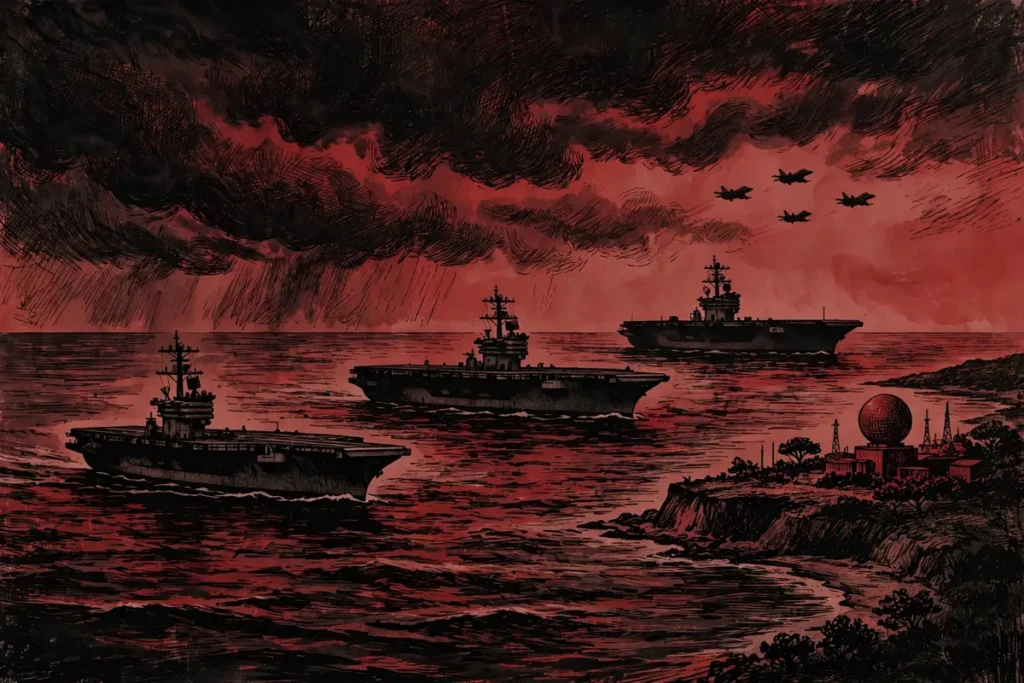
Travel is the second channel. Bahrain and Kuwait are both on high alert, and Gulf airspace has already seen repeated drone interceptions this week. Travellers with flights routing through Bahrain, Kuwait or the wider Gulf should check airline advisories before departure, as airspace closures and diversions have followed escalations before. For the US military community, the stakes are direct: the Pentagon has now publicly committed to defending personnel across the region, and the arrival of a third carrier strike group signals that Washington expects the confrontation to continue.
For European readers, the diplomatic angle matters most. The Gulf Cooperation Council has formally urged the UN Security Council to act, and mediation by Qatar and Oman is running in parallel with the strikes. If those talks fail, Europe faces the same two risks as in the spring: higher energy costs and a new wave of shipping disruption in a waterway that still carries a large share of the world’s oil and liquefied natural gas.
Background and timeline: how the Gulf reached this point
The war began on February 28, 2026, when the United States and Israel launched strikes on Iran. It has since fought in waves — heavy fighting followed by lulls and talks — and has now spilled over into the Gulf states that host US military facilities, as Tehran steps up retaliatory attacks on American assets in the region.
- November 2, 2026: The US carries out limited strikes on Qeshm Island, targeting a launcher that had fired missiles at US aircraft, according to US officials. Iran reports five explosions on the island.
- November 15, 2026: Three tankers are reported hit by mines in the Strait of Hormuz. Iran claims the tankers struck naval mines; the claim remains unverified. WarBrief’s explainer on how naval mines work in Hormuz sets out what is known about the threat.
- November 16, 2026: Iran launches its second drone attack on a US radar in Bahrain. US Central Command says it shot down two Iranian drones, with no casualties or damage.
- November 17, 2026: The IRGC says it targeted the US radar at Sheikh Isa Air Base in Bahrain in the morning. Hours later, US fighter jets strike an IRGC missile launch site on Qeshm Island. An ADNOC vessel is attacked in the Strait of Hormuz in the evening, leaving one crew member missing and 11 injured. Iran claims three tankers caught fire in the strait.
- November 18, 2026: Bahrain says its air defences intercepted Iranian attacks for the third time this week. Kuwait says its air defences are countering hostile drone attacks. Iran’s army says its drones targeted Patriot systems at Ali Al-Salem Air Base in Kuwait. The Saudi-led coalition says it intercepted a Houthi cruise missile aimed at Riyadh. The GCC condemns the attacks and urges UN Security Council action.
Running alongside the fighting is a mediation track. Qatari and Iranian officials met on Tuesday, November 17, as part of efforts to end nearly nine months of war, with Qatar saying the talks aimed at “bridging perspectives and narrowing the gap between proposals presented on the ground.” Iranian Foreign Minister Abbas Araghchi visited Oman the same day, discussing safeguarding maritime corridors and preventing military escalation with Oman’s foreign minister and meeting Sultan Haitham bin Tariq. Pakistan’s Field Marshal Asim Munir was in Tehran on November 16–17, with Saudi and Turkish officials also involved in the mediation effort.
The mediation faces a complication. US President Donald Trump said on November 17 that he was taking “very seriously” reports that Iran was planning to attack officials in Washington, possibly with a so-called dirty bomb, after a CNN report citing US intelligence assessments. Iran’s foreign ministry dismissed the report as fabricated, saying Washington was “seeking to lay the media groundwork for their sinister designs.” Trump has also said he will maintain a US naval blockade on Iran because Tehran has continued to disrupt shipping in the Strait of Hormuz — a sticking point in negotiations.
Different perspectives
Washington frames the Qeshm strike as a limited, defensive response. The anonymous US military official’s language — precision munitions, a single missile launch site, self-defence — is designed to signal restraint: a retaliation proportionate to the Bahrain attack, not the opening of a wider campaign. That framing matches the pattern of the November 2 strikes, which US officials also described as limited and defensive. The arrival of a third carrier strike group, however, gives Washington the capacity to escalate quickly if Iran continues to target US personnel.
Tehran frames its actions as responses to American provocation. The IRGC said the Bahrain radar attack was a response to repeated violations of Iranian airspace by US military drones, and Iranian officials have consistently described the Qeshm strike as causing no meaningful damage. Iran’s army spokesman has warned that any further US attack would receive an “immediate and crushing” response on a broader scale than before. The message is deterrence: each American strike will be answered, and the theatre of conflict will not be limited to Iranian territory.
The Gulf states caught in the middle are asking for the fighting to stop. The GCC’s condemnation of the attacks on Bahrain and its call for UN Security Council action reflect a shared fear: that the war, which began as a US–Iran confrontation, is becoming a regional conflict fought over their territory and airspace. Qatar’s mediation effort and Oman’s role as a channel to Tehran are the practical expression of that fear. For the Gulf monarchies, the worst outcome is not a single strike but a sustained tit-for-tat cycle that makes their airspace a battlefield and their ports a target — the exact pattern now visible in Bahrain, Kuwait and the Strait of Hormuz.
What to watch next in the Gulf
Four things will decide whether this escalation burns out or widens. First, whether Iran’s attacks on Bahrain and Kuwait continue into a second day — the November 18 morning interceptions are the third wave against Bahrain this week, and a fourth would signal a deliberate campaign rather than a single retaliation. Second, whether the United States strikes again, and whether any second strike goes beyond a single launch site on Qeshm. Third, whether the tanker attacks in the strait continue: the ADNOC vessel incident and the reported mine strikes point to a maritime campaign that could push oil prices sharply higher if it disrupts transits. Fourth, whether the Qatar–Oman mediation track produces anything concrete — a ceasefire framework, a shipping arrangement, or even a pause in strikes — before the next round of attacks makes talks politically impossible.
Also watch the US naval posture. The third carrier strike group is now in the region, and Task Force Iron Gate — the US effort to choke Iran’s land and Caspian supply routes — shows that Washington is building pressure on several fronts at once. And watch the Houthi front: the cruise missile aimed at Riyadh on November 18 shows that Iran’s allies are part of the same escalation, and a successful strike on a Gulf capital would change the political calculus for every government in the region. WarBrief will update this story as new verified information emerges; the conflict zones hub carries the latest on the wider war.
Frequently asked questions
What happened on Qeshm Island on November 17, 2026?
US fighter jets used precision munitions to strike an IRGC missile launch site on Qeshm Island in the Strait of Hormuz. A US military official described the strike as self-defence, in response to Iranian attacks on US personnel and assets in Bahrain. Iranian officials said the attack caused no damage to residential areas or vital infrastructure, and five to six explosions were heard on the island that evening.
Why did the US strike Qeshm Island?
Hours earlier, Iran’s Revolutionary Guards said they had launched drones at a US radar system at Sheikh Isa Air Base in Bahrain. The US said the Qeshm strike was a direct response to that attack on American personnel and assets. Iran said its Bahrain attack was itself a response to alleged violations of Iranian airspace by US military drones.
Is the Strait of Hormuz still open to shipping?
The strait remains open but is partly blocked and increasingly dangerous. Tanker attacks have increased this month, an ADNOC vessel was attacked on November 17 with one crew member missing and 11 injured, and the US military is escorting ships through the waterway in defiance of Iranian attempts to close it. Shipping companies and insurers are watching the situation closely.
How many US aircraft carriers are in the Gulf?
Three US carrier strike groups are now in the region, after the USS Theodore Roosevelt arrived on November 15, according to The National and Axios. The build-up gives the US the capacity to sustain strikes and defend its forces across the Gulf, and it signals that Washington expects the confrontation to continue.
Are the Qatar and Oman talks still going on?
Yes. Qatari and Iranian officials met on November 17, and Iranian Foreign Minister Abbas Araghchi visited Oman the same day to discuss safeguarding maritime corridors and preventing escalation. Pakistan’s Field Marshal Munir was also in Tehran on November 16–17 as part of the mediation effort. No breakthrough has been reported.
Sources
- The Hindu (Reuters): Bahrain, Kuwait attacked after U.S. strikes Iranian island
- The Times of Israel: US strikes Iran’s Qeshm Island after Tehran attacks American radar site in Bahrain
- Gulf News: Gulf Crisis Deepens: Iran Targets Bahrain, ADNOC Vessel Attacked, US Responds with Strikes
- Dawn: Live Updates — US Iran Rift
- Prothom Alo (AFP): Gulf nations on alert after US strikes Iranian island
- The Indian Express: US strikes Iran missile site on Qeshm Island

Discussion 0
Share analysis, corrections, or context. Be civil — comments are moderated.