
WarBrief Live | November 16, 2026 | Breaking Analysis
6
drones the IRGC says it launched at the Al-Riffa radar on November 15 — claimed, not confirmed
2
threat alerts from Bahrain’s Interior Ministry — the first since September
2
Iranian attacks on Bahrain in three days — November 13 and November 15
1,500–2,500
missiles Iran is estimated to retain, per US intelligence cited by the Wall Street Journal
Iran says it launched six drones at a US air-defence radar in Bahrain on Sunday, November 15, 2026. Bahrain says its air defences intercepted the attack before it reached its target. No damage or casualties have been reported, and the US military has not yet commented on the latest claim.
Key Takeaways
- Iran’s Revolutionary Guards say six drones targeted the US air-defence radar at Bahrain’s Al-Riffa helicopter base on November 15 — the second Iranian attack on Bahrain in three days.
- Bahrain’s Defence Force says its air defences intercepted and destroyed several Iranian aerial attacks before they reached their targets; sirens sounded and the Interior Ministry issued two threat alerts, the first since September.
- Whether the radar was actually hit is unconfirmed: Iran claims a successful strike, Bahrain says the attack was stopped, and US Central Command has not publicly commented on Sunday’s incident.
- The attack came as two tankers struck mines in the Strait of Hormuz on November 14 and as President Donald Trump said he might hold off further strikes on Iran if there are no new provocations.
What happened in Bahrain on Sunday, November 15?
Sirens sounded across Bahrain in the early hours of Sunday, November 15, 2026, as the kingdom’s Interior Ministry warned residents of a potential threat and urged them to remain calm and proceed to the nearest safe location. The ministry issued two alerts within about three hours, the first at around 4:30am local time (01:30 GMT), without giving details about the nature of the threat. It was the first time Bahrain had issued such alerts since September.
Hours later, Iran’s Islamic Revolutionary Guard Corps (IRGC) said its Aerospace Force had launched six drones at a US air-defence radar system at the Al-Riffa helicopter base in Bahrain, in retaliation for what it described as hostile US actions. The claim was carried by Iranian state broadcaster IRIB and the IRGC-affiliated Fars News Agency. In the same statement, the IRGC said the Strait of Hormuz remained closed, claimed US efforts to escort ships through the waterway had failed, and warned that any US attack would draw a more severe response.
Bahrain’s Defence Force gave a different account. It said its air defences had intercepted and destroyed several Iranian aerial attacks before they could reach their intended targets, and accused Tehran of continuing what it called a “systematic hostile approach” toward the kingdom. The force said all units remained at the highest level of readiness. Bahrain also strongly condemned the renewed attacks, noting that the IRGC had claimed responsibility for both the Friday and Sunday incidents. Al Jazeera’s explainer and the Reuters report carried by Haaretz both record the two conflicting accounts without resolving them.
The US Embassy in Bahrain issued a security alert urging American citizens in the country to exercise heightened vigilance because of the risk of attacks from Iran and the Houthis. As of publication, US Central Command (CENTCOM) had not publicly commented on Sunday’s claim.
What is confirmed — and what is still only claimed?
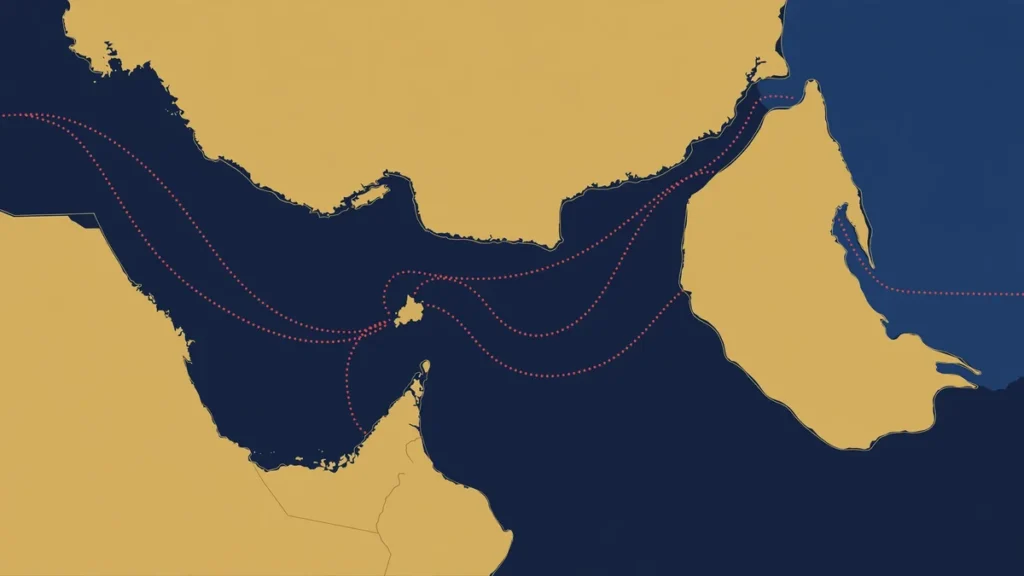
The core of this story is a split between two official accounts, and the split matters more than either claim on its own. What is confirmed is that something flew toward Bahrain in the early hours of Sunday, that Bahrain’s government treated it as a real threat, and that the kingdom’s air defences engaged it. What is not confirmed is whether any drone reached the Al-Riffa radar, whether the radar was damaged, or even whether all six drones Iran claims to have launched actually existed.
Confirmed: Bahrain’s Interior Ministry issued two threat alerts on November 15, the first since September, and sirens sounded. Bahrain’s Defence Force says it intercepted and destroyed several Iranian aerial attacks. On Friday, November 13, the IRGC claimed it had destroyed a US early-warning radar in Bahrain; CENTCOM denied that claim, saying it had shot down two Iranian drones with no injuries or damage. The US-Israel war on Iran began on February 28, 2026, and is now in its ninth month.
Claimed, not confirmed: the IRGC’s assertion that its six drones successfully targeted — or struck — the radar at Al-Riffa. No independent evidence of damage has been published, and neither Bahrain nor the United States has confirmed any impact. The same caution applies to the IRGC Navy’s statement that two oil tankers struck naval mines in the Strait of Hormuz on November 14 and caught fire: Reuters reported that it could not independently verify that claim, and the vessels were not identified.
The pattern is familiar from Friday’s incident. Then, as now, Iran claimed a radar destroyed and the United States said the drones were shot down with no damage. Readers should treat the gap between the two accounts as the story itself: until satellite imagery, an official US statement, or independent verification appears, the radar’s condition is unknown.
By the numbers: the Bahrain drone attacks
| Metric | Figure | Source | Status |
|---|---|---|---|
| Drones the IRGC says it launched at Al-Riffa (Nov 15) | 6 | IRGC via IRIB / Fars | Claimed |
| Drones CENTCOM says it shot down over Bahrain (Nov 13) | 2 | US Central Command | Confirmed |
| Bahrain Interior Ministry threat alerts (Nov 15) | 2 | Bahrain Interior Ministry | Confirmed |
| Days between the two Bahrain attacks | 2 | Timeline of official statements | Confirmed |
| Missiles Iran is estimated to retain | 1,500–2,500 | Wall Street Journal, citing US intelligence | Reported — low confidence |
| Tankers that struck mines in the Strait of Hormuz (Nov 14) | 2 | IRGC Navy via IRNA | Claimed — Reuters could not verify |
| Houthi ballistic missiles intercepted en route to Riyadh (Nov 15) | 2 | Saudi-led coalition | Reported |
Figures marked “claimed” come from a single party and have not been independently verified. The missile-stockpile estimate carries a low level of confidence, according to the US officials cited, because of the difficulty of determining how many missiles are ready for launch and how many remain in storage.
Background and timeline: how Bahrain became a front line

Bahrain is a small Gulf kingdom with an outsized strategic role: it hosts the US Navy’s Fifth Fleet, the command responsible for naval operations across the Middle East, and US air-defence assets on the island protect both Bahraini territory and American forces. That is why Iran has repeatedly treated Bahraini-based radars as targets rather than the fleet itself — a radar is a fixed, symbolic, and militarily useful objective, and striking at it lets Tehran signal resolve without sinking a ship.
- February 28, 2026: the US-Israel war on Iran begins with US and Israeli strikes on Iran. Tehran responds with missile and drone attacks on US military bases in Gulf countries.
- First four months of the war: a Pentagon inspector general’s report released in September found that Iranian attacks had damaged or destroyed buildings at US installations in eight countries, including Bahrain.
- Early September 2026: the last Iranian attack claim on a US military asset in a Gulf country before the recent pair, according to Reuters — and the last time Bahrain issued threat alerts, until Sunday.
- November 13, 2026 (Friday): the IRGC says it destroyed a US early-warning radar in Bahrain in retaliation for what it called an air attack on a telecommunications tower in southern Iran. CENTCOM says it shot down two Iranian drones and reports no injuries or damage.
- November 14, 2026 (Saturday): the IRGC Navy says two oil tankers struck sea mines south of the Strait of Hormuz and caught fire, claiming the vessels had switched off their navigation systems and were using an unauthorised route. Two other tankers turned back after warnings, the IRGC says. Reuters could not independently verify the mine claim.
- November 15, 2026 (Sunday): sirens sound in Bahrain, the Interior Ministry issues two threat alerts, the Defence Force says it intercepted several Iranian aerial attacks, and the IRGC claims six drones targeted the Al-Riffa radar. The same day, the Saudi-led coalition says it intercepted two Houthi ballistic missiles headed for Riyadh and three drones in Saudi Arabia’s Eastern Province.
The two-month lull that ended on Friday is the most important piece of context. From early September until November 13, Iran had not publicly claimed an attack on US military assets in a Gulf country. The pause coincided with stalled negotiations over ending the war. Its end — twice in three days — suggests Tehran has decided that limited, deniable pressure on Gulf hosts is worth the risk of escalation, or that it believes the diplomatic track is going nowhere.
Why the Bahrain attacks matter for the wider Iran war
Three things make the Sunday attack more significant than its modest scale suggests. First, it is the second strike on the same target set in 48 hours. A single drone launch can be dismissed as a signal; a repeated attack on the same radar, after a two-month pause, looks like a deliberate campaign — a test of whether Bahraini and American defences can be saturated, and a message that the lull is over.
Second, the attack was claimed by the IRGC as retaliation for “hostile US actions” while the United States maintains a naval blockade of Iranian ports and has tightened sanctions. President Donald Trump said in recent days that he might hold off from attacking Iran if the United States faces no new provocations from Tehran or the Iran-backed Houthis in Yemen — but that he would maintain the blockade. The Bahrain attack, if it is treated in Washington as a new provocation, could close the off-ramp Trump described. That is the escalation logic both sides are now testing: Iran probes the boundary of what counts as a provocation; the United States decides whether to answer.
Third, the attack did not happen in isolation. The same weekend brought the reported mine strikes on two tankers in the Strait of Hormuz, Houthi missile fire toward Riyadh, and a reported Iranian cyber operation against supermarket refrigeration systems in France — which Paris linked to an Iranian cyber unit and the IRGC dismissed as an Israeli “false flag”. Taken together, the pattern is a multi-front pressure campaign: drones at Bahrain, mines in Hormuz, missiles at Riyadh, cyber operations in Europe. Each incident is individually small; collectively they raise the cost of the status quo for Washington and its partners.
“Both sides may prefer to avoid a full-scale war, but the danger lies in miscalculation. Iran may continue limited maritime and regional escalation to increase pressure while Washington could respond militarily. Such exchanges could eventually lead to a broader conflict that neither side initially intended.”
— Saeid Golkar, associate professor of political science at the University of Tennessee at Chattanooga, speaking to Al Jazeera
The diplomacy, meanwhile, is stuck. Iran’s parliamentary speaker and chief negotiator, Mohammad Bagher Ghalibaf, has said Tehran conveyed seven conditions for a deal through a Qatari mediator — including lifting the US naval blockade and sanctions, releasing frozen Iranian funds, ending hostilities on all fronts, and formally declaring the war over — and is awaiting an official US response. Iran’s Foreign Ministry spokesperson, Esmaeil Baghaei, has accused the United States of lacking the commitment to advance talks, and Deputy Foreign Minister Kazem Gharibabadi said late on Sunday that Tehran “will not wait for the US to attack first” before responding. Tehran has also told the UN Security Council it would respond immediately to renewed US or Israeli attacks, and Bahrain has called for the full implementation of Security Council Resolution 2817, which condemned Iranian attacks on Bahrain and other countries in the region.
What the Bahrain drone attacks mean for US/UK/EU readers
For readers in the United States, the most direct consequence is the safety of US personnel and their families based in Bahrain, and the readiness of the Fifth Fleet. The US Embassy’s security alert — urging heightened vigilance — is the practical signal: Americans in Bahrain should follow official guidance, and the Pentagon will be watching whether Sunday’s incident is treated as the provocation that reopens the strike option Trump had appeared to pause.
For UK and European readers, the exposure runs through energy and shipping. The Strait of Hormuz carries a large share of the world’s seaborne oil, and the reported mine strikes on two tankers — even unverified — are the kind of incident that pushes up war-risk insurance premiums and freight rates, costs that feed through to fuel and heating bills within weeks. The reported French supermarket cyberattack, which Paris says hit more than 700 retail locations in October, is a reminder that this conflict already touches European daily life, not only Gulf shipping lanes. And with Iran estimated to retain between 1,500 and 2,500 missiles despite months of strikes, according to US intelligence cited by the Wall Street Journal, the capacity for further escalation has not been removed — only degraded.
For travellers, the immediate advice is unchanged but worth repeating: Bahrain’s Interior Ministry alerts were the first since September, flights and ferry services in the Gulf can be disrupted at short notice when airspace closes, and government travel advice for Bahrain, Saudi Arabia, and the wider Gulf should be checked before any trip.
What to watch next in the Gulf
The first thing to watch is whether CENTCOM issues a statement on Sunday’s incident — and what it says. On Friday, the command’s denial of the IRGC’s radar claim settled the question within hours. Silence, or a delayed statement, would leave the damage question open and give Tehran room to claim success. Satellite imagery of the Al-Riffa base, if it emerges in the coming days, would be the next check.
The second is the Hormuz shipping picture. Two tankers reportedly struck mines on Saturday; Al Jazeera’s reporting from Tehran noted that the number of such incidents has been increasing. If a third vessel is hit, or if a shipping company or insurer confirms damage, the mine campaign becomes a confirmed fact rather than an Iranian claim — and the insurance and oil-price consequences follow quickly.
The third is the diplomatic track. Ghalibaf’s seven conditions are on the table through a Qatari mediator, and Trump’s conditional pause is the clearest off-ramp either side has offered in weeks. But the pause was conditioned on no new provocations, and Bahrain has now had two. Whether Washington treats the drone attacks as the provocation that voids the pause — or as a manageable incident that diplomacy can absorb — is the decision that will shape the next phase of the war.
Read next: our account of Friday’s attack on the Bahrain radar, and what is confirmed about the tanker mine strikes in the Strait of Hormuz. For the wider picture, see our Conflict Zones hub and our explainer on Bab el-Mandeb vs the Strait of Hormuz.
Frequently asked questions
Did Iran hit the US radar in Bahrain on November 15?
That is unconfirmed. Iran’s Revolutionary Guards say six drones targeted the radar at the Al-Riffa helicopter base. Bahrain’s Defence Force says its air defences intercepted and destroyed several Iranian aerial attacks before they reached their targets. The US military has not publicly commented on Sunday’s incident, and no independent evidence of damage has been published.
How many drones were involved in the Bahrain attack?
Iran says six drones were launched on Sunday, November 15. On Friday, November 13, Iran claimed an attack on a US early-warning radar in Bahrain, and US Central Command said it shot down two Iranian drones. The figure of six comes from the IRGC’s own statement and has not been independently verified.
Why is Iran attacking Bahrain?
Bahrain hosts the US Navy’s Fifth Fleet and US air-defence assets, making it a key node in the American military presence in the Gulf. The IRGC says the attacks are retaliation for what it calls hostile US actions, including the US naval blockade of Iranian ports. Tehran has also accused Bahrain and other Gulf states of supporting US military operations.
Is the Strait of Hormuz closed?
Iran says the strait remains closed and claims US efforts to escort ships through it have failed. The United States rejects Iran’s claim to control the waterway. Two tankers were reported to have struck mines in the strait on November 14, but that claim has not been independently verified, and commercial traffic continues under heightened risk.
Could the Bahrain attacks restart full-scale fighting?
They raise the risk. President Trump had said he might hold off further strikes on Iran if there were no new provocations, while maintaining the naval blockade. Two attacks on Bahrain in three days may be treated in Washington as such a provocation. Analysts warn the main danger is miscalculation: limited exchanges on both sides could escalate into a broader conflict neither side initially intended.
Sources
- Al Jazeera: Iran says it targets US radar in Bahrain. What do we know?
- Haaretz (Reuters): Bahrain Intercepts Iranian Drone Attacks as Tehran Says It Hit U.S. Base
- The Express Tribune: Bahrain says its air defences intercepted several Iranian attacks
- Gulf News: Saudi Arabia intercepts Houthi missiles targeting Riyadh as Iran claims Bahrain drone attack
- The Hindu: Sirens sound in Bahrain as Iran’s Guards claim drone attack


Discussion 0
Share analysis, corrections, or context. Be civil — comments are moderated.