WarBrief Live | November 12, 2026 | Intelligence Report
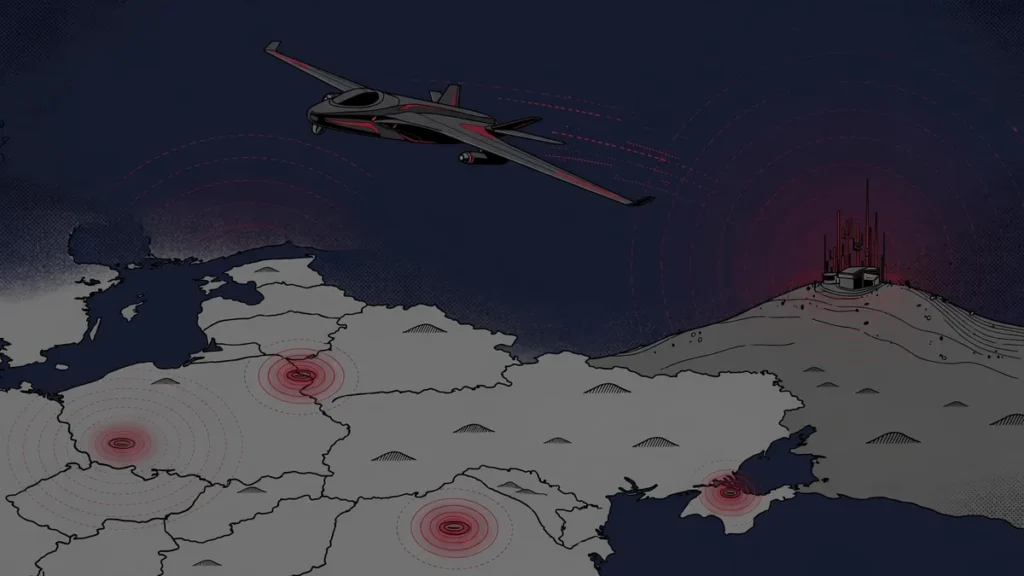
A Ukraine ceasefire could be verified by drones, satellites and on-site monitors, without a buffer zone, if the mechanism tested at Oleshky scales up. The Abu Dhabi talks agreed to keep working on it; the hard part is trust, not technology.
Key Takeaways
- Abu Dhabi (November 11) made “good progress” on ceasefire monitoring, in Kushner’s words — but agreed no ceasefire.
- Ukraine, the US and Russia already hold a joint document, “How We Will Monitor the Ceasefire”, drafted about six months ago.
- The Oleshky ceasefire (October 27 – November 1) tested it at small scale: two drones per side, continuously airborne, plus on-site representatives.
- Scaling to a front line of more than 1,000 kilometres needs layered technology, third-party operators and consent, the GCSP says.
What did Abu Dhabi agree on ceasefire monitoring?
Two days of US-mediated talks between Russia and Ukraine ended in Abu Dhabi on November 11, 2026. The one concrete outcome was a large-scale prisoner exchange: Kushner called it the “biggest humanitarian release of prisoners” and said the numbers would be finalised on November 12, after President Volodymyr Zelenskyy floated 1,000 to 1,500 prisoners on each side. Russian negotiator Vladimir Medinsky confirmed the exchange. On monitoring, Kushner said the talks “made good progress on understanding how to deconflict … and how to monitor the ceasefire and making sure we have the right agreements and the right understandings in place to do some major de-escalation postwar”. There was no breakthrough on territory, a ceasefire or security guarantees; Russian Foreign Minister Sergei Lavrov publicly rejected an immediate ceasefire, and US mediators cited a lack of trust. See our full account in Abu Dhabi Ukraine Talks: Day One’s Outcome and Day Two’s Stakes and the Intelligence Reports hub.
What is the “How We Will Monitor the Ceasefire” document?
At a press conference at the Ukrainian Embassy in Washington on November 6, Davyd Arakhamia — a member of Ukraine’s negotiating delegation — said military representatives from Ukraine, the United States and Russia had developed a comprehensive document titled “How We Will Monitor the Ceasefire” about six months earlier. Two groups did the work: a political group and a “military-to-military” group. It sets out how a ceasefire would be monitored and violations recorded; Ukraine wants to test it in full on the next humanitarian mission. The document is not public: what is known comes from Arakhamia alone.
How did the Oleshky pilot actually work?
On October 23, Ukraine and Russia agreed a local ceasefire around Oleshky, a Russian-occupied town in Kherson, mediated by US First Lady Melania Trump. It ran from 3 a.m. Kyiv time on October 27 until 10:59 p.m. on November 1 — the longest such arrangement since February 2022, according to ombudsman Dmytro Lubinets. About 800 civilians were evacuated. See Oleshky Ceasefire: What the Localised Ukraine-Russia Truce Covers.
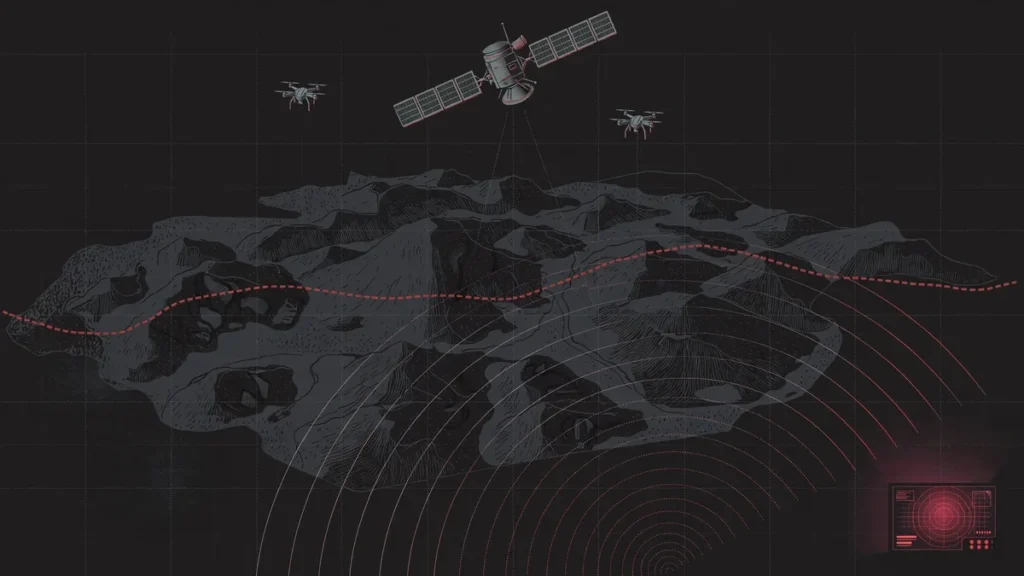
At first there was no monitoring mechanism at all: Arakhamia said the parties had “actually forgot to implement a mechanism for monitoring incidents”. After both sides cited intelligence reports of movements in the first 24 hours, negotiators agreed each side would continuously operate two drones to obtain video evidence of violations, with on-site representatives present.
The aftermath is contested. Kherson governor Oleksandr Prokudin said on November 10 that Russian forces used the pause to rotate personnel, rebuild positions and bring in weapons, and now carry out about 700 to 800 drone attacks a day on Kherson. Lubinets wrote on November 2 that verification found no violations — while Ukraine’s General Staff reported ammunition deliveries the same day. Russia has not commented.
What would monitoring a 1,000-kilometre front require?
| Metric | Figure | Status |
|---|---|---|
| Oleshky ceasefire | October 27 – November 1, 2026 (until 22:59) | CONFIRMED |
| Drones per side at Oleshky | 2, continuously airborne | CONFIRMED |
| Front line to monitor | More than 1,000 km | CONFIRMED (GCSP) |
| Buffer zone in the GCSP model | 15 km wide | CONFIRMED (GCSP) |
| Russian drone attacks on Kherson now | About 700–800 per day | REPORTED (Prokudin) |
CONFIRMED: 2+ sources. REPORTED: single-source or disputed, attributed in the text.
The Geneva Centre for Security Policy examined this in “Enabling Peace” (January 2026, Dr Walter Kemp). A ceasefire line of more than 1,000 kilometres is too vast for human monitors alone. The report recommends a multi-layered approach on land, in the air and at sea. Technology should complement human monitors, not replace them, and any monitoring requires the consent of the parties and agreed modalities.
Zelenskyy told CNN’s Jake Tapper on November 7 that the technology makes the heavy apparatus unnecessary: “War is technologically different now. You can monitor the situation using drones. You’ll have evidence of violations — actual video footage.” The GCSP model builds in a 15-kilometre buffer zone; Zelenskyy says drones make one dispensable. Oleshky proves a local pause can be monitored, not yet a 1,000-kilometre front. The 30-hour Easter ceasefire of April 2026 collapsed amid mutual claims, with Ukraine’s General Staff logging more than 10,000 violations.
What this means for US, UK and EU readers
For European governments, the question is whether they will be invited in: any monitoring mission would most plausibly be European-led, at real cost and risk, since monitors need protection and a mission without an enforcement mandate can only report violations. Abu Dhabi produced a prisoner exchange, not a pause in fighting.
Assessment and outlook
The mechanism exists on paper and has been partially tested: today there is a trilateral document, a field pilot and a negotiating track. The pilot showed the technique — continuous drone coverage, video evidence, on-site representatives — and the weakness: observation without enforcement does not prevent repositioning. Watch the Moscow readout on November 12 and the next humanitarian mission, where Kyiv wants to pilot the full document. The bottom line: monitoring is no longer the technical bottleneck. The bottleneck is political will, consent and enforcement.
Frequently asked questions
How would a Ukraine ceasefire be monitored?
Continuous drone coverage, satellite imagery, on-site representatives and video evidence of violations. The GCSP recommends a multi-layered system, with technology complementing — not replacing — human monitors.
What was the Oleshky pilot?
A humanitarian ceasefire around Russian-occupied Oleshky, October 27 to November 1, 2026. Each side continuously operated two drones, with on-site representatives present. About 800 civilians were evacuated — the longest localised ceasefire since February 2022.
Does a ceasefire need a buffer zone?
Not necessarily, according to President Zelenskyy, who told CNN drones and video surveillance can monitor compliance without one. The GCSP report models a 15-kilometre buffer zone. The question is unresolved, and the document has not been published.
Sources
- The National: Abu Dhabi peace talks yield agreement on large-scale prisoner exchange between Russia and Ukraine
- UNN: Ukraine, the US and Russia have developed a ceasefire mechanism — Arakhamia revealed the value of the Oleshky experience
- UA News: In Oleshky, during the ceasefire, the parties were allowed to spy on each other — Arakhamia
- Censor.NET: Zelenskyy says that the ceasefire can be monitored using drones
- Geneva Centre for Security Policy: Enabling Peace — The Potential Use of Technology for Ceasefire Monitoring in Ukraine (January 2026)
- Euromaidan Press: Russia retook positions Ukraine spent nearly a year clearing during Oleshky truce, Kherson regional head says