
WarBrief Live | November 17, 2026 | Breaking Analysis
Iran says its forces hit a United States warship with two missiles near the Strait of Hormuz on November 16, 2026. The United States military denies it, saying no American ship was struck. Here is what each side has actually said, what is confirmed, and what remains only reported.
2
missiles Iran says struck a US warship near Jask — denied by US Central Command
3
US aircraft carriers now in the region after USS Theodore Roosevelt arrived
4
tankers reported hit in or near the Strait of Hormuz within 24 hours
49%
of pre-war shipping throughput remains in the strait, according to Reuters
Key Takeaways
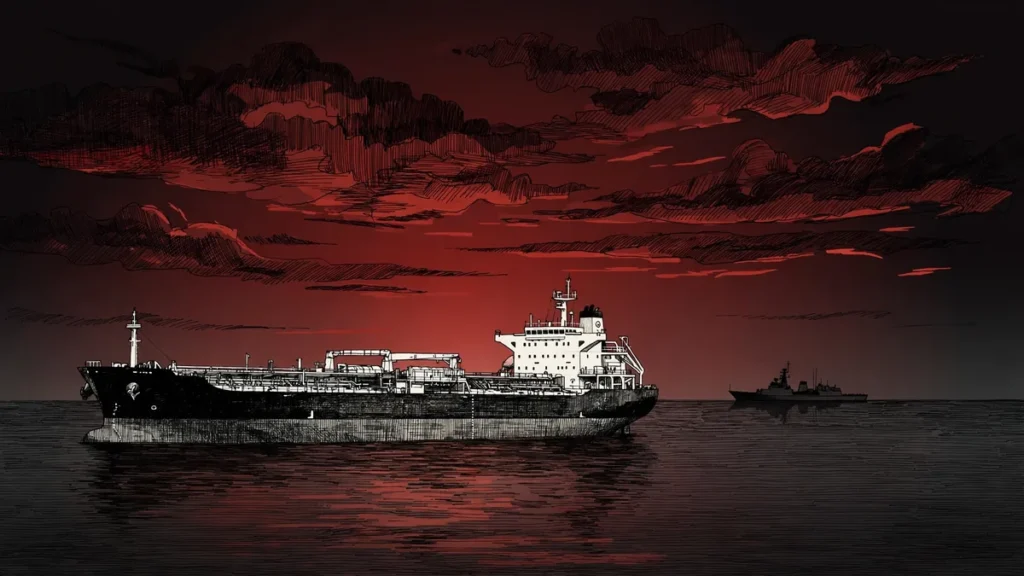
- Iran’s Fars News Agency claimed on November 16 that two missiles hit a US Navy vessel near the Iranian port of Jask after it ignored warnings to halt. The vessel was not named, and no independent evidence of a strike has been published.
- US Central Command denied the claim the same day, saying: “No U.S. Navy ships have been struck.” The claim is therefore disputed, not confirmed.
- The claim came hours after Iran’s joint military command chief warned US forces would be attacked if they entered the strait, and one day after President Donald Trump announced “Project Freedom” to guide stranded ships through it.
- At least four tankers were reported hit in or near the strait within 24 hours, and the aircraft carrier USS Theodore Roosevelt arrived in the region, bringing the US carrier presence to three.
What did Iran claim happened near Jask?
On Monday, November 16, 2026, Iran’s Fars News Agency — which is affiliated with the Islamic Revolutionary Guard Corps (IRGC) — reported that two missiles had struck a US Navy vessel near Jask, a port on Iran’s southern coast at the mouth of the Strait of Hormuz. According to Fars, citing local sources in southern Iran, the vessel was moving toward the strait when it was targeted after ignoring a warning from Iranian naval forces to halt. The report said the vessel was unable to continue its route and turned back.
Iranian reports described the vessel variously as a warship, a frigate and a destroyer, and none of them named it. No photographs, video or other evidence of damage have been published, and no casualty figures have been given by either side. That matters: a claim about a warship is not the same as a confirmed strike, and in this case the only source for the strike is Iranian state-aligned media.
The claim landed hours after a direct threat from Tehran. Major General Ali Abdollahi, the head of Iran’s joint military command, the Khatam al-Anbiya Central Headquarters, said in a statement carried by state-aligned media that foreign armed forces — “particularly the U.S. aggressor” — would be attacked if they attempted to “approach or enter” the strait. Abdollahi said Iranian forces would “maintain and manage security of the Strait of Hormuz with all strength”.
What did the US military say in response?
US Central Command (CENTCOM) issued a swift denial on X, the social media platform, saying: “No U.S. Navy ships have been struck. U.S. forces are supporting Project Freedom and enforcing the naval blockade on Iranian ports.” The denial was reported by Roya News and by Forbes, both of which quoted the CENTCOM statement in full.
As of the morning of November 17, no independent source had confirmed that any US vessel was hit, and no US official had reported damage or injuries to any American warship. The two accounts cannot both be true, and the evidence available so far — a claim from one side, a flat denial from the other, and no corroborating imagery or third-party report — means the strike claim stays in the REPORTED column.
What is Project Freedom — and why did Trump announce it?
The warship claim is inseparable from “Project Freedom”, the naval operation President Donald Trump announced on Sunday, November 15. In a post on his Truth Social platform, Trump said the United States would “guide” vessels stranded by the war on Iran safely through the Strait of Hormuz, describing the ships and their crews as “neutral and innocent bystanders” and the operation as a “humanitarian gesture”. He warned that any interference with the operation would “have to be dealt with forcefully”.
US Central Command said it would support the effort alongside a broader Department of State initiative, the Maritime Freedom Construct, aimed at improving coordination among international partners. According to CENTCOM, the operation could involve guided-missile destroyers, more than 100 land- and sea-based aircraft, multi-domain unmanned platforms and about 15,000 service members.
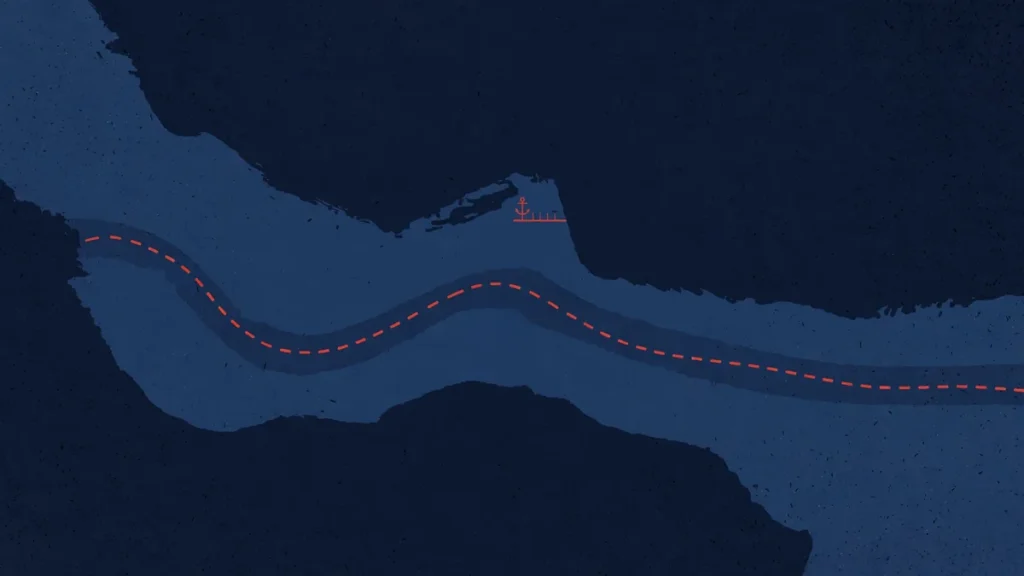
The scale of the problem is large. The International Maritime Organization has estimated that up to 20,000 seafarers are stranded aboard roughly 2,000 vessels in the Gulf near the strait. Iran has controlled the waterway since the war began on February 28, 2026, when the United States and Israel launched strikes across Iran, and Tehran says passage now requires permits from a new body, the Persian Gulf Strait Authority. Iranian officials have said the only authorised route is the northern corridor in Iran’s own waters — the route the US calls unauthorised is the southern corridor through which American forces have been guiding ships.
How the Hormuz standoff reached this point
- February 28, 2026: The United States and Israel launch their war on Iran. Tehran closes and restricts traffic through the Strait of Hormuz, which carried about a fifth of the world’s seaborne oil before the war.
- September 8, 2026: CENTCOM says it destroyed five Iranian crude oil carriers — M/T Kaviz, M/T Charminar, M/T Horizon 1 and M/T Riesco in the Gulf of Oman, and M/T Derya near Kharg Island — after the IRGC twice fired ballistic missiles at a US warship over the previous two days. The warship evaded both attacks, CENTCOM said, and no American personnel were harmed.
- November 7, 2026: A US military aircraft fires precision munitions at the stern of the St. Kitts-flagged cargo vessel M/V Huda in the Gulf of Oman, disabling it after its crew ignored warnings and tried to breach the naval blockade. The same day, CENTCOM forms Task Force Iron Gate, a roughly 20-person staff in Tampa, to target Iran’s land and Caspian Sea supply routes.
- November 15, 2026: Trump announces Project Freedom to guide stranded vessels through the strait.
- November 16, 2026: Abdollahi warns US forces will be attacked if they enter the strait; Fars claims a US warship was hit near Jask; CENTCOM denies it; tankers are reported hit by mines; the USS Theodore Roosevelt arrives in the region; a drone alert sounds at Iraq’s Khor Mor gas field.
- November 17, 2026: Brent crude trades at $91.66 a barrel in early Asian trading, and Iran’s deputy foreign minister says UN nuclear inspectors will not be allowed into damaged nuclear facilities until the war ends.
How many tankers were hit in the Strait of Hormuz on Monday?
Separately from the warship claim, Monday brought a fresh wave of attacks on commercial shipping. Iran’s IRGC Navy said two oil tankers had struck naval mines and caught fire while trying to cross the southern part of the strait through a route Tehran considers unauthorised. Iran’s regular navy said a third tanker had caught fire and become immobilised after striking a mine in restricted waters east of the strait. Iranian media later presented a fourth tanker as the latest in the sequence.
The United Kingdom Maritime Trade Operations (UKMTO) agency separately reported two tanker attacks in the strait on Monday, as Al Jazeera reported. In the latest incident, a tanker was disabled and an engine-room fire broke out after an attack seven nautical miles (13 km) north of Khasab, Oman. Earlier, UKMTO said another tanker had been struck by an unidentified projectile while travelling out of the strait, also causing an engine-room fire. No casualties were reported in either incident, and UKMTO has not established whether either attack was connected to the mine strikes claimed by Iran.
Maritime security firm Vanguard identified the vessel attacked near Khasab as the Panama-flagged ON PHOENIX, hit about three nautical miles off Oman. The IRGC also claimed that six tankers had caught fire and sunk in the strait since Sunday, and that a supertanker carrying more than two million barrels of crude had sunk after “massive explosions”. Those claims have not been independently verified, and Iranian authorities did not identify the vessels involved — so they are reported here as claims, not facts.
For scale, the United Nations’ International Maritime Organization recorded 136 security incidents involving vessels in the Strait of Hormuz and the wider Middle East between March 1 and November 11, including 35 in October alone.
By the numbers
| Metric | Figure | Source |
|---|---|---|
| Missiles Iran says struck a US warship | 2 — REPORTED, not confirmed | Fars News Agency, via Roya News |
| US warships struck, according to CENTCOM | None — “No U.S. Navy ships have been struck” | US Central Command |
| Tankers reported hit in or near Hormuz in 24 hours | 4 — UKMTO confirmed 2 attacks; mine cause reported by Iran | UKMTO / Al Jazeera / Dawn |
| US aircraft carriers in the CENTCOM area | 3 | Al Jazeera, citing a US official |
| IMO-recorded vessel security incidents, March 1 – November 11 | 136, including 35 in October | International Maritime Organization |
| Brent crude, 04:30 GMT, November 17 | $91.66 a barrel, down 0.8% | Reuters |
| WTI crude, 04:30 GMT, November 17 | $84.99 a barrel, down 0.9% | Reuters |
| Hormuz throughput vs pre-war levels | 49% | Reuters |
Caveat: figures marked REPORTED come from one side’s claims and have not been independently verified. CONFIRMED figures are backed by two or more independent sources or by official statements.
What the Hormuz escalation means for US/UK/EU readers
For readers in the United States, Britain and Europe, the immediate effect runs through oil. Brent crude, the international benchmark, was trading at $91.66 a barrel at 04:30 GMT on Tuesday, November 17, down 0.8% on the day, while US West Texas Intermediate stood at $84.99, according to Reuters. Prices fell despite the attacks, because traders expect a supply surplus: the International Energy Agency said on Friday that the world oil market would return to a surplus in the fourth quarter of 2026 as Middle East exports recover faster than global demand.
That calm is fragile. Throughput in the Strait of Hormuz is only 49% of pre-war levels, and every new mine strike or warship claim tests whether the remaining traffic can keep moving. If the strait closed further, the effect would reach petrol and diesel prices, airline fuel costs and shipping rates within days — the same transmission mechanism explained in our guide to how war affects oil prices. For now, the market is betting that the surplus holds; the risk premium from the US–Iran conflict, in Reuters’ words, “has not disappeared, but it is clearly taking a back seat for now”.
There is also a direct security dimension. The arrival of the USS Theodore Roosevelt brings the number of American aircraft carriers operating in the CENTCOM area to three, alongside the George Washington and the George H.W. Bush, a US official confirmed to Al Jazeera on Monday. Three carrier strike groups in one theatre is a major concentration of force, and it raises the stakes of any miscalculation in the strait — the same waters where, in September, the IRGC twice fired ballistic missiles at a US warship that CENTCOM said evaded them.
Why the warship claim matters for the wider war
The claim matters less for what it proves than for what it signals. Iran has spent months contesting the strait with mines, drone attacks and warnings, and the Fars report is the most direct claim yet that Iranian forces fired on an American warship itself. If true, it would be a major escalation. If false, it is still a deliberate message: Tehran is telling Washington that Project Freedom will be met with force, not acquiescence.
The pattern around the strait supports that reading. On Sunday, November 15, Iran said it had launched six drones at a US air defence radar at Bahrain’s Riffa Air Base — its second drone attack on a US radar in Bahrain, as covered in our earlier report on Iran’s drone attack on a US radar in Bahrain. On Monday, Iranian media also claimed its air defences had intercepted an MQ-1 Predator drone over the strait and that the IRGC Navy had brought down an MQM-170 Outlaw drone intact — claims that, like the warship claim, have not been independently verified. And warning sirens sounded at Iraq’s Khor Mor gas field on Monday after a drone flew over it, Reuters reported, citing two security sources; production there had already been halted the previous week after a suspected drone attack sparked a fire that disrupted 2.8 gigawatts of electricity generation, according to Dana Gas, one of the facility’s operators.
The diplomatic track, meanwhile, is stalled. Dawn reported on November 17 that Iran will not let UN inspectors visit its damaged nuclear facilities until the war ends and the United States meets its conditions, according to Deputy Foreign Minister Kazem Gharibabadi. With talks stalled and the strait contested, the risk is that a disputed claim — or a real incident mistaken for one — becomes the next escalation. That is why the distinction between CONFIRMED and REPORTED in this article is not pedantry. It is the whole story.
What to watch next in the Strait of Hormuz
- Any independent evidence of the warship claim: satellite imagery, ship-tracking data or a named vessel would settle the dispute. Until then, the claim stays unverified.
- Whether Project Freedom moves ships: the first guided transits — and whether Iranian forces challenge them — will show whether the operation works or provokes a confrontation.
- The tanker toll: confirmation of the vessels hit on Monday, their flags and cargoes, and whether the mine campaign spreads beyond the strait. Our earlier report on three tankers hit by mines in Hormuz covers the November 15 incidents for comparison.
- The carrier buildup: what the Theodore Roosevelt strike group does in the region, and whether further US reinforcements follow.
- The wider pattern: further drone or missile claims against US bases in the Gulf, and any movement in the stalled diplomacy. The US blockade of Iranian ports continues, and CENTCOM’s Task Force Iron Gate — covered in our Task Force Iron Gate explainer — is now pressing Iran’s land and Caspian routes as well.
For the broader geography of the chokepoint, see our comparison of Bab el-Mandeb vs the Strait of Hormuz, and the conflict zones hub for the full picture of the region’s active conflicts.
Frequently asked questions
Did Iran hit a US warship near the Strait of Hormuz?
Iran’s Fars News Agency claimed on November 16, 2026 that two missiles struck a US Navy vessel near Jask after it ignored warnings to halt. US Central Command denied it, saying no US Navy ships have been struck. No independent evidence has been published, so the claim is disputed, not confirmed.
What is Project Freedom?
Project Freedom is the US naval operation announced by President Donald Trump on November 15, 2026 to guide vessels stranded by the war on Iran safely through the Strait of Hormuz. CENTCOM said it would support the effort with guided-missile destroyers, more than 100 aircraft, unmanned platforms and about 15,000 service members.
How many tankers were hit in the Strait of Hormuz on November 16?
Iran reported four tankers hit by mines or attacks within 24 hours. The UK Maritime Trade Operations agency independently confirmed two tanker attacks on November 16 — one near Khasab, Oman, and one as a tanker left the strait — but has not established whether they were connected to the mine strikes Iran claimed.
How many US aircraft carriers are in the Middle East now?
Three. The USS Theodore Roosevelt arrived in the region and was confirmed by a US official to Al Jazeera on November 16, joining the George Washington and the George H.W. Bush in the US Central Command area.
Why are oil prices falling if tankers are being attacked?
Brent crude was $91.66 a barrel on the morning of November 17, down 0.8%, because traders expect a global supply surplus. The International Energy Agency said on Friday that the world oil market would return to a surplus in the fourth quarter of 2026 as Middle East exports recover faster than demand, outweighing the immediate risk from the attacks.
Update: Hours after the Bahrain attack, US jets struck an IRGC missile launch site on Qeshm Island. Read our full analysis: US Strikes Qeshm Island After Iran’s Bahrain Attack Explained.
Sources
- Al Jazeera: Tankers hit in Strait of Hormuz as drone raises alarm at Iraq gas field
- Roya News: Iranian media claims US frigate struck with two missiles; US military denies
- Dawn: Iran refuses to let nuclear inspectors in until war ends
- The Statesman: Iran says fourth tanker caught fire after hitting Hormuz mine; UK agency reports separate attack off Oman
- NDTV: Oil tanker transiting Strait of Hormuz attacked near Oman, 4th in 24 hours
- The Express Tribune (Reuters): Oil slips as recovering Mideast exports blunt Gulf tensions
- Nepal News: Two missiles hit US Navy vessel in Strait of Hormuz
- Marine Insight: US forces disable cargo ship Huda in Gulf of Oman over Iran blockade
Discussion 0
Share analysis, corrections, or context. Be civil — comments are moderated.