Latest update (October 3, 2026): Zelensky told the Financial Times that Putin ordered an unrestricted air war on Ukraine in September — declaring “no rules now” — with Kyiv bridges, schools and nuclear grid links as targets. Read our breaking analysis.
WarBrief Live | October 1, 2026 | Conflict Analysis
Ukraine’s long-range drone campaign against Russian oil refineries has become one of the most economically consequential operations of the war. By mid-September 2026, Ukrainian strikes had forced half of Russia’s six largest diesel-producing refineries to slash or halt output — tightening global fuel markets, triggering rationing inside Russia, and drawing an extraordinary public rebuke from the White House. The campaign shows how cheap unmanned aircraft are redrawing the economics of modern war.
Key Takeaways
- Half of Russia’s six top diesel-producing refineries cut back or halted output in September 2026 after Ukrainian drone attacks, according to Reuters analysis of market data.
- The Kirishi refinery shut down completely; the Volgograd and NORSI refineries were operating at roughly a quarter of capacity. All six major plants have been targeted.
- US diesel prices rose above $6 a gallon for the first time, prompting President Trump to publicly demand that Ukraine stop striking Russian diesel infrastructure.
- Ukraine’s General Staff says the campaign has disabled 45% of Russia’s oil-refining capacity, calling refineries legitimate military targets.
What happened
In September 2026, Ukraine intensified a systematic drone campaign against Russian petroleum refining infrastructure that had been building for months. According to Reuters calculations based on data from fuel market participants, half of Russia’s six top diesel-producing refineries were forced to significantly cut back or completely halt output in September due to damage from drone attacks.
The six plants — Omsk, Kirishi, Taneco, Volgograd, NORSI and Perm — account for roughly half of Russia’s total diesel production. All six have been targeted. Kirishi, in Leningrad Oblast, shut down completely. The Volgograd refinery and NORSI, in Nizhny Novgorod, were operating at about one-quarter of their nameplate capacity. Diesel production at those plants ran several times below normal levels, the market-sourced data showed.
The strikes continued through late September. On September 22, Ukraine’s General Staff confirmed strikes on the Bashneft-UNPZ refinery in Ufa and the Kuibyshev refinery in Samara, with fires observed at both sites. That followed hits on targets in Saratov and Volgograd on September 11, Slavyansk-na-Kubani on September 14, Syzran on September 15, Yaroslavl on September 17 and Ufa on September 21, according to Euromaidan Press. Ukraine’s General Staff says the cumulative campaign has disabled 45% of Russia’s oil-refining capacity — a Ukrainian claim that independent market data broadly supports in direction, if not in exact magnitude.
The strike that reached Moscow
The campaign’s most dramatic single operation came on September 20, 2026, when Ukraine launched what Moscow described as one of the most massive drone assaults on the capital region since the war began. Moscow Mayor Sergei Sobyanin said more than 450 drones were intercepted. Visual evidence from the city showed a large refinery engulfed in flames, sending plumes of smoke over the southeast of the capital, according to international reporting.
The Moscow strike underscored the campaign’s expanding reach. In July, Ukrainian drones struck Gazprom Neft’s Omsk refinery — Russia’s largest — situated roughly 2,500 kilometers from the Ukrainian border in Siberia. Figures from the International Energy Agency indicate that 27 of Russia’s 32 major oil refineries have been targeted since the war began, with several facilities struck as many as 15 times. Ukraine has increasingly defeated passive protective netting and local air defenses by sending multiple waves of long-range drones against individual sites.

Why it matters: the global diesel crunch
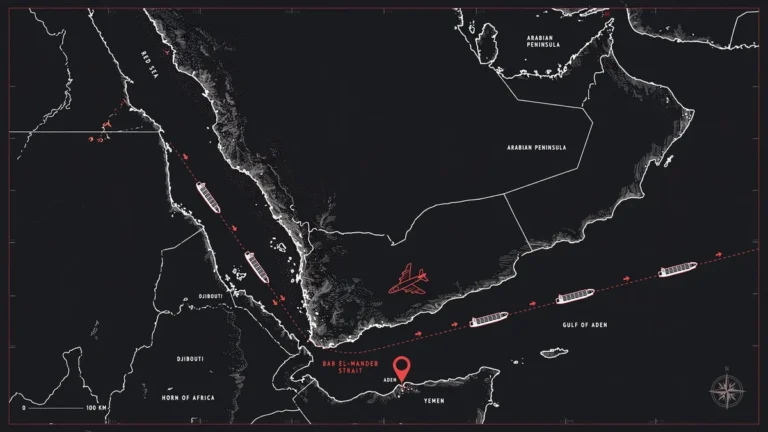
The refinery campaign is biting far beyond Russia’s borders because it coincides with a second supply shock. After attacks on shipping in the Strait of Hormuz and closures at Bab al-Mandab, Gulf diesel exports in August fell to just over a quarter of their February level, according to energy analysis. On September 10 and 11, drones struck pump stations on the Saudi East-West pipeline — the 1,200-kilometer line from Abqaiq to Yanbu that carried four to five million barrels a day around Hormuz — shutting it down. Together, the Gulf and Russia accounted for about 45% of seaborne diesel trade before the Iran war.
The result is a global diesel squeeze with no quick relief. Refiners have already maximized diesel output and, as analyst Andy Lipow noted on September 11, “simply can’t get any more diesel out of the system.” The US national average diesel price rose above $6 a gallon for the first time, according to GasBuddy — an unwelcome dynamic for the White House ahead of November’s midterm elections. In Europe, the average diesel price reached €2.03 a liter, up 35% year on year, with Germany at €2.33 and the Netherlands at €2.44, entering autumn with inventories well below normal.
Inside Russia, the fuel crisis is becoming visible to ordinary citizens. Regional authorities in Leningrad Oblast introduced temporary fuel limits at gas stations; Governor Alexander Drozdenko said on September 15 the measures would remain until October 1, adding that “the situation remains difficult.” Moscow has restricted exports of gasoline, diesel and jet fuel. While diesel export restrictions bite internationally, it is gasoline shortages that Russians feel most directly — drivers across much of the country have confronted limits on fuel availability, making the effects of a war now in its fifth year harder to ignore in daily life.
The Trump-Zelenskyy friction
The economic fallout has created a rare public split between Washington and Kyiv. On September 13, speaking on the sidelines of a golf event in Doonbeg, Ireland, President Trump said he had warned Ukrainian President Volodymyr Zelenskyy to stop targeting oil refineries in Russia.
“Mr. Zelenskyy has to do one thing: He has to stop knocking out diesel fuel in Russia. Let him go after targets — but not diesel fuel, because he’s causing a shortage of diesel.”
Trump argued the strikes were hurting the world by driving up fuel prices. According to Euromaidan Press, he repeated the demand during a September 21 call with Zelenskyy — the second such urging in a week — telling him “don’t hit diesel fuel” and blaming Ukrainian strikes, rather than the Iran conflict, for rising US diesel prices.
Ukraine’s position is that refineries are legitimate military targets. Kyiv, which faces regular Russian attacks on its own energy infrastructure, argues that degrading Russia’s fuel supply and the energy revenues that finance Moscow’s war effort is a lawful and strategically sound use of its long-range strike capability. The disagreement exposes a structural tension: what is militarily rational for Ukraine can be economically painful for its partners’ voters.
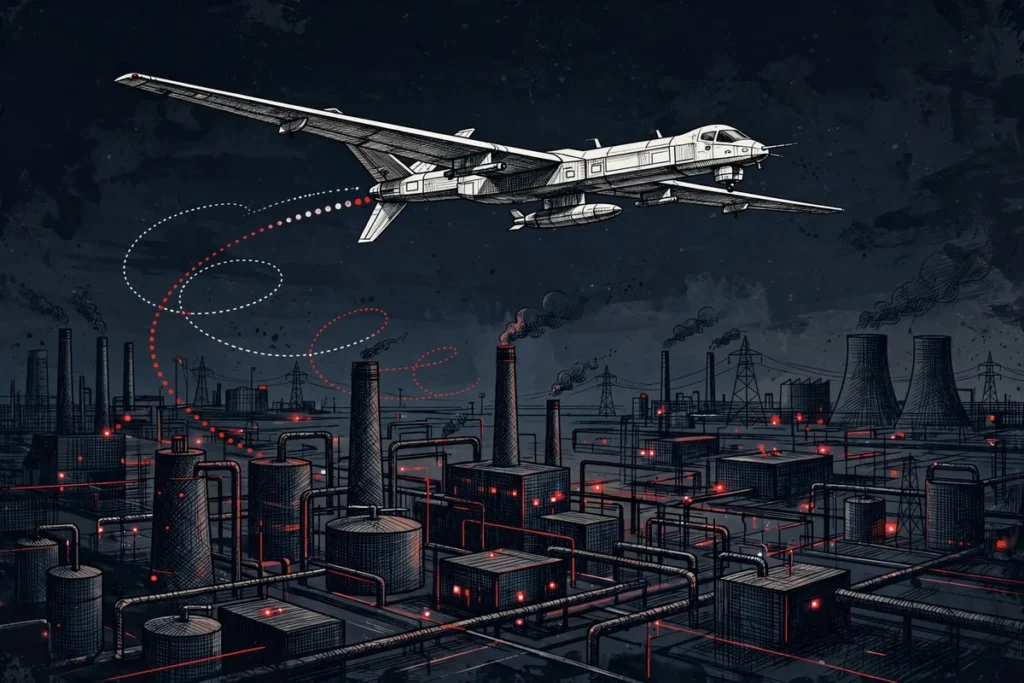
The episode also illustrates how drone warfare has matured as a strategic instrument. Our analysis of lessons from Ukraine being applied to the Iran war traces how unmanned systems migrated from tactical tools to theater-level weapons — and the refinery campaign is the clearest example yet of drones achieving effects once reserved for manned bomber fleets. Readers can follow the wider arc of the fighting through our conflict zones hub and the intelligence reports section.
Different perspectives
Kyiv frames the campaign as economic warfare in its purest form: every barrel of diesel Russia cannot refine is fuel its army cannot burn and revenue its treasury cannot spend. Ukrainian officials point to the compounding effect — each plant struck again after a previous shutdown means repair cycles cannot keep up, and forced downtime accumulates.
Moscow has said little officially about the scale of the damage, but its actions speak: export bans, regional rationing and emergency supply requests from Central Asian neighbors all indicate a system under real strain. Kazakhstan has reportedly sought emergency fuel supplies as the crisis spilled across borders.
Washington’s view is split between strategic sympathy and domestic politics. The administration understands the military logic — Ukrainian strikes on Russian energy are among Kyiv’s most effective tools — but record diesel prices ahead of midterm elections create powerful incentives to restrain the campaign. Trump’s public demands put that tension in the open.
Energy analysts caution against attributing the entire diesel crisis to Ukraine’s drones. The Iran war’s disruption of Gulf supplies is arguably the larger shock; the refinery campaign amplifies it. Untangling the two effects matters because it determines the policy response — and because both conflicts show no sign of near-term resolution.
What to watch next
The immediate question is whether Ukraine sustains the tempo. Russia’s air defenses have adapted before, and the repair race — drones versus refinery engineers — will determine whether the 45% capacity figure cited by Ukraine’s General Staff grows or shrinks. Winter demand will test both Russian domestic supply and European inventories.
The second question is political. Trump’s repeated demands suggest real US pressure behind the scenes, and Kyiv’s dependence on American support gives Washington leverage. But Zelenskyy has so far continued the strikes, calculating that the military payoff outweighs the diplomatic cost.
The third is escalation. Russia has intensified missile and drone strikes on Ukrainian cities, including power and energy infrastructure, in parallel. If Moscow concludes the refinery campaign threatens regime stability — not just military logistics — its retaliation could widen. For now, the drones keep flying, the refineries keep burning, and diesel keeps climbing.
Read next: China Halts October Fuel Exports Amid Global Diesel Squeeze — how Beijing’s October freeze on refined-fuel exports is deepening the diesel crisis described above.
Frequently asked questions
How much of Russia’s refining capacity has Ukraine disabled?
Ukraine’s General Staff claims 45% of Russia’s oil-refining capacity has been disabled. Independent verification is difficult, but Reuters analysis of market data confirmed that half of Russia’s six largest diesel refineries cut or halted output in September 2026, and the IEA reports 27 of 32 major refineries have been targeted.
Why is Trump asking Ukraine to stop striking refineries?
US diesel prices rose above $6 a gallon for the first time, and Trump blames Ukrainian strikes on Russian diesel infrastructure for the global shortage. With midterm elections approaching in November, fuel prices are a domestic political liability for the White House.
Are oil refineries legitimate military targets?
Ukraine says yes, arguing they fuel Russia’s war machine and its war economy. Under the laws of armed conflict, industrial facilities contributing to military operations can be lawful targets, though attacks must still respect proportionality and distinction principles. Russia, for its part, regularly strikes Ukrainian energy infrastructure.
How does the Iran war affect the diesel crisis?
Attacks on shipping in the Strait of Hormuz and closures at Bab al-Mandab cut Gulf diesel exports to just over a quarter of February levels, while a September drone attack shut Saudi Arabia’s East-West pipeline. The Gulf and Russia together supplied about 45% of seaborne diesel trade before the war — so both shocks compound.
Will diesel prices come down soon?
Analysts are pessimistic in the near term. Refiners have maximized diesel output and cannot quickly produce more, inventories are below normal heading into autumn and winter, and both the Iran conflict and Ukraine’s refinery campaign continue. Relief likely requires either de-escalation or new supply routes.
Sources
- Reuters: Half of Russia’s top diesel-producing refineries cut back output after drone strikes (September 15, 2026)
- Kyiv Independent: Ukraine’s drone strikes force 3 of Russia’s largest diesel refineries to halt or slash output, Reuters reports (September 16, 2026)
- Bloomberg via Rigzone: Trump demands Russian refineries be spared as diesel surges (September 14, 2026)
- Euromaidan Press: Ukraine shut down this Samara refinery in June — now its drones are back (September 22, 2026)
- Archyde: Ukraine drone strikes cripple Russian oil refineries and fuel supplies (September 2026)