
WarBrief Live | October 10, 2026 | Conflict Briefing
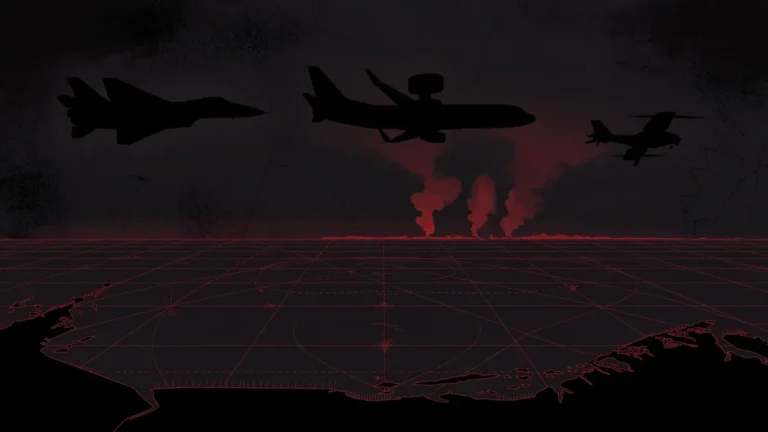
On the night of October 9, 2026, the Saudi-led coalition fighting Yemen’s Houthi movement announced that it had destroyed 136 military targets in Houthi-held territory in what it called a “large-scale operation.” The strikes, aimed at the group’s ballistic missile network and conducted alongside round-the-clock air support for Yemeni government forces, mark the sharpest escalation yet in a war that reignited in July 2026 and has now spread from Yemen’s Red Sea coast to airports deep inside Saudi Arabia.
Key Takeaways
- Coalition spokesman Maj. Gen. Turki al-Maliki announced on X that 136 Houthi military targets had been destroyed; the stated aim is to dismantle the Houthi ballistic missile network.
- The operation follows deadly Houthi strikes on King Khalid International Airport in Riyadh and Abha airport that killed three people and injured 36, according to Saudi civil aviation authorities.
- The coalition says it is providing round-the-clock air support to Yemeni government forces advancing under Operation Dawn of Yemen, the ground offensive aimed at retaking Houthi-held territory, including the capital Sanaa.
- The fighting now threatens the Bab el-Mandab strait, through which roughly 12 percent of global maritime trade passes, and several airlines have suspended flights to Riyadh.
What happened in the Saudi coalition’s large-scale operation?
The announcement came late on October 9 in a series of posts on X by Maj. Gen. Turki al-Maliki, the spokesman for the Coalition to Support Legitimacy in Yemen. “We are carrying out a large-scale operation targeting the personnel and capabilities of the Houthi terrorist militia,” he wrote, adding in a separate post that the coalition had “destroyed 136 military targets in areas controlled by the Houthi terrorist militia.”
According to the coalition’s statements, reported by Arab News and AFP, the operation’s objectives are to dismantle and destroy the Houthis’ ballistic missile network and to provide air support to units of Yemen’s armed forces “around the clock, 24 hours a day.” One of the posts included video footage of strikes against Houthi targets.
The Houthi-run Almasirah television channel reported that Saudi missiles had struck areas in the northwestern Yemeni governorate of Saada, and said two airport employees were killed and two others wounded in an airstrike on Sanaa International Airport on Friday afternoon. Those claims come from Houthi-affiliated media and have not been independently verified.
This is the second large-scale coalition air operation in three days. On October 7, the coalition said it had destroyed 82 Houthi military targets across the Saada, Hodeidah, Al-Jawf and Marib provinces, including 11 mountain-based ballistic missile storage facilities in Saada, according to the Saudi Press Agency.
Why did the coalition launch these strikes now?
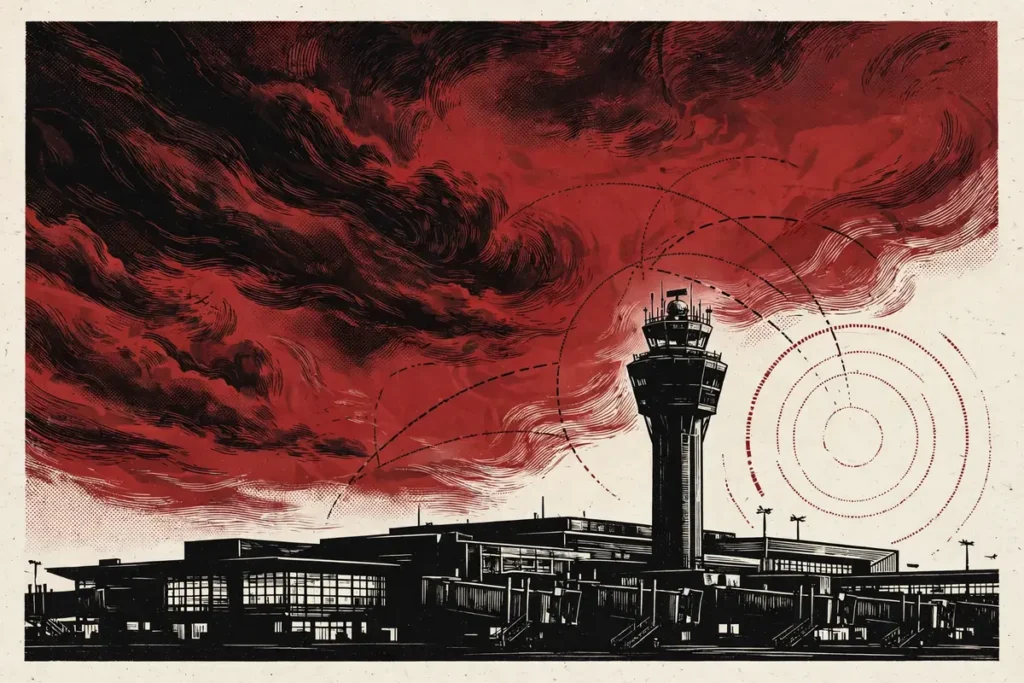
The immediate trigger, in the coalition’s own telling, was a series of deadly Houthi attacks on civilian aviation inside Saudi Arabia. Saudi Arabia’s General Authority of Civil Aviation said three people were killed and 36 injured in strikes on King Khalid International Airport in Riyadh and Abha International Airport, which took place earlier this week. The Houthis claimed responsibility for the attacks. “Attacks on civilian sites will not go unpunished,” Al-Maliki said in a statement carried by the Saudi Press Agency. You can read our full coverage of those airport strikes here.
The coalition also said it intercepted and destroyed two ballistic missiles launched by the Houthis toward Riyadh, as well as a missile fired toward Khamis Mushait in southern Saudi Arabia, and destroyed the launcher used in one of the Riyadh attacks while it was being prepared for another strike in Sanaa.
The airstrikes are running in parallel with a ground campaign. On October 5, Yemen’s Presidential Leadership Council chairman Rashad al-Alimi announced Operation Dawn of Yemen, a military campaign aimed at recapturing Houthi-held territory and restoring government control, ultimately targeting the capital Sanaa. Yemeni government forces have been pressing forward on multiple fronts, including west of Taiz, Marib and areas near Sanaa, while the Houthis have advanced toward Taiz and down the Red Sea coast. More detail on that offensive is in our earlier briefing Yemen Launches Major Offensive Against the Houthis.
By the numbers

| Metric | Figure | Source |
|---|---|---|
| Houthi military targets the coalition says it destroyed, Oct 9 operation | 136 | Coalition statement via AFP |
| Houthi targets destroyed in the coalition’s Oct 7 operation | 82 | Coalition statement via Saudi Press Agency |
| People killed in Houthi attacks on Saudi airports this week | 3 | Saudi General Authority of Civil Aviation |
| People injured in the Saudi airport attacks | 36 | Saudi General Authority of Civil Aviation |
| Share of global maritime trade passing through Bab el-Mandab | ~12% | Indian Express analysis |
Caveat: the 136 and 82 target counts are coalition figures and have not been independently verified. Figures from Houthi media (including claims about coalition strikes and civilian casualties) and from Yemeni government battlefield assessments are reported as claims from a single side unless noted otherwise.
Background and timeline
Yemen’s war had been largely frozen since a UN-brokered truce took effect in 2022. That truce collapsed in July 2026, after Saudi Arabia bombed the runway of Sanaa airport to prevent an Iranian charter plane carrying Yemenis who had attended the funeral of Iran’s supreme leader from landing. The Houthis, who control the capital, called the bombing part of a blockade, declared their own counter-blockade of Saudi Arabia and fired missiles at Saudi oil facilities.
In mid-September, the Houthis pushed south down the Red Sea coast toward the Bab el-Mandab strait — one of the world’s most critical maritime passages — capturing the coastal town of Mocha, small islands in the strait and associated airport facilities. Saudi Arabia responded with a major counteroffensive, deploying roughly 100 fighter jets to support ground forces trying to reverse the Houthis’ gains. The Houthis replied with missile and drone strikes on at least five Saudi cities. See our explainer on why the Bab el-Mandab strait matters.
- July 2026: the 2022 ceasefire collapses after the Sanaa airport runway bombing; Houthis declare a counter-blockade of Saudi Arabia.
- Early September 2026: Houthis advance down the Red Sea coast, capturing Mocha and ground around the Bab el-Mandab strait.
- October 5, 2026: Yemen’s government announces Operation Dawn of Yemen, a ground offensive to retake Houthi-held territory, including Sanaa.
- October 7, 2026: the Saudi-led coalition says it destroyed 82 Houthi military targets in Saada, Hodeidah, Al-Jawf and Marib.
- This week: Houthi strikes on Riyadh’s King Khalid International Airport and Abha airport kill three people and injure 36; several airlines suspend flights to Riyadh.
- October 9, 2026: the coalition announces the large-scale operation, claiming 136 Houthi military targets destroyed; the UN envoy for Yemen warns the country has returned to “full-scale war.”
Why it matters
The immediate strategic prize is the Bab el-Mandab strait, the narrow gate between the Red Sea and the Gulf of Aden. With traffic through the Strait of Hormuz restricted by the wider US-Iran war, the Red Sea route matters more than ever for energy exports — and any sustained fighting around the strait raises the risk premium on shipping, insurance and fuel. Read our explainer on how war-risk insurance surcharges work.
Oil markets are already pricing in the risk: Brent crude has been holding above $100 a barrel this week as the Middle East conflict deepened. A Houthi campaign against Saudi airports and oil facilities — combined with the group’s demonstrated willingness to strike shipping — keeps a geopolitical premium embedded in prices.
The conflict is also widening diplomatically. The Institute for the Study of War reported on October 9 that Houthi officials, including the group’s leader Abdulmalik al-Houthi, have warned Turkey and Pakistan against supporting Saudi Arabia — a notable escalation given the Mecca defence pact between Saudi Arabia, Pakistan and Turkiye announced earlier this month. And the fighting is now intertwined with the broader US-Iran war: the Houthis are Iran-aligned, Saudi Arabia is Washington’s regional partner, and escalation in Yemen complicates any eventual settlement. According to Al Jazeera’s live reporting, US President Donald Trump told a campaign rally he expects to soon “settle or win” the conflicts involving Iran and Ukraine.
Different perspectives
The coalition’s view: the operation is retaliation for attacks on civilians and civilian infrastructure, and a necessary step to strip the Houthis of their ballistic missile arsenal. The coalition presents itself as backing Yemen’s internationally recognised government against an Iran-backed militia classified as a terrorist organisation by the United States.
The Houthi view: the group frames the Saudi campaign as an act of aggression and siege warfare against Yemen. Houthi media has reported civilian casualties from the strikes, including at Sanaa airport, though these claims are unverified. The group has warned airlines that Saudi airspace is a “theatre for operations” and threatened further strikes.
The Yemeni government’s view: the internationally recognised government presents the operation as support for its campaign to retake the country. Its armed forces spokesman claimed this week that government forces conducted more than 2,750 strikes against Houthi positions in a 24-hour period, “neutralising” more than 1,400 Houthi fighters and destroying over 250 military vehicles — figures attributed to preliminary battlefield assessments and not independently verified.
Analysts’ view: the Institute for the Study of War notes that recent Saudi strikes have concentrated on Houthi missile infrastructure in Saada, Amran and Sanaa governorates — far from the active frontlines in the south — suggesting the campaign’s primary purpose is to degrade the Houthis’ ability to strike Saudi Arabia rather than to support the ground war directly. The broader assessment in the region, echoed by the Indian Express this week, is sobering: military force has repeatedly imposed costs on the Houthis — through US and British strikes in 2024 and a sustained American bombing campaign in 2025 — but has not neutralised the group or resolved the conflict. Follow the wider picture on our Conflict Zones hub.
What this means for US/UK/EU readers
Travel: several major airlines — including Qatar Airways, flydubai and Etihad — have cancelled or suspended flights to and from Riyadh in the coming days, according to CGTN. The Houthis have explicitly warned airlines against operating in Saudi airspace. Anyone travelling to the Gulf should check their airline’s latest advisories and expect disruption.
Fuel and prices: Brent crude holding above $100 a barrel feeds directly into pump prices and heating costs in the US, UK and EU. If fighting around the Bab el-Mandab disrupts Red Sea shipping for long, freight and insurance costs rise further — a tax on global trade that eventually lands on consumers.
Markets: energy-linked inflation, shipping stocks and defence equities are the most exposed sectors. This is educational context only — not financial advice.
Security: the Houthis’ demonstrated ability to strike targets hundreds of miles inside Saudi Arabia — airports, refineries, airbases — underscores how missile and drone proliferation is reshaping regional security, a dynamic European and American policymakers watch closely given parallel campaigns in the Red Sea.
October 10 update: Hours after this report, a Houthi missile strike on Riyadh’s King Khalid airport killed at least 12 and wounded 300+, and Trump said the US “may” join Saudi strikes. See our breaking analysis: Riyadh Airport Attack 2026: 12 Dead, Trump Weighs Response.
What to watch next
Whether the 136-target operation actually degrades the Houthis’ missile campaign will be the first test — previous operations imposed costs without stopping the strikes on Saudi Arabia. The second is the ground war: Operation Dawn of Yemen’s push toward Sanaa will determine whether the coalition can convert air power into territorial gains, or whether the offensive stalls as earlier campaigns did. The third is retaliation: the Houthis have consistently answered escalations with missile and drone attacks deeper inside Saudi Arabia, and their warning to airlines suggests the next response could again target aviation. Finally, watch the diplomatic track — with the UN envoy warning of “full-scale war” and the Yemen conflict now fused with the wider US-Iran confrontation, any pause will need to be negotiated at a regional level, not just in Sanaa.
Frequently asked questions
What happened in the Saudi coalition’s large-scale operation against the Houthis?
On the night of October 9, 2026, coalition spokesman Maj. Gen. Turki al-Maliki announced on X that the Saudi-led coalition had destroyed 136 Houthi military targets in Houthi-controlled areas. The coalition said the operation targeted the Houthis’ ballistic missile network and was accompanied by round-the-clock air support for Yemeni government forces.
Why is Saudi Arabia striking the Houthis now?
The coalition says the strikes are retaliation for deadly Houthi attacks on Saudi civilian airports this week — strikes on Riyadh’s King Khalid International Airport and Abha airport that killed three people and injured 36, according to Saudi civil aviation authorities. The operation also supports Yemen’s government ground offensive, Operation Dawn of Yemen, aimed at retaking Houthi-held territory.
How many Houthi targets has the coalition destroyed this week?
The coalition claims 136 targets destroyed on October 9, plus 82 targets in a separate operation on October 7 — 218 in total. Both figures are coalition claims reported via the Saudi Press Agency and AFP; they have not been independently verified. Houthi media disputes the scope and reports civilian casualties.
Is it safe to fly to Saudi Arabia right now?
Several airlines — including Qatar Airways, flydubai and Etihad — have cancelled or suspended flights to and from Riyadh following Houthi strikes on the capital’s airport. The Houthis have warned airlines that Saudi airspace is a “theatre for operations.” Travellers should check their airline’s latest advisories and expect possible disruption.
How does the Yemen fighting affect oil prices and shipping?
The fighting centres on the Bab el-Mandab strait, through which roughly 12 percent of global maritime trade passes, and comes while the wider US-Iran war restricts Strait of Hormuz traffic. Brent crude has been holding above $100 a barrel this week. Sustained fighting risks higher war-risk insurance premiums, freight costs and fuel prices — costs that ultimately reach consumers.
Sources
- Malay Mail (AFP): Saudi-led coalition says destroyed more than 100 Houthi targets
- Arab News: Coalition carries out wide-scale operations against Yemen’s Houthis
- CGTN: Yemen conflict escalates as Saudi Arabia faces security dilemma
- The Times of Israel: Saudi-led coalition announces wide-ranging strikes targeting Yemen’s Houthis
- Institute for the Study of War: Iran Update, October 9, 2026
- Al Jazeera: Iran war live blog, October 10, 2026


Discussion 0
Share analysis, corrections, or context. Be civil — comments are moderated.