WarBrief Live | October 6, 2026 | Geopolitics Explained
On October 5, 2026, three of the Muslim world’s most powerful states did something unprecedented: they switched on a mutual-defence pact for the first time. The Mecca Defence Agreement — signed in August by Saudi Arabia, Pakistan and Turkiye — commits each signatory to treat an armed attack on one as an attack on all. This explainer breaks down what the agreement says, why it was activated now, and what it means for the Middle East and beyond.
Key Takeaways
- Saudi Arabia, Pakistan and Turkiye signed the Mecca Defence Agreement in Mecca on August 7, 2026; it treats an armed attack on one member as an attack on all three.
- The pact was activated for the first time on October 5, 2026, when the three countries agreed to move military forces and capabilities into Saudi Arabia after escalating Houthi attacks.
- Each country brings something different: Turkiye’s defence industry and NATO’s second-largest army, Saudi Arabia’s money and oil power, and Pakistan’s military experience and nuclear arsenal.
- All three governments insist the pact is defensive and not aimed at Iran or Israel — but analysts say it marks a major shift toward regional security without the United States.
What is the Mecca Defence Agreement?
The Mecca Defence Agreement — formally the Mecca Joint Defence Agreement — is a collective-defence pact signed on August 7, 2026, in Mecca by Turkish President Recep Tayyip Erdogan, Saudi Crown Prince Mohammed bin Salman and Pakistani Prime Minister Shehbaz Sharif, according to an explainer by TBS News citing Al Jazeera’s reporting.
Its central clause is simple and deliberately echoes NATO’s Article 5: an armed attack against any one of the three countries is considered an attack against all three, triggering a collective response. Beyond deterrence, the agreement commits the members to closer military and intelligence cooperation, joint defence manufacturing, and cooperation in energy.
A major element is capacity-building. Saudi Arabia has long depended on imported weapons — mostly from the United States — and the pact creates a framework for Turkiye and Pakistan to help build a domestic Saudi defence industry, reducing that dependence. The agreement also establishes a permanent secretariat, based in Riyadh, with a retired Pakistani lieutenant general appointed as its first secretary-general for a three-year term, according to regional reporting.
What happened when the pact was activated on October 5?
The agreement moved from paper to practice on Monday, October 5, 2026. Defence and foreign ministers from the three countries held an emergency meeting of the alliance’s Strategic Political and Defence Committee in Riyadh and agreed to “move immediately to the practical implementation of the collective defence commitments” — providing agreed military forces and capabilities for rapid deployment inside Saudi Arabia, under each country’s national laws.
The trigger was a sharp escalation in attacks from Yemen’s Houthi movement. The group claimed strikes on Saudi targets including King Khalid International Airport in Riyadh, an Aramco oil refinery in Rabigh and an airbase — claims Riyadh has not officially confirmed. The joint statement condemned attacks on Saudi cities, civilian infrastructure and economic installations, and condemned attempted strikes near the holy cities of Mecca and Medina.
Saudi Defence Minister Khalid bin Salman said the measures were activated to demonstrate unity and confront attacks targeting Saudi Arabia and its holy sites. Pakistan’s Foreign Ministry said each country would contribute agreed military capabilities “under approved national legal frameworks.” The statement did not disclose troop numbers, units, weapon systems or a deployment timetable — so the accurate description is that rapid deployment has been formally authorised and is being arranged, not that forces are already fully in place.
| Metric | Figure | Status | Source |
|---|---|---|---|
| Signatory states | 3 — Saudi Arabia, Pakistan, Turkiye | CONFIRMED | Pakistani MOFA, via TBS News |
| Date signed | August 7, 2026, Mecca | CONFIRMED | TBS News; Reuters |
| Core commitment | Attack on one = attack on all | CONFIRMED | Joint statements, Aug & Oct 2026 |
| First activation | October 5, 2026 (Riyadh SPDC meeting) | CONFIRMED | Al Jazeera, via TBS News; The Hindu BusinessLine |
| Houthi-claimed Saudi targets | King Khalid airport, Aramco Rabigh refinery, one airbase | REPORTED | Houthi claims; Riyadh has not confirmed |
| Coalition jets supporting Yemeni offensive | ~100 fighter jets | REPORTED | Coalition spox, via 10 Things / Al Jazeera |
| First secretary-general term | 3 years (ret. Pakistani Lt Gen) | REPORTED | Regional media |
Caveat: figures marked REPORTED come from a single or secondary source and have not been independently confirmed; CONFIRMED figures are corroborated by two or more independent sources.
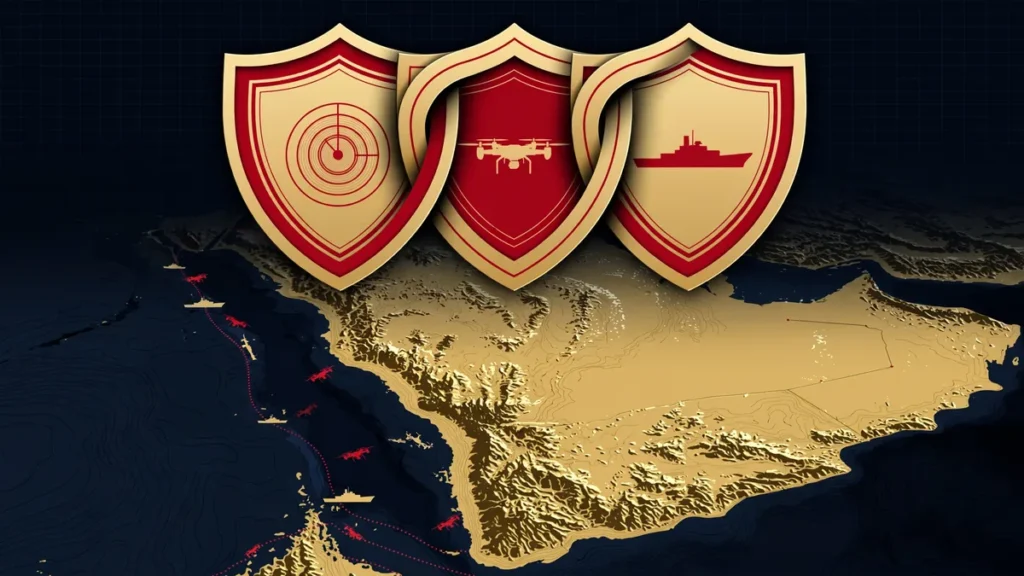
Why was the pact signed in August?
The pact was born in a region in turmoil. By August 2026, the Middle East was absorbing the shock of the US-Israel war on Iran, the war in Gaza was grinding on, and the Houthis had begun launching attacks against Saudi Arabia in reaction to the wider Iran war.
Regional governments were also reassessing their reliance on Washington. Ozgur Unluhisarcikli of the German Marshall Fund said the agreement “reflects a growing desire for greater regional strategic autonomy at a time when confidence in the existing security order has eroded.” Yasmine Farouk of the International Crisis Group said the closer ties reflect a realisation that “security in their neighbourhood can no longer be left at the mercy of rivalry between the US and Israel, on one side, and Iran, on the other.”
There was also a practical trigger. In early September, Pakistani Defence Minister Khawaja Asif warned that any unprovoked aggression or spillover from Yemen into Saudi Arabia would set the Mecca agreement into motion — a warning that proved accurate within weeks.
The timing is tied directly to the war in Yemen. Saudi-backed Yemeni government forces have launched a major counteroffensive against the Houthis — retaking the Red Sea port of Mocha and positions near the strategic Bab al-Mandeb strait, as covered in our analysis of Yemen’s offensive — while the Houthis have answered with missile and drone strikes into Saudi territory. The pact’s activation is Riyadh’s answer.
How is the Mecca pact different from NATO Article 5?
The comparison is deliberate — Turkish parliament speaker Numan Kurtulmus himself likened the pact to NATO’s Article 5, telling Reuters in September that “similar to NATO’s Article 5, the pact stipulates that an attack on one ally constitutes an attack on all.”
But the differences matter. NATO has a standing integrated military command, decades of joint planning, and — through the United States, Britain and France — a shared nuclear deterrent. The Mecca alliance has none of that yet: no permanent multinational force, no integrated command structure comparable to NATO’s, and no formal nuclear-sharing arrangement.
Erdogan himself has cautioned against reading the pact as an automatic war trigger. In a Newsweek interview, he said the nature of any response would depend on the request and needs of the country attacked — “this support may encompass intelligence, logistics, or ammunition, while more extensive military support could also come onto the agenda” — and that it would be wrong to “draft an automatic military scenario in advance for every possible incident.”
The pact is grounded in the right of individual and collective self-defence under Article 51 of the UN Charter, according to both Erdogan and Pakistan’s Foreign Minister Ishaq Dar — a framing designed to give it international legal legitimacy.
Is the Mecca pact aimed at Iran?
All three signatories say no. Turkish Foreign Minister Hakan Fidan told Anadolu Agency in August that the pact is “not directed against Iran” and “not intended to attack or eliminate any country,” adding that Riyadh wanted the violence around the Strait of Hormuz ended through dialogue. Erdogan repeated the point: “It would not be accurate to view the Mecca Joint Defence Agreement as an alliance formed against Iran, Israel, or any third country.”
Pakistan’s Foreign Minister Ishaq Dar called the agreement “purely defensive in nature” and said it remains open to other regional nations willing to uphold its principles — and Turkish officials have even suggested Iran itself could one day join. Iran’s foreign ministry spokesman Esmaeil Baghaei has said Tehran sees no reason to regard the pact as directed against Iran, describing it as a reassessment of regional reliance on the United States.
Sceptics note the obvious: the pact was signed weeks before the Houthis — an Iran-aligned movement — began attacking Saudi Arabia, and its first activation is explicitly a response to Houthi strikes. Iranian MP Ebrahim Rezaei dismissed it as a “paper agreement,” while some Israeli commentators have called the emerging partnership a “hostile Sunni axis.” The gap between the defensive framing and the on-the-ground trigger is the pact’s central tension — and the thing to watch.
What does the pact mean for US, UK and EU readers?
Even if you never visit the Gulf, this pact touches your wallet and your security:
- Fuel prices: the Houthi campaign that triggered the activation targets Saudi oil infrastructure and Red Sea shipping. Any sustained disruption to Saudi exports or to traffic through the Bab al-Mandeb pushes crude prices up — and, with a lag, petrol and diesel prices across the US, UK and Europe. Our Hormuz kill-box explainer details how tanker attacks translate into pump prices.
- Travel: missile and drone threats around Saudi airports and the Red Sea have already forced airlines to reroute. Expect longer flight times and higher fares on Europe–Asia routes if the escalation continues.
- Markets: defence stocks in Turkiye and Western arms exporters tend to rally on Gulf rearmament news; oil-price volatility feeds directly into inflation prints that central banks are watching.
- Security: a functioning Muslim-world collective-defence bloc — with a nuclear-armed member — changes the calculus for US and European planners in the Gulf. It does not replace American security guarantees, but it is the clearest signal yet that Riyadh, Ankara and Islamabad want options beyond Washington. Track the wider picture on our country-by-country conflict hub.
What to watch next
- Troop movements: the joint statement authorised deployment but gave no numbers or timetable. Satellite imagery and official announcements in the coming days will show whether this is a symbolic gesture or a real force build-up.
- Parliamentary ratification: Turkey’s parliament speaker said in September that the agreement would come before parliament after its October return from recess. Approval would give the pact full legal force in Turkiye.
- Expansion: Pakistan says 6–7 Muslim nations have expressed interest in joining, and Turkish officials have floated Iran as a future member. Any expansion would transform the pact from a trilateral deal into a genuine regional bloc.
- Houthi response: the group has vowed to continue strikes. Whether the activation deters further attacks — or provokes them — is the pact’s first real test.
- The secretariat: with a secretary-general appointed and a Riyadh secretariat being set up, the alliance’s institutional machinery is forming. Its first public decisions will reveal how the pact actually works.
Frequently asked questions
What is the Mecca Defence Agreement?
The Mecca Defence Agreement is a collective-defence pact signed on August 7, 2026, by Saudi Arabia, Pakistan and Turkiye. Its core rule is that an armed attack on one member is treated as an attack on all three, and it also covers intelligence sharing, defence manufacturing and military cooperation.
Has the Mecca pact been activated?
Yes. On October 5, 2026, the three countries’ defence and foreign ministers met in Riyadh and agreed to activate collective-deterrence measures and move military forces into Saudi Arabia, in response to escalating Houthi attacks. It was the first time the pact had been invoked since it was signed.
Is the Mecca Defence Agreement aimed at Iran?
The signatories insist it is not. Turkiye’s foreign minister, Pakistan’s foreign minister and President Erdogan have all described the pact as purely defensive and open to other countries — including, Turkish officials have suggested, Iran itself. Critics point out that its first activation is a response to attacks by the Iran-aligned Houthis.
Is the Mecca pact an “Islamic NATO”?
Not yet. While it copies NATO Article 5’s collective-defence principle, it has no standing integrated command, no permanent multinational force and no shared nuclear planning. Analysts say the “Islamic NATO” label captures the political symbolism but overstates its current military reality.
Sources
- TBS News: What is the Mecca Joint Deterrence Agreement between Türkiye, Saudi Arabia and Pakistan?
- TBS News: Türkiye, Pakistan and Saudi Arabia activate Mecca defence pact (citing Al Jazeera)
- The Hindu BusinessLine: Pak, Turkiye agree to deploy forces in Saudi Arabia under trilateral pact
- TBS News / Reuters: Pact could expand to Muslim world, Turkish speaker says
- Indian News Network / Anadolu: Fidan says Mecca pact not aimed at attacking Iran
- EuropeSays / Newsweek: Erdogan — Mecca pact not aimed at Iran or Israel
- ISN Media / SCMP: Pakistan calls Mecca pact purely defensive, open to others