
WarBrief Live | November 9, 2026 | Geopolitics
Nov 10–11
Talks open in Abu Dhabi
4 parties
US, Russia, Ukraine — plus Europe
9 months
Since the last trilateral round
2,800 troops
Coalition exercise starts today
Europe will be represented at the US-mediated talks between Russia and Ukraine in Abu Dhabi on November 10 and 11, France said on November 8 — a change that turns a three-way meeting into a four-party one, one day before it opens. French Foreign Minister Jean-Noël Barrot announced the move on RTL radio, even as the Kremlin insists there is no place for Europe at the table. What is confirmed, what is still unresolved, and what each side wants from two days of talks that US President Donald Trump says could be “very close” to a deal.
Key Takeaways
- France says Europe will be represented in Abu Dhabi on November 10–11, reversing the trilateral format agreed by Washington, Moscow and Kyiv — but who represents Paris, and whether Europeans sit in the room or observe, is still unresolved.
- The Kremlin has objected publicly: presidential aide Yuri Ushakov said “no one is going to invite them to the negotiating table”, while spokesman Dmitry Peskov said Europeans could be involved only later.
- President Donald Trump told CBS’s 60 Minutes that a deal is “very close”, blaming the “hatred between Zelenskyy and Putin” for the delay and predicting Ukraine will end up with “a little bit different shape”.
- Secretary of State Marco Rubio said “some progress” has been made on post-war security guarantees, but “nothing’s been finalized yet” — and the war itself has not paused: Russia struck Ukrainian power substations overnight, and 140 combat engagements were recorded on November 8.
What changed about the Abu Dhabi talks?
Until November 8, the Abu Dhabi meeting was presented as a trilateral, official-level session: delegations from the United States, Russia and Ukraine, mediated by Washington, meeting on November 10 and 11 to discuss ending the war, post-war security arrangements, de-escalation and humanitarian measures. US envoy Steve Witkoff announced the round on November 2, and the Kremlin confirmed its participation on November 6.
Barrot’s announcement on RTL radio changed the shape of the meeting. “The Europeans will be well represented. France will be in Abu Dhabi to take part in these discussions,” he said, adding: “I can’t tell you yet who will be representing France on this occasion, but France will certainly be there.” He also said France would “ensure that Europe’s voice is heard”, and that he himself would not be at the negotiating table.
The announcement matters because it is the first time a European government has said it will attend a US-mediated round that Moscow had defined as three-way only. It does not settle the question of format: Barrot did not say whether European officials will sit in the negotiating room, take part in separate sessions, or observe. Neither Russia, the United States nor Ukraine had publicly commented on the French announcement at the time of writing, and the European Union has not agreed on a representation mechanism. What Barrot’s statement does settle is that Europe will be physically present in Abu Dhabi — the open question is in what capacity.
Who is going to the Abu Dhabi talks?
The three delegations are now named, with the European presence still to be specified:
- United States: special envoy Steve Witkoff and Jared Kushner, President Trump’s son-in-law and special envoy, who were travelling to Abu Dhabi on November 8–9, according to Secretary of State Marco Rubio.
- Russia: a delegation led by Vladimir Medinsky, a presidential aide who has led Russia’s negotiating team in most rounds with Ukraine since 2022. Kremlin spokesman Dmitry Peskov confirmed the delegation on November 6.
- Ukraine: a delegation expected to be led by Rustem Umerov, head of Ukraine’s Foreign Intelligence Service.
- Europe: France has confirmed it will send representatives; the identity of the French representative has not been disclosed, and no other European government had confirmed its own representative by November 9. German Chancellor Friedrich Merz and other European leaders had insisted for weeks that Europe must be involved, without agreement on who speaks for the continent.
The talks are at official level, not leader level. President Volodymyr Zelenskyy said in Berlin on November 3 that he hopes the adviser-level talks will open the way to a trilateral meeting of leaders, including President Vladimir Putin. “We are counting on the fact that work in this format and our other diplomatic steps will open the way to a trilateral format at the level of leaders,” he told reporters alongside Chancellor Merz, who cautioned: “I do not see that happening so far.” Putin and Zelenskyy have had no direct contact since Russia’s full-scale invasion began in February 2022.
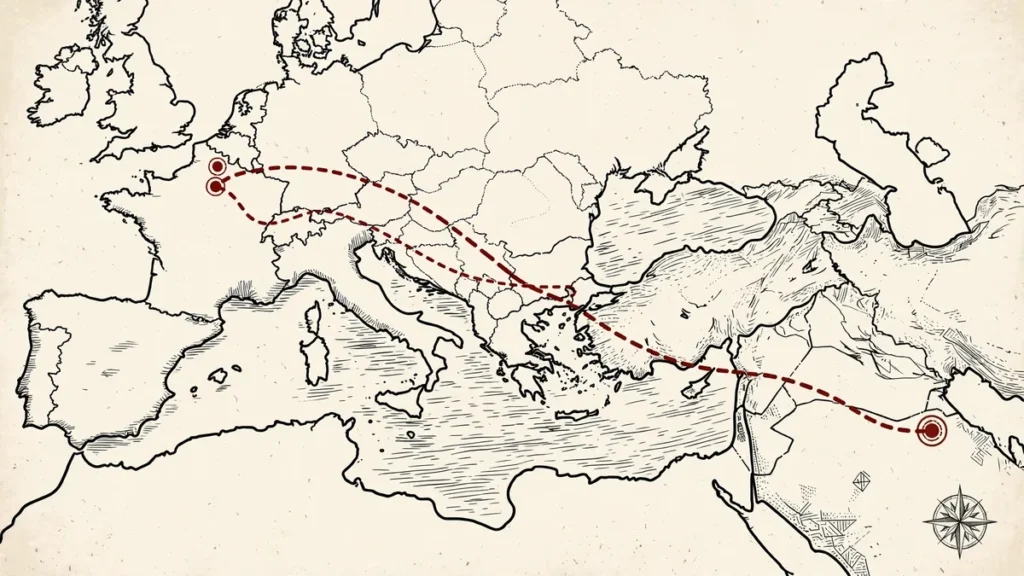
By the numbers: Abu Dhabi, November 2026
| Metric | Figure | Source | Status |
|---|---|---|---|
| Talks dates | November 10–11, 2026 | Reuters | CONFIRMED |
| Delegations in Abu Dhabi | US, Russia, Ukraine — plus European representatives | Reuters | CONFIRMED (exact format unresolved) |
| Time since last trilateral round | ~9 months (Geneva, February 2026) | Associated Press | CONFIRMED |
| Combat engagements on November 8 | 140 | Ukrainian General Staff | REPORTED (single source) |
| Killed in Komyshuvakha aid-centre strike, November 2 | 31 | Al Jazeera / Ukrainian officials | REPORTED (earlier reports said 24) |
| Coalition troops exercising in Poland, November 9–22 | ~2,800 from 10 countries | TASS | REPORTED (single source) |
Figures marked CONFIRMED rest on two or more independent sources. Figures marked REPORTED come from a single source or a party to the conflict and have not been independently verified. Where reports conflict — as with the Komyshuvakha toll, first reported as 24 and later as 31 — we use the latest figure and note the discrepancy rather than averaging the two.
Why is Europe joining now?
Three developments converged in the week before the talks. First, the substance of the agenda itself is European: the central question, as Rubio put it on November 8, is “what is the post-war security infrastructure of Ukraine and more broadly of the European continent going to look like?” Any deal would commit European states to security guarantees, troop deployments or funding, yet the format agreed by Washington and Moscow gave them no seat.
Second, European governments spent the week building the case for inclusion. On November 5, US, European, Ukrainian and NATO officials met in Brussels ahead of the Abu Dhabi talks; a NATO spokeswoman said they “sought to advance a just and sustainable end to the war in Ukraine”. On November 6, Kushner said that if the Abu Dhabi talks made progress, he hoped to move towards a broader multilateral framework “with the direct participation of European countries”. Barrot’s November 8 announcement turned that conditional hope into a stated fact: France will be there.
Third, the political clock is ticking. Trump’s Republicans lost heavily in the November 3 midterm elections, losing control of Congress, and Rubio was flying to Paris on November 8 for a meeting of G7 foreign ministers on November 9–10 — the first foreign trip of his since the election result. France holds the G7 presidency, and the Paris meeting, which Ukraine has been invited to join for some sessions, runs in parallel with the final preparations for Abu Dhabi.
The timeline of the talks themselves shows how quickly the round came together:
- October 21: Putin agrees to revive trilateral talks after meeting Witkoff in St Petersburg.
- November 2: Witkoff announces the Abu Dhabi round for November 10–11, covering the end of the war, post-war security arrangements, de-escalation and humanitarian measures.
- November 3: Zelenskyy, in Berlin with Merz, says he hopes the talks open the way to a leaders’ meeting with Putin.
- November 5: US, European, Ukrainian and NATO officials meet in Brussels; Trump meets Kremlin envoy Kirill Dmitriev in Washington.
- November 6: The Kremlin confirms Medinsky will lead its delegation; Kushner floats a broader multilateral framework if Abu Dhabi progresses.
- November 7: Russian Foreign Ministry spokeswoman Maria Zakharova says Europe “has no place at the negotiating table”.
- November 8: Barrot announces Europe will be represented; Trump tells 60 Minutes a deal is “very close”; Rubio says “some progress” has been made on security guarantees.
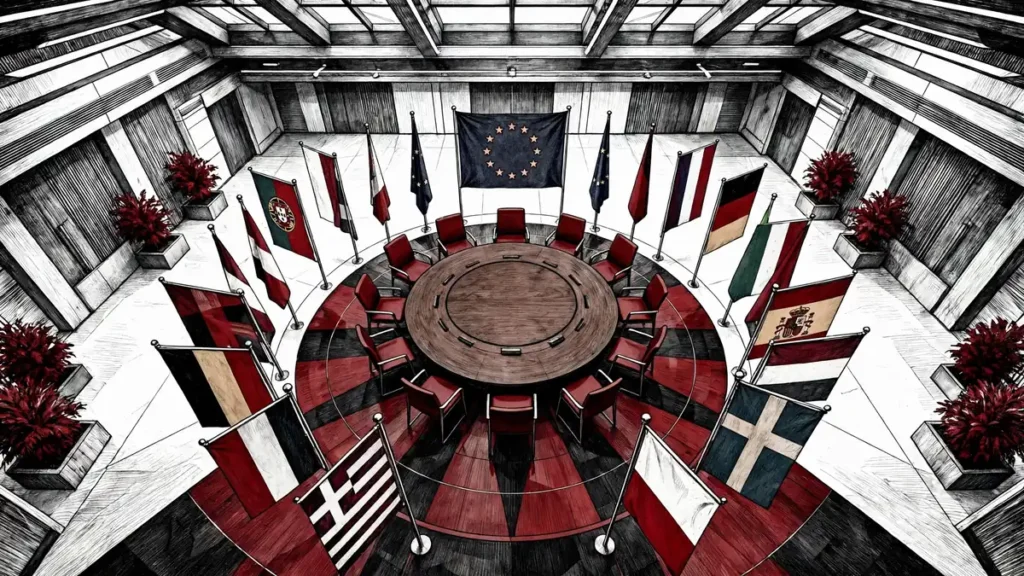
What does each side want from the talks?
The United States wants a deal, quickly, and on Trump’s terms. The president told 60 Minutes correspondent Ross Douthat that he believes “we’re very close to making a deal”, and that “that war is going to end, and it’s gonna end soon. And the only reason it’s gonna end is because of me.” When asked what the biggest obstacle had been, he said: “It was the hatred between Zelenskyy and Putin.” He also predicted Ukraine would end up with “a little bit different shape” — the clearest signal yet that Washington expects territorial change in any settlement, though he offered no specifics. Rubio, more cautious, said the sides are not “at the verge of a breakthrough” and that the main topic is security guarantees “which, in particular, extend beyond Ukraine’s borders”.
Russia wants a comprehensive settlement on its conditions, and it wants Europe kept out of the room. Putin wants Ukraine to pull its troops back from the four regions Moscow illegally annexed early in the war but never fully captured, and he will not agree to a general halt in hostilities, arguing that a pause would only let Ukrainian troops rest and rearm. Ushakov’s blunt line — “No one is going to invite them to the negotiating table” — and Zakharova’s warning that Europe “has no place at the negotiating table” show Moscow views European participation as a red line, not a detail. Peskov softened the position only slightly, saying Europeans would need to be involved in broader negotiations, “but only later”. Moscow also warns it would treat any European troops on Ukrainian soil as legitimate targets.
Ukraine wants European allies at the table, security guarantees it can rely on, and a path to a leaders’ meeting — while refusing to cede territory Russia has not taken on the battlefield or accept limits on its military and its arrangements with Western partners. Zelenskyy has said he was not given details of the agreement Trump referenced, and he warned against any deal struck over Kyiv’s head. For Kyiv, the Abu Dhabi round is a step, not a settlement: the adviser-level talks are meant to open the way to a trilateral format at leader level.
Europe wants a voice in decisions that will shape its own security for a generation. As Barrot put it, “France will be there and will ensure that Europe’s voice is heard.” The practical stakes are concrete: European states would be expected to fund, guarantee and possibly enforce any settlement, and the Coalition of the Willing — the 36-nation group led by France and the UK — begins its first military exercise on November 9 in Nowa Deba, Poland, with about 2,800 soldiers from 10 European countries rehearsing a deployment to Ukraine if a ceasefire is reached. Europe’s position, in short, is that it cannot be asked to underwrite a peace it had no part in negotiating.
What the Abu Dhabi talks mean for US, UK and EU readers
For readers in the United States, the talks are the clearest test yet of Trump’s promise to end the war. A deal would reshape US defence spending priorities, the future of American military aid to Ukraine, and the administration’s leverage in its parallel confrontation with Iran. A collapse would leave Washington managing a war it promised to close, with a Congress now controlled by Democrats who are likely to scrutinise every concession.
For readers in the UK and the EU, the stakes are closer to home. Any security guarantee for Ukraine would fall largely on European states to fund and enforce, and the talks will shape energy prices, defence budgets and the future of the Coalition of the Willing’s deployment plans. The G7 foreign ministers’ meeting in Paris on November 9–10 — where Rubio is expected to attend both days, and where no joint communiqué is expected — is the forum where European governments will try to align their position before Abu Dhabi opens. Travellers and businesses should note that the talks themselves change nothing on the ground for now: airspace over the war zone remains closed, and the fighting continues.
For markets, the signal to watch is not the opening ceremony but the first readouts on security guarantees. Progress there would ease pressure on European energy and defence stocks; a breakdown, or a deal that trades Ukrainian territory for a ceasefire, would do the opposite. Neither outcome is priced in: as Rubio said, “nothing’s been finalized yet”.
Why the talks could still fail
The gaps between the parties are wide, and the war has not paused for diplomacy. On the night of November 8–9, Russian forces struck three power substations across Ukraine and hit a cargo ship in the Black Sea that Moscow said was carrying arms to Ukraine; Reuters could not independently verify the reports. Ukraine’s General Staff recorded 140 combat engagements on November 8, with the fiercest fighting in the Pokrovsk and Kostiantynivka sectors, and Russian drone strikes on Kremenchuk injured seven people, including a teenager. A week earlier, a Russian strike on an aid centre in a school in Komyshuvakha, Zaporizhzhia region, killed 31 people, according to Ukrainian officials — an attack Zelenskyy called “further proof that Russia does not want any kind of de-escalation”. Our earlier coverage of that strike is here.
The format dispute is itself a risk. If European officials arrive in Abu Dhabi and are kept out of the room, as Ushakov suggested they would be, the episode could harden positions rather than soften them. If they are admitted, Moscow may treat their presence as a breach of the agreed format. And the substance is unresolved: Russia demands territory it has not captured and rejects a ceasefire; Ukraine rejects ceding that territory; the United States has not published any draft terms. Trump’s confidence — “very close to making a deal” — is a prediction, not a fact, and his own secretary of state has cautioned that the sides are not at the verge of a breakthrough.
There is also a longer diplomatic calendar in play. Trump, Xi Jinping and Putin may hold three-way talks on the sidelines of the APEC summit in Shenzhen on November 18–19 — a meeting Beijing has said it is “in communication” about but has not confirmed, and which Xi has said would not put Ukraine on the table. Whether Abu Dhabi succeeds or fails, it will shape that conversation.
What to watch next in Abu Dhabi
- November 9–10, Paris: G7 foreign ministers meet, with Ukraine invited to some sessions. Watch for any joint language on security guarantees, and for whether Rubio’s tone shifts after meeting his counterparts.
- November 9, Poland: the Coalition of the Willing’s Multinational Force for Ukraine exercise begins in Nowa Deba and runs to November 22. Moscow has already criticised it; watch for any Russian response.
- November 10, Abu Dhabi: the talks open. Watch who actually sits in the room — the first photograph or official readout will answer the format question Barrot’s announcement left open.
- November 10–11, Abu Dhabi: watch for any mention of security guarantees, ceasefire terms or a leaders’ meeting. A joint statement, even a thin one, would be a real result; silence would not.
- November 11 onwards: watch for a second round, a date for leader-level talks, or a return to the pattern of the February Geneva round — talks that ended without visible progress.
For the background to this round, read our preview of the talks, Abu Dhabi Ukraine-Russia Talks, November 10-11: What to Expect, and our coverage of the November 7 Kyiv barrage, Kyiv Barrage: 36 Ballistic Missiles, KN-23s and a Patriot Shortage. Today’s companion coverage of Europe’s northern flank — the expanded Joint Expeditionary Force anti-submarine pact — is here. The conflict hub is here.
Frequently asked questions
Will Europe be at the Abu Dhabi Ukraine talks?
France says yes: Foreign Minister Jean-Noël Barrot announced on November 8 that “the Europeans will be well represented” and that France will take part. Who represents Paris has not been disclosed, and whether European officials sit in the negotiating room or observe has not been settled. The Kremlin has objected, saying Europe has no place at the table.
Who is going to the Abu Dhabi talks?
The United States will be represented by special envoys Steve Witkoff and Jared Kushner, Russia by a delegation led by presidential aide Vladimir Medinsky, and Ukraine by a delegation expected to be led by Rustem Umerov, head of the Foreign Intelligence Service. France has confirmed it will send representatives but has not named them.
When are the Abu Dhabi Ukraine talks?
November 10 and 11, 2026, in Abu Dhabi, United Arab Emirates. The talks are at official level, not leader level, and are the first trilateral round between Russia, Ukraine and the United States since Geneva in February 2026.
What is on the agenda for the Abu Dhabi talks?
According to US envoy Steve Witkoff, the agenda covers ending the war, post-war security arrangements, de-escalation and humanitarian measures. Secretary of State Marco Rubio has said the central question is what the post-war “security infrastructure” of Ukraine and Europe will look like. No draft terms have been published.
Has Trump said a Ukraine deal is close?
Yes. In a CBS 60 Minutes interview aired on November 8, President Donald Trump said “I believe we’re very close to making a deal”, blaming the “hatred between Zelenskyy and Putin” for the delay. He also predicted Ukraine would end up with “a little bit different shape”. His secretary of state, Marco Rubio, cautioned the same day that “nothing’s been finalized yet”.
Sources
- Reuters: Europeans will join Ukraine talks in Abu Dhabi, French foreign minister says
- Dawn: Europe to join US-led talks on Ukraine in Abu Dhabi
- The Hindu: Europe will be represented at U.S.-mediated Ukraine talks in Abu Dhabi, France says
- Al Jazeera: Ukraine’s Zelenskyy hopes Abu Dhabi talks will open path to Putin meeting
- Kyiv Independent: Ukraine will likely ‘end up with a little bit different shape’ after war, Trump tells 60 Minutes
- Korea Times (AFP): Rubio says progress made on ‘security infrastructure’ after Ukraine war
- Associated Press: Rubio will discuss Iran, Ukraine, AI and more with G7 allies in France
- Associated Press: What to know about upcoming peace talks involving Russian, Ukrainian and US officials
- NPR/WHRO: Europe to join U.S.-brokered Ukraine talks in Abu Dhabi, defying Kremlin objections

Discussion 0
Share analysis, corrections, or context. Be civil — comments are moderated.