
WarBrief Live | November 8, 2026 | Breaking Analysis
36
ballistic missiles fired at Kyiv overnight
4
ballistic missiles intercepted, Ukraine’s air force said
172
drones launched; 149 shot down
6
killed, including a 7-year-old child, Ukrainian officials said
The Russia Kyiv missile attack of November 7, 2026 saw 36 ballistic missiles and 172 drones fired at the Ukrainian capital overnight — and only four of the ballistic missiles were intercepted. President Volodymyr Zelenskyy said the shortfall came down to a shortage of Patriot interceptors, and that preliminary findings point to North Korean KN-23 missiles striking a key energy facility.
The barrage damaged homes and businesses across Kyiv, forced the closure of the city’s Northern Bridge over the Dnipro River, and knocked out power and water in parts of the capital as temperatures headed towards freezing. It came three days before Russian, Ukrainian and American negotiators are due to meet in Abu Dhabi on November 10-11, in the fourth round of talks brokered by the Trump administration — and Zelenskyy accused Moscow of using the attack to put pressure on Kyiv before the meeting.
Key Takeaways
- Russia fired 36 ballistic missiles and 172 drones at Kyiv and 12 other regions overnight on November 6-7, 2026; only four of the ballistic missiles were intercepted, according to Ukraine’s air force.
- President Zelenskyy said preliminary findings indicate North Korean KN-23 missiles were used against a key energy facility — a preliminary assessment, not yet a confirmed finding.
- The Northern Bridge was hit and closed, and strikes on substations cut power from two nuclear plants to Kyiv and central regions as temperatures approached freezing.
- Ukraine answered by striking the Saratov oil refinery and an electronics plant in Oryol, as both sides prepare for US-brokered talks in Abu Dhabi on November 10-11.
What happened in the Russia Kyiv missile attack of November 7, 2026?
Russia launched waves of ballistic missiles and drones at Ukraine overnight on Friday into Saturday, with the heaviest fire concentrated on Kyiv and the surrounding region. Explosions rocked the capital as missiles struck residential and commercial buildings, and a kindergarten was among the buildings hit, according to a Reuters photograph from the scene. Drone and missile attacks across the country wounded at least nine people, including a child, the Associated Press reported.
Ukrainian officials cited by Times Now said at least six people were killed, including a seven-year-old child, and nine were wounded. Early wire reports had put the death toll lower, at two, reflecting how casualty figures were still being updated in the first hours after the attack. The figures in this article use the later Ukrainian-official toll, attributed as such.
Strikes on energy facilities outside Kyiv caused serious damage, Ukraine’s energy ministry said, including to the networks that carry electricity from nuclear power plants to Kyiv and central regions. The attacks damaged an electricity substation in Kyiv oblast connecting the Rivne and Khmelnytskyi nuclear power plants with the capital, and hit substations in Vinnytsia, Zhytomyr, Rivne, Kharkiv and Dnipropetrovsk oblasts. Five regions were plunged into darkness, and outages were most widespread in the Kyiv and central Zhytomyr regions, as well as in the eastern regions of Kharkiv, Donetsk and Dnipropetrovsk. The outages were separate from the scheduled rolling blackouts imposed to protect the grid, which remain in effect across much of Ukraine.
Kyiv Mayor Vitali Klitschko said the city’s energy situation was “extremely difficult, affecting the city’s heating and water supply systems”, and that work was already underway to repair the Northern Bridge and that water pressure in the capital had been stabilised. The 816-metre Northern Bridge, a major route connecting the city with large residential areas on the east bank of the Dnipro, was closed after the strikes.
Why were only 4 of 36 ballistic missiles intercepted?
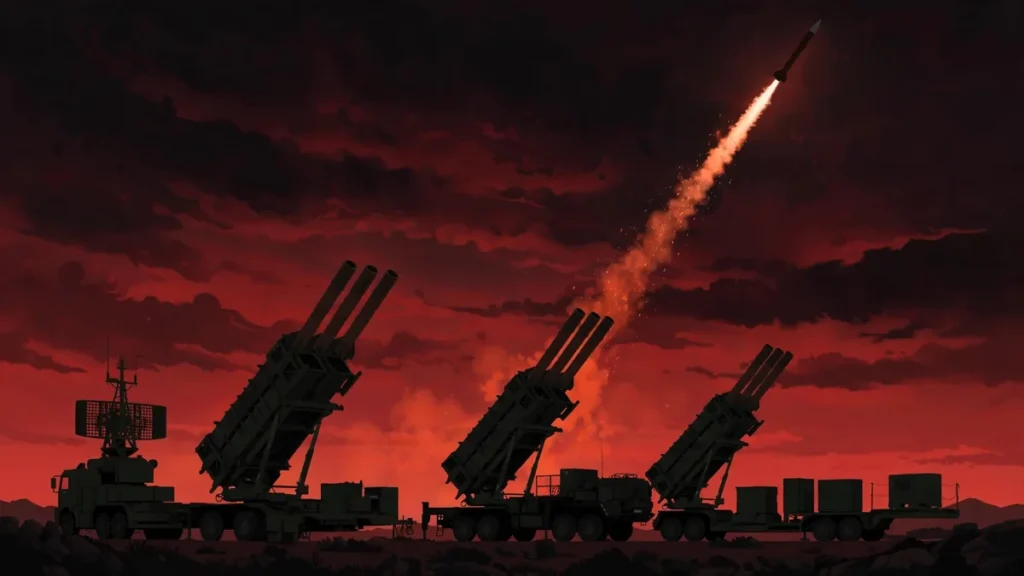
Zelenskyy said only four of the 36 ballistic missiles were shot down because Ukraine lacks enough Patriot interceptors — a claim Ukraine’s air force figures support, with 149 of the 172 drones downed but the ballistic-missile interception rate at roughly one in nine. Ballistic missiles are among the hardest targets in air defence: they travel at several times the speed of sound on steep trajectories, leaving defenders minutes, not hours, to react, and only a small number of systems — principally the US-made Patriot — can reliably engage them.
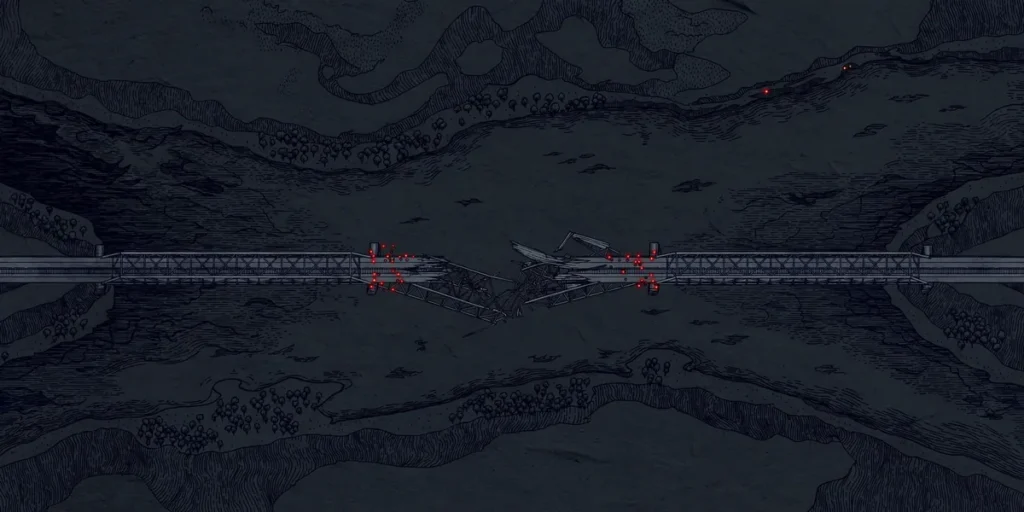
The gap is visible in what got through. Six ballistic missile attacks targeted the Northern Bridge, Zelenskyy said, and four of them struck it, damaging the roadbed, the trolleybus overhead line and a power line, according to Klitschko. Russia has repeatedly struck Kyiv’s Northern and Southern bridges throughout October, in what the Independent described as an attempt to disrupt the wider Ukrainian economy by severing the capital’s river crossings.
The shortage is not only Ukraine’s problem. Germany’s defence minister, Boris Pistorius, said on November 7 that Berlin had exhausted its capacity to supply Ukraine with additional Patriot systems for the time being. “Anything we give now cannot be replaced for the time being, which would create gaps (in our defences) that we cannot responsibly accept. We cannot do more right now,” he said. The United States has approved a $2.1 billion Patriot missile sale to Ukraine, but the November 7 barrage shows the interceptor shortage is still biting on the night it matters.
What are KN-23 missiles — and why does their use matter?
The KN-23 is a North Korean-made ballistic missile, and Zelenskyy said preliminary findings from technical assessments at impact sites indicate Russia used them against one of Ukraine’s key energy facilities. “Technical assessments are ongoing at the sites hit by ballistic missiles. According to preliminary findings, at one of the key energy facilities that was damaged, the Russians used KN-23 missiles manufactured and supplied by North Korea,” he said on social media.
The wording matters. This is a preliminary technical assessment, not a confirmed finding: investigators were still working at the impact sites when Zelenskyy spoke, and no independent verification had been published. WarBrief is treating the KN-23 use as reported and attributed, not confirmed, until the technical assessment is completed or corroborated.
If confirmed, the use of North Korean missiles in this strike would underline how deeply Pyongyang is now embedded in supplying Moscow’s war effort — and it would tie directly to the interception problem. North Korean ballistic missiles add to the volume of fast, hard-to-intercept weapons Ukraine’s air defences must handle, at the same time as Patriot interceptor stocks are running low. It would also raise fresh questions about how North Korean weapons reach the Russian battlefield despite years of United Nations sanctions on Pyongyang’s arms exports, a question our intelligence desk examines in its intelligence reporting on the conflict.
By the numbers: what is confirmed and what is still reported
| Metric | Figure | Source |
|---|---|---|
| Ballistic missiles fired at Kyiv and the surrounding region | 36 | Zelenskyy / Ukrainian air force (AP, Independent) |
| Ballistic missiles intercepted | 4 | Ukrainian air force (AP, Independent) |
| Drones launched | 172 | Zelenskyy (AP) |
| Drones shot down | 149 | Ukrainian air force (Independent) |
| Regions attacked besides Kyiv | 12 | Zelenskyy (AP) |
| People wounded | 9, including a child | Zelenskyy (AP) |
| People killed — REPORTED | 6, including a 7-year-old child | Ukrainian officials (Times Now); early wire reports put the toll at two |
| Missiles aimed at the Northern Bridge / that struck it | 6 / 4 | Zelenskyy (Independent) |
| Ukrainian drones shot down over Russia — REPORTED | 411 over 10 Russian regions | Russian Ministry of Defence (AP) |
Figures marked REPORTED rest on a single source or conflict with early wire reports; all other figures above were carried by at least two outlets. Casualty figures were still being updated in the hours after the attack.
Background: the bridge campaign and the road to Abu Dhabi
The November 7 barrage did not come from nowhere. It is the latest step in a campaign against Kyiv’s energy grid and river crossings that has intensified through the autumn:
- October 2026: Russia repeatedly strikes Kyiv’s Northern and Southern bridges, in what the Independent described as an attempt to disrupt the wider Ukrainian economy.
- November 2-3, 2026: Russia carries out its largest energy strike of 2026, battering power infrastructure ahead of winter.
- November 3, 2026: Russian guided bombs hit an aid centre in Komyshuvakha in the Zaporizhzhia region; emergency services later said the death toll had risen to 55.
- Overnight November 6-7, 2026: the Kyiv barrage — 36 ballistic missiles and 172 drones, the Northern Bridge hit, five regions left in darkness.
- November 7, 2026: Ukraine replies by striking the Saratov oil refinery in southwestern Russia and an electronics plant in Oryol.
- November 10-11, 2026: Russian, Ukrainian and US negotiators are scheduled to meet in Abu Dhabi for a new round of US-brokered talks.
Why the Kyiv barrage matters for the Abu Dhabi talks
Zelenskyy framed the barrage as a negotiating tactic, not a coincidence. “Russia is preparing for trilateral talks by launching ballistic missiles at Ukraine’s critical infrastructure,” he said, adding that Moscow was stepping up strikes to build pressure on Ukraine ahead of the meeting. “Russia perceives diplomacy in its own peculiar way – as a form of aggression,” he wrote, and in a separate post: “Russia has a very particular view of diplomacy — as a subtype of aggression.”
The talks, scheduled for Tuesday and Wednesday in Abu Dhabi, would be the fourth round brokered by the Trump administration, the most recent having been in Geneva in February. The American delegation is expected to be led by special envoy Steve Witkoff alongside Jared Kushner, President Trump’s son-in-law, while Russia’s delegation will include senior military officials and diplomats, including Deputy Foreign Minister Sergei Ryabkov, for the first time, according to the Kremlin.
Zelenskyy has also raised concerns about a European security framework proposed by Trump, arguing that Moscow should not be allowed to influence the continent’s security arrangements while continuing its military operations against Ukraine. “We don’t want to be divided by Russia,” he told CNN’s Jake Tapper on Friday, insisting that negotiations over Europe’s future security must protect Ukraine’s sovereignty. He added that Kyiv was counting on the US Congress to give more attention to Ukraine, “because Russia keeps increasing the number of its attacks”.
Moscow, for its part, confirmed the strikes and described different targets. Russia’s Ministry of Defence said it had carried out a massive strike on what it described as targets in Ukraine’s military-industrial sector, as well as energy and transport infrastructure in and around Kyiv — including the Northern Bridge, which it said facilitated the transport of weaponry, military hardware and specialist equipment for Ukraine’s armed forces, and an industrial facility it said produced Flamingo cruise missiles.
What the November 7 Kyiv barrage means for US/UK/EU readers
First, the air-defence constraint is now a European stockpile problem, not only a Ukrainian one. Germany’s admission that it cannot supply more Patriots for the time being shows allied arsenals are stretched, and the interception figures from November 7 — four of 36 ballistic missiles stopped — are the sharpest illustration yet of what that shortage costs on a single night. Watch for whether the Abu Dhabi talks, or the US Congress, produce new air-defence commitments.
Second, winter is now the front line. With temperatures hovering around freezing, five regions in darkness and Kyiv’s heating and water systems under strain, the damage is measured in homes without heat as much as in military effect. Zelenskyy noted that Ukraine is currently generating more electricity than it consumes, but “because Russia is striking substations and power grids, we are seeing significant shortages in Kyiv and other regions”. For European governments, that points to grid equipment, transformers and winter aid as the most urgent form of support.
Third, the talks themselves now carry a European security question. Zelenskyy’s objection to Moscow shaping a European security framework while the bombing continues puts the Abu Dhabi agenda in direct tension with the debate in European capitals about who writes the continent’s security rules. The outcome in Abu Dhabi will be read in London, Paris and Berlin as much as in Kyiv.
Finally, for energy watchers, the night had a second half: Ukraine’s reply strike on the Saratov refinery, a Rosneft facility with a crude processing capacity of about 140,000 barrels per day, which produces petrol, diesel and fuel oil including products supplied to the Russian military. The refinery has been targeted before, and the strike keeps pressure on Russian fuel supplies even as Russia targets Ukraine’s grid.
How Moscow and Kyiv are framing the barrage
Kyiv’s framing is that Russia is bombing its way into a stronger negotiating position. Zelenskyy urged greater US support and attention from Congress, called for bipartisan backing for Ukraine and stronger sanctions on Russia, and said: “When Russia tries to plunge Kyiv — a city of millions — and the entire country into a blackout, Ukraine must not be left to face this alone.”
Moscow’s framing is that the strikes hit legitimate military targets. Its defence ministry confirmed the Northern Bridge strike and said the crossing moved weapons and equipment for Ukraine’s armed forces, and said it had also hit a plant producing Flamingo missiles, a power station, an electrical substation and a plant producing ammunition, explosives and gunpowder in the wider Kyiv region. Russia’s defence ministry also said its forces shot down 411 Ukrainian drones overnight over 10 Russian regions, including Belgorod, where local officials said a Ukrainian drone killed one person in the town of Grayvoron.
Both accounts agree on the scale of the night’s exchange; they disagree on what was hit and why. The bridge, the substations and the energy facilities are confirmed damaged by Ukrainian authorities; the military character of those targets is Russia’s claim, not an independently verified fact.
What to watch next in the run-up to Abu Dhabi
First, whether the Northern Bridge reopens and how quickly power returns to Kyiv and the five affected regions — Klitschko said repairs were already underway, but the energy ministry’s description of damage to nuclear-plant transmission networks suggests restoration will take days, not hours. Second, whether the preliminary KN-23 finding is confirmed once technical assessments at the impact sites are complete; confirmation would make North Korean missile use a central talking point in Abu Dhabi. Third, whether allies announce new Patriot deliveries or interceptor packages before the talks, and whether Germany’s position shifts. Fourth, whether Russia repeats the bridge and energy strikes in the coming nights, and whether Ukraine’s deep strikes on Russian refineries continue in reply. And finally, the talks themselves on November 10-11: the delegations, the agenda, and whether the energy war pauses while negotiators are in the room.
Read next: our conflict zones hub tracks the war’s active fronts, our assessment of the November 2-3 energy strike explains the campaign this barrage belongs to, and our Abu Dhabi talks preview sets out what to expect on November 10-11.
Frequently asked questions
How many missiles did Russia fire at Kyiv on November 7, 2026?
Russia fired 36 ballistic missiles and 172 drones at Kyiv and the surrounding region overnight on November 6-7, according to President Zelenskyy and Ukraine’s air force. Only four of the ballistic missiles were intercepted, while air defences shot down 149 of the 172 drones.
What is the KN-23 missile?
The KN-23 is a ballistic missile manufactured and supplied by North Korea, according to President Zelenskyy. He said preliminary findings from technical assessments at impact sites indicate Russia used KN-23 missiles against a key Ukrainian energy facility in the November 7 barrage. The finding is preliminary and has not yet been independently confirmed.
Why is the Northern Bridge important?
The Northern Bridge is an 816-metre crossing over the Dnipro River that connects Kyiv with large residential areas on the city’s east bank. Six ballistic missiles were aimed at it in the November 7 attack and four struck it, damaging the roadbed, trolleybus lines and a power line. Russia says the bridge moves military equipment; Ukraine says it is civilian infrastructure. Russia has repeatedly struck Kyiv’s bridges throughout October 2026.
Will the Abu Dhabi talks still go ahead?
As of November 8, the talks are still scheduled for November 10-11 in Abu Dhabi, with Russian, Ukrainian and US negotiators attending. They would be the fourth round brokered by the Trump administration, the most recent having been in Geneva in February. The American delegation is expected to be led by Steve Witkoff and Jared Kushner.
How bad is Ukraine’s Patriot missile shortage?
On the night of November 7, Ukraine intercepted only four of 36 ballistic missiles, and President Zelenskyy blamed a lack of Patriot interceptors. Germany’s defence minister said on November 7 that Berlin cannot supply more Patriot systems for the time being. The United States has approved a $2.1 billion Patriot missile sale to Ukraine, but the shortage was still evident in the interception figures from this attack.
Sources
- The Manila Times (Associated Press): Ukraine hit by drone, missile attacks as talks with Russia, US loom
- Dawn: Zelensky accuses Russia of using N. Korean missiles to hit power grid
- The Independent: Ukraine-Russia war latest — Kyiv strikes and the Patriot shortage
- Times Now: Russia Strikes Kyiv, Ukraine Bombs Oil Refinery Ahead Of Abu Dhabi Peace Talks


Discussion 0
Share analysis, corrections, or context. Be civil — comments are moderated.