
WarBrief Live | November 7, 2026 | Breaking Analysis
| 2,000 km | 2017 | November 7, 2026 | 4,000 km* |
|---|---|---|---|
| Self-imposed missile-range cap now lifted | Year the cap was set by the supreme leader’s decree | Date of the IRGC announcement in Tehran | Distance to Diego Garcia, target of a reported March attempt |
*Reported, not confirmed — see the table below.
Iran’s Revolutionary Guard says the self-imposed 2,000 km limit on ballistic missile range “has been lifted”. The announcement signals a wider threat, but Tehran has not shown a missile that can fly further — and that gap is the story.
Key Takeaways
- Iran’s Revolutionary Guard said on November 7, 2026, that the 2,000 km self-imposed limit on ballistic missile range “has been lifted”, nine years after the cap was set.
- The Guard’s spokesman did not say Iran possesses a missile that can fly beyond 2,000 km — and Iran is not known to have one.
- The announcement follows the supreme leader’s order for a response “without geographical limits” and fresh US strikes on Qeshm Island.
- The same briefing raised the prospect of a nuclear-doctrine change if ordered — conditional, with no decision announced.
What did the IRGC actually announce on November 7?
At a press conference in Tehran during the Revolutionary Guard’s Aerospace Week, IRGC spokesman Brigadier General Hossein Mohebbi was asked about the long-standing limit on missile ranges. According to the Associated Press, he replied: “That restriction has been lifted for us.”
Mohebbi added that Iran would “demonstrate these capabilities in practice” rather than make statements about them, and said Tehran was prepared to respond to threats without geographical limitations, relying on asymmetric warfare to catch adversaries off guard, according to Iran’s ISNA news agency. He also said: “We are constantly improving the range of our missiles, and there is no pause in this work.”
What was announced is a policy change, not a weapon. No new missile was unveiled, no test flight was announced and no missile was named. Mohebbi did not say whether Iran currently possesses missiles capable of travelling beyond 2,000 km — a point the Associated Press and other outlets stressed in their reporting. The distinction matters: lifting a self-declared cap is a statement of intent; a longer-range missile is a piece of hardware that has to be built, tested and deployed.
What is the 2,000 km limit — and where did it come from?
The cap dates to October 31, 2017, when the then chief of the Revolutionary Guard, General Mohammad Ali Jafari, said Supreme Leader Ali Khamenei had decreed that the maximum range of any Iranian ballistic missile should be no more than 2,000 kilometres (1,200 miles). Defense News reported at the time that Michael Elleman of the International Institute for Strategic Studies called the limit “a political decision”, not an engineering one — Iran’s Khorramshahr missile could likely fly further with a lighter warhead, but Tehran chose to cap it.
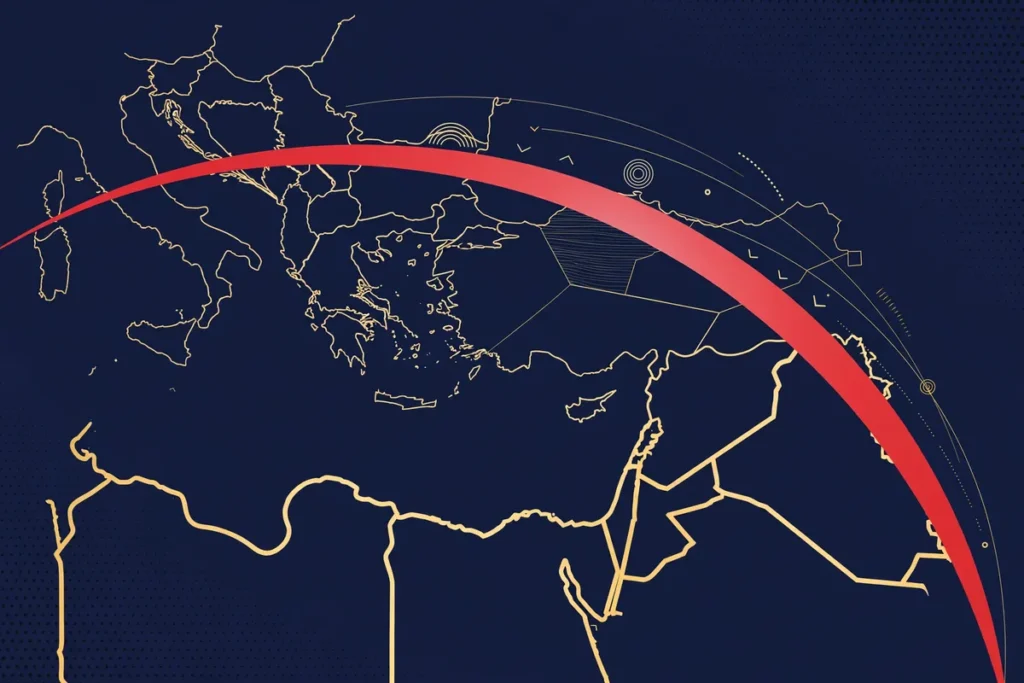
The purpose was reassurance. For years the Guard maintained that it limited its missiles to about 2,000 km to reassure European countries that they would not be targeted, as Al Jazeera noted. A 2,000 km range from Iran already covers Israel, every US base in the Gulf, the entire Arabian Peninsula, the Levant, most of Egypt and parts of Greece and the Balkans, according to the Associated Press.
The cap was never as settled as Tehran presented it. Jafari reaffirmed it in June 2018, saying Iran had “no plans” to build a missile beyond 2,000 km. But in August 2019 a senior Iranian officer said the range of Iran’s missiles was “constantly increasing”, and in January 2021 the Aerospace Force commander, Brigadier General Amir-Ali Hajizadeh, said the policy of restricting range to 2,000 km was “not permanent”. The November 7 announcement is therefore the formal end of a limit Iranian officials had already been publicly questioning for years.
Iran’s longest-range missiles are publicly listed at 2,000 km — the Shahab-3, the Khorramshahr, the solid-fuel Sejjil and the Kheibar (Khorramshahr-4). Western analysts have long assessed that some of these systems could exceed 2,000 km with lighter warheads, but no Iranian missile has been publicly demonstrated flying beyond that distance.
By the numbers: what is confirmed and what is only reported
| Metric | Figure | Source |
|---|---|---|
| Self-imposed range cap lifted | 2,000 km (1,200 miles) | Associated Press / Times of Israel — CONFIRMED |
| Year the cap was set | 2017 (October 31) | Defense News — CONFIRMED |
| Announcement date | November 7, 2026 | Associated Press / Al Jazeera — CONFIRMED |
| Territory inside the old 2,000 km range | Greece, Balkans, Arabian Peninsula, Levant, most of Egypt | Associated Press — CONFIRMED |
| Ships attacked in and around Hormuz, week to November 6 | At least 11, three sank | UKMTO via Al Jazeera — CONFIRMED |
| Brent crude, Friday close | $98.32 a barrel | Reuters via Gulf News — CONFIRMED |
| Distance to Diego Garcia | About 4,000 km (2,500 miles) | Times of Israel — REPORTED |
| Projectile strikes since hostilities resumed in early July | 88 | Western military intelligence via Al Jazeera — REPORTED |
| Missiles Iran can field beyond 2,000 km | None known | Associated Press — CONFIRMED (absence) |
Figures marked REPORTED come from a single or secondary source and have not been independently verified; figures marked CONFIRMED are corroborated by two or more reputable sources.
Why the announcement matters now
The timing is the message. The announcement came a day after President Donald Trump confirmed that US forces carried out fresh limited strikes on Friday against an Iranian air-defence installation on Qeshm Island, near the Strait of Hormuz, where Iranian media reported two explosions in the Suza area. Trump called the strikes “minor” and has described the confrontation as something other than a war, even while acknowledging US military operations. Iran’s army said in the early hours of Saturday that it had destroyed a US MQ-9 drone using a new system — a claim that has not been independently verified.
The shipping war around Hormuz is intensifying at the same time. At least 11 ships were attacked in and around the Strait in the week ending November 6, according to the United Kingdom Maritime Trade Operations, which said three of them sank. Brent crude settled at $98.32 a barrel on Friday, according to Reuters, carrying a visible war-risk premium.
Mohebbi’s briefing carried a second escalation signal alongside the range announcement. He told Iran’s Fars news agency that if the country’s leadership decides to revise its nuclear doctrine, “the necessary preparations will be made”. The statement is conditional: no decision to change doctrine has been announced. Last week, Supreme National Security Council secretary Mohsen Rezaei said officials were weighing possible changes to nuclear policy but had made no decision, and Foreign Ministry spokesman Esmaeil Baghaei said on November 2 that Iran remains a member of the Nuclear Non-Proliferation Treaty and considers itself bound by its obligations. The International Atomic Energy Agency reported in 2025 that Iran is enriching uranium to 60 percent purity, a short technical step from the 90 percent required for a weapon.
Mohebbi also warned that the Guard’s aerospace division has prepared “surprising defence achievements” to be deployed if another wave of major attacks begins, and that any miscalculation by the US or Israel would result in blows “whose effects would be felt for years”.
What the range lift does not prove
Three things the announcement does not establish. First, capability: Iran is not known to have operational ballistic missiles exceeding 2,000 km, and Mohebbi offered no evidence of one. Designing, testing, manufacturing and deploying a longer-range missile are separate steps, and none has been demonstrated.
Second, intent beyond signalling: the Guard has made this kind of statement before — and walked it back. The 2017 decree, the 2018 reassurance, the 2019 “constantly increasing” remark and the 2021 “not permanent” comment show a pattern of using the range question as a diplomatic lever. A statement at a press conference is cheaper than a test launch, and Tehran knows it.
Third, the Diego Garcia precedent is unconfirmed. The Times of Israel reported that Iran in March “reportedly tried and failed” to hit the joint US-UK base at Diego Garcia, some 4,000 km away — but that account is attributed, not confirmed, and no official source has verified it. Similarly, US officials have said technology from Iran’s space programme could be repurposed to build intercontinental ballistic missiles; that is a stated concern, not a demonstrated capability.

What the missile-range announcement means for US/UK/EU readers
For Europe, the change is prospective rather than immediate. Southeastern Europe — parts of Greece and the Balkans — was already inside the 2,000 km envelope. A missile that could fly materially further would put more European cities in theoretical range, but only after development and testing that would be visible to Western intelligence and almost certainly public. The event to watch is a test, not a statement.
For energy and household costs, the effect is already visible. Brent crude closed Friday at $98.32 a barrel, and the attacks on shipping in and around Hormuz — at least 11 vessels in a week, three sunk — are the reason. If the confrontation widens, fuel prices, shipping insurance and freight rates are the first channels through which US, UK and EU readers feel it.
For travel, the disruption is concrete. The US Mission to the UAE has advised American citizens in the Middle East to remain vigilant, and airlines continue to adjust flights to Saudi Arabia and other destinations. Etihad Airways’ travel advisory confirms that all passenger and cargo flights between Abu Dhabi and Riyadh and Dammam remain cancelled through November 19.
For the UK specifically, the shipping picture matters most: UK Maritime Trade Operations is the authority tracking the Hormuz attacks, and British-flagged and British-crewed shipping in the Gulf is directly exposed to any escalation in the strait.
How Tehran, Washington and Europe read the announcement
Tehran reads it as deterrence. The Guard’s message pairs the lifted cap with a warning that capabilities will be “demonstrated in practice” and that Iran will rely on asymmetric warfare — the implication being that adversaries should no longer assume Iran’s retaliation will stay inside the limits it previously described. The supreme leader’s order this week for a response “without geographical limits” to any threat from the US or Israel is the political backing for that message.
Washington, so far, is treating the latest round as limited. Trump confirmed the Qeshm strikes, called them minor, and has not announced the larger decision on resuming the war in full that he had promised earlier in the week. At the same time, the US State Department is offering a reward of up to $20 million for information about Iran’s nuclear programme — a signal that Washington’s focus remains on the nuclear file as much as on missiles.
Europe has not yet responded formally. No European government had issued a formal response to the announcement at the time of writing, and mediation continues through regional channels: Qatar’s prime minister has urged the US and Iran not to wait for a “perfect moment” to reach a deal, and Iran’s foreign minister, Abbas Araghchi, said on Saturday that he had held talks with 12 foreign ministers over the past 48 hours, including counterparts from Oman, Qatar, Saudi Arabia and Pakistan.
What to watch next in the Iran missile standoff
- A missile test beyond 2,000 km: the single event that would turn the announcement from signalling into capability. Watch for a launch, a NOTAM or a public claim with verifiable detail.
- The IAEA Board of Governors, November 16–20: Iran’s nuclear file returns to the board with verification still incomplete, and the nuclear-doctrine debate will shape the discussion.
- Whether mediation produces movement: Qatar and Pakistan are leading efforts to resume talks on the nuclear programme, sanctions and maritime safety in the Strait of Hormuz.
- Further strikes or retaliation: the Qeshm strikes, the claimed MQ-9 shootdown and the Hormuz shipping attacks show how quickly a limited exchange can widen.
- Any European response: the cap was originally set to reassure Europe; its removal is aimed squarely at European capitals, and their reaction will show whether the signal landed.
Frequently asked questions
What is Iran’s 2,000 km missile range limit?
It was a self-imposed cap on the range of Iran’s ballistic missiles, set in 2017 when the Revolutionary Guard chief said Supreme Leader Ali Khamenei had decreed a 2,000 km maximum. It was a political decision, not a technical one — Iran’s longest-range missiles were listed at 2,000 km, but analysts assessed some could fly further with lighter warheads.
Has Iran lifted the missile range limit?
Yes. On November 7, 2026, IRGC spokesman Brigadier General Hossein Mohebbi said at a Tehran press conference that the restriction “has been lifted”. He did not say whether Iran currently has missiles capable of flying beyond 2,000 km.
Can Iran’s missiles reach Europe?
Within the old 2,000 km limit, Iranian missiles could already reach parts of Greece and the Balkans. Beyond that, Iran is not known to have operational missiles exceeding 2,000 km. A longer range would require development and testing, which would be visible to Western intelligence.
Does this mean Iran will change its nuclear doctrine?
No decision has been announced. The IRGC said preparations would be made only if the country’s leadership orders a change. Iran’s security chief said last week that officials were weighing possible changes but had made no decision, and Iran remains a member of the Nuclear Non-Proliferation Treaty.
Why does the range announcement matter for oil prices?
Because it raises the risk of a wider confrontation around the Strait of Hormuz, through which a large share of the world’s oil moves. At least 11 ships were attacked in and around the strait in the week to November 6, and Brent crude closed Friday at $98.32 a barrel.
Sources
- Associated Press (via The Week): Iran says it has lifted its self-imposed limit on missile ranges
- The Times of Israel: Iran’s Revolutionary Guard says self-proclaimed limit on ballistic missile range ‘has been lifted’
- Al Jazeera: Iran war live — IRGC warns ready to change ‘nuclear doctrine’ if ordered to
- Al Jazeera: Qeshm island and Hormuz hit, as mediators try to prevent US-Iran escalation
- Gulf News: Middle East War — 9 things UAE residents need to know tonight, November 7
- The Times of India: Beyond 2000 km — Iran removes cap on ballistic missile range
- Defense News (2017): Iran’s supreme leader limits range for ballistic missiles produced locally

Discussion 0
Share analysis, corrections, or context. Be civil — comments are moderated.