WarBrief Live | November 4, 2026 | Intelligence Report
Overnight on November 2–3, 2026, Russia launched one of the largest combined strikes of the war against Ukraine’s energy system: 289 drones, 17 ballistic missiles and 59 cruise missiles, according to Ukrainian President Volodymyr Zelenskyy. The Institute for the Study of War (ISW) assesses the barrage as part of a Russian campaign to inflict increasing costs on Ukrainian society and coerce Kyiv into capitulation over the winter. This report assesses what it hit, what the interception figures reveal, and whether it is winter coercion, negotiating leverage, or both.
Key Takeaways
- Russia fired 289 drones, 17 ballistic missiles and 59 cruise missiles overnight on November 2–3, 2026, targeting power plants and substations across Ukraine.
- Ukrainian air defences intercepted 83.05% of cruise missiles but only 17.65% of ballistic and anti-ship missiles, according to Ukrainian Air Force data cited by ISW.
- Three DTEK thermal power plants stopped generating electricity, and Ukrenergo described the attack as one of the largest on the energy system since the full-scale invasion began.
- The timing — days after a short local truce expired and a week before US-brokered talks were due to resume in Abu Dhabi — points to both winter coercion and negotiating leverage.
What happened on November 2–3, 2026?
The barrage was aimed primarily at electricity generation and the substations that distribute power to consumers. Zelenskyy said the main targets were power plants and substations in nine oblasts, from the Black Sea port city of Odesa in the south to Rivne in the west. Ukraine’s Energy Ministry separately reported damage in ten regions, including Vinnytsia, Dnipropetrovsk, Zaporizhzhia, Zhytomyr, Rivne, Odesa, Chernihiv, Chernivtsi, Khmelnytskyi and Kharkiv. The difference reflects different tallies of targeted areas and reported damage.
Ukrenergo said Russian forces deliberately attacked energy facilities more than 20 times overnight and during the day on November 3. Emergency cuts were imposed in Kyiv and six other regions, and Kyiv’s mayor, Vitali Klitschko, described the city’s power situation as extremely difficult, with water and transport disrupted. DTEK said three of its five thermal plants were hit by dozens of missiles and drones, suffered extensive destruction and stopped generating electricity, although it did not say how long the shutdown would last.
Energy minister Denys Shmyhal also said three drones were directed at a substation important to the Khmelnytskyi nuclear power plant’s stable operation — a claim about a targeted substation, not damage to the plant itself.
By the numbers: what is confirmed, and what is only reported?
| Metric | Figure | Source |
|---|---|---|
| Drones launched overnight | 289, including 120 jet-powered | Zelenskyy / Ukrainian Air Force, via ISW |
| Ballistic missiles launched | 17 | Zelenskyy, via ISW |
| Cruise missiles launched | 59 | Ukrainian Air Force, via ISW |
| Drones / cruise / ballistic intercepted | 257 / 49 (83.05%) / 3 (17.65%) | Ukrainian Air Force data, via ISW |
| DTEK thermal plants stopped | 3 of 5 | DTEK |
| Deliberate attacks on energy facilities | More than 20 | Ukrenergo |
Russian claims about the number of plants struck differ and are not adopted here: the Russian Defence Ministry claimed four power plants and two substations were struck, while a Kremlin-affiliated military blogger claimed at least six power plants. Both are reported claims, not independently confirmed totals.
What does the interception split reveal about Ukraine’s air-defence gap?
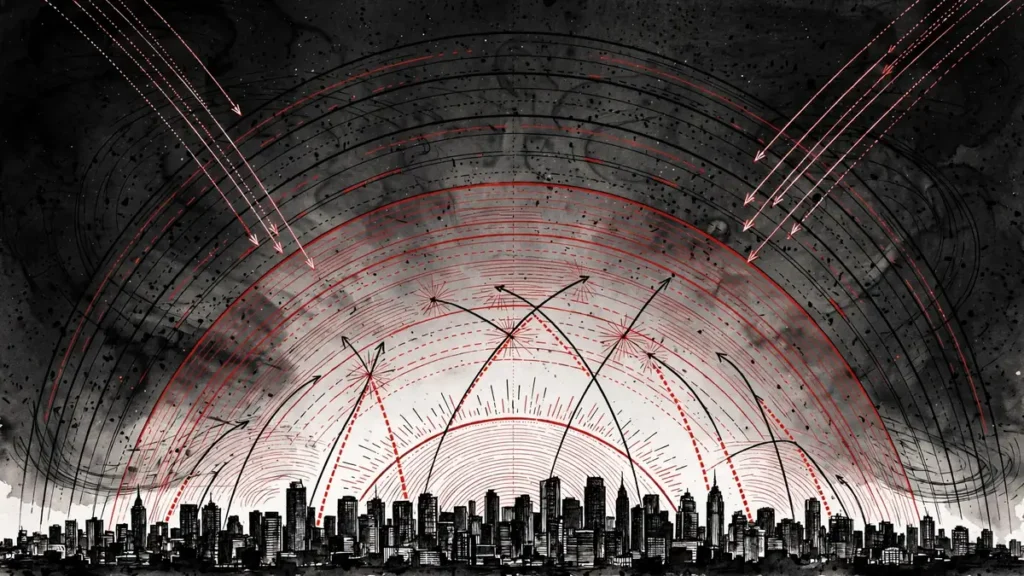
The most analytically important number is not the total of 365 weapons launched. It is the split in what got through: 83.05% of cruise missiles intercepted, but only 17.65% of ballistic and anti-ship missiles, according to the Air Force data analysed by ISW. Cruise missiles fly relatively slowly and at low altitude, giving layered defences repeated engagement opportunities. Ballistic missiles arrive far faster on a steep trajectory, leaving minutes for detection, tracking and a hit-to-kill intercept, and anti-ship weapons such as the Zircon add further speed and manoeuvre problems.
The mix matters too: the barrage included 120 jet-powered drones, which fly at up to 600 kilometres per hour and which Ukrainian interceptor drones have historically struggled against, per ISW’s November 2 assessment. In October 2026, about 75% of 6,473 long-range Shahed/Geran drones were downed — roughly 66% of jet-powered variants against about 89% of piston-engine variants. Russia is shifting toward faster weapons ahead of winter, and Ukraine’s defences cope best with the slower end of that mix.
Why does the timing matter for the talks?
The barrage came hours after a short-term humanitarian truce in Oleshky expired on November 1, and a day after a separate strike on an aid distribution site in Komyshuvakha. Whether that sequence was choreographed or reflects a campaign already planned for early November cannot be established from open sources.
What can be said is that the strike landed a week before US-brokered peace talks were due to resume in Abu Dhabi on November 10–11, 2026, according to Reuters reporting. Strikes ahead of talks serve two purposes at once: they degrade Ukraine’s resilience going into winter, raising the cost of holding out — the coercion reading ISW advances — and they create facts a counterpart must price in, including the demonstrated ability to repeat a barrage of this size. For US, UK and EU readers, the practical consequence is a question of air-defence stocks, repair assistance and winter humanitarian support, not a direct energy-price shock.
Assessment and outlook: what to watch next
The assessment is that this was a winter-campaign opening move, not a one-off retaliation. Three indicators will test it: repetition of comparable barrages; repair pace at the three DTEK plants and the lifting of emergency outages; and whether ballistic interception stays near the November 2–3 level while cruise-missile interception stays high — which would strengthen the case for prioritising high-end interceptor supply.
What to watch: further strikes before and during the Abu Dhabi talks; statements on interceptor stocks and new air-defence deliveries; Ukrenergo’s daily grid assessments; and whether any party proposes a moratorium on energy strikes. Until one of those signals changes, the prudent reading is that Ukraine faces a winter in which its energy system is the front line, and its defences are thinnest where the threat is fastest.
Frequently asked questions
How large was Russia’s November 2–3, 2026 strike on Ukraine’s energy system?
Ukraine reported 289 drones, 17 ballistic missiles and 59 cruise missiles. Ukrenergo called it one of the largest strikes on the energy system since the full-scale invasion began, and DTEK said three thermal plants stopped generating electricity.
Why were so few ballistic missiles intercepted?
Air Force data cited by ISW put ballistic and anti-ship interception at 17.65%, against 83.05% for cruise missiles. Ballistic missiles arrive much faster on a steep trajectory, leaving far less time for an intercept, and saturation across 23 impact locations compounds the difficulty.
Did the strike damage a nuclear power plant?
No nuclear incident has been reported. The energy minister said three drones were directed at a substation important to the Khmelnytskyi plant’s stable operation — a claim about a targeted substation, not damage to the plant.
What happens at the Abu Dhabi talks on November 10–11?
US-brokered talks were due to resume in Abu Dhabi on those dates, per Reuters. Whether energy targeting is restrained there will test whether the barrage was leverage, winter coercion, or both.
Read next: WarBrief’s Intelligence Reports hub and the Conflict Zones hub, plus the Oleshky ceasefire explainer for the truce that expired on November 1.
Sources
- Institute for the Study of War: Russian Offensive Campaign Assessment, November 3, 2026
- Institute for the Study of War: Russian Offensive Campaign Assessment, November 2, 2026
- Euromaidan Press: Russia fires 59 cruise missiles at Ukraine’s grid
- New York Post (reporting Reuters material): Russia strikes energy facilities in 10 Ukrainian regions
- DD India (reporting Reuters): Russia bombards Ukraine power grid before Abu Dhabi talks
- Rubryka: Ukrenergo on the November 3 energy attacks