
WarBrief Live | November 5, 2026 | Geopolitics
| 3 Signatory states | 16 Articles in the agreement | 10 years Withdrawal lock-in | 1 of 3 Ratification bill articles adopted |
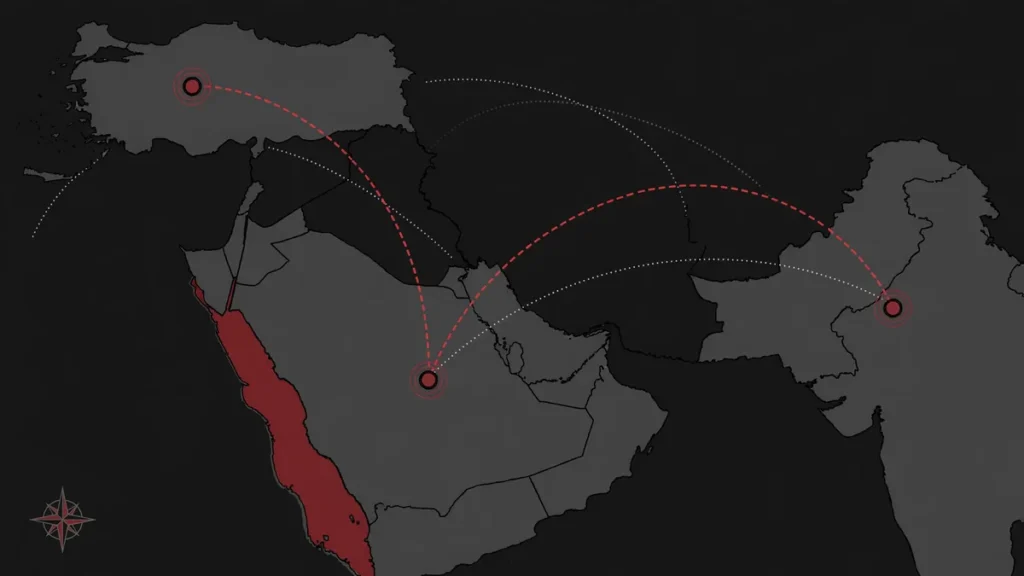
Turkey’s parliament adopted the first article of the bill ratifying the Makkah defence pact on November 5, 2026, starting the final domestic approval of a trilateral mutual-defence deal signed in August by Türkiye, Saudi Arabia and Pakistan. Ratification is not yet complete: lawmakers still have to vote on the remaining articles when the session resumes later on Thursday.
Key Takeaways
- Turkey’s parliament completed its general debate on the ratification bill and adopted its first article early on Thursday, November 5; deliberations on the remaining articles resume later the same day.
- The Makkah pact’s Article 2 treats an armed attack on one signatory as an attack on all three, but — unlike NATO’s Article 5 — it does not bind any party to the use of force. The means of assistance are left open and decided by consensus.
- Pakistan and Saudi Arabia completed their own ratifications on October 23, so Türkiye is the last of the three signatories to finish the domestic process.
- Ratification alone sends no Turkish troops to Saudi Arabia. Any deployment of personnel needs a separate parliamentary mandate, and Ankara says its contribution will be equipment, intelligence and weapons systems — not combat against the Houthis.
What happened in Turkey’s parliament on November 5?
After completing general discussions on the bill as a whole, lawmakers in the Turkish Grand National Assembly (TBMM) moved on Wednesday to debate the legislation article by article. The first article — which formally approves ratification of the 16-article Mecca Joint Defense Agreement — was adopted early on Thursday. Deputy Parliament Speaker Celal Adan then suspended the session until further deliberations scheduled for late Thursday, according to Daily Sabah.
The ratification bill itself has only three articles. The first approves the agreement. The second states that the law enters into force when it is published in the Official Gazette. The third assigns responsibility for implementing it to the president. Once the remaining articles pass and the law is published, Türkiye’s domestic approval of the pact will be complete — the final piece of a process the other two signatories finished weeks ago.
The vote comes at a moment of acute pressure on Saudi Arabia. Yemen’s Houthis have stepped up missile and drone attacks on the kingdom, and the pact was signed before those attacks began. Reuters reported that the parliamentary vote follows a senior Iranian official telling the agency that Tehran and Washington remain far from a deal to end their war — the wider conflict in which the Houthi campaign is one front.
The debate was not a formality. The opposition Republican People’s Party (CHP) is among the supporters of the alliance, and its parliamentary group chair, Faik Öztrak, told the session that the agreement offered Türkiye an opportunity to build a new regional security structure outside NATO, with Türkiye at its centre. That cross-party backing matters: ratification of a treaty that commits NATO’s second-largest army to the defence of a Gulf monarchy is the kind of decision that usually splits a parliament. On this occasion it did not.
What does Article 2 of the Makkah pact actually commit?
The heart of the agreement is Article 2, and it is also the part most often misunderstood. It states that if one of the parties is subjected to an armed attack by another country, the parties shall immediately assist the attacked party with “all means of mutual assistance that they can provide to one another”. That sounds like NATO’s Article 5 — and the pact’s drafters clearly wanted the comparison — but the resemblance stops at the headline.
The crucial difference, set out in analysis of the full text published after Türkiye submitted the agreement to parliament on October 20, is that Article 2 does not bind any party to the use of force. The means of assistance are left deliberately open, and decisions are taken by consensus. That contrasts with the North Atlantic Treaty (1949) and the Collective Security Treaty (1992), which specify the right of member states to conduct an armed attack in response, and with the Gulf Cooperation Council’s Joint Defence Agreement (2000), which explicitly lists military armed force as a possible response.
Article 1 commits the three states to protect each other’s “independence, sovereignty, territorial integrity, and the inviolability of their internationally recognised borders”. Article 3 then redirects the agreement toward its main purpose: close cooperation in defence, the defence industry and security, developing relations among the armed forces, and activities aimed at strengthening cooperation in defence. In other words, the pact is oriented at least as much toward long-term capacity building as toward wartime mutual defence.
Seven articles are dedicated to that capacity-building work. Article 4 commits the parties to regular consultations on international security matters to develop common assessments. Article 5 strengthens efforts at the operational level to combat terrorism jointly. Article 6 encourages reciprocal personnel exchanges among defence institutions, joint training programmes and exercises aimed at increasing interoperability in both wartime and peacetime. Article 7 covers technology sharing among defence-industry institutions, joint technology development, joint production and cooperation in specialised defence technologies. Article 9 promotes intelligence sharing, and Article 10 covers logistical support in both wartime and peacetime.
The institutional machinery is set out in Article 8. A Strategic Political and Defence Committee, bringing together the foreign ministers, defence ministers and military chiefs of all three countries, meets twice a year. A permanent secretariat is based in Riyadh, and the first secretary-general is Pakistani — retired Lieutenant General Nauman Mahmood, appointed on September 23 for a three-year term, with the post rotating thereafter. Article 13 prohibits sharing confidential information with outside governments, companies or individuals, a clause with obvious implications for Türkiye’s NATO relationships and for the other two states’ ties with Washington. Article 16 locks the parties in: no party may withdraw until 10 years have elapsed from the agreement’s entry into force, and then only with three months’ written notice.
Read the original text of the deal in our earlier explainer: Mecca Defence Agreement: Saudi-Pakistan-Turkiye Pact (2026).
By the numbers: the Makkah pact in figures
| Metric | Figure | Source |
|---|---|---|
| Signatory states | 3 — Saudi Arabia, Türkiye, Pakistan | Reuters; Jerusalem Post |
| Articles in the agreement | 16 | Indian Express; Jerusalem Post |
| Withdrawal lock-in | 10 years from entry into force | Jerusalem Post (Article 16) |
| Articles in the Turkish ratification bill | 3 | Türkiye Today; Daily Sabah |
| Ratification bill articles adopted so far | 1 of 3 (November 5) | Daily Sabah |
| Committee meetings since signing | 3 — Istanbul (Aug 31), Riyadh chiefs (Sep 25), Riyadh emergency (Oct 5) | Dawn; Express Tribune |
| Houthi claim of a “direct hit” on Riyadh airport | REPORTED only — no Saudi confirmation | Siasat (attributed claim) |
Caveat: figures marked CONFIRMED in the table above rest on two or more independent sources. The Houthi “direct hit” claim is REPORTED only — it is attributed to the group and has not been confirmed by Saudi authorities or the Saudi-led coalition, which has reported interceptions.
Why the ratification vote matters now
The timing is the story. The pact was signed on August 7, 2026, at a trilateral summit in Mecca by Saudi Crown Prince Mohammed bin Salman, Turkish President Recep Tayyip Erdoğan and Pakistani Prime Minister Shehbaz Sharif. At that point it was a political declaration with a text. It became something more concrete on October 5, when the three countries’ Strategic Political and Defence Committee met in Riyadh and agreed to move immediately to the practical implementation of the collective defence commitments — including the rapid deployment of agreed military forces and capabilities in Saudi Arabia, subject to each country’s domestic laws.
That October 5 decision came as the Houthis escalated attacks on the kingdom. The group has claimed strikes on targets in Saudi Arabia’s Jizan, Najran and Al-Jawf regions, as well as on Riyadh’s King Khalid International Airport. The airport claim — a “direct hit” causing “significant damage” — is unconfirmed: Riyadh has not confirmed it, and the Saudi-led coalition has reported intercepting incoming fire, with shrapnel injuries reported in the capital. The coalition also said it destroyed a missile the Houthis launched toward Medina, Islam’s second holiest city. The background is covered in our earlier reporting: Riyadh Airport Closed: Houthi Air Campaign Explained (2026) and Houthi Airport Attacks: What Happened in Saudi Arabia (2026).
Ankara has been careful to define what ratification does — and does not — mean in practice. Officials told Reuters last month that Turkey’s contribution to Saudi Arabia was expected to be limited to military equipment, intelligence sharing and weapons systems. Defence Minister Yaşar Güler has said Turkey did not see its troops engaging in combat or offensive operations against the Houthis. A ruling-party lawmaker told Reuters that Turkey would also submit a separate mandate to parliament allowing military personnel to be deployed to Saudi Arabia under the pact, but that the scope of support would be determined through collective consultations and in line with requests from Riyadh. Analysts quoted by Reuters expect Turkish troops, advisers and military personnel to be deployed to help install and operate systems sent by Ankara once that deployment mandate passes — a technical and advisory role, not a combat one.
The parliamentary debate reflected the same caution. Fuat Oktay, chair of parliament’s Foreign Affairs Committee, told the session that the agreement activates a “comprehensive consultation and objective assessment mechanism” in the event of an attack, with decisions taken by consensus. “Accordingly, there is no question of our country being drawn into an uncontrolled process against its own will,” he said. He added that deploying the Turkish Armed Forces abroad is possible only through motions approved by parliament, under Article 92 of the Constitution. Hulusi Akar, the former army chief and defence minister who now chairs the National Defense Commission, described the agreement as “fundamentally about solidarity and deterrence”, adding that it is “in no way an alternative to NATO; rather, it is a complementary partnership and is not directed against any country”.
What the Makkah pact ratification means for US/UK/EU readers
For readers in the United States, Britain and Europe, the ratification matters in four concrete ways.
NATO’s second-largest army is acquiring a second alliance. Türkiye is a NATO member, and the pact’s drafters were careful to note that existing treaties are protected. But a Turkish parliament that ratifies a mutual-defence commitment outside NATO — with a committee structure, a secretariat and a ten-year lock-in — is a signal about where Ankara sees the future of its security policy. Akar’s insistence that the pact complements rather than replaces NATO is the official line; the structure being built looks, to sceptics, like the beginning of a parallel architecture.
Energy and fuel prices are in the background. The pact exists because Saudi Arabia, the world’s largest oil exporter, is under attack and the US protective umbrella over the Gulf is perceived to be shrinking. Any escalation that threatens Saudi export infrastructure or the Strait of Hormuz feeds directly into Brent crude and, through it, into petrol and diesel prices in the US, the UK and the EU. The pact’s deterrent value, if it works, is a stabilising factor for energy markets; if it fails, or if it draws Türkiye into a wider confrontation, it becomes a risk factor.
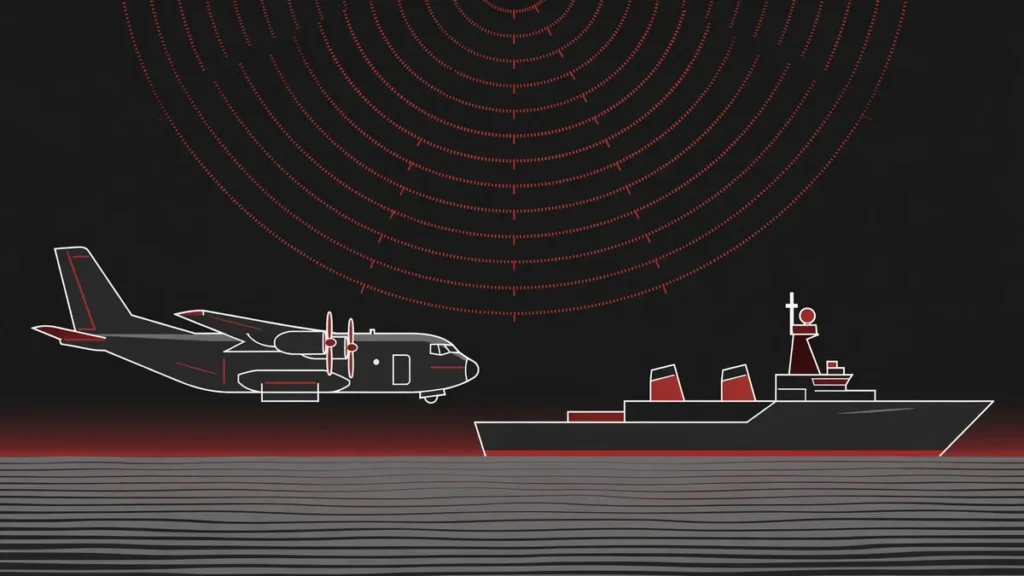
Travel to the Gulf is already affected. Houthi claims of strikes on Riyadh’s airport — even unconfirmed — force airlines and travellers to weigh the risk, and the coalition’s interception reports underline that the threat is real even when the damage claims are not verified. A functioning trilateral defence arrangement, with Turkish air-defence and electronic-warfare expertise in the mix, is one reason the kingdom’s airspace has stayed open. Readers flying to or through the Gulf should watch for travel advisories, not just headlines.
Defence industry is the quiet winner. Türkiye brings a large defence industry and NATO-standard expertise; Pakistan brings major military capabilities, including nuclear weapons; Saudi Arabia brings the money. Article 7’s provisions on joint production, research and development and specialised defence technologies point to contracts, co-production lines and technology transfer — the kind of industrial cooperation that European and American defence firms will be watching closely, and competing with.
Different perspectives
Ankara’s framing is defensive and institutional. Akar called the pact a matter of “solidarity and deterrence” and stressed that other countries may join if they wish, subject to parliamentary approval. Oktay described it as a regional security ring that complements Türkiye’s 360-degree security approach. The CHP’s Öztrak went further, calling it a new autonomous space in the East-West balance — and noting that Iranian President Masoud Pezeshkian has said Tehran is ready to join the agreement, and that Syria’s foreign minister has said Damascus is considering joining. Keeping the agreement within “defence and deterrence” and maintaining security diplomacy with Iran, Öztrak argued, are guarantees against a new sectarian conflict in the region.
That diplomatic outreach to Tehran is real and documented. The three pact countries’ foreign ministers met Iran’s foreign minister in Tehran, and a four-way dialogue on regional peace and security involving the pact states and Iran was agreed after an unprecedented meeting of top military, defence and intelligence officials in the Iranian capital. Our earlier coverage: Mecca Pact Meets Iran in Tehran to Avert a Renewed War (2026).
Islamabad and Riyadh present the pact as purely defensive. Pakistan’s Foreign Office has said it is not directed against any country and does not constitute a new bloc. President Asif Ali Zardari told the pact’s first secretary-general that the accord would strengthen regional peace through defensive cooperation guided by the UN Charter — and Pakistan has placed its commitments within Article 51 of the Charter, which recognises the right of individual and collective self-defence following an armed attack.
Sceptics, however, note the gap between the text’s categorical language and its machinery. Analysts writing in the London Dialogue observed that the treaty establishes no decision-making rule, timeline, force commitments or joint command, and that the October 5 statement committed the parties to act under approved arrangements and “in accordance with each country’s own laws”. A Dawn explainer made the same point: as of late October the alliance had a political commitment, an institutional head and a secretariat, but no standing assigned force, no joint commander, no publicly defined rules of engagement and no published military doctrine — and no public authorisation for Pakistani or Turkish forces to take part in combat inside Yemen. On that reading, the pact will be judged not by its Article 2 wording but by whether the three states build the machinery the text cannot conjure.
Meanwhile the membership question is moving. Syria’s foreign minister said at the Manama Dialogue that Damascus was in negotiations on joining the pact, and on November 4 — the day before the Turkish vote — Syria signed a separate defence agreement with Saudi Arabia during President Ahmed al-Sharaa’s visit to Riyadh. That deal’s text has not been published, and neither Riyadh nor Damascus has said what it covers beyond defence-ministry cooperation.
What to watch next in Ankara, Riyadh and Islamabad
First, the rest of the vote. The Turkish parliament resumes deliberations late on Thursday, November 5, to consider the bill’s second and third articles. Watch for the final vote, the law’s publication in the Official Gazette — which brings it into force — and any statement from the presidency on implementation. The session’s earlier adjournment, after a commission failed to return to its place, is a reminder that parliamentary procedure can still produce delays.
Second, the separate deployment mandate. Reuters reported that Turkey will submit a mandate to parliament allowing military personnel to be deployed to Saudi Arabia under the pact. That vote — not the ratification itself — is the one that determines whether Turkish advisers and technicians actually arrive in the kingdom, and on what terms.
Third, the secretariat’s build-out. With Lt Gen Mahmood in post since September 23 and the Riyadh secretariat being established, the next test is whether the Strategic Political and Defence Committee produces concrete joint planning, shared intelligence products and a published doctrine — or remains a ministerial talking shop.
Fourth, the accession queue. Iran says it is ready to join; Syria is negotiating; Qatar, Pakistan, Türkiye and Indonesia signed a separate military cooperation agreement on October 21. Any formal application to join the Makkah pact would require consensus among the three core parties and would transform a trilateral deal into something larger. Watch for the next committee meeting — and for whether the Houthi campaign against Saudi Arabia eases or escalates in response to the ratification.
Finally, the war it sits inside. The pact’s first real test will not be a parliamentary vote but the next Houthi attack on Saudi Arabia, and the next turn in the US-Iran war. If the deterrent works, nothing happens — which is the hardest outcome to report, and the one the pact’s authors are counting on.
Read next: Mecca Pact Meets Iran in Tehran to Avert a Renewed War (2026) and Mecca Defence Agreement: Saudi-Pakistan-Turkiye Pact (2026). For the wider picture, see our Conflict Zones hub.
Read next: our explainer on how mutual defence pacts work — NATO Article 5, the CSTO, ANZUS and the Makkah pact compared, clause by clause.
Frequently asked questions
Has Turkey ratified the Makkah defence pact?
Not yet in full. On November 5, 2026, Turkey’s parliament adopted the first article of the three-article ratification bill, with deliberations on the remaining articles resuming later the same day. Pakistan and Saudi Arabia completed their ratifications on October 23, so Türkiye is the last signatory to finish the process.
Does the pact force Turkey to send troops to Saudi Arabia?
No. Ratification creates a formal mutual-defence obligation, but Article 2 leaves the means of assistance open and subject to consensus, and any deployment of Turkish personnel needs a separate parliamentary mandate under Article 92 of the Constitution. Defence Minister Yaşar Güler has said Turkey does not see its troops engaging in combat or offensive operations against the Houthis.
What does “attack on one is an attack on all” mean in the Makkah pact?
Article 2 says an armed attack on one party is treated as an attack on all three, and the parties must immediately assist the attacked party with all means of mutual assistance they can provide. Unlike NATO’s Article 5, it does not specify the use of force as a response, so the nature and extent of assistance are decided collectively in each case.
Can other countries join the Makkah pact?
Yes. Article 8.4 of the agreement sets out a method for admitting additional members, subject to consensus among the three core parties. Iran’s president has said Tehran is ready to join, Syria’s foreign minister has said Damascus is considering it, and Syria signed a separate defence agreement with Saudi Arabia on November 4, 2026.
Why is the pact being ratified now?
The timing is driven by the Houthi campaign against Saudi Arabia, which escalated in October and November 2026 with claimed strikes on Riyadh’s airport and other targets. The pact was signed in August, before the attacks began; the October 5 committee meeting in Riyadh already agreed to accelerate implementation, and the parliamentary vote in Ankara is the last domestic step.
Sources
- Reuters: Turkey’s parliament set to ratify defence pact with Saudi Arabia, Pakistan as Houthi attacks mount
- Daily Sabah: Turkish Parliament adopts 1st article of bill on Mecca alliance
- Indian Express: Mecca Defence Pact — full text of Turkey, Pakistan and Saudi Arabia’s mutual defence deal explained
- Jerusalem Post: What is in the Pakistan-Saudi Arabia-Turkey defense pact?
- Dawn: Makkah pact ratified by Pakistan, Saudi Arabia, says FO
- Siasat: Houthis claim direct hit on Riyadh airport, warn airlines
- The National: Syria and Saudi Arabia sign defence agreement as Al Shara returns to Riyadh


Discussion 0
Share analysis, corrections, or context. Be civil — comments are moderated.