
WarBrief Live | October 28, 2026 | Markets & Economy
At a glance
- Total US military cost: at least $47.1 billion through mid-October 2026, according to Pentagon figures reported by Reuters and CBS News
- Munitions replacement: about $29 billion, the largest single share
- Equipment and platform losses: $6.1 billion
- Continuing run-rate: $2 billion to $3 billion a month, according to the Congressional Budget Office
The United States military has now spent more than $47 billion on the war in Iran, according to Pentagon data obtained by Reuters and reported on October 27, 2026. The new figure, put at $47.1 billion through mid-October by US Central Command in figures shared with Congress, is more than 25 percent higher than the $37.5 billion estimate that Defense Secretary Pete Hegseth gave lawmakers in July 2026. The iran war cost 47 billion pentagon explained in one sentence is this: a war launched on February 28, 2026, with predictions that it would be short, has turned into a long, munitions-hungry campaign whose replacement bill alone now exceeds $29 billion.
For background on the wider conflict, see WarBrief’s conflict zones hub. That distinction matters. The $47.1 billion is an estimate of what the US military has spent and must spend to replace what it has used or lost. It is not a final audited total, and the Pentagon has not publicly released the estimate itself. Reuters reported that the department did not immediately respond to a request for comment. What follows separates what officials have confirmed on the record from what has been reported from Pentagon data shared with lawmakers, because the gap between the two is now part of the political story.
Key Takeaways
- Pentagon figures reported by Reuters and CBS News put the US military cost of the Iran war at $47.1 billion through mid-October 2026, up from $37.5 billion in July and $43.6 billion in early September.
- About $29 billion is earmarked to replace expended munitions, $6.1 billion to replace lost equipment and aircraft, and $11.9 billion to cover incremental operating costs.
- The Congressional Budget Office estimated about $38 billion through August 1, 2026, and projected $2 billion to $3 billion a month for as long as fighting continues.
- Damage to US bases hit by Iranian strikes is not clearly included, so the true cost is almost certainly higher than $47.1 billion.
- A separate $87.6 billion supplemental funding request from June 2026 remains unpassed, leaving the funding decision for the lame-duck session after the November 3 midterm elections.
Iran war cost: what does the $47.1 billion actually pay for?
The breakdown reported from Central Command figures is strikingly lopsided. More than 60 percent of the total is munitions. The Reuters report puts the cost of replacing expended munitions at more than $29 billion, and the cost of replacing military equipment and so-called platform losses at more than $6 billion. A separate account of the same Central Command figures, obtained by USA Today, gives the precise split as $29 billion for munitions, $6.1 billion for equipment replacement, and $11.9 billion in additional operating expenses, including support for deployed personnel.
Munitions dominate because of how the war has been fought. The United States and Israel launched strikes against Iran on February 28, 2026, and American forces initially relied heavily on expensive, high-end precision-guided weapons to weaken Iranian defenses, so that cheaper munitions could be used later. That plan ran into the April 2026 ceasefire, which gave Iran time to dig out underground storage facilities and bring back online some defenses, missiles and drones that had been inaccessible. The result, reported consistently across outlets, was a longer war fought with more expensive weapons for longer than planned.
Platform losses are the second, smaller but politically visible, share. A congressional report cited in October 2026 found that 81 US military aircraft and drones had been destroyed or damaged during the war, with replacement costs estimated at $1.9 billion to $3.3 billion. MQ-9 Reaper drones accounted for more than half of those losses. USA Today reported that the Air Force, which has lost dozens of aircraft, has spent $7.6 billion since fighting began, against $2.1 billion for the Army and $1.5 billion for the Navy. More than 50,000 US troops are assigned to the war mission, according to Central Command, and USA Today cited the military’s official casualty database as recording at least 21 US service members killed and 865 wounded since February 28, 2026.
How did the estimate climb from $37.5 billion to $47.1 billion?
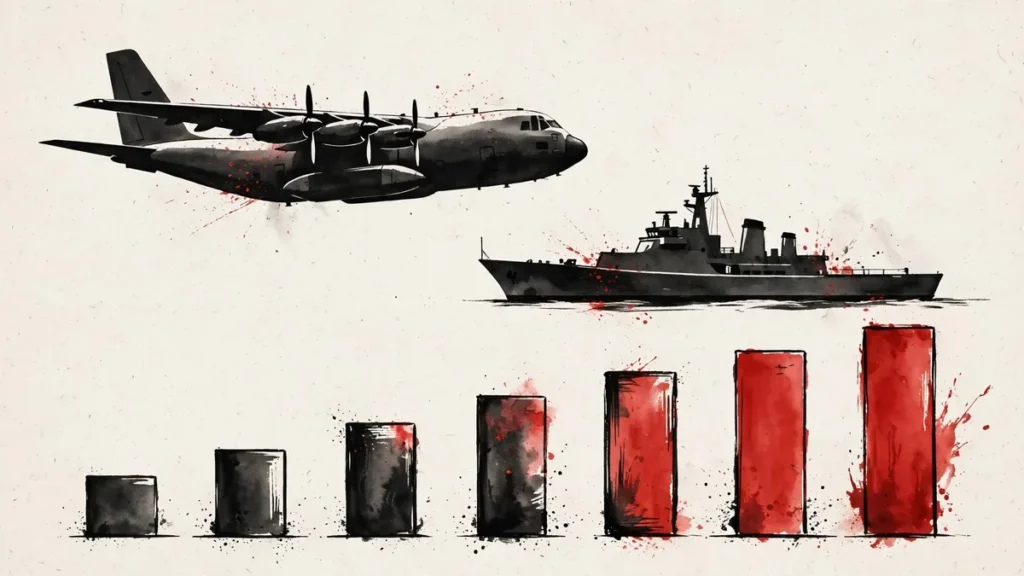
The cost curve tells its own story, and it is worth setting out in full because each step was reported at a different date with a different cutoff. In March 2026, Pentagon officials told lawmakers that the first six days of the war had cost more than $11.3 billion. A Pentagon comptroller later put the cost at $25 billion. In July 2026, Hegseth told Congress the figure was approximately $37.5 billion. By early September 2026, Central Command’s estimate had risen to about $43.6 billion. The latest figure, $47.1 billion through October 16, 2026, is $3.5 billion higher than that September update.
The Congressional Budget Office, working from an earlier cutoff and a different method, estimated about $38 billion through August 1, 2026. That figure is not in conflict with the Pentagon’s $47.1 billion; it simply stops earlier and, as the Media Line noted, the budget office cautioned that the Pentagon had not supplied all the information it requested. The CBO’s forward projection is the number that matters most for what comes next: $2 billion to $3 billion a month, depending on fighting intensity, with a return to July-level intensity pushing costs toward the top of that range.
One cost is conspicuously absent from every version of the total. The $47.1 billion does not clearly include the cost of repairing US bases in the Middle East that were damaged by Iranian missile and drone strikes. Reporting from the Washington Post, cited in later coverage, made the same point about the September figure. That means $47.1 billion should be read as a floor for the direct military cost, not a ceiling, and it excludes wider economic costs entirely, including veterans’ care, interest on borrowed money, and higher household energy bills.
By the numbers: the Iran war bill
| Metric | Figure | Source |
|---|---|---|
| Total US military cost through mid-October 2026 | $47.1 billion (reported) | Pentagon/Central Command figures via Reuters and CBS News |
| Munitions replacement | About $29 billion (reported) | Central Command figures via Reuters and USA Today |
| Equipment and platform replacement | $6.1 billion (reported) | Central Command figures via USA Today |
| Incremental operating costs | $11.9 billion (reported) | Central Command figures via USA Today |
| July 2026 estimate | $37.5 billion (confirmed on the record) | Defense Secretary Pete Hegseth to Congress |
| Early September 2026 estimate | $43.6 billion (reported) | Central Command via later Pentagon reporting |
| CBO estimate through August 1, 2026 | About $38 billion (confirmed) | Congressional Budget Office, September 2026 |
| CBO monthly run-rate | $2 billion to $3 billion (projected) | Congressional Budget Office |
| US service members killed / wounded | At least 21 / 865 (reported) | US military casualty database via USA Today |
| Aircraft and drones destroyed or damaged | 81 (reported) | Congressional Research Service report, October 2026 |
Caveat: figures marked “reported” come from Pentagon or Central Command data obtained by news outlets, not from a publicly released Pentagon statement; figures marked “confirmed” were given on the record to Congress or published by the Congressional Budget Office. Base-repair costs are not clearly included in any total above.
What does the war bill mean for US, UK and EU readers?
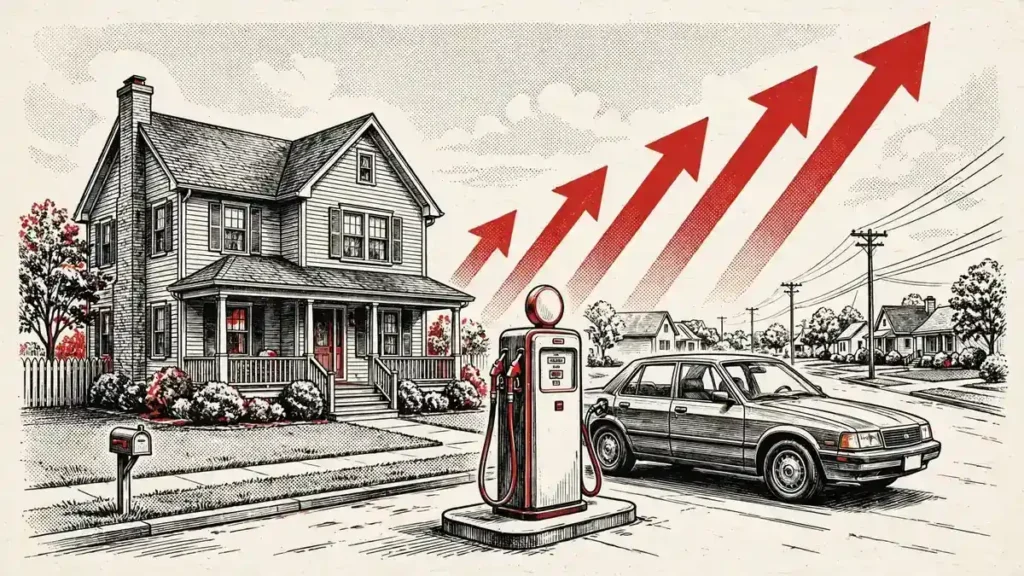
For American readers, the most direct translation of the Pentagon bill comes not from the $47.1 billion itself but from what households have already paid at the pump and on their borrowing. Mark Zandi, chief economist at Moody’s Analytics, estimated in early October 2026 that the war had cost the average American household about $2,000 so far, with about $1,100 of that in higher energy and transport costs and about $540 in higher borrowing costs linked to war-driven inflation. The American Progress fact sheet on the war’s costs, drawing on Zandi’s analysis, put regular gasoline at $4.27 a gallon on October 22, 2026, against $2.98 on February 27, 2026, and cited Brown University’s tracker for more than $141 billion in extra gas and diesel costs paid by Americans since the war began. Those are estimates by economists, not government bills, and they are best read as the wider economic shadow of the military total, not as an addition to it.
For UK and EU readers, the link runs through energy markets and defense budgets rather than a tax bill. Brent crude reached $115.36 a barrel on October 28, 2026, as WarBrief reported the same day, and diesel remains near record levels across much of Europe. A war that burns through Patriot interceptor stockpiles, USA Today reported that roughly 65 percent of the US Patriot interceptor stockpile has been expended, also strains the air-defense inventories that NATO allies share and replenish from the same production lines. The Pentagon’s inspector general warned in September 2026 of strategic inventory shortfalls linked to munitions use, even as the administration maintained that the military is not facing shortages. For European planners, that tension between stockpile warnings and official reassurance is the practical consequence of the $29 billion munitions bill.
This article is educational only and is not financial advice. It does not recommend buying or selling any security, commodity or currency, and it makes no prediction about future oil prices or interest rates.
Why is Congress still arguing over an $87.6 billion request?
The funding fight is older than the latest cost estimate and, for now, unresolved. The White House asked Congress on June 24, 2026, for $87.6 billion in supplemental funding, of which about $67 billion was earmarked for the Defense Department, with the remainder covering items including economic assistance for farmers and the Ebola response in Central Africa. In July 2026, the House adopted a $95 billion budget resolution by 216 votes to 214, a vehicle that would allow up to roughly $73 billion for the war, and passed a $1.1 trillion defense authorization bill by 216 votes to 212. Neither became law. Senate Democrats blocked the authorization bill, and Senate Majority Leader John Thune said the Senate lacked the votes for the $95 billion resolution as written.
Then came the stopgap. On September 1, 2026, the House passed a bipartisan funding bill to keep the government open through December 11, 2026. It did not include the emergency war supplemental the Pentagon had requested. In practical terms, as the Washington Examiner’s analysis of the funding timeline put it, the war-funding decision was placed in the lame-duck session, after voters have made their choices. That timing is now the backdrop to the $47.1 billion disclosure: the figure arrived six days before the November 3, 2026, midterm elections, which will determine control of Congress for the next two years, and Reuters reported that the war’s impact on global energy costs has weighed on support for Republican candidates and on President Donald Trump’s approval ratings. Those political effects are reported, not endorsed here, and the administration has disputed critics’ cost characterizations, including Zandi’s household estimates.
Democrats have pressed Hegseth for a more detailed accounting, while some Republican lawmakers have questioned why additional supplemental funds are needed when the Pentagon still held unobligated funds from the previous year’s reconciliation package. The Pentagon has not made its latest estimate public, which leaves lawmakers, and the public, working from figures disclosed to Congress and then reported by news outlets. That opacity is itself a recurring theme of the funding debate: each new total has arrived through a leak or a congressional briefing rather than a published Pentagon release.
What happens to the bill if fighting restarts after November 3?
The cost trajectory depends on a decision that has not yet been made. The United States has warned several Gulf governments to prepare for a possible short, intense renewed campaign against Iran after the November 3 midterms, according to a Wall Street Journal report published on October 27, 2026, which WarBrief covered the same day. Trump has said the United States would not resume strikes before the elections, while holding out the possibility of renewed combat afterwards, and US officials have said the Pentagon has been planning options for a resumption of heavy fighting if ordered. At a rally in Corpus Christi, Texas, Trump said the United States was making an absolute fortune because of the situation in the Middle East and predicted the Iran war would end very soon. Those two signals, preparation for escalation alongside predictions of a quick end, are both on the record, and they point in opposite directions for the bill.
At the CBO’s run-rate, even a quiet month adds $2 billion to $3 billion. A renewed heavy campaign would add far more, and faster, because the most expensive munitions are spent first in any new round of strikes, just as they were in February 2026. The stockpile question compounds that: with Patriot interceptors and other critical munitions already depleted, a new round would either draw down remaining stocks further or force faster, more expensive replenishment. Conversely, a negotiated pause would not stop the bill immediately, because the $29 billion munitions replacement and $6.1 billion equipment replacement are costs already incurred, whether or not another shot is fired. The bill for what has already happened is now largely fixed; only the rate at which it keeps growing is still in doubt.
That is why the $47.1 billion figure matters beyond its headline size. It marks the point at which the war’s direct military cost has passed the $45 billion mark that some analysts were citing only weeks ago, and it arrives alongside a household cost estimate of about $2,000 per family and a gasoline price more than 40 percent above its pre-war level. The war was launched with a prediction that it would be short. Eight months later, the accounting says otherwise, and the next accounting will be written by whatever decision follows the midterms.
Different perspectives
The administration’s position, as reported, is that the military cost is the price of denying Iran a nuclear weapon and degrading its missile and drone capabilities, and that the United States is benefiting from increased domestic energy production. Trump has framed the Middle East situation as profitable for the United States, and administration officials have maintained that the military is not facing shortages despite the inspector general’s warning.
Critics in Congress and among economists argue the opposite: that the war is a war of choice whose costs, in military spending, household energy bills and higher borrowing costs, now outweigh its stated gains, and that the funding process has avoided a full public accounting. Zandi’s assessment, that the war has absorbed about half the average household’s income gain over the past eight months, is the sharpest version of that argument. Supporters of the administration’s approach counter that Zandi’s household figures mix direct military spending with wider economic effects that would not all disappear if the war ended tomorrow, and that energy prices reflect many factors beyond the conflict.
Regional governments, meanwhile, face a different ledger. Gulf states that host US forces and have absorbed Iranian retaliatory strikes are weighing the cost of a renewed campaign against the cost of a nuclear-armed Iran, a calculation that the Mecca Pact’s talks in Tehran and the post-midterms strike window both reflect. None of those governments publishes a comparable cost total, which is why the American figure dominates the public debate even though the war’s costs are spread far beyond the United States.
What to watch next in the Iran war funding fight
- November 3, 2026: midterm elections determine control of Congress, and with it the shape of any lame-duck funding deal.
- December 11, 2026: the stopgap funding bill expires, forcing a decision on the supplemental request or a further extension.
- Any Pentagon release: whether the department publishes the $47.1 billion estimate itself, with a service-by-service breakdown, or leaves it to congressional briefings and press reports.
- Stockpile replenishment: whether production of Patriot interceptors and other critical munitions accelerates, and at what unit cost.
- Base repair accounting: whether a future estimate finally includes damage to US bases, which would push the total above $47.1 billion.
Frequently asked questions
How much has the Iran war cost the US military?
At least $47.1 billion through mid-October 2026, according to Pentagon and Central Command figures reported by Reuters, CBS News and USA Today. The figure includes about $29 billion to replace munitions, $6.1 billion to replace equipment, and $11.9 billion in operating costs, and it does not clearly include base-repair costs.
Why is the $47 billion figure higher than earlier estimates?
The estimate has risen at every update: $37.5 billion in July 2026, $43.6 billion in early September 2026, and $47.1 billion in mid-October 2026. The main driver is continued munitions expenditure, especially expensive precision weapons and air-defense interceptors, during a war that lasted far longer than initially predicted.
What has the war cost the average American household?
About $2,000 so far, according to Moody’s Analytics chief economist Mark Zandi’s October 2026 estimate, mostly through higher energy costs (about $1,100) and higher borrowing costs (about $540). That is an economist’s estimate of wider economic costs, not a tax bill, and it is separate from the Pentagon’s $47.1 billion military total.
Has Congress approved the war funding?
Not in full. The White House requested $87.6 billion in supplemental funding in June 2026, including about $67 billion for the Defense Department. The House passed related measures, but none became law, and a September 2026 stopgap bill excluded the emergency war supplemental. The decision is expected in the lame-duck session after the November 3 midterms.
Will the cost keep rising?
Almost certainly, unless fighting stops and replenishment ends. The Congressional Budget Office projected $2 billion to $3 billion a month for as long as the conflict continues, and a renewed heavy campaign after the midterms would add costs faster. Even with no further fighting, the $29 billion munitions bill and $6.1 billion equipment bill are already incurred.
Sources
- Reuters: US costs of Iran war rise to over $47 billion, according to Pentagon estimate
- USA Today: US military cost of Iran war tops $47B, Pentagon tells Congress
- The Media Line: Pentagon puts US Iran war costs at $47.1 billion, up more than 25% since July
- Center for American Progress: Fact Sheet: Costs of the Iran War
- Washington Examiner: Congress is hiding Trump’s $45 billion Iran war bill until after you vote
- Free Malaysia Today (Reuters): US costs of Iran war rise to over US$47bil, Pentagon estimates


Discussion 0
Share analysis, corrections, or context. Be civil — comments are moderated.