
WarBrief Live | November 2, 2026 | Event Preview
At a glance: 6 member states listed | 1 membership frozen since February 2024 | Russia holds the 2026 chairmanship | Council session in Moscow on November 11, 2026
Leaders of the Collective Security Treaty Organization (CSTO) will meet in Moscow on November 11, 2026, with Armenia’s frozen membership and Central Asian border security at the top of the agenda.
The session of the CSTO Collective Security Council was agreed at the bloc’s previous summit in Bishkek on November 27, 2025, and will close Russia’s year as chair of the organisation, according to BelTA. Some CSTO announcements refer to a November 10-11 meeting window, reflecting preparatory and related sessions around the leaders’ meeting; the Collective Security Council session itself is dated November 11 in the summit decision and in the Secretary-General’s later remarks. That distinction matters for readers tracking the outcome: the headlines on the day will come from the Council session, not from the surrounding meetings.
This preview explains what the summit is, why Armenia’s status has become the live question, what the Tajikistan border programme is likely to produce, and what to watch for in the communique. It does not predict an expulsion: as of November 2, no member state had formally tabled one in public, and the Secretary-General has framed the Armenia question as conditional, not decided.
Key Takeaways
- The CSTO Collective Security Council meets in Moscow on November 11, 2026, under Russia’s 2026 chairmanship.
- Armenia remains formally listed as a member but froze its participation in February 2024; Foreign Minister Ararat Mirzoyan said on October 28, 2026, that Yerevan sees no return to the bloc.
- Secretary-General Taalatbek Masadykov has said Armenia’s membership could be raised at the summit if a member state proposes it; he has not said a decision is certain.
- A five-year programme to strengthen Tajikistan’s border with Afghanistan, approved in November 2024, is due to deliver its first equipment before the end of 2026.
- For US, UK and EU readers, the summit is a cohesion test for Russia’s regional bloc, not a market-moving event in itself; its signals concern Central Asia, Armenia’s Western partnerships, and Afghan border security.
What is the CSTO summit in Moscow on November 11?
The CSTO is a Russia-led intergovernmental military alliance of six post-Soviet states: Armenia, Belarus, Kazakhstan, Kyrgyzstan, Russia and Tajikistan. It grew out of the Collective Security Treaty signed on May 15, 1992, and became a formal international organisation in 2002. Its best-known provision, Article 4 of the treaty, treats aggression against one member as aggression against all, in a formulation often compared with NATO’s Article 5, although the two alliances differ sharply in size, capability and practice.
The Collective Security Council, made up of the member states’ heads of state, is the CSTO’s highest body. Its sessions typically approve decisions on collective security, adopt joint statements, and set the organisation’s work for the following year. The Moscow session will therefore be read less as a routine annual meeting and more as a statement of what the bloc still is, after two years in which one of its six members has stopped taking part.
Russia assumed the CSTO chairmanship on January 1, 2026. At the Bishkek summit in November 2025, Russian President Vladimir Putin proposed holding an international expert forum in Moscow on building an equal and indivisible security architecture in Eurasia ahead of the 2026 summit, according to BelTA’s account of that meeting. Whether that forum produced anything the leaders will endorse in Moscow is one of the smaller, but telling, items to look for in the summit documents.
Why is Armenia’s membership on the agenda?
Armenia announced in February 2024 that it was freezing its participation in the CSTO, citing the bloc’s failure to respond adequately to Armenia’s security challenges. Prime Minister Nikol Pashinyan said in December 2024 that relations with the organisation had passed the point of no return, and in August 2026 he said Armenia did not intend to intensify its CSTO activities over the next five years. Yerevan has also stopped paying membership contributions, according to multiple reports of the Secretary-General’s remarks.
The position was restated bluntly on October 28, 2026. Foreign Minister Ararat Mirzoyan told a news conference in Yerevan that Armenia had stopped participating in the organisation’s work long ago and had frozen its membership. Public Radio of Armenia reported his words as: “We stopped our participation in the organization’s activities a long time ago. We have frozen our membership.” He added that Yerevan would not change its position and did not see itself returning to the CSTO.
Mirzoyan was responding to former CSTO Secretary-General Nikolay Bordyuzha, who said on October 28 that Armenia should be expelled because it neither participated in the organisation’s activities nor paid its fees, while formally remaining a full member in a bloc where decisions are taken by consensus. Bordyuzha’s intervention is a former official’s argument, not a summit decision, and this preview treats it as such: it raised the political temperature, but it did not itself put expulsion on the agenda.
What did put the question on the table was Secretary-General Taalatbek Masadykov, who took office on January 1, 2026. Speaking to journalists on October 23, 2026, Masadykov said Armenia’s membership could be discussed at the Moscow session if the presiding country or another member state put forward a relevant proposal. He linked the situation to Article 25 of the CSTO Charter, under which a member that fails to pay contributions and fill quota-based positions can lose its voting rights. He also noted a peculiar half-presence: Armenia does not take part in discussions or decision-making, but an Armenian representative still attends the weekly meetings of the CSTO Permanent Council, listens to reports, and reports back to Yerevan.
That framing leaves three broad outcomes open in Moscow. Leaders could formally address Armenia’s status, whether by expulsion, by restricting its voting rights, or by recording a withdrawal; they could defer the question again, keeping the frozen status in place; or they could avoid a formal decision while tightening the practical consequences, such as voting rights, through the Charter’s contribution rules. Russian Deputy Foreign Minister Mikhail Galuzin said in August 2026 that restricting Armenia’s powers could be discussed at the summit and that any such decision would rest with the Collective Security Council, according to a report citing TASS. That is a procedural point worth keeping in mind: whatever happens, it will be presented as a Council decision, not as a secretariat ruling.
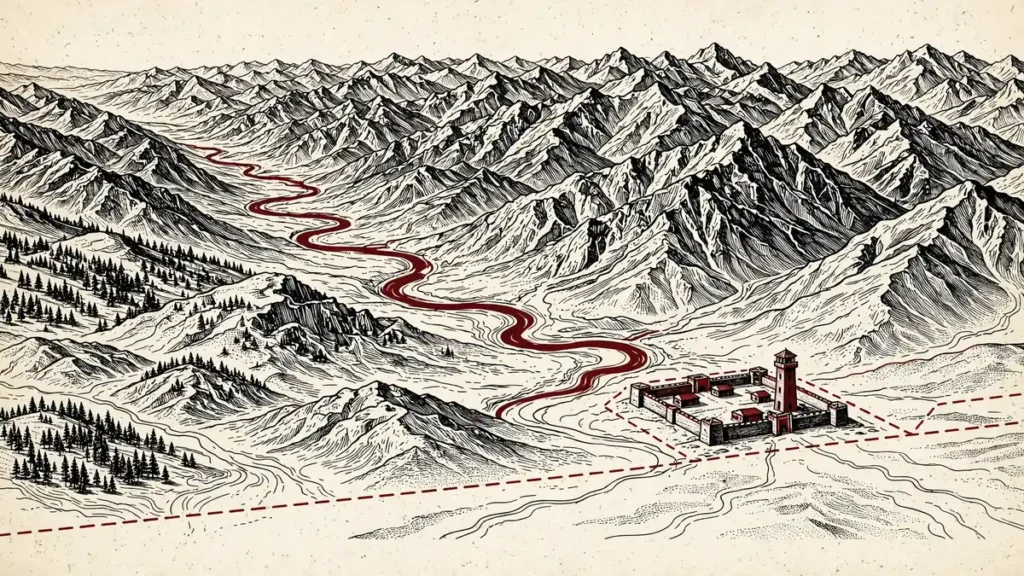
Background and timeline: from the 1992 treaty to the frozen membership
The CSTO’s history helps explain why the Armenia question is awkward for every side. The original treaty was signed in 1992 by Armenia, Kazakhstan, Kyrgyzstan, Russia, Tajikistan and Uzbekistan; Azerbaijan, Belarus and Georgia joined in 1993, and the treaty entered into force in 1994. Azerbaijan, Georgia and Uzbekistan later left. The organisation created in 2002 therefore inherited both a collective-defence promise and a record of members drifting away when the promise did not match their security needs.
- May 15, 1992: Collective Security Treaty signed by six post-Soviet states.
- 2002: Treaty framework becomes the Collective Security Treaty Organization, headquartered in Moscow.
- January 2022: CSTO peacekeepers deploy to Kazakhstan during unrest, the bloc’s most prominent collective operation to date.
- February 2024: Armenia announces it is freezing its participation in the CSTO.
- December 2024: Pashinyan says Armenia-CSTO relations have passed the point of no return.
- November 27, 2025: Bishkek summit agrees the next Collective Security Council session will be held in Moscow on November 11, 2026, under Russia’s chairmanship.
- January 1, 2026: Taalatbek Masadykov becomes CSTO Secretary-General; Russia holds the chairmanship for 2026.
- August 2026: Galuzin raises the prospect of restricting Armenia’s powers at the Moscow summit, citing the Collective Security Council’s authority.
- October 2026: CSTO exercises in Belarus and Tajikistan, and Masadykov sets out the Tajikistan delivery timetable (see below).
- October 23, 2026: Masadykov says Armenia’s membership could be raised in Moscow if a member proposes it.
- October 28, 2026: Mirzoyan rules out any return to the CSTO; Bordyuzha calls for Armenia’s expulsion.
- November 11, 2026: Collective Security Council session scheduled in Moscow.
That timeline also shows why Yerevan’s stance is not a sudden break. The freeze followed years of Armenian complaints that the bloc did not act when Armenia sought support over border clashes with Azerbaijan. Moscow and other members, in turn, have argued that Armenia’s own decisions, including its refusal to host exercises and to pay dues, hollowed out its standing. Neither side’s account is treated here as settled fact beyond what its officials have said in public; the summit’s documents, if any, will show how far the other members are willing to formalise the split.
What the Tajikistan border programme means for the summit
The second substantive item is more concrete than the Armenia debate, and it is where the summit may produce verifiable outcomes rather than declaratory language. In November 2024, CSTO leaders approved a five-year programme to strengthen Tajikistan’s border with Afghanistan, with implementation beginning in 2025 and running to 2029. Tajikistan shares a mountainous frontier with Afghanistan usually described as more than 1,300 kilometres long, and Dushanbe has long sought help guarding it.
According to Ariana News, reporting remarks by Masadykov to TASS on October 21, 2026, Russia, Kazakhstan, Kyrgyzstan and Belarus are preparing to supply Tajikistan with weapons, military equipment and border-protection technology, with the first deliveries expected before the end of 2026. Masadykov said Tajik authorities had completed supplier selection and agreed order volumes, with contracts being finalised, and he stressed that the initiative was not directed against Afghanistan. A separate summary of the programme reports that it aims to equip 80 border outposts; that figure comes from a single secondary summary and is marked as reported, not confirmed, in the table below.
The programme sits alongside a busy autumn exercise calendar. In October 2026, CSTO contingents from Belarus, Kazakhstan, Kyrgyzstan, Russia and Tajikistan took part in the Indestructible Brotherhood-2026 and Barrier-2026 exercises in Belarus, involving more than 1,500 personnel according to Xinhua’s reporting, while special-purpose units rehearsed operations against armed groups in Tajikistan during Cobalt-2026 from October 18 to 23. None of that proves the border programme is on schedule, but it does show the bloc’s Central Asian work continuing in parallel with the Armenia dispute. In Moscow, look for a specific delivery confirmation, a named timetable, or a fresh programme decision; a generic reaffirmation of border security, without dates or quantities, would signal that the programme is still more promise than delivery.
By the numbers: the Moscow summit
| Metric | Figure | Source |
|---|---|---|
| Member states listed in the CSTO | 6 — CONFIRMED (5 active, Armenia frozen) | CSTO membership reporting; Public Radio of Armenia, October 28, 2026 |
| Time since Armenia froze participation | About 2 years 9 months (February 2024 to November 2026) — CONFIRMED by dated announcements | Armenian government announcements, February 2024; Mirzoyan, October 28, 2026 |
| Days from this preview (November 2) to the summit | 9 days — CONFIRMED by calendar | Summit date, November 11, 2026 (BelTA, November 27, 2025) |
| Tajikistan-Afghanistan border length | More than 1,300 km — REPORTED (some summaries give about 1,400 km) | Central Asia security reporting, October 2026 |
| Border outposts the programme aims to equip | 80 — REPORTED (single secondary summary) | Programme summary, October 26, 2026 |
| First Tajikistan equipment deliveries due | Before the end of 2026 — REPORTED via TASS remarks by the Secretary-General | Ariana News / TASS, October 21-22, 2026 |
Caveat: figures marked CONFIRMED appear in two or more independent reports or in the primary announcement; figures marked REPORTED rest on a single source or a single news-agency account and should be read as claims awaiting summit confirmation.
What the Moscow summit means for US/UK/EU readers
For readers in the United States, the United Kingdom and the European Union, the Moscow summit will not move markets or travel advice on its own. Its importance is indirect, and it is worth stating plainly rather than inflating it. First, the summit tests whether Russia can still convene a functioning regional security bloc while it is engaged in its war against Ukraine and while its partners hedge between Moscow, Beijing and the West. A smooth summit with a substantive Tajikistan decision would suggest the bloc retains practical uses for its Central Asian members, even if its collective-defence credibility remains contested. A summit consumed by the Armenia row, or one that produces only vague language, would suggest the opposite.
Second, Armenia’s trajectory matters for European engagement in the South Caucasus. Yerevan has deepened ties with the EU and the United States since freezing its CSTO participation, and a formal expulsion or voting-rights decision in Moscow would remove an ambiguity that has suited both sides: Armenia could present itself as fully outside the bloc, while Moscow could present the departure as Armenia’s choice. Neither outcome would by itself change Armenia’s security position, which depends far more on its bilateral partnerships and on the Azerbaijan-Armenia peace process than on CSTO paperwork.
Third, the Tajikistan programme touches issues European and American policymakers do track: narcotics trafficking, militant movement across the Afghan frontier, and migration pressures in Central Asia. Equipment deliveries to border forces do not resolve those issues, but they signal how Russia and its partners intend to manage them without Western involvement. Travellers are unlikely to be affected directly; the practical effects, if any, will show up in border-security reporting from Tajikistan and Afghanistan over the following months, not in a summit-day announcement.
Different perspectives: Moscow, Yerevan, and the Central Asian capitals
From Moscow’s perspective, the summit is an opportunity to demonstrate that the CSTO still functions as a security provider, particularly in Central Asia, where the Afghanistan border gives the bloc a concrete task that does not depend on the Ukraine war. Russian officials have framed the Tajikistan programme as border protection, not as a move against Kabul, a distinction Masadykov repeated in October. That framing is also a signal to Central Asian capitals that cooperation with Moscow does not require confrontation with Afghanistan’s rulers.
From Yerevan’s perspective, the summit is a formality about an organisation Armenia already regards as defunct for its purposes. Mirzoyan’s October 28 remarks were designed to close off speculation about a return, and Pashinyan has previously said he would welcome expulsion as a resolution of the dilemma. That is a striking position for a government to take about its own alliance membership, and it explains why the summit’s Armenia language will be parsed in Yerevan as much as in Moscow: expulsion would confirm a break Armenia has already made, while deferral would leave the ambiguity intact.
From the Central Asian capitals’ perspective, the calculation is more pragmatic. Kazakhstan, Kyrgyzstan and Tajikistan value CSTO exercises, equipment and border support, but they also maintain extensive ties with China, Turkey, the EU and the United States, and they have avoided endorsing positions that would tie them to Russia’s war in Ukraine. For them, a summit that delivers border equipment and avoids a divisive Armenia vote is the better outcome; a summit that forces a public choice on Armenia is a cost, not a benefit. Western analysts, meanwhile, tend to treat the CSTO as a weak alliance whose collective-defence clause has rarely been tested, and they will judge Moscow less on the summit’s declarations than on whether the Tajikistan deliveries actually arrive.
What to watch next in Moscow on November 11
Five things will tell readers whether the summit mattered. First, the communique’s Armenia paragraph: does it name expulsion, voting-rights restriction, deferral, or nothing at all? Second, any Tajikistan decision with dates, quantities or delivery confirmation, as opposed to a restatement of the 2024 programme. Third, the chairmanship handover: who chairs the CSTO in 2027, and what priorities do they set? Fourth, the Afghanistan language: does the summit address cross-border threats in specific terms, or retreat to general statements about regional stability? Fifth, the bilateral meetings on the margins, which often reveal more about Russia’s relationships with Kazakhstan, Kyrgyzstan and Tajikistan than the plenary session does.
WarBrief Live will update this preview after the summit with what the Council actually decided, separating confirmed decisions from reported claims, as with all developing stories. Readers looking for background on other regional forums can also see our previews of the ASEAN Summit in Manila and the Quad leaders’ meeting in Manila, and our explainer on ADMM-Plus, Asia’s defence ministers’ forum. For the full conflict picture, see the Conflict Zones hub.
Frequently asked questions
What is the CSTO?
The Collective Security Treaty Organization is a Russia-led military alliance of six post-Soviet states: Armenia, Belarus, Kazakhstan, Kyrgyzstan, Russia and Tajikistan. It was created as an organisation in 2002 from the 1992 Collective Security Treaty, and its Article 4 collective-defence clause is often compared with NATO’s Article 5.
Is Armenia still a member of the CSTO?
Formally, yes: Armenia remains listed as a member. In practice, it froze its participation in February 2024, stopped paying membership contributions according to the Secretary-General’s remarks, and said on October 28, 2026, that it sees no return to the bloc. That gap between formal membership and actual participation is exactly what the Moscow summit may address.
What could happen to Armenia at the Moscow summit?
Three broad outcomes are open: a formal decision on its status (expulsion, voting-rights restriction or recorded withdrawal), a deferral that leaves the frozen status in place, or no formal decision at all. Secretary-General Masadykov has said the issue could be raised if a member state proposes it; he has not said a decision is certain, and no proposal had been made public as of November 2.
Why is Tajikistan’s border with Afghanistan on the agenda?
The CSTO approved a five-year programme in November 2024 to strengthen Tajikistan’s border with Afghanistan, running to 2029. First equipment deliveries are reported to be due before the end of 2026, supplied mainly by Russia with Kazakhstan, Kyrgyzstan and Belarus. The summit is the natural point to confirm whether those deliveries are on schedule.
Does the CSTO summit affect US, UK or EU readers directly?
Not directly: it is unlikely to move markets, energy prices or travel advice on the day. Its significance is as a signal about Russia’s regional influence, Armenia’s Western partnerships, and how Central Asian border security is managed without Western involvement.
Sources
- BelTA: Next CSTO summit to take place in Moscow on 11 November 2026
- Public Radio of Armenia: Armenia rules out return to CSTO, says Foreign Minister
- MENAFN: Armenia Rules Out Return to Russia-Led CSTO Alliance
- MENAFN: Armenia’s Future In CSTO Could Be Discussed At Moscow Summit
- Ariana News: CSTO to supply Tajikistan with weapons to strengthen Afghan border
- Collective Security Treaty Organization: background on treaty, membership and structure
Discussion 0
Share analysis, corrections, or context. Be civil — comments are moderated.