WarBrief Live | October 7, 2026 | AI & Future Warfare
AI military intelligence is no longer a research project — it is the Pentagon’s operating system. Algorithms now sift through hundreds of millions of satellite images, fuse signals and battlefield data, and flag targets for human analysts at a scale no workforce could match. But the same technology that promises faster, sharper decisions carries documented dangers: hallucinations, automation bias, and adversaries who have learned to fool the machines. Here is how AI became a military intelligence machine — and what can go wrong.
Key Takeaways
- Project Maven, launched in 2017 to help analysts process drone video, was designated an official Pentagon “program of record” in March 2026 — locking in long-term funding and adoption across all services.
- The National Geospatial-Intelligence Agency’s systems now serve 400,000+ users and delivered over 325 million unclassified images in 2024 alone, with commercial AI analytics identifying 2,400+ vessels of interest in the South China Sea.
- AI models automate large portions of imagery analysis — but NGA’s own deputy director cautions that expectations of 24/7 “always-on” intelligence outpace what the technology can actually deliver.
- The documented risks are real, not theoretical: AI hallucinations, automation bias (humans rubber-stamping machine output), and adversarial attacks that manipulate what the algorithms “see.”
What is AI military intelligence?
AI military intelligence means using artificial intelligence to collect, process and analyze the information armed forces need to make decisions — satellite imagery, intercepted signals (SIGINT), open-source data (OSINT), drone video feeds, and the fusion of all of them into a single picture. The core problem it solves is volume: modern sensors produce far more data than human analysts can review. AI triages the flood, flagging what might matter so humans can focus on judgment.
This is the least controversial military use of AI — analysis rather than weapons — yet it is arguably the most consequential, because intelligence shapes every decision that follows, including who gets targeted.
How did Project Maven become the Pentagon’s AI backbone?
Project Maven began in 2017 as a Pentagon effort to apply computer vision to the overwhelming volume of full-motion video from surveillance drones. It has since grown into something much larger: a data-fusion and targeting-support platform that pulls together multiple sensor feeds to identify objects, assess threats and support operational decisions, as Military.com detailed.
The turning point came in March 2026. In a March 9 memo reviewed by Reuters, Deputy Secretary of Defense Steve Feinberg designated Palantir’s Maven Smart System an official program of record — Pentagon-speak for stable, multi-year funding — with the designation expected to take effect by the end of fiscal year 2026. Oversight moved from the National Geospatial-Intelligence Agency to the Chief Digital and AI Office within 30 days, and the Army took over future contracting. Feinberg wrote that embedding Maven would give warfighters the tools to “detect, deter, and dominate,” Reuters reported on March 20, 2026.
The money trail shows how central Maven has become: a $480 million Army contract in 2024, a follow-on expansion later that year, a contract modification worth up to $795 million in 2025 — and a separate Army enterprise agreement with Palantir that could reach $10 billion over a decade. Maven’s reach extends beyond the US: NATO’s Communications and Information Agency acquired the Palantir Maven Smart System for NATO’s Allied Command Operations in March 2025, and the UK announced a Palantir partnership worth up to £750 million over five years in September 2025.
Satellites, SIGINT and the data flood
The National Geospatial-Intelligence Agency is where AI meets the largest data firehose in the intelligence world. In congressional testimony on the fiscal 2026 budget, NGA reported that its Global Enhanced GEOINT Delivery environment had more than 400,000 users and delivered more than 325 million unclassified images across the US government during 2024 alone — and that commercial analytic services identified and geolocated over 2,400 vessels of interest in the South China Sea between July and November 2024, as documented by the Project Geospatial analysis.
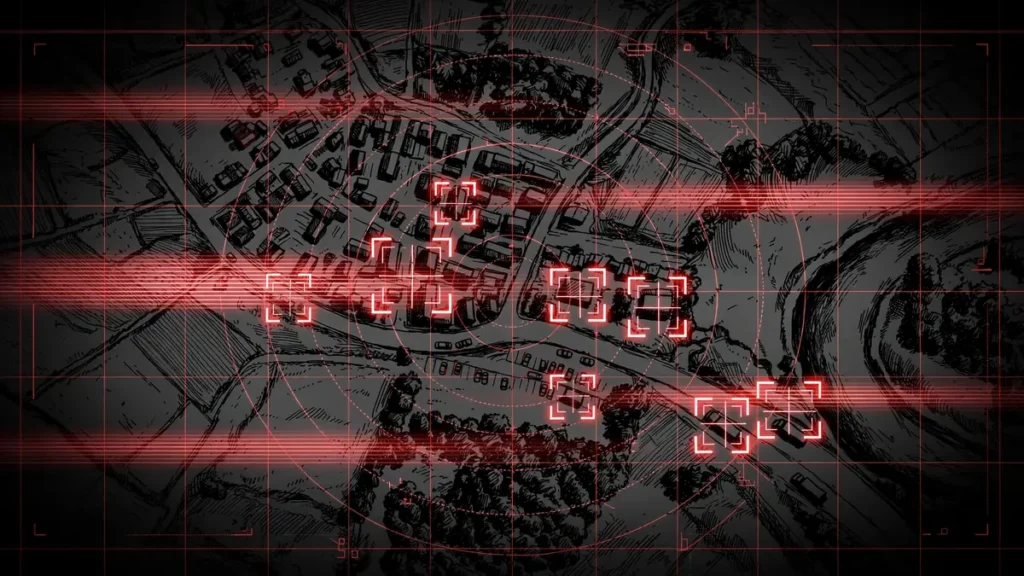
The commercial pipeline keeps expanding. In January 2025, NGA selected 13 vendors for the $200 million Luno B contract — AI-driven analytics of economic, environmental and geopolitical activity worldwide. Planet Labs received a $22 million NGA option for AI maritime analytics — detecting “dark fleets” operating with disabled tracking signals — plus a Defense Innovation Unit deal for near-daily AI change detection from its satellite constellation.
In May 2026, NGA deputy director Brett Markham told the GEOINT Symposium that AI models now automate large portions of imagery analysis, while cautioning that expectations of 24/7 “always-on” intelligence outpace reality — “I wish that were true,” he said, SpaceNews reported. The agency, he said, uses AI to narrow uncertainty for analysts — not to replace their judgment.
Beyond imagery, AI is being applied across the intelligence disciplines: SIGINT processing to triage intercepted communications, OSINT tools that scan the open internet for indicators (see our guide to Censys vs Shodan for OSINT investigations), and data fusion platforms that combine them. The same AI assistance has a dark side — see our reports on the Pentagon DMDC breach and internet intelligence in military cybersecurity.
Read next in this series: superintelligence and the military · whether AI could trigger a nuclear war · how AI is changing the Iran war
What can go wrong with AI intelligence?
The dangers are documented in studies and in the agencies’ own admissions — not science fiction.
Hallucinations: confident, wrong answers
Generative AI models produce incorrect information because of training-data limitations and their probabilistic nature — the phenomenon researchers call hallucination. RAND lists “inappropriate model output” as a core technical risk of defense AI, and its study of 713 publicly reported generative-AI incidents found factual errors in 215 of them. In intelligence work, a hallucinated “fact” in an analyst’s draft can propagate into briefings before anyone notices.
Automation bias: the human stops checking
Perhaps the more insidious risk. The US State Department’s 2023 Political Declaration on Responsible Military Use of AI explicitly names automation bias — the tendency of humans to defer to machine output — and requires training personnel to understand AI limitations precisely to mitigate it. The danger is not that the model errs; it is that the human stops checking its work.
Adversarial attacks: fooling the machine’s eyes
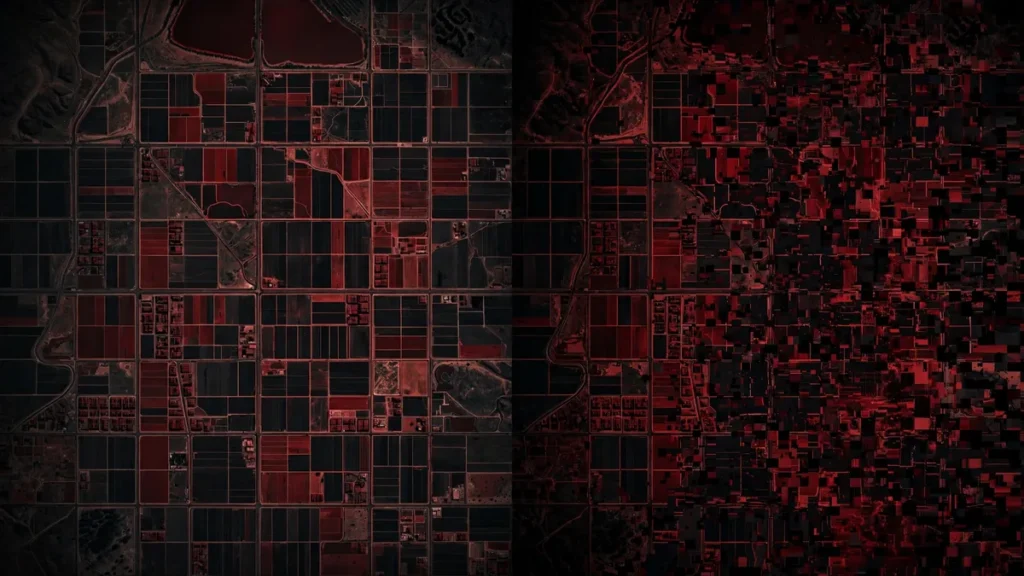
Adversaries can manipulate what AI systems perceive. As far back as 2019, NGA’s own automation lead Todd Myers warned publicly that China was “well ahead” in using generative adversarial networks to manipulate satellite imagery — inserting objects that aren’t there, such as a bridge over a river, so analysts and their AI assistants report false terrain. The NATO Association warned in September 2026 that generative tools have now made fake satellite imagery cheap to produce, eroding confidence in visual evidence itself.
The adversary’s AI, too
AI-assisted intelligence is not a Western monopoly. In September 2026, Anthropic reported disrupting an Iran-nexus actor that used its Claude model to build targeting recommendations against US naval forces — compiling personnel rosters scraped from public military photo captions, ship transponder identifiers and commercial satellite-imagery query scripts, as The War Zone detailed. The same OSINT-to-targeting pipeline the Pentagon uses is available to its adversaries.
| Metric | Figure | Source | Status |
|---|---|---|---|
| NGA G-EGD users | 400,000+ | NGA FY2026 testimony via Project Geospatial | CONFIRMED |
| Unclassified images delivered (2024) | 325 million+ | Same | CONFIRMED |
| Vessels of interest ID’d, South China Sea (Jul–Nov 2024) | 2,400+ | Same | CONFIRMED |
| Palantir Army Maven contract (2024) | $480 million | Military.com | CONFIRMED |
| Palantir 2025 contract modification | Up to $795 million | Military.com | CONFIRMED |
| Army–Palantir enterprise agreement | Up to $10 billion over 10 years | Military.com | CONFIRMED |
| NGA Luno B contract | 13 vendors, $200 million (Jan 2025) | Project Geospatial | CONFIRMED |
| Planet Labs NGA contract option | $22 million (2026) | spacemagz | CONFIRMED |
| UK–Palantir partnership | Up to £750 million over 5 years (Sept 2025) | Wikipedia | REPORTED |
| Generative-AI incidents studied by RAND | 713; 84% involved misinformation/deepfakes | RAND via USA Herald | CONFIRMED |
Caveat: “CONFIRMED” means supported by two or more reputable sources or a primary outlet; “REPORTED” means single-source figures, stated as claimed.
Different perspectives
The Pentagon’s view: AI is the only way to keep pace with the data deluge; Maven’s program-of-record status reflects battlefield-tested value, and human analysts remain in charge of judgment. Faster intelligence means faster, better decisions.
The skeptics’ view: automation bias is already eroding the “human in the loop,” adversarial manipulation is a demonstrated threat, and concentrating intelligence on one vendor’s platform creates single-point-of-failure and accountability risks.
The intelligence professionals’ view: NGA’s own leadership lands in the middle — AI narrows uncertainty and buys speed, but context, deception-awareness and final judgment remain human work. The June 2025 introduction of standardized disclosures for AI-generated intelligence products shows the system is building auditability in as it scales.
What this means for US/UK/EU readers
AI-driven intelligence is reshaping what Western governments claim to know — and how fast they claim to know it. For US readers, Maven’s program-of-record status means AI targeting infrastructure is now a permanent budget line, with the Army managing future contracts. For UK readers, the £750 million Palantir partnership makes Britain a co-developer of the same ecosystem. For EU readers, the lesson is dependence: European intelligence increasingly rides on US commercial imagery and American AI platforms. And for everyone, the Anthropic disclosure is a warning that the same tools help adversaries build targeting packages from public photos.
What to watch next
- Maven’s program-of-record deadline: the designation was expected to take effect by September 30, 2026 — confirmation of its completion is pending.
- NGA’s Automated Feature Extraction: the March 2026 RFI could become a major procurement; watch who wins.
- The 3000.09 revision: the overdue Pentagon directive update will set the formal rules for human judgment in AI-assisted targeting.
- Adversarial incidents: the first confirmed case of AI-deceived battlefield intelligence would be a watershed — none has been publicly confirmed to date.
Frequently asked questions
What is AI military intelligence?
AI military intelligence is the use of artificial intelligence to collect, process and analyze defense information — satellite imagery, intercepted signals, open-source data and drone video — fusing it into assessments for commanders. Its main job is triaging data volumes far beyond what human analysts can review.
What is Project Maven?
Project Maven is the Pentagon’s AI intelligence and targeting-support platform, built with Palantir’s Maven Smart System. Launched in 2017 to analyze drone video with computer vision, it now fuses multi-sensor battlefield data. In March 2026 it was designated an official program of record, securing long-term funding across all US military services.
Can AI intelligence systems be fooled?
Yes — and this is documented, not theoretical. Adversaries can use generative AI to manipulate satellite imagery (a threat NGA warned about as early as 2019), poison training data, or exploit model weaknesses. RAND studies and the State Department’s 2023 declaration on military AI both flag deception and hallucinations as core risks.
Do humans still check AI-generated intelligence?
Officially, yes — US policy requires human judgment in targeting decisions, and NGA stresses analysts provide the context AI cannot. But researchers warn of “automation bias”: humans tend to rubber-stamp machine output, which is why the 2023 Political Declaration on Responsible Military AI requires specific training to counteract it.
Will AI replace intelligence analysts?
Not according to the agencies themselves. NGA’s deputy director said in May 2026 that expectations of fully automated “always-on” intelligence outpace reality. The current model is AI as a force multiplier — automating detection and triage — with humans handling context, deception and final judgment.
Sources
- Reuters via SRN News: Pentagon to adopt Palantir AI as core US military system
- Military.com: Pentagon Expands Use of Palantir AI in New Defense Contract
- Tom’s Hardware: Pentagon formalizes Palantir’s Maven AI (via Reuters/Bloomberg)
- Project Geospatial: The Evolution of Commercial Satellite Imagery in the US Government
- SpaceNews: NGA pushes AI adoption as demand grows for ‘always-on’ intelligence
- Defence Blog: US NGA moves to replace manual geospatial analysis with AI
- The War Zone: Adversaries Using Claude AI to Target Americans
- RAND: Acquiring Generative Artificial Intelligence for DoD Influence Activities