
Space has become the ultimate high ground in modern warfare. Satellite technology has revolutionized how military forces collect intelligence, communicate, navigate, and engage targets. The ability to monitor the Earth surface from orbit provides an unparalleled strategic advantage that has fundamentally transformed battlefield awareness. As space technology becomes more accessible and sophisticated, the competition for dominance in this domain has intensified dramatically.
The Evolution of Military Space Capabilities
Military use of space began with reconnaissance satellites during the Cold War. The CORONA program, launched by the United States in 1960, provided the first satellite imagery of the Soviet Union, transforming US intelligence capabilities. These early systems relied on film canisters that were ejected from satellites and recovered mid-air by aircraft. Modern systems transmit high-resolution imagery, radar data, and signals intelligence in real time, providing commanders with unprecedented situational awareness.
The development of the Global Positioning System represented another quantum leap in military space capability. Originally developed by the US Department of Defense, GPS enables precision navigation, targeting, and timing that are essential for modern military operations. The system has become so integral to military operations that the US Space Force maintains a constellation of 31 operational GPS satellites to ensure continuous global coverage.
Satellite Intelligence Capabilities
Electro-Optical and Infrared Imaging
Modern reconnaissance satellites carry sophisticated electro-optical sensors capable of resolving objects smaller than 30 centimeters from orbit. These systems can identify vehicle types, read license plates, and detect changes in terrain that might indicate military construction or equipment deployment. Infrared sensors enable nighttime imaging and can detect heat signatures from vehicles, aircraft, and industrial facilities.
The commercial satellite imagery industry has grown substantially, with companies like Maxar Technologies, Planet Labs, and BlackSky providing high-resolution imagery to government and civilian customers. This democratization of space-based intelligence has enabled smaller nations and non-governmental organizations to access capabilities once reserved for superpowers.
Synthetic Aperture Radar
Synthetic Aperture Radar satellites represent one of the most important advances in space-based intelligence. Unlike optical sensors, SAR can penetrate cloud cover, smoke, and darkness, providing all-weather imaging capability. Modern SAR satellites can detect changes in terrain elevation of just a few centimeters, making them invaluable for detecting tunnel construction, buried structures, and vehicle tracks.
Germany SAR-Lupe system and Italy COSMO-SkyMed constellation represent the state of the art in military SAR capability. These systems can image any point on Earth multiple times per day, providing near-real-time intelligence to military commanders.

Signals Intelligence from Space
Space-based signals intelligence platforms intercept communications, radar emissions, and other electronic signals from orbit. These satellites can monitor radio communications, cell phone networks, and military radar systems across vast geographic areas. The US National Reconnaissance Office operates a constellation of SIGINT satellites that form a critical component of the global intelligence architecture.
Space as a Contested Domain
The increasing reliance on space-based assets has made them attractive targets for adversaries. China and Russia have both developed and tested anti-satellite weapons, including direct-ascent kinetic kill vehicles, co-orbital interceptors, and directed-energy weapons. The 2007 Chinese anti-satellite test, which destroyed a defunct weather satellite and created thousands of pieces of debris, demonstrated the vulnerability of space assets.
Electronic warfare against satellite systems represents a more immediate threat. Jamming of GPS signals has been observed in conflict zones from Ukraine to the South China Sea, degrading the accuracy of precision-guided munitions and disrupting military operations. Russia has deployed sophisticated electronic warfare systems specifically designed to interfere with satellite communications and navigation.
The Future of Space-Based Intelligence
Several emerging trends will shape the future of space-based intelligence:
- Constellation Architectures: Large constellations of small satellites provide persistent coverage and resilience against attack. SpaceX Starlink system, while primarily commercial, has demonstrated the military utility of large satellite constellations.
- Hyperspectral Imaging: Advanced sensors that analyze hundreds of spectral bands can identify material composition, detect camouflage, and monitor environmental changes relevant to military operations.
- Space-Based Internet of Things: Networks of small satellites that collect data from ground-based sensors provide continuous monitoring of military facilities, border regions, and conflict zones.
- On-Orbit Processing: AI-powered processing capabilities on satellites reduce the latency between collection and intelligence dissemination, enabling real-time targeting support.
Conclusion
Space-based intelligence has become indispensable to modern military operations. Satellite technology provides the persistent, global surveillance capability that enables commanders to understand the battlefield, track adversary movements, and make informed decisions. As space becomes increasingly contested, protecting these capabilities while developing new ones will remain a top priority for defense establishments worldwide.
Explore our Analysis section for more in-depth coverage of space and satellite intelligence. Subscribe to the Daily Brief for updates on space security developments.
Case Studies and Practical Applications
The practical application of these technologies and strategies has been demonstrated across multiple conflict zones and security scenarios. In each case, the specific challenges and lessons learned provide valuable insights for practitioners and policymakers seeking to understand the evolving landscape of modern military and security operations.
The conflict in Ukraine has served as a particularly rich source of operational lessons. Both conventional and unconventional capabilities have been tested in high-intensity combat, revealing strengths and weaknesses that were previously theoretical. The ability to rapidly adapt tactics, technology, and organization in response to battlefield realities has proven essential, while rigid doctrinal approaches have often resulted in failure. This adaptability requires not only flexible systems but also a culture that encourages innovation and learning at all levels of military organization.
Interoperability between allied forces has emerged as a critical success factor. NATO forces operating alongside partner nations have demonstrated that common standards, shared procedures, and compatible equipment significantly enhance operational effectiveness. Exercises and training programs that build interoperability before deployment are essential investments that pay dividends in actual operations. The ability to share intelligence, coordinate fires, and conduct joint maneuver operations across national boundaries multiplies the combat power available to any single nation.
The role of private sector technology companies in modern military operations has expanded dramatically. Commercial satellite imagery, cloud computing services, artificial intelligence platforms, and communications infrastructure provided by companies like SpaceX, Microsoft, Amazon, and Maxar have become integral to military operations. This dependence creates new vulnerabilities and dependencies that military planners must carefully manage, ensuring that access to critical commercial capabilities is maintained during crises.
Training and education remain fundamental to military effectiveness despite technological advances. The complexity of modern military operations demands highly skilled personnel capable of operating sophisticated systems, making rapid decisions under pressure, and adapting to unforeseen circumstances. Investment in simulation-based training, professional military education, and experiential learning programs produces the human capital that ultimately determines military success or failure.
The strategic implications of these developments extend beyond the battlefield. Military capabilities shape diplomatic relationships, influence alliance dynamics, and affect the calculations of potential adversaries. Nations that successfully integrate emerging technologies while maintaining ready and capable conventional forces will be better positioned to deter aggression, protect their interests, and shape the international security environment in ways favorable to their strategic objectives.
Strategic Implications and Policy Recommendations
The strategic implications of these developments extend far beyond the immediate operational considerations. Policymakers must grapple with fundamental questions about the nature of security in an era of rapid technological change, shifting power distributions, and evolving threats. The decisions made today will shape the security environment for decades to come, and getting these decisions right requires careful analysis of both opportunities and risks.
Investment in human capital is perhaps the most important strategic priority. Technology is only as effective as the people who develop, operate, and employ it. Military and intelligence organizations must attract and retain talented personnel with the skills needed to succeed in an increasingly technical and complex environment. This requires competitive compensation, challenging career paths, and organizational cultures that value innovation and critical thinking.
International cooperation remains essential despite the competitive dynamics of the current strategic environment. Many security challenges, including terrorism, cyber threats, and WMD proliferation, cannot be addressed by any single nation acting alone. Intelligence sharing, joint military exercises, and collaborative technology development multiply the effectiveness of national investments and build the trust necessary for effective alliance operations.
The private sector will play an increasingly important role in national security. Governments must develop effective frameworks for partnering with technology companies, defense contractors, and academic institutions to leverage innovation and maintain technological advantage. These partnerships must balance the need for security and secrecy against the benefits of open innovation and commercial dynamism that have made the technology sector so successful.
Resilience must be built into national security systems at every level. The ability to continue operating under attack, to recover quickly from disruptions, and to adapt to changing circumstances is essential in an era of persistent competition and conflict. This requires redundant systems, distributed architectures, robust supply chains, and organizational cultures that embrace learning from failure.
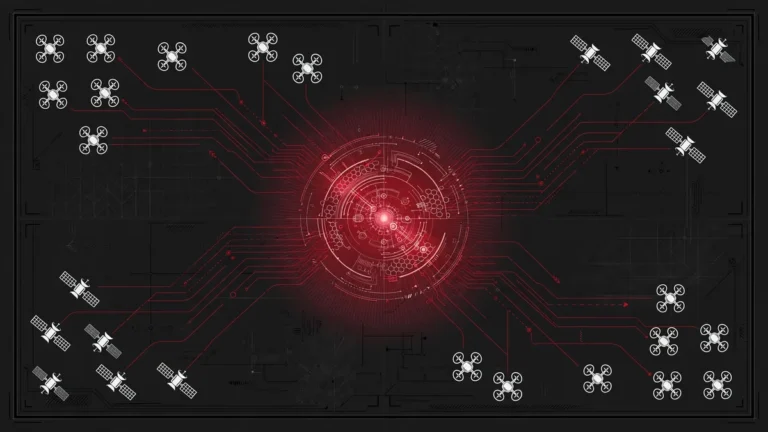
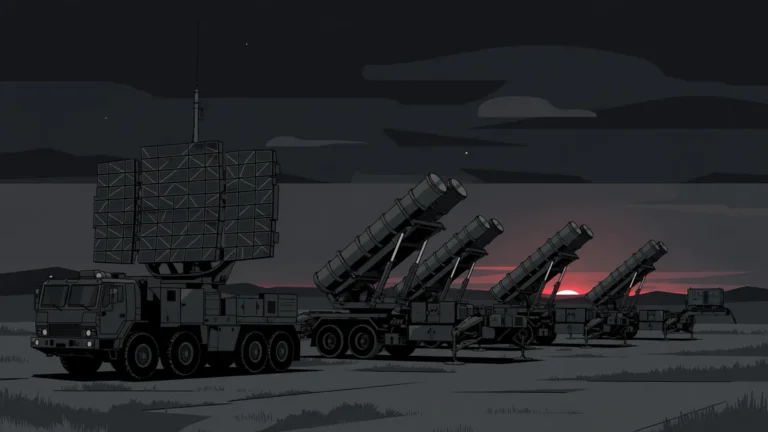
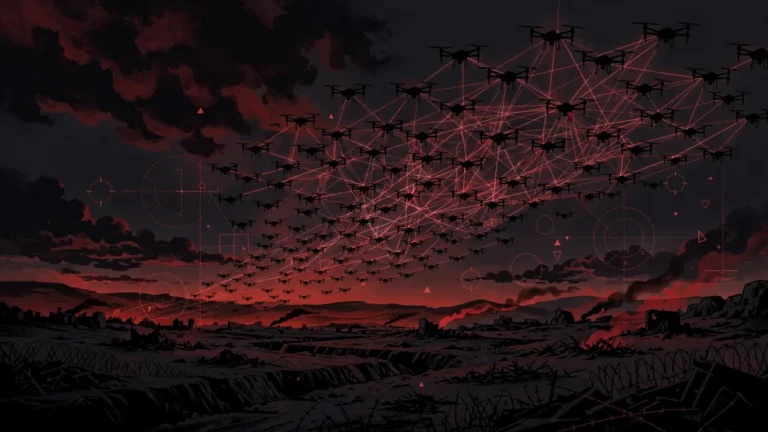
[…] Other existing systems are barely a decade old and already decisive. Loitering munitions — “kamikaze drones” such as the US Switchblade, the Israeli Harop and Russia’s ZALA Lancet — hunt targets for hours before striking. In the Black Sea, Ukrainian naval drones (uncrewed surface vessels) have hit Russian warships hundreds of kilometers from shore. In 2025’s Operation Spiderweb, Ukraine smuggled 117 drones deep into Russia to strike strategic bombers across five time zones — an operation that rewrote the rules of what small, cheap systems can achieve. And behind it all, AI software descended from the Pentagon’s 2017 Project Maven helps analysts sift through oceans of drone footage and satellite imagery — powerful assistance, but still assistance to human decision-makers. Much of it will be decided in orbit — see the orbital layer of future war. […]
[…] Here is how AI became a military intelligence machine — and what can go wrong. Overhead, space-based intelligence and battlefield awareness now update targeting cycles in near real […]