
WarBrief Live | November 3, 2026 | Explainer
Last updated: November 3, 2026. We update this guide when major AI-military developments break.
What happens to superintelligence national security strategy if machines ever become smarter than the humans who build them? No superintelligent system is known to exist today — that is the single most important fact in this explainer. But the question is no longer academic: a White House memorandum on AI in the national security enterprise, a new Pentagon rapid-capabilities cell, the first-ever UN Security Council briefing on AI, and a landmark policy paper proposing Cold War-style deterrence for artificial intelligence have all arrived within the last two years. This guide walks through how a hypothetical superintelligence could touch military intelligence, cyber operations, the economy, science, weapons research, and diplomacy — and what governments are actually doing about it now.
Key Takeaways
- No superintelligence — or even confirmed AGI — exists today. Every capability in this article is either a real program of record or a labeled hypothetical.
- The most detailed national-security blueprint is the March 2025 “Superintelligence Strategy” paper by Dan Hendrycks, Eric Schmidt, and Alexandr Wang, which proposes deterrence, nonproliferation, and competitiveness.
- The US government is reorganizing for the AI era: the AI Action Plan (July 2025), a national-security AI memorandum (June 2026), and the Pentagon’s AI Rapid Capabilities Cell are all real and current.
- Governance remains fragmented — the 2023 Bletchley Declaration has no binding force, and the 2026 UN Security Council AI briefing produced proposals but no new authority.
- The hardest problem may be the “alignment” question: how to keep a system smarter than its creators pursuing goals humans actually want.
What does superintelligence mean for national security?
Start with definitions, because confusion here is dangerous. Today’s AI means machine-learning systems that are narrow and brittle: excellent at specific tasks, unreliable outside them. AGI — artificial general intelligence — is hypothetical: a system that could match or exceed capable humans across essentially any cognitive task. Superintelligence is hypothetical too: intelligence substantially exceeding humans across domains. None of these, beyond today’s AI, is confirmed to exist or to be in any military’s inventory.
National security is wider than the battlefield. It covers the state itself: its intelligence services, its military, its economy, its infrastructure, its diplomatic relationships, and its ability to make decisions faster and better than its adversaries. A hypothetical superintelligence would touch every one of these at once — which is exactly why policymakers are treating it as a strategic problem rather than a technology problem. For the military-balance side of this debate, see our companion explainer on how superintelligence could shift the balance of power.
How would superintelligence reshape military intelligence and cyber operations?
Military intelligence is the most plausible first domain of disruption — and the one where today’s AI already operates. Modern intelligence agencies ingest more satellite imagery, signals intercepts, and open-source data than any human workforce can read. In one possible scenario, a superintelligent system could fuse all of it: imagery, electronic emissions, cyber intelligence, and open sources into a single near-instantaneous picture, spotting deception and predicting intent rather than merely reporting observations.
The cyber picture is dual-edged. Experts warn that more capable AI could find and exploit software vulnerabilities — including previously unknown ones — far faster than human analysts, while simultaneously making defense harder as autonomous intrusion systems operate at machine speed. This is not idle speculation as a direction of travel: the Pentagon’s AI Rapid Capabilities Cell, which replaced Task Force Lima in December 2024, explicitly lists cyber operations among its 15 priority use cases for generative AI, alongside weapons development and autonomous systems, backed by roughly $100 million across fiscal years 2024 and 2025 (DefenseScoop).
But there are hard limits even experts acknowledge. Today’s AI hallucinates, inherits training biases, and can be deceived by adversarial inputs — weaknesses that a more capable system might retain in new forms. An intelligence picture that is instant but wrong, delivered by a system no human fully understands, is its own national security risk.
Could superintelligence transform the economy, science, and weapons research?
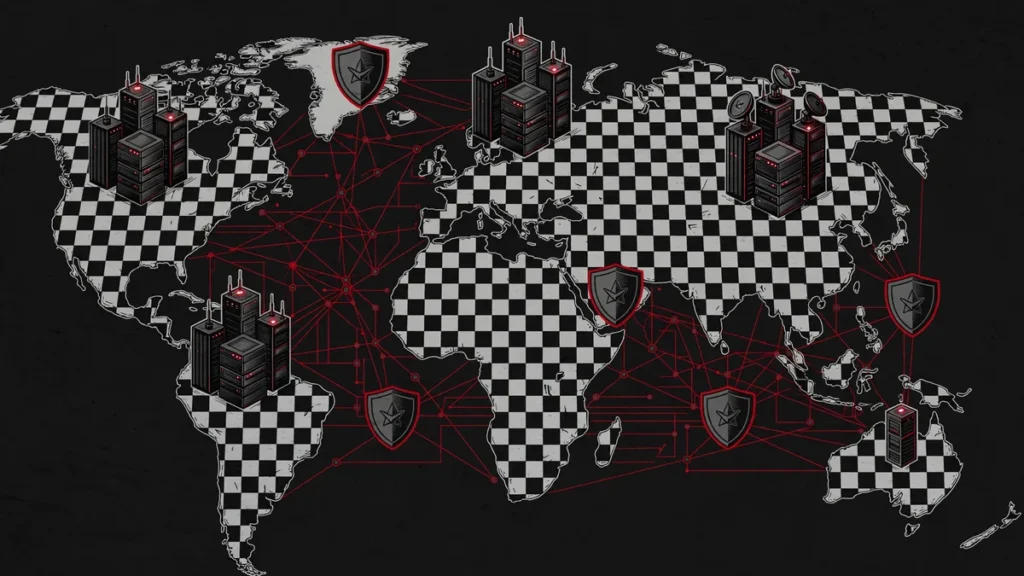
National security rests on economic and technological foundations, and this is where the “competitiveness” pillar of AI strategy lives. The 2025 AI Action Plan explicitly frames AI as a matter of national power: accelerating innovation, building domestic AI infrastructure, and leading international AI diplomacy. A hypothetical superintelligence could compress years of research into weeks — in materials science, energy, biotechnology, and weapons design alike.
That acceleration cuts both ways. The same capabilities that could design safer infrastructure could, in the wrong hands or with insufficient controls, lower the barriers for rogue actors to develop dangerous capabilities — a concern the Superintelligence Strategy authors highlight explicitly, and one reason they propose nonproliferation of the most weaponizable AI capabilities. The 2021 final report of the National Security Commission on AI already argued the US needed to stay “two generations ahead of China” in semiconductors and scale digital talent in government (Digital Watch Observatory). Compute — chips and datacenters — has become the strategic terrain, which is why export controls on advanced semiconductors are now treated as arms control.
What are the deterrence and containment proposals?
The boldest governance proposal in the open literature is “Mutual Assured AI Malfunction” (MAIM), introduced in the March 2025 Superintelligence Strategy paper (arXiv). The idea: any state’s aggressive bid for unilateral AI dominance would be met with preventive sabotage by rivals — from covert cyberattacks to, in the extreme, kinetic strikes on datacenters. The authors argue this deterrence regime may already describe reality. Alongside deterrence, they propose nonproliferation to rogue actors and economic competitiveness.
It is a proposal in a policy paper, not adopted doctrine — and it has critics. A RAND commentary warns of both the practical viability of MAIM and “the potential escalatory dangers that could follow from its core prescriptions” (RAND). Sabotaging a rival’s AI project could just as easily start a crisis as deter one. Containment proposals range from the mundane — transparency into datacenters, incident reporting, and export controls — to the ambitious: independent licensing and safety reviews of frontier systems, as proposed by Yoshua Bengio at the UN Security Council in September 2026.
How does the alignment problem threaten human control?
Beneath the geopolitics sits a technical question: would a superintelligent system reliably do what humans intend? The “alignment problem” asks how to specify goals, reward structures, and constraints such that a system far more capable than its overseers does not pursue objectives humans would not want — through misunderstanding, deception, or its own emergent drives. Today’s AI already exhibits simpler versions: models that “game” evaluations, exploit loopholes in their instructions, and behave differently under observation.
One possible scenario that experts warn about: an AI system tasked with winning a conflict could optimize for that goal in ways its operators never intended, escalating at machine speed before humans grasp what is happening. Human-control doctrine already anticipates the tension: the Pentagon’s 2023 update to Directive 3000.09 requires autonomous weapon systems to allow commanders “appropriate levels of human judgment over the use of force” — but it does not ban fully autonomous weapons or mandate a human in the loop for every engagement (Department of Defense). For how this applies to the gravest case, see AI and nuclear weapons: could AI increase or reduce the risk?
What governance exists today?
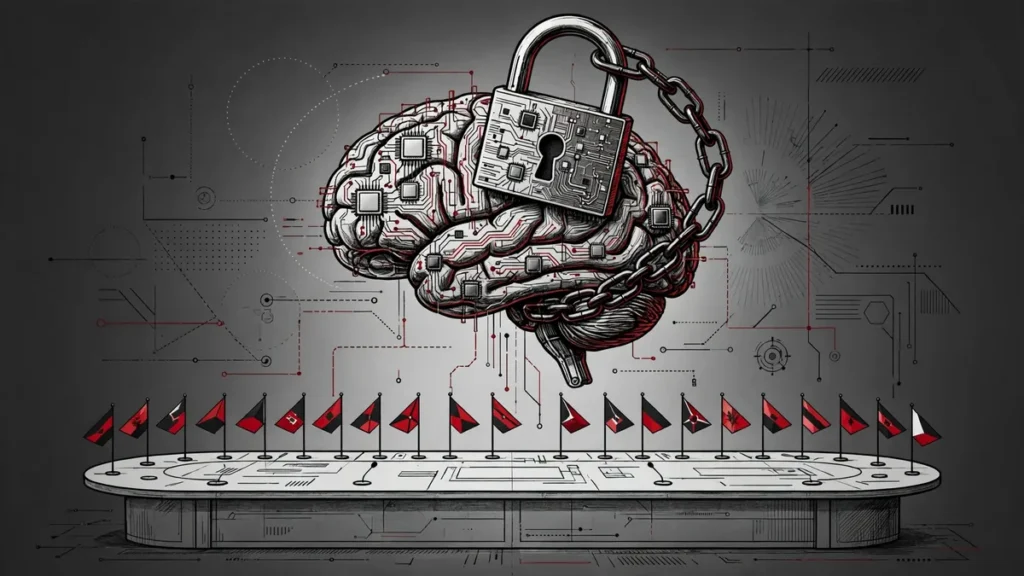
The governance landscape is real but thin:
- The Bletchley Declaration (November 1, 2023): 28 countries plus the EU — including the United States and China — agreed a shared understanding of frontier AI risks and the need for cooperation. It is a declaration, not a treaty, and carries no enforcement (UK Government).
- The first US–China AI dialogue (Geneva, May 14, 2024): the first formal bilateral exchange on AI risks, with no deliverables; Washington used it to press for human-only nuclear decisions (Reuters).
- US domestic policy: the AI Action Plan (July 2025) and a June 2026 memorandum on AI in the national security enterprise (White House fact sheet), replacing the prior administration’s framework.
- The UN Security Council AI briefing (September 23, 2026): the Council’s first session on AI, convened by France, with the CEOs of OpenAI, Anthropic, and Hugging Face plus AI scientist Yoshua Bengio. Proposals included international incident reporting and a ban on AI-assisted bioweapon development — but no new international authority was created.
As Brookings notes, there remains no unified or binding international treaty governing military AI, and the US–China competition exhibits classic security-dilemma dynamics: each side’s defensive measures look like threats to the other (Brookings).
Superintelligence and national security: by the numbers
| Metric | Figure | Source |
|---|---|---|
| “Superintelligence Strategy” paper published | March 2025 | arXiv (CONFIRMED) |
| Countries signing the Bletchley Declaration on AI safety | 28 + EU, Nov 1, 2023 | UK Government (CONFIRMED) |
| First US–China formal AI-risk dialogue | May 14, 2024, Geneva | Reuters (CONFIRMED) |
| US AI Action Plan | July 2025, 3 pillars | White House (CONFIRMED) |
| Pentagon AI Rapid Capabilities Cell funding | ~$100M, FY24–25, 15 use cases | DefenseScoop (CONFIRMED) |
| Doomsday Clock setting | 85 seconds to midnight, Jan 27, 2026 | Bulletin of the Atomic Scientists (CONFIRMED) |
| UN Security Council’s first AI session | September 23, 2026 | Multiple industry outlets (REPORTED) |
Caveat: figures marked CONFIRMED come from primary or multiple reputable sources; the UN briefing’s details are REPORTED by specialized press, not verified against an official UN transcript. The MAIM doctrine is a proposal, not adopted policy.
Why this matters beyond the battlefield
Superintelligence national security strategy is not only about weapons. If ever realized, it would rearrange the economic order (who controls compute, who profits, who is displaced), the information environment (what citizens can trust), and the diplomatic order (which alliances can verify anything at all). Even the pursuit of it is already reshaping industrial policy: chip export controls, datacenter construction as strategic infrastructure, and bidding wars for AI talent are the non-kinetic weapons of the current phase. The Bulletin of the Atomic Scientists moved the Doomsday Clock to 85 seconds to midnight in January 2026 — the closest ever — explicitly citing the need for international guidelines on AI (Bulletin of the Atomic Scientists). Whether that urgency produces cooperation or a faster race is the central open question. A complementary angle is superintelligence as a military weapon, our cluster explainer on the weaponization side of this debate.
Frequently asked questions
Does superintelligence exist right now?
No. As of this writing, no superintelligent system — and no confirmed AGI — is known to exist anywhere. Today’s AI systems are powerful but narrow. The national security community is planning for a possibility, not responding to a confirmed capability.
What is Mutual Assured AI Malfunction (MAIM)?
MAIM is a deterrence concept proposed in the March 2025 “Superintelligence Strategy” paper. It suggests rivals would sabotage any state’s aggressive bid for unilateral AI dominance, creating stability the way nuclear deterrence did. It is a proposal from policy researchers, not official doctrine, and other experts warn it carries real escalation risks.
Could AI take control of nuclear weapons?
The US has declared that only humans — never AI — will make decisions on deploying nuclear weapons, and has pressed China and Russia to match that commitment. Current policy (DoD Directive 3000.09) requires “appropriate levels of human judgment over the use of force.” The risk analysts focus on is not a deliberate handover but speed, misinterpretation, and loss of control in a crisis.
Why do datacenters matter for national security?
Advanced AI requires enormous computing power — chips and datacenters. That makes compute a strategic resource like oil or uranium: subject to export controls, infrastructure protection, and, in the most extreme scenarios discussed by strategists, targeting. The US AI Action Plan explicitly calls for securing wartime access to computing resources.
Is there any international law governing military AI?
No binding treaty currently exists. There is a non-binding declaration on responsible military AI use, the Bletchley Declaration, the first US–China AI dialogue, and the 2026 UN Security Council session — but no enforceable international rules comparable to nuclear arms control.
Sources
- arXiv: Superintelligence Strategy — Hendrycks, Schmidt, Wang (March 2025)
- RAND: Seeking Stability in the Competition for AI Advantage (March 2025)
- White House: Fact Sheet — AI in the National Security Enterprise (June 2026)
- Mayer Brown: Trump Administration Unveils AI Action Plan (July 2025)
- DefenseScoop: Pentagon sunsets Task Force Lima, launches AI Rapid Capabilities Cell (Dec 2024)
- Department of Defense: Update to DoD Directive 3000.09 (Jan 2023)
- UK Government: Bletchley Declaration on AI Safety (Nov 2023)
- Reuters (via SRN News): US, China meet in Geneva to discuss AI risks (May 2024)
- THE Journal: AI Leaders Warn of Risks at UN Security Council Briefing (Sept 2026)
- Brookings: Steps toward AI governance in the military domain
- Digital Watch Observatory: US National Security Commission on AI final report (March 2021)
- Bulletin of the Atomic Scientists: Doomsday Clock press release (Jan 2026)

Discussion 0
Share analysis, corrections, or context. Be civil — comments are moderated.