
WarBrief Live | November 3, 2026 | Breaking Analysis
United States forces struck Iran’s Qeshm Island on Monday, November 2, 2026, in what US officials described to CNN as a limited, defensive action after Iranian forces fired on a US aircraft. The Qeshm Island strike was first reported by the Wall Street Journal and independently described to CNN by three US officials.
What is confirmed: the strike happened, on Monday, and Iran’s state media outlet IRNA reported several explosions on the island. What is not confirmed: the targets hit, the damage done, and whether anyone was killed. US Central Command (CENTCOM) had issued no public statement as of this writing and did not respond to a Reuters request for comment. Every attributed claim below is labelled as such.
| Strike date November 2, 2026 | US officials to CNN 3 confirming | Qeshm to Bandar Abbas ~14 miles | Pre-war Hormuz oil flow ~20M barrels/day |
Figures: CNN and Reuters reporting, November 2–3, 2026.
Key Takeaways
- US forces struck Iran’s Qeshm Island on November 2, 2026 — a new action, separate from the larger October 29 strike package.
- Officials call it defensive: a response to Iranian surface-to-air missile fire at a US aircraft, meant to protect US assets.
- Washington says it is not a resumption of major combat; the Wall Street Journal reports similar limited strikes have been carried out in secret in recent weeks.
- CENTCOM has made no public statement; targets, damage and casualties remain unconfirmed.
- The strike surfaced while Qatari-mediated talks continue and President Trump publicly floats a deal with Tehran.
What happened on Qeshm Island on November 2?
The Wall Street Journal first reported on Monday that the US military had struck Qeshm Island, citing US officials, and Reuters carried the report the same day. CNN then confirmed the operation with three US officials, who characterised it as limited and defensive in nature, meant to protect US assets in the region.
Iran’s state media outlet IRNA reported several explosions on the island, which sits in the Strait of Hormuz. One person familiar with the matter told CNN the administration deliberately kept the attack under wraps in an effort not to overstate the defensive move. The strikes became public on the eve of the US midterm elections, a timing CNN noted underlines that the conflict with Iran remains unresolved even as both capitals talk about an off-ramp.
What did US officials say the Qeshm strike was for?
One official told CNN the US attack came in response to Iran firing at a US aircraft. A second official framed the target set directly:
“This was a defensive measure for Iranians using surface to air missiles against US assets.” — US official, speaking to CNN
Reuters, in its market coverage, reported that some of the officials described the assaults as defensive in nature to prevent Iran from having the freedom to attack commercial ships in the Strait of Hormuz. The Wall Street Journal said the attack was the latest in a series of limited strikes carried out by Washington in recent weeks, conducted on a smaller scale and purposefully kept secret so as not to signal any intent of resuming its major military campaign against Iran.

The Qeshm strike by the numbers: confirmed vs reported
| Item | What is known | Status | Source |
|---|---|---|---|
| Strike date | Monday, November 2, 2026 | Confirmed (2+ reports) | CNN; Reuters |
| First report | Wall Street Journal, Monday, citing US officials | Confirmed | Reuters; CNN |
| Explosions on Qeshm | Several explosions reported on the island | Reported (Iranian state media) | IRNA via Reuters |
| Trigger | Iran fired at a US aircraft | Reported (one official) | CNN |
| SAM threat | “Defensive measure” against Iranians using surface-to-air missiles against US assets | Reported (official quote) | CNN |
| CENTCOM statement | None issued; no response to a request for comment | Confirmed as of Nov 3 | Reuters |
| Oil reaction | Brent crude +0.5% to $105.25 in early Asian trade on Nov 3 | Confirmed (market data) | Reuters |
| Targets, damage, casualties | Not published by any source | Unconfirmed | — |
“Confirmed” means carried by at least two reputable reports. “Reported” means a single-source or officially attributed claim that WarBrief Live could not independently verify.
How is the November 2 strike different from the October 29 operation?
The October 29 strikes were a larger, publicly reported package against Iranian naval targets — the operation WarBrief Live analysed in our October 29 explainer. The November 2 action differs in three ways: it was smaller, it was tied by officials to a specific air-defence incident rather than a planned target set, and it was deliberately not announced. It fits the pattern Washington has signalled for weeks — the short, intense strike options the US has warned Gulf states about, used sparingly and quietly while diplomacy runs in parallel.
Why Qeshm Island matters for the Strait of Hormuz
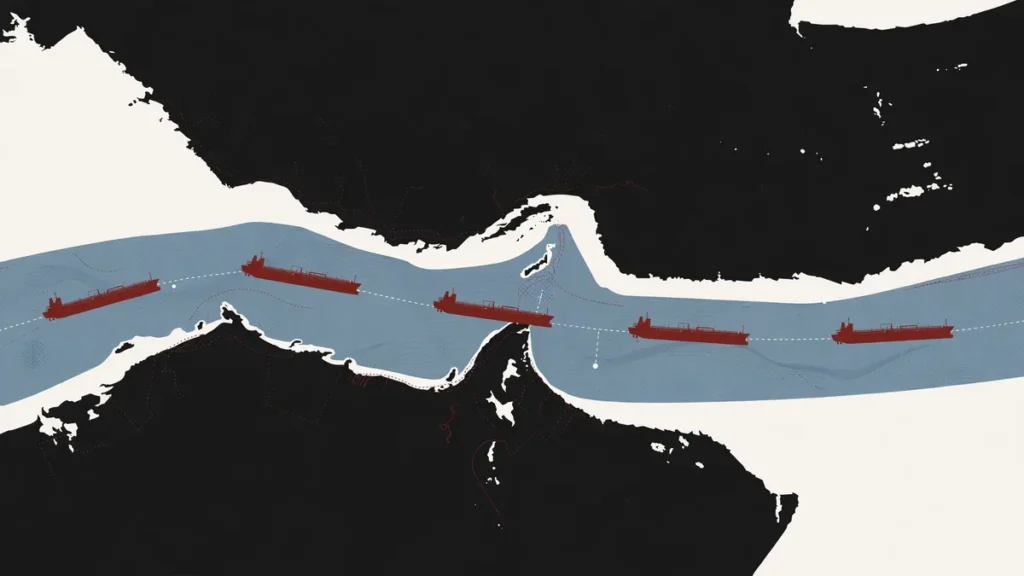
Qeshm Island lies about 14 miles from the Iranian port city of Bandar Abbas and, as CNN notes, is key to Iran asserting control over traffic through the Strait of Hormuz — the waterway through which about 20 million barrels of oil passed every day before the war. Iranian air-defence and anti-ship positions on and around the island bear directly on the safety of both military aircraft and commercial shipping, which is why a strike framed around surface-to-air missiles lands on one of the most sensitive pieces of coastline in the Gulf. Our intel assessment of the Hormuz tanker campaign tracks the wider campaign against shipping, and the Conflict Zones hub follows the theatre as a whole.
What the Qeshm strike means for US, UK and EU readers
For energy markets, the immediate effect was modest but pointed: Brent crude rose 0.5% to $105.25 a barrel in early Asian trade on Tuesday, Reuters reported, after falling more than 7% on Monday as diplomacy hopes unwound the war premium — the dynamic WarBrief Live unpacked in our Hormuz premium explainer. For shipping, the US rationale — protecting commercial traffic from Iranian fire — underlines that war-risk costs on every Hormuz transit are not coming down while exchanges of fire continue. For US politics, the strike became public on the eve of the midterm elections, on the same day President Trump said a deal with Tehran “could happen” and answered “no” when asked by reporters whether he was considering striking Iran after the elections — remarks that appear to concern a large campaign, not limited defensive actions of this kind.
What is still unverified about the Qeshm strike
Several central facts remain unconfirmed. CENTCOM has issued no statement, so there is no official target list, no munitions detail and no battle-damage assessment. The claim that Iran fired first at a US aircraft rests on a single official speaking to CNN. Iran’s public account so far, in the reporting reviewed, is limited to IRNA’s report of explosions; Tehran’s on-record comment on Monday concerned the continuing diplomatic contacts, not the strike itself. WarBrief Live will update this page if CENTCOM or Iranian officials publish verifiable statements.
What to watch next after the Qeshm strike
Three things. First, whether CENTCOM confirms the operation publicly and whether Iran answers militarily — Supreme Leader Ali Khamenei has previously ordered an unrestricted response doctrine, and Tehran is weighing its position as the Doha talks enter a third day. Second, whether the Qatari-mediated channel produces movement on the reported two-day Hormuz proposal. Third, Vice President JD Vance said on Monday that the US and Iran have “made some progress” toward an off ramp — whether quiet, limited strikes continue alongside that diplomacy is now the defining question of the ceasefire-that-isn’t.
Frequently asked questions
Did the US strike Qeshm Island again?
Yes. US forces struck Iran’s Qeshm Island on Monday, November 2, 2026. The Wall Street Journal reported it first, and three US officials confirmed the operation to CNN. It is a separate, smaller action from the October 29 strike package.
Was the Qeshm strike a resumption of large-scale combat?
Officials say no. CNN reported it does not appear to be the kind of major combat operation officials have been contemplating, and the Wall Street Journal reported such limited strikes are kept secret precisely so as not to signal an intent to resume the major campaign.
Why did the US strike Qeshm Island?
US officials told CNN it was a defensive measure: one official said it responded to Iran firing at a US aircraft, and another described it as a response to Iranians using surface-to-air missiles against US assets. Reuters reported officials also framed it as preventing attacks on commercial shipping in the Strait of Hormuz.
Has the Pentagon officially confirmed the Qeshm strike?
Not publicly, as of November 3. US Central Command did not immediately respond to a Reuters request for comment, and no CENTCOM statement appears in the reporting. Confirmation currently comes from US officials speaking to CNN and the Wall Street Journal.
Where is Qeshm Island and why does it matter?
Qeshm is an Iranian island in the Strait of Hormuz, about 14 miles from Bandar Abbas. It helps Iran assert control over traffic through the strait, which carried about 20 million barrels of oil per day before the war, according to CNN.
Sources
- CNN: US military conducts strikes on Iran’s Qeshm Island in defensive operation, officials say
- Reuters: US struck Iran’s Qeshm Island, Wall Street Journal reports
- Reuters: Oil rises after report of US strike on Iran’s Qeshm Island
- Wall Street Journal: first report of the Qeshm Island strike, November 2, 2026 (as reported by Reuters and CNN)

Discussion 0
Share analysis, corrections, or context. Be civil — comments are moderated.