
WarBrief Live | November 4, 2026 | Breaking Analysis
Oil bounced because a reported US strike on Qeshm Island restored the war-risk premium that Monday’s deal hopes had briefly removed, even though no confirmed supply was lost.
At a glance
- Brent, November 2: settled at $104.77, down 7.63% on the day.
- Brent, November 3: rose to $106.61 in Asian trading, up 1.76%.
- Brent, November 4: traded at $104.36 at 0730 GMT, then slipped again.
- The premium that matters: war-risk insurance, freight and the chance of a new disruption, not a confirmed barrel lost.
That sequence is the whole story in miniature. On November 2, traders priced in a diplomatic path out of the eight-month US-Israeli war with Iran after Iranian-Qatari contacts raised hopes of a settlement. On November 3, reports of a US strike on Qeshm Island, described by US officials as defensive, priced the risk back in. By November 4, the market was wavering again: Reuters reported Brent up 0.7% to $104.36 at 0730 GMT, before later reports showed it slipping back toward about $102. A falling price on Monday did not mean the risk had gone. A rising price on Tuesday did not mean supply had been cut. Both moves were about probability, and probability is what the Hormuz risk premium really measures.
Key Takeaways
- Brent fell 7.63% to $104.77 on November 2 on hopes that Iranian-Qatari talks could end the war, then rose to $106.61 in Asian trading on November 3 after reports of the Qeshm Island strike.
- The rebound was a repricing of risk, not evidence of a confirmed supply loss: the strike was described by US officials as defensive, aimed at surface-to-air missiles threatening shipping.
- What keeps the premium alive is the Strait of Hormuz itself, which carried about 20 million barrels a day in 2024, roughly 20% of global petroleum liquids consumption, according to the US Energy Information Administration.
- Goldman Sachs raised its December 2026 Brent forecast to $105 from $90 on November 1, citing substantial downside supply risks and a large near-term risk premium.
- For households, the practical channel is slower and smaller than the futures move: freight and insurance costs feed into delivered fuel prices over weeks, not in a single trading session.
What happened to oil prices on November 2 and 3?
On November 2, Brent crude settled at $104.77 a barrel, down $8.66 or 7.63%, while West Texas Intermediate (WTI) settled at $96.46, down about 7.4%. The fall followed signs that Iranian-Qatari talks might open a diplomatic path, and it was the sharpest daily drop in months. Our Oil Plunges 7% on Iran Deal Hopes: What It Means for Fuel Prices post covered that fall in full. It was also, in hindsight, a bet that the war’s shipping risk was about to shrink.
That bet lasted less than a day. The Wall Street Journal, citing US officials, reported that the United States had struck Qeshm Island, at the mouth of the Strait of Hormuz, in what some officials described as defensive strikes to stop Iran using the island to threaten commercial shipping — the strike itself is set out in our Qeshm Island Strike: What Happened on November 2, and What It Was Not post. By 0744 GMT on November 3, Reuters reported Brent up $1.84, or 1.76%, to $106.61, and WTI up $1.60, or 1.66%, to $98.06. Tim Waterer, chief market analyst at KCM Trade, said the report had put some risk premium back into oil prices at a moment when markets had begun pricing in a more diplomatic path. In other words, the same waterway, the same war, and a completely different price — because the odds attached to disruption had changed.
A senior Iranian official told Reuters on November 3 that a deal remained far off and that Tehran would not accept what it called excessive demands, which reinforced the reversal. The rebound therefore had two drivers, not one: a military report that reminded traders the shooting had not stopped, and a diplomatic signal that the talks had not yet produced an agreement.
Why did a limited strike move the price so much?
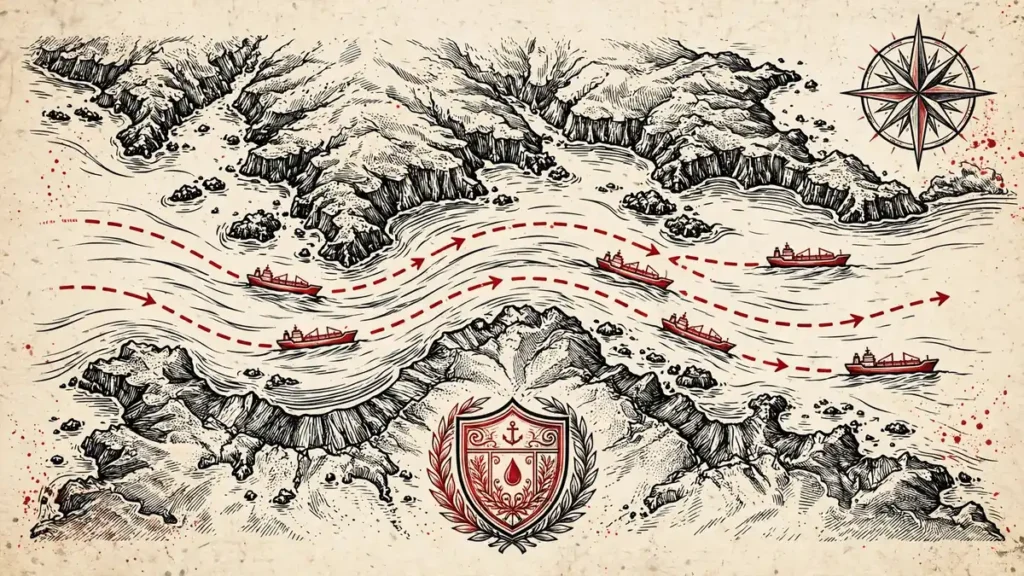
Because in a chokepoint market, traders do not wait for a tanker to be sunk before they reprice. They price the chance that the next tanker cannot sail, cannot be insured, or cannot be insured at a price its owner will pay. Qeshm Island sits at the entrance to the Strait of Hormuz, and the reported target — surface-to-air missiles that US officials said were being used against American assets in the strait — went directly to that calculation. If missiles near the strait are being used, the strait is not becoming safer, whatever the diplomatic headlines say.
Priyanka Sachdeva, head of market insight at Phillip Nova, made the other half of the point: unless there is concrete evidence of further disruption to physical supplies or critical energy infrastructure, fresh headlines alone may struggle to sustain another rally. That is exactly what happened. The November 3 rebound recovered only part of the November 2 fall, and by November 4 the price was slipping again as traders weighed the US midterm results, the continuing Qatar mediation, and President Donald Trump’s November 3 statement that the United States had no immediate plan to strike Iran. Our Trump Rules Out Immediate Iran Strike: What the Pause Signals post sets out that posture in full.
The lesson is not that markets overreact. It is that they react to a different question from the one most readers ask. Readers ask whether oil has been lost. Traders ask whether oil might be lost, how soon, and what it would cost to move the oil that remains. The first question is about barrels. The second is about insurance, freight, and fear — and it moves first.
What is the Hormuz risk premium, in plain terms?
The risk premium is the extra amount traders will pay for a barrel today because they are unsure whether tomorrow’s barrel will arrive. It has three visible parts. First, the futures price itself: a higher spot price relative to what fundamentals alone would suggest. Second, freight: tanker owners charge more, or refuse voyages, when a route is threatened. Third, insurance: war-risk cover for a Hormuz transit, which brokers told the Financial Times in early October 2026 cost about 6% to 10% of a ship’s hull value per voyage, against 0.15% to 0.25% before the war began on February 28.
Those insurance figures are broker quotes, not an official index, and every policy is priced separately. But the scale is instructive. On a $100 million tanker, 6% to 10% is $6 million to $10 million for one voyage, against about $250,000 before the war. Spread across a very large crude carrier holding about 2 million barrels, that is roughly $3 to $5 a barrel — before freight, before delays, and before any cargo is actually damaged. Our War Risk Insurance Explained: The Surcharge on Every Hormuz Transit guide explains how that cover works and why it can stop a voyage even when the strait itself is physically open.
That distinction — open but unaffordable, or open but uninsurable — is why the November 2 plunge and the November 3 bounce can both be true without contradiction, as our Why Brent Fell but Oil Still Costs More: Hormuz Premium analysis had already argued. A diplomatic breakthrough would collapse the premium quickly, because the insurance and freight surcharges would fall even before a single extra barrel flowed. A new incident restores it just as quickly, because underwriters and owners reprice the next voyage, not the last one.
By the numbers: what is confirmed, and what is only reported
| Metric | Figure | Source |
|---|---|---|
| Brent settlement, November 2 (CONFIRMED) | $104.77, down 7.63% ($8.66) | Reuters via market reports |
| WTI settlement, November 2 (CONFIRMED) | $96.46, down about 7.4% | Reuters via market reports |
| Brent, November 3 at 0744 GMT (CONFIRMED) | $106.61, up 1.76% ($1.84) | Reuters |
| WTI, November 3 at 0744 GMT (CONFIRMED) | $98.06, up 1.66% ($1.60) | Reuters |
| Brent, November 4 at 0730 GMT (CONFIRMED) | $104.36, up 0.7% | Reuters |
| Oil flows through Hormuz, 2024 (CONFIRMED) | About 20 million barrels a day, about 20% of global petroleum liquids consumption | US Energy Information Administration |
| Goldman Sachs December 2026 Brent forecast (CONFIRMED) | $105, raised from $90 on November 1 | Goldman Sachs via Moneycontrol |
| Goldman Sachs 2027 Brent average forecast (CONFIRMED) | $88, raised from $80 | Goldman Sachs via Moneycontrol |
| War-risk premium, Hormuz transit, early October (REPORTED) | About 6% to 10% of hull value, against 0.15% to 0.25% pre-war | Brokers via Financial Times |
| Four tankers destroyed by mines, November 4 (REPORTED) | Claimed by Iran’s Revolutionary Guard Corps; not independently verified | IRGC via IRNA, reported by Al Jazeera |
Caveat: figures marked CONFIRMED rest on two or more reputable sources or on a named official source; figures marked REPORTED rest on a single or secondary source, or on a claim that has not been independently verified, and should be read as such.
Background and timeline
- February 28, 2026: the US-Israeli war with Iran begins; shipping through the Strait of Hormuz is sharply curtailed.
- October 2026: Brent ends the month at its highest level in six months on concern that the conflict could escalate again after the US midterm elections.
- November 1, 2026: Goldman Sachs raises its December Brent forecast to $105 from $90 and its 2027 average to $88 from $80, citing substantial downside supply risks.
- November 2, 2026: Brent settles at $104.77, down 7.63%, and WTI at $96.46, after Iranian-Qatari talks raise hopes of a diplomatic path; US officials report a defensive strike on Qeshm Island.
- November 3, 2026: Brent rebounds to $106.61 in Asian trading and WTI to $98.06; a senior Iranian official tells Reuters a deal remains far off; Trump tells the Financial Times the US has no immediate plan to strike Iran.
- November 4, 2026: Brent trades at $104.36 at 0730 GMT, then slips again; Iran’s Revolutionary Guard Corps claims four tankers were destroyed after striking mines south of the strait — a claim not independently verified.
The November 4 tanker claim deserves care. Al Jazeera reported the Revolutionary Guard Corps claim that four non-compliant tankers attempting to pass through a prohibited lane south of the strait were destroyed after striking naval mines and were still burning, with two other vessels detained. That is an Iranian claim carried by state media, not an independently verified incident, and it should not be treated as proof that the strait is closed or that a specific cargo was lost. What it does show is how quickly a single claim can re-enter the premium: on the same morning, traders were already weighing whether the mine risk, real or claimed, would change an owner’s next decision to sail.

What the Hormuz risk premium means for US/UK/EU readers
For readers in the United States, the United Kingdom and the European Union, the premium reaches the household through fuel and freight, not through the futures ticker. A $2 rebound in Brent does not add $2 to a litre of petrol overnight. Refined fuel prices, taxes, exchange rates and local competition all sit between the crude price and the pump, and contracts and inventories blunt the first days of any move. What does reach households faster is the direction of travel: a sustained premium keeps wholesale fuel costs higher than they would otherwise be, and a collapse in the premium — the kind Monday’s 7.63% fall pointed toward — is the fastest route to relief at the pump.
For businesses, the channel is shipping. Higher war-risk insurance and freight rates raise the delivered cost of Gulf crude and of goods that travel through the region, and they can reroute trade even when no ship is attacked. For governments, the premium is a fiscal and political problem at once: it feeds inflation, complicates central-bank decisions, and raises the domestic cost of a foreign war that voters did not choose. That is part of why the US midterm elections mattered to traders on November 4, and why Democrats’ gains in Congress were read as a possible brake on a larger post-midterm campaign, even though no policy had yet changed.
None of this is investment advice. Forecasts quoted here are analysts’ views, not predictions that a reader should trade on, and the $140-a-barrel upside scenario Goldman Sachs sketched for 2027 is a conditional scenario — Gulf output staying 3.5 million barrels a day below its 2025 average — not its central forecast.
Different perspectives
Traders who sold on November 2 read the Iranian-Qatari contacts as the start of an exit: a war that had already curtailed Hormuz shipping for eight months might finally have a negotiated end, and the premium built up over those months could unwind fast. Traders who bought on November 3 read the Qeshm strike and the Iranian official’s warning as proof that the exit was not yet real: the shooting continued, the demands had not been met, and the strait remained a place where a single incident could strand a cargo.
Analysts split on what comes next. Goldman Sachs’ November 1 upgrade argued that substantial downside supply risks would sustain a large near-term premium, with an implied risk premium of about $27 a barrel in its modelling. Others, including Phillip Nova’s Priyanka Sachdeva, argued that without concrete evidence of further physical disruption, headlines alone would struggle to sustain a rally. Both can be right at different horizons: the premium can stay high while the price drifts sideways, because a high premium and a stable price are not the same thing. The premium is the reason the price is $104 rather than $80; the daily move is the market arguing about whether $104 is too high or too low.
What to watch next in the Hormuz oil market
First, whether the Qatar mediation produces anything verifiable: a framework, a timetable, or a concession on either side’s conditions, rather than another round of talks described as continuing. Second, whether any November 4 tanker incident is independently confirmed — by a shipowner, an insurer, a flag state, or the United Kingdom Maritime Trade Operations — or remains a claim. Third, the official US inventory data due later on November 4, which will show whether the reported American Petroleum Institute draw of about 5.27 million barrels for the week ended October 30 is confirmed. Fourth, any change in war-risk insurance quotes or tanker freight rates, which are the premium’s physical footprint and often move before the futures price settles on a direction.
Above all, watch what would actually push Brent back above $113, the level it held before the November 2 fall. It would take more than another headline: a confirmed loss of a tanker or a loading terminal, a sustained closure or blockage of the strait, a collapse of the mediation with both sides hardening their positions, or a wider strike campaign that traders read as the start of a new phase rather than a limited defensive action. Short of that, the pattern of the last three days — sharp fall on hope, partial rebound on a strike, drift on uncertainty — is likely to repeat, because the premium is now the market’s default setting, and only a settlement or a shock can switch it off.
Frequently asked questions
Why did oil prices bounce on November 3, 2026?
Because reports of a US strike on Qeshm Island, described by US officials as defensive, restored part of the war-risk premium that had been removed on November 2, when Iranian-Qatari talks raised hopes of a diplomatic settlement. Brent rose to $106.61 in Asian trading, up 1.76%, after settling at $104.77 the day before.
What is the Hormuz risk premium?
It is the extra amount traders pay for oil because of the chance that supply through the Strait of Hormuz could be disrupted. It shows up in the futures price, in tanker freight rates, and in war-risk insurance, which brokers quoted at about 6% to 10% of a ship’s hull value per Hormuz transit in early October 2026, against 0.15% to 0.25% before the war.
Did the November 3 rebound mean oil supply was cut?
No confirmed supply loss explained the rebound. The strike was reported as a limited defensive action against surface-to-air missiles, and the price move reflected a changed assessment of disruption risk, not a verified fall in exports or production.
Why did Brent fall 7.63% on November 2?
Because Iranian-Qatari contacts raised hopes that the eight-month US-Israeli war with Iran could end diplomatically, which would remove much of the risk premium that had kept Brent elevated. The fall was the market pricing in a settlement before one had been agreed.
What does the Hormuz premium mean for fuel prices?
It raises the delivered cost of crude through freight and insurance, which feeds into wholesale fuel prices over weeks rather than overnight. A sustained fall in the premium is the fastest route to lower pump prices, while a sustained premium keeps them higher than fundamentals alone would suggest.
Sources
- CNBC Africa: Oil prices climb after US strikes Iran’s Qeshm Island
- Nikkei Asia: Oil edges up after report of US strike on Iran’s Qeshm Island
- Reuters via Tribune: Oil rises on Iran war uncertainty after Trump’s Republicans face election rout
- Moneycontrol: Goldman Sachs raises Brent crude forecast to $105 for December, sees oil at $88 in 2027 amid Iran war risks
- Al Jazeera: Iran says US reply to Hormuz plan ‘unconvincing’; Trump confirms strikes
- Goodreturns: Crude Oil Prices Today: Brent, WTI Rebound After 7% Crash Amid US-Iran Tensions
Read next: Conflict Zones hub

Discussion 0
Share analysis, corrections, or context. Be civil — comments are moderated.