
WarBrief Live | November 3, 2026 | Markets and Geopolitics
On election day, markets are pricing uncertainty, not a result: oil has swung on Iran war-or-deal hopes, the dollar is near a one-month low, and defence budgets face a new Congress.
Confirmed versus reported: the market prices, seat counts and Monday oil settlements below are confirmed by multiple outlets; prediction-market odds and any claim about what a future Congress will do are reported or analytical, and no election result is known at publication time. This article is educational only and is not financial advice.
At a glance — November 3, 2026
Brent crude: $104.77 after a 7.63% fall on November 2 | WTI crude: $96.46 after a 7.36% fall | US dollar index: about 101.7, near a one-month low | US 10-year yield: about 4.91%
Key Takeaways
- Americans are voting on November 3, 2026, for all 435 House seats, 35 Senate seats and 36 governorships; results are not yet known, and early market moves reflect expectations, not outcomes.
- Oil is the clearest war-risk gauge: Brent fell 7.63% to $104.77 and WTI fell 7.36% to $96.46 on November 2 as Iran diplomacy hopes eased fears of escalation after the midterms.
- The dollar index traded around 101.7, near a one-month low, while the US 10-year yield sat near 4.91%; strategists do not expect the vote alone to rewrite currency trends.
- Congress controls spending, oversight and confirmation power, so a divided Congress would change what can pass on war funding and defence budgets — it would not by itself end or start a war.
- For readers in the US, UK and EU, the nearest transmission is through fuel prices, energy costs, the dollar and defence supply chains, not through election-night headlines alone.
What are markets pricing on election day?
Markets opened on November 3, 2026, in a cautious mood. Reuters reported that global stocks slipped as investors weighed renewed anxiety about artificial intelligence earnings alongside voting in the US midterm elections, with the pan-European STOXX 600 down 0.6% to 645.36 and MSCI’s gauge of world stocks down 0.26%. In Asia, South Korea’s KOSPI fell 3.6% and Taiwan’s index fell 3.6% in the same session, a reminder that election-day nerves are travelling well beyond Washington.
The pattern is familiar to market watchers: before a vote, traders hedge; after a vote, they reprice. FXStreet noted that strategists at ING do not expect the midterm results to cause structural shifts in foreign exchange, although they flagged possible short-term pressure on the dollar if Democrats were to win both chambers. That distinction matters. A one-day move in the dollar is not a verdict on the next two years of US foreign policy, and a calm currency market is not proof that nothing has changed.
Prediction markets add colour, not certainty. Reuters reported that traders on Polymarket saw about a 77% chance of Democrats winning both chambers, while other reports put the chance of Democrats taking the Senate at about 75%. Those are betting-market odds, not votes counted, and they have moved before. Readers should treat them as a snapshot of expectations at a moment in time, and nothing more.
What does the 7% oil swing actually tell us?
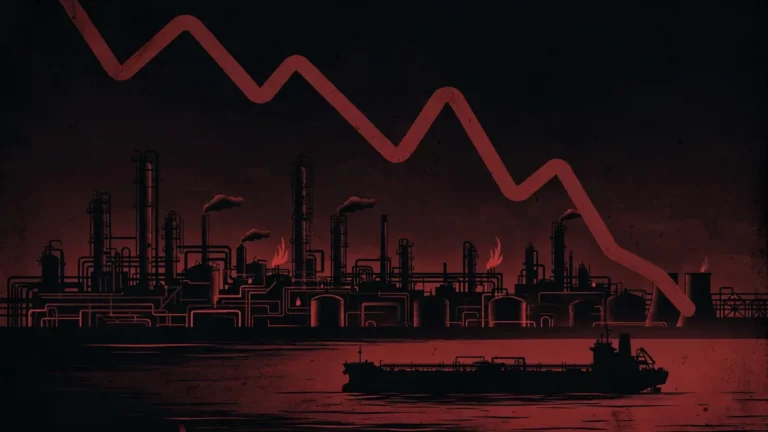
Oil tells the war story more directly than any other market. On November 2, Brent crude futures settled $8.66, or 7.63%, lower at $104.77 a barrel, while US West Texas Intermediate fell $7.66, or 7.36%, to $96.46, according to Dawn’s Reuters-based report. The trigger was diplomatic, not physical: Iranian and Qatari officials had held talks aimed at ending the US-Israeli war with Iran, Iranian President Masoud Pezeshkian said the supreme leader had granted the government certain authorities for peace talks, and US President Donald Trump said Iran wanted a deal and that such a deal “could happen”.
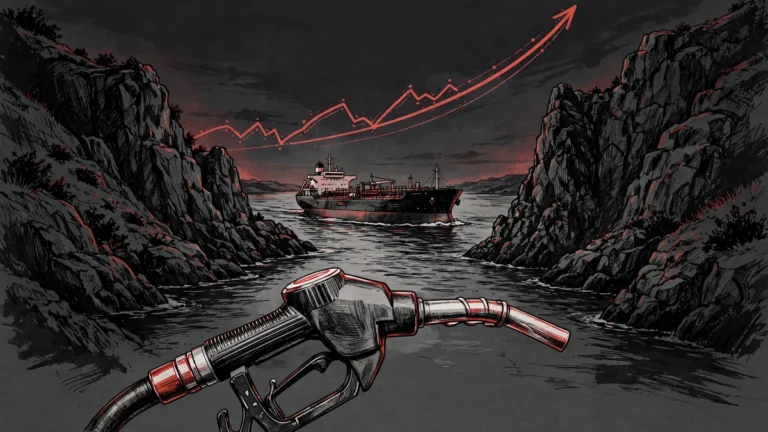
That is why the fall was so sharp. Traders had priced in a risk premium for military escalation after the midterms, because Trump had previously said he would not attack Iran before the elections. When diplomacy looked more plausible, part of that premium unwound in a single session. WarBrief’s companion report on the oil plunge explains the pump-price pass-through in detail, and our earlier explainer on the Hormuz premium explains why a lower Brent price does not instantly mean cheaper fuel at every forecourt.
By the morning of November 3, oil had steadied rather than kept falling. Reuters reported Brent up about 1.6% to $106.44 in early trading, while other morning snapshots put Brent near $105.78 and WTI near $97.50. The bounce does not cancel the story; it confirms it. Oil is now trading on two competing signals at once: hopes for a deal, and the reported US strike on Iran’s Qeshm Island in the Strait of Hormuz on November 2, which kept escalation risk firmly in view. Until talks produce a breakthrough or fighting clearly resumes, volatility is the baseline, not the exception.

What could a divided Congress change for war funding?
Congress matters for war policy because it holds the power of the purse. All spending bills must originate in the House, both chambers must agree on funding, and the Senate confirms senior nominees. A Democratic House, if that is the outcome, could chair committees, issue subpoenas, hold hearings on administration decisions and block legislation, even while a Republican Senate and a presidential veto limit what new laws can pass. That is gridlock in the textbook sense: less sweeping change, more oversight, and harder negotiations over every funding bill.
For Ukraine aid and sanctions, the stakes are practical rather than rhetorical. Our earlier preview of the 2026 midterms and Ukraine aid set out how control of Congress shapes aid packages and sanctions enforcement. This election-day piece does not repeat that politics: the market question is narrower. Investors in defence stocks are watching which budget lines survive negotiation, not which speeches are given. Analysis by Trefis on November 3 argued that the White House had sought $1.5 trillion for defence in 2027 — $1.15 trillion in the normal budget plus $350 billion through a party-line bill — and that the $350 billion element, including much of the Golden Dome missile-defence funding, would be the most exposed if Democrats took the House. That framing is analytical, not an official forecast, but it explains why some defence names move more than others on election news.
History counsels against over-reading a single night. FXStreet recalled the long-run pattern that US stocks have often been weak before midterms and strong afterwards, with the S&P 500 higher 12 months after every midterm since 1950, 19 out of 19 times, at an average gain of about 15%. That is a historical pattern, not a promise, and it says nothing about any individual stock, sector or war. Defence spending has also historically enjoyed support across party lines for the base budget, even when the extras are contested. The useful question for readers is therefore not “who wins tonight?” but “which funding lines need both chambers, and which do not?”
| Metric | Figure | Source |
|---|---|---|
| Brent crude, November 2 settlement (CONFIRMED) | $104.77, down 7.63% | Dawn / Reuters |
| WTI crude, November 2 settlement (CONFIRMED) | $96.46, down 7.36% | Dawn / Reuters |
| US dollar index, November 3 morning (CONFIRMED) | About 101.7, near a one-month low | Reuters / FXStreet |
| US 10-year Treasury yield, November 3 (CONFIRMED) | About 4.91% | Reuters |
| Spot gold, November 2 rebound (CONFIRMED) | Up more than 2% to about $3,954 an ounce, after a one-year low near $3,870 on October 30 | Economic Times / Reuters market reporting |
| Democrats winning both chambers (REPORTED) | About 77% on Polymarket, per Reuters; about 75% for the Senate in other reports | Reuters / prediction-market reporting |
| Defence request at risk in a divided Congress (REPORTED / ANALYTICAL) | $350 billion party-line element of a $1.5 trillion 2027 request, per Trefis analysis | Trefis |
Caveat: CONFIRMED figures above are reported by two or more outlets; REPORTED figures rest on a single source or a prediction market and should not be treated as results or official forecasts.
What the midterm market moves mean for US/UK/EU readers
For US readers, the first effect is at the pump and in the household budget. A sustained fall in crude eventually feeds through to petrol and diesel prices, but the pass-through takes weeks and is uneven by region and retailer, so a single day’s 7% drop should not be read as an immediate 7% saving. The second effect is through interest rates: if lower oil prices ease inflation pressure, that can soften expectations for further rate rises, which matters for mortgages, credit cards and business borrowing. If fighting resumes and oil spikes again, that relief reverses just as quickly.
For UK and EU readers, the channel is energy costs, the dollar and defence orders. Europe buys energy in dollars and watches Brent as its benchmark, so a dollar near a one-month low and Brent near $105 still leaves prices far above pre-war norms, with winter heating and industrial costs exposed to any Hormuz disruption. European defence firms and suppliers into US programmes also watch the same budget negotiation: a contested $350 billion element in Washington can delay or reshape orders that ripple through allied supply chains. None of this turns on a single House race, but all of it turns on whether Congress can pass funding cleanly in December and into 2027.
Gold illustrates the limits of the “safe haven” shorthand. Spot gold rebounded more than 2% on November 2 to about $3,954 an ounce after hitting a one-year low near $3,870 on October 30, yet on November 3 it traded in a choppy range around $3,927 to $3,956 as higher-rate expectations and margin-call selling competed with geopolitical demand. Analysts quoted in market reporting noted that gold has at times been sold to cover losses elsewhere rather than bought as a refuge. The lesson is general: in a week when tech stocks, oil and politics move together, no single asset tells the whole story.

What to watch next after the polls close
First, watch the count, not the exit polls. The first results are expected on the evening of November 3, US Eastern Time, but close races can take days, and control of either chamber may not be clear on election night. Second, watch the funding calendar: a December funding deadline and the 2027 budget negotiation will test any new majority far sooner than a set-piece foreign-policy vote. Third, watch Iran diplomacy and Hormuz shipping together: a deal, a breakdown or a new strike would move oil faster than any committee hearing.
Fourth, watch what markets do on the second day, not the first. Election-night moves often reverse once traders see the actual margins, the recount risks and the legislative calendar. A divided Congress that still funds the base defence budget is a different market story from a Congress heading for a funding standoff, and that difference only becomes visible in the days after the vote. WarBrief will update this assessment when results are confirmed, rather than treating election-night expectations as outcomes.
Follow WarBrief’s conflict coverage for the Iran talks, Ukraine and the defence-budget negotiations as they develop, and read the companion oil report for the fuel-price detail behind today’s numbers.
Frequently asked questions
What are the US midterm elections 2026?
They are the federal elections held halfway through a president’s term. On November 3, 2026, voters decide all 435 House seats, 35 Senate seats and 36 governorships, determining which party controls Congress for the final two years of President Donald Trump’s second term.
Why did oil fall 7% before the midterms?
Brent fell 7.63% to $104.77 and WTI fell 7.36% to $96.46 on November 2 as talks between Iranian and Qatari officials, and comments from Trump and Pezeshkian suggesting a deal was possible, eased fears of military escalation after the elections. The fall unwound part of the war-risk premium traders had priced in, but no breakthrough had been confirmed.
How do midterm results affect defence stocks?
Congress writes the defence budget each year, so control of the House and Senate shapes which programmes are funded, investigated or blocked. The base budget has historically enjoyed broad support, while extra funding sought through party-line bills — including much of the Golden Dome request analysed by Trefis — is more exposed to a divided Congress. Individual company outcomes still depend on contracts, earnings and orders, not on the election alone.
Does a divided Congress stop a president from using force?
No, not by itself. The president retains significant powers over foreign policy and the use of force, and can use executive orders, but Congress can withhold or limit funding, hold oversight hearings and block legislation. That creates constraint and negotiation, not an automatic veto on military action.
When will we know the midterm results?
First results are expected on the evening of November 3, US Eastern Time, but close races can take days or weeks to call, and control of a chamber may not be clear on election night. This article reports expectations and market prices at publication time, not results.
Sources
- Reuters: Asian stocks retreat ahead of US midterms, oil steadies
- FXStreet: US Dollar Index edges up within range with midterm elections front and centre
- Dawn: Oil prices drop over 7pc
- DailyForex: Forex Today 03/11 — Crude Oil Plunges Over 7%; Stock Selloff
- Channel News Asia: CNA Explains — Why do the US midterm elections matter?
- Indian Express: US Midterm Elections 2026 — Date, key races, how to check results
- Trefis: Defense Stocks’ $350 Billion Problem If Democrats Win

Discussion 0
Share analysis, corrections, or context. Be civil — comments are moderated.