
WarBrief Live | November 3, 2026 | Explainer
At a glance
48 hours — deadline to report to Congress | 60 days — clock before authorisation is required | +30 days — extra withdrawal time if certified | 1973 — year the law was enacted over a presidential veto
The War Powers Resolution is a 1973 United States law that requires the president to report to Congress within 48 hours of introducing armed forces into hostilities, and to end that use of force within 60 days unless Congress authorises it. It does not ban presidential military action outright. It creates a clock, a reporting duty and a set of fast-track votes — and then leaves the hardest questions, including what counts as “hostilities”, to politics, lawyers and, sometimes, the courts of public opinion.
Key Takeaways
- Congress holds the constitutional power to declare war; the president is commander in chief. The War Powers Resolution was Congress’s 1973 attempt to police the space between those two roles.
- The core mechanics are a consultation duty, a 48-hour written report, and a 60-day termination clock, extendable by 30 days for a safe withdrawal.
- A concurrent resolution directing withdrawal is not the same as a binding law: after the Supreme Court’s 1983 decision in INS v. Chadha, modern war-powers efforts are normally framed as joint resolutions or funding measures.
- In 2026, both chambers of Congress passed a concurrent resolution directing the removal of US forces from hostilities with Iran, yet the administration treated it as non-binding and operations continued — a vivid illustration of the law’s limits.
What is the War Powers Resolution?
The War Powers Resolution, also called the War Powers Act, is Public Law 93-148, enacted on November 7, 1973. Its stated purpose, in Section 2, is to ensure that “the collective judgment of both the Congress and the President” applies when US armed forces are introduced into hostilities, or into situations where imminent involvement in hostilities is clearly indicated. Congress passed it over President Richard Nixon’s veto, in the aftermath of the Vietnam War, when US troops had fought for years without a formal declaration of war. The State Department’s Office of the Historian records the veto-override votes as 284–135 in the House and 75–18 in the Senate.
The law sits on top of a constitutional split that predates it by nearly two centuries. Article I of the Constitution gives Congress the power to declare war, raise and support armies, and control federal spending. Article II designates the president as commander in chief of the armed forces. Neither provision, on its own, answers every modern question: what about airstrikes that last days, a naval deployment that deters rather than fights, or a supporting role in an allied operation? The Congressional Research Service (CRS) has described that grey area as a “twilight zone” of concurrent authority. The War Powers Resolution was an attempt to give that twilight zone a timetable.
How does the 48-hour report and the 60-day clock work?
Section 3 requires the president to consult Congress “in every possible instance” before introducing forces into hostilities or imminent hostilities, and to consult regularly until the engagement ends. The CRS notes that the statute does not define what counts as meaningful consultation, and that a failure to consult does not itself trigger an automatic legal consequence. The teeth of the law are in the reporting and termination provisions.
Under Section 4, the president must submit a written report to the Speaker of the House and the President pro tempore of the Senate within 48 hours when US forces are introduced into hostilities or imminent hostilities, into the territory, airspace or waters of a foreign nation while equipped for combat (except for deployments relating solely to supply, replacement, repair or training), or in numbers that substantially enlarge combat-equipped forces already in a foreign nation. The report must set out the circumstances necessitating the deployment, the constitutional and legislative authority relied upon, and the estimated scope and duration. While forces remain deployed on that basis, the president must report again at least once every six months.
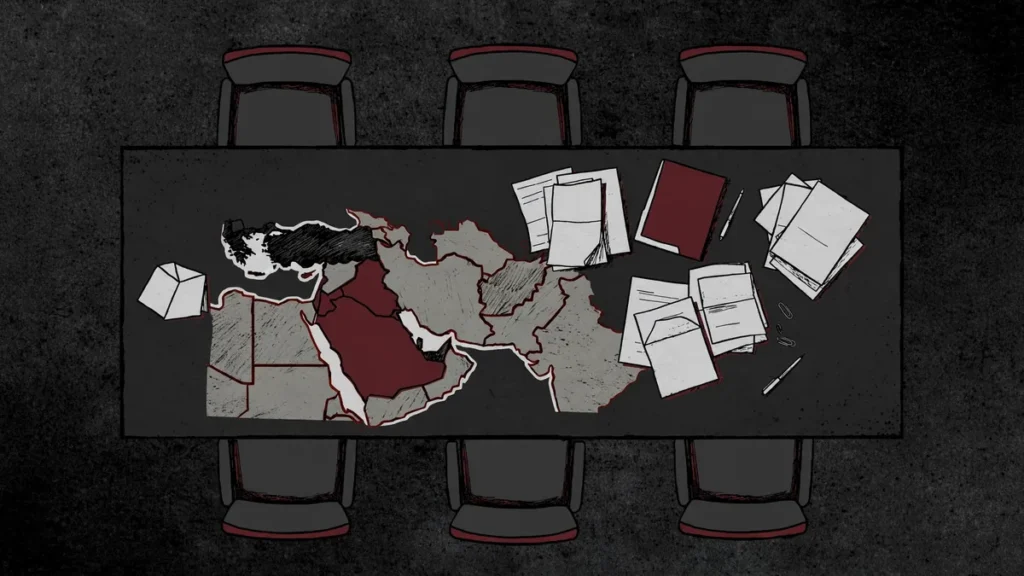
Section 5(b) then starts the clock. Within 60 calendar days after the report is submitted, or was required to be submitted, whichever is earlier, the president must terminate the use of forces covered by the report unless Congress has declared war, enacted a specific authorisation for that use, or extended the period by law — or unless Congress is physically unable to meet because of an armed attack on the United States. The 60-day period can be extended by no more than 30 additional days if the president certifies in writing that unavoidable military necessity relating to the safety of the forces requires it. That is the familiar “60 plus 30” formula: 60 days to get authorisation, 30 more to get out safely.
Two common misunderstandings follow from this design. First, a report to Congress is not an authorisation. Filing within 48 hours satisfies the reporting duty; it does not grant permission for the next 60 days in any political sense, and it does not settle whether the operation was lawful. Second, the clock is only as strong as agreement about when it started. If an administration argues that a particular operation does not involve “hostilities” within the meaning of the law, it may argue that the clock never started at all. That dispute, more than any single deadline, is where most war-powers fights are actually fought.
What happened when Congress tried to use it over Libya?
The Libya operation of 2011 is the textbook example of the “hostilities” argument. As US involvement passed 60 days, the Obama administration argued that the limited American supporting role in the NATO mission — with no US ground troops and a supporting, rather than leading, combat role — did not amount to the kind of hostilities the War Powers Resolution covers. Many members of Congress disputed that reading, and the episode is still cited by both sides: by defenders of executive flexibility as proof that the law must bend to limited operations, and by critics as proof that the law’s central term can be defined away. The CRS literature on the subject stresses a related point: Congress has never fully used the War Powers Resolution’s own expedited procedures for an authorisation, and the chambers have typically acted faster, and through other parliamentary mechanisms, than the statute’s deadlines envisage.
That history matters because it explains why the law so often produces votes that clarify political positions without changing battlefield facts. A war-powers vote forces every member to go on the record. It creates a deadline for debate. What it does not automatically do is stop an operation, especially when the president disputes the law’s application or when the measure chosen cannot, on its own, become binding law.
Why did the 2026 Iran war-powers votes not stop the war?
The Iran war that began on February 28, 2026, put the War Powers Resolution through its most consequential test in decades. According to a Senate document setting out findings for a later Iran war-powers measure, Congress had not declared war on Iran and had not enacted a specific statutory authorisation for the use of force within or against Iran. Reporting in SOFREP, drawing on Pentagon figures provided to Congress, put the cost of the war at $47.1 billion through October 16, 2026 — a reported figure, not a figure confirmed here from a second independent source, and one that illustrates the stakes of the authorisation debate rather than settling it.
Congress voted repeatedly. On March 4, 2026, the Senate rejected a withdrawal measure by 47 votes to 53, and on March 5 the House rejected its version by 212 votes to 219, according to House Clerk roll-call reporting. The picture changed in June. On June 3, the House passed House Concurrent Resolution 86, directing the president, under Section 5(c) of the War Powers Resolution, to remove US armed forces from hostilities with Iran, by 215 votes to 208. On June 23, the Senate passed the same resolution by 50 votes to 48. That was, as SOFREP noted, the first time since the War Powers Resolution was enacted in 1973 that both chambers had approved a concurrent resolution directing a sitting president to end a military conflict.
Yet operations continued. The reason is procedural, and it goes back to INS v. Chadha. The War Powers Resolution as enacted in 1973 provided for expedited consideration of a concurrent resolution to direct removal. In 1983, the Supreme Court held in Chadha that legislative veto devices — measures by which Congress purports to approve or disapprove executive action without presentment to the president — were unconstitutional, because lawmaking requires passage by both houses and presentment to the president. The CRS explains that Congress responded later in 1983 by creating a new mechanism: expedited Senate consideration of a bill or joint resolution to direct removal. The result is that Congress now has, in the CRS’s account, two fast-track procedures — the older concurrent-resolution route, which is constitutionally problematic, and the joint-resolution or bill route, which is the binding-law route but can be vetoed.
The June 2026 votes took the concurrent-resolution route. Because a concurrent resolution is not presented to the president for signature, the administration treated it as non-binding, and the House and Senate votes, however politically significant, did not produce a binding order to withdraw. Further votes followed — the House passed another withdrawal resolution on July 23 by 214 votes to 208, the Senate rejected a measure on September 24 by 49 votes to 50, and the House passed a third resolution on September 15 by 220 votes to 204 — but none of them, on the reporting available, converted a concurrent-resolution majority into a veto-proof binding statute. That sequence is the War Powers Resolution in miniature: a real vote, a real political signal, and a legal result that falls short of compulsion.
What is the power of the purse, and why does it keep coming up?
If a concurrent resolution cannot compel withdrawal, Congress has two stronger tools, both harder to use. The first is a binding statute — a bill or joint resolution, passed by both chambers and either signed by the president or enacted over a veto — that restricts or ends an operation. That requires either presidential agreement or a two-thirds majority in both chambers, a high bar in a divided Congress. The second is the power of the purse: Congress can refuse to appropriate new money for an operation, or attach conditions to funding.
The funding argument resurfaced days before the November 3, 2026 midterm elections, when Representative Ro Khanna said on television that a Democratic Congress would cut off money for further military action in Iran “on day one”, arguing that the House and Senate hold the power on appropriations bills. That is a political claim, not a legal finding, and it needs a qualification that its proponents sometimes omit: refusing future appropriations is a clear constitutional lever, but it does not by itself cancel money Congress has already appropriated, so it would not necessarily end operations on the first day of a new Congress. The distinction between stopping new funding and clawing back existing funding is the difference between a slogan and a strategy, and it is worth keeping in mind whenever the phrase “day one” is used.

What does the war-powers debate mean now, on midterm day?
The question is live, not academic, for three reasons that converge on November 3, 2026. First, voters are choosing the Congress that would have to pass any binding war-powers statute or funding restriction, which is why the Iran authorisation debate featured in congressional campaigns, including an October debate in Maine’s 2nd Congressional District in which the candidates took opposite positions on a war-powers resolution to stop the Iran war. Second, reported limited strikes on Qeshm Island on November 2 are a reminder that executive decisions about the scope of the Iran war continue to be made without a new Iran-specific authorisation on the record. Third, talks on the war’s future were under way in Doha, which means the same Congress that debates authorisation is also watching a negotiation whose outcome could change what authorisation would even cover.
None of this means the War Powers Resolution has “failed” in any simple sense, nor that it has “worked”. Its defenders argue that it forced reports, debates and recorded votes that would not otherwise have happened, and that the June 2026 votes, even though non-binding, put every member on the record about an unauthorised war. Its critics argue that a law whose central deadline can be disputed, whose original enforcement mechanism is constitutionally doubtful, and whose binding route requires a veto-proof majority is a reporting regime dressed up as a constraint. Both readings can be true at once: the law structures the argument, even when it does not settle it.
By the numbers: the War Powers Resolution
| Metric | Figure | Source |
|---|---|---|
| Deadline to report to Congress | 48 hours | War Powers Resolution, Section 4; CRS Report R47603 |
| Termination clock without authorisation | 60 days | War Powers Resolution, Section 5(b); CRS Report R47603 |
| Additional withdrawal period if certified | 30 days | War Powers Resolution, Section 5(b); CRS Report R47603 |
| Enacted over presidential veto | November 7, 1973 (House 284–135; Senate 75–18) | US State Department, Office of the Historian |
| House vote, Iran concurrent resolution (H.Con.Res. 86) | 215–208 on June 3, 2026 | Senate findings document; SOFREP reporting |
| Senate vote, Iran concurrent resolution (H.Con.Res. 86) | 50–48 on June 23, 2026 | Senate findings document; SOFREP reporting |
| Reported cost of the Iran war through October 16, 2026 | $47.1 billion (REPORTED) | SOFREP, citing Pentagon figures provided to Congress |
Caveat: figures marked CONFIRMED in the text are supported by at least two sources or by the statute itself; the $47.1 billion cost figure is REPORTED from a single secondary source citing Pentagon figures, and is not independently confirmed here.
What this war-powers fight means for US, UK and EU readers
For US readers, the immediate consequence is domestic and financial: an unauthorised war is still funded from appropriations Congress has already passed, and the composition of the Congress chosen on November 3, 2026 will determine whether a binding restriction or a funding cutoff is politically possible. For UK and EU readers, the consequence is indirect but real. The War Powers Resolution binds only the United States, not its allies, but American deployments, naval operations and air campaigns shape the security environment in which Britain and European states make their own decisions — on support for Ukraine, on Gulf shipping, on energy prices and on the credibility of allied planning. When Washington’s authority to act is contested at home, allies cannot assume that an American commitment made in one month will carry the same political backing the next. That uncertainty, rather than any single vote count, is the practical effect of the war-powers debate beyond America’s borders.
What to watch next in the war-powers debate
Watch for three things. First, whether any future Iran measure is framed as a joint resolution or a funding bill — the binding routes — rather than a concurrent resolution, and whether it can attract a veto-proof majority. Second, whether the administration files War Powers reports that acknowledge the 60-day clock, or continues to argue that particular operations fall outside “hostilities”. Third, whether the new Congress, whatever its composition, uses appropriations as its lever, and whether it does so prospectively, by refusing new money, or attempts the harder task of restricting money already appropriated. The WarBrief conflict zones hub will track the Iran war itself; this explainer will remain the reference for the legal framework behind the argument. Readers following election-day markets should also see WarBrief’s election-day markets explainer for how the same vote is being read by traders.
Frequently asked questions
What is the War Powers Resolution?
The War Powers Resolution is a 1973 US law that requires the president to consult Congress before introducing armed forces into hostilities, report to Congress within 48 hours, and end the use of force within 60 days unless Congress declares war, authorises it specifically, or extends the period by law.
Does the president need Congress’s permission before any military strike?
No, not under the War Powers Resolution as written. The president can act first in an emergency or to defend US forces, but must then report within 48 hours and faces the 60-day clock. Advance permission is required only if Congress has enacted a binding restriction, or if the operation needs a new authorisation to continue beyond the clock.
What happens after the 60 days expire?
Under Section 5(b), the use of forces covered by the report must terminate unless Congress has declared war, enacted a specific authorisation, or extended the period by law, or Congress is physically unable to meet because of an armed attack on the United States. The president may certify an additional 30 days for a safe withdrawal. In practice, disputes over whether “hostilities” are under way have often kept this deadline contested.
Can Congress force a president to withdraw troops?
Congress can do so through a binding statute — a bill or joint resolution passed by both chambers and signed by the president or enacted over a veto — or by refusing future funding. A concurrent resolution alone, the route used for the June 2026 Iran votes, expresses the will of both chambers but is not presented to the president and has been treated by the administration as non-binding since the Supreme Court’s 1983 Chadha decision cast doubt on legislative vetoes.
Why did the June 2026 Iran votes not end the war?
Both chambers passed House Concurrent Resolution 86 directing removal from hostilities with Iran, but a concurrent resolution is not a law and is not presented to the president for signature. The administration therefore treated it as non-binding, and no veto-proof binding statute or funding cutoff followed. The votes mattered politically, by putting members on the record, but they did not by themselves compel withdrawal.
Sources
- Congressional Research Service: War Powers Resolution — Expedited Procedures in the House and Senate (R47603)
- Congressional Research Service: The War Powers Resolution — Concepts and Practice (R42699)
- US State Department, Office of the Historian: War Powers Resolution editorial note (veto override, 1973)
- GovInfo: War Powers Resolution, Public Law 93-148 (statutory text)
- US Senate: Iran war-powers joint resolution findings (June 2026 House and Senate votes)
- SOFREP: The Iran War Has Cost $47.1 Billion. Congress Never Authorized It
- South Bay Chronicle: Ro Khanna on Iran war funding and the power of the purse (November 2, 2026)


Discussion 0
Share analysis, corrections, or context. Be civil — comments are moderated.