
WarBrief Live | October 19, 2026 | Breaking Analysis
drones launched overnight, one of Kyiv’s largest aerial attacks
Russian regions targeted, per Moscow’s defense ministry
in St. Petersburg, per the regional governor
residents left without power in the Leningrad region
Ukraine launched more than 1,000 drones at Russia overnight on October 18-19, 2026, setting the St. Petersburg oil terminal and the city’s Ruchi oil depot ablaze in one of Kyiv’s largest aerial attacks of the war. The Ukraine 1000 drone attack on Russia struck oil sites, logistics hubs and a data center – and it landed in the middle of a rapidly deepening rift between Washington and Kyiv, with US President Donald Trump publicly rebuking Volodymyr Zelenskyy for hitting Russian energy infrastructure while defending his decision to hold off on new sanctions against Moscow.
Key Takeaways
- Ukraine’s 1,000-plus-drone overnight barrage hit the St. Petersburg oil terminal, the Ruchi oil depot and industrial warehouses – one person was killed and five injured, per regional officials.
- Trump lashed out at Zelenskyy, saying the Ukrainian president “doesn’t want to end this war,” and defended his hold on new Russia sanctions as Zelenskyy called the waiver a gift to Putin.
- The October 11 “energy ceasefire” has effectively collapsed: Kyiv says Russia hit Ukrainian energy, oil and gas sites 76 times in the past week.
- St. Petersburg’s airport restricted operations, about 20,000 residents lost power, and oil markets opened the week watching Brent near $109 a barrel.
What happened in Ukraine’s 1,000-drone raid on St. Petersburg?
The raid unfolded overnight on Sunday, October 18, 2026. Al Jazeera reported that more than 1,000 Ukrainian drones crossed into Russia, one of the largest aerial strikes Kyiv has mounted in the war. In St. Petersburg, firefighters battled blazes at the Petersburg Oil Terminal, the Ruchi oil depot and industrial warehouses in the Kolpinsky district south of the city, according to regional governor Alexander Beglov.
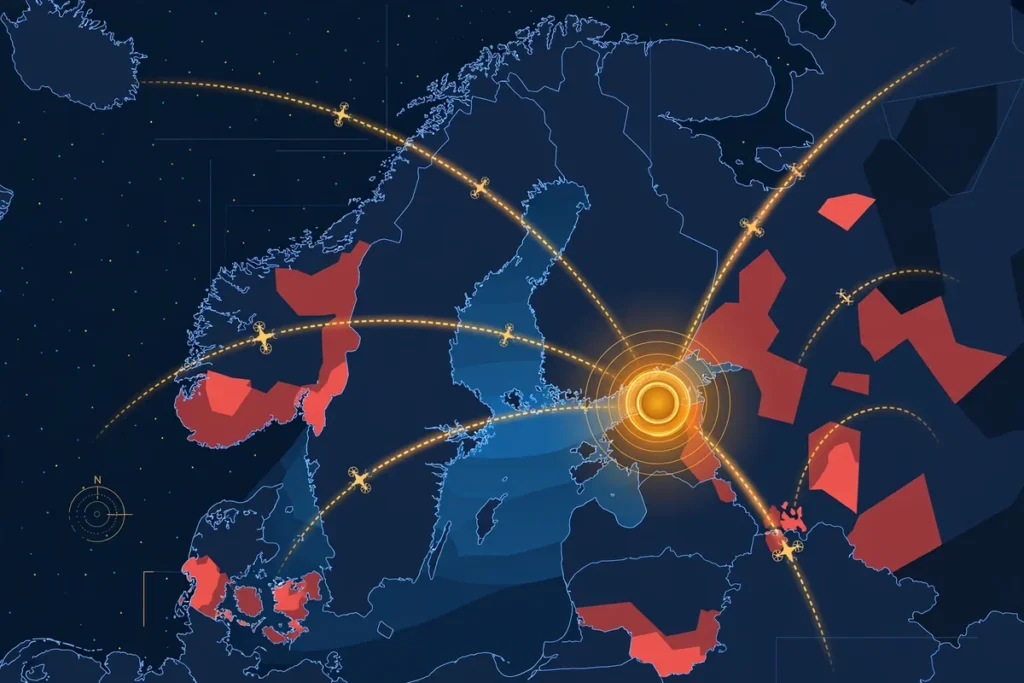
The damage was not limited to energy sites. Russia’s e-commerce giant Ozon said fire broke out at its logistics hub in St. Petersburg and staff were evacuated; the internet company VK said drones attacked its data center in the broader Leningrad region, though it said services stayed available, Anadolu reported. Leningrad regional governor Alexander Drozdenko said about 20,000 people were without electricity after the raid and that 12 apartment buildings and two private homes were damaged.
St. Petersburg’s main airport, one of Russia’s busiest, restricted operations “for safety reasons” during the attack, Beglov said. Russia’s defense ministry claimed its air defenses neutralized 1,015 Ukrainian drones overnight across 15 Russian regions, annexed Crimea and the Black Sea – a figure Moscow reported that no independent source has verified. The claim should be read alongside Kyiv’s own strike announcement rather than taken as a confirmed tally.
By the numbers: what is confirmed and what is claimed
| Metric | Figure | Source |
|---|---|---|
| Ukrainian drones launched overnight | 1,000+ | Al Jazeera, Associated Press (confirmed across outlets) |
| Killed in St. Petersburg | 1 | Gov. Alexander Beglov (via Al Jazeera, Anadolu) |
| Injured in St. Petersburg | 5 | Gov. Alexander Beglov (via Al Jazeera, AP) |
| Residents without power | ~20,000 | Leningrad Gov. Drozdenko (via Anadolu, Al Jazeera) |
| Residential buildings damaged | 12 apartment blocks + 2 homes | Anadolu (via Gov. Beglov) |
| Russian strikes on Ukraine energy sites in past week | 76 | President Zelenskyy on X (via Al Jazeera, Anadolu) |
| Drones “neutralized” (Russian claim) | 1,015 | Russian Defense Ministry (single official claim, unverified) |
| Brent crude on Sunday | ~$109 | Market trackers (single report, unconfirmed at press time) |
Caveat: overnight drone totals come from rival official claims. Independent verification of the exact figures remains difficult during active hostilities.
From the “energy ceasefire” to burning terminals: a one-week timeline
- October 9, 2026: US and Ukrainian negotiating teams meet in Miami; Zelenskyy later discusses the results with US envoys Steve Witkoff and Jared Kushner.
- October 11, 2026: Trump announces an “energy ceasefire” between Russia and Ukraine, offering no details on terms or enforcement. Days later, Zelenskyy tells the Financial Times he is “done” with the arrangement after holding Ukrainian strikes while Moscow kept hitting Ukraine’s grid.
- October 16, 2026: Trump signs an executive order invoking waiver authority under the Lindsey Graham sanctions act, preventing new sanctions measures against Moscow from taking effect.
- October 17, 2026: Russia launches what Zelenskyy calls one of its largest attacks on Ukraine’s energy infrastructure; regional authorities report seven people killed and around 90 injured over the day, per the Kyiv Independent.
- October 18, 2026 (day): Trump tells reporters Ukraine’s refinery strikes must stop; in a social media post he says Zelenskyy “doesn’t want to end this war” and defends the sanctions hold.
- October 18-19, 2026 (overnight): Ukraine launches the 1,000-plus-drone barrage; fires erupt at the St. Petersburg oil terminal and Ruchi depot.
- October 19, 2026: Zelenskyy appears on NBC’s Meet the Press, warning that waiving sanctions would strengthen Putin’s war effort and saying US-Ukraine intelligence sharing has resumed.
Why did Trump lash out at Zelenskyy?
The weekend’s sharpest political development was not the drone raid itself but the open split it exposed between Washington and Kyiv. The Associated Press reported that Trump criticized Kyiv’s attacks on Russian oil infrastructure during the conflict, claiming Zelenskyy “doesn’t want to end this war,” and said he held off on new sanctions because he did not want to do anything that would “foolishly” drive Russia away from the bargaining table.

Trump’s Friday waiver order blocked measures under the Graham Act – the Lindsey O. Graham Sanctioning Russia and Iran Act of 2026 – that would have widened pressure on Russia’s oil and gas sector. He defended the move against bipartisan criticism that he was favoring Vladimir Putin’s interests, insisting: “I can sign it later, or any time that I want!”
Zelenskyy answered directly. Speaking on NBC’s Meet the Press on Sunday, he said waiving sanctions against Russia would strengthen Putin’s war effort and that if Trump sided with Moscow it would be a “historic mistake” for Washington – while adding that he still views Trump as an ally. The Ukrainian leader also revealed that US-Ukraine intelligence sharing had resumed after being “blocked for some period of time,” a significant admission about the recent state of the partnership.
The contrast in the two leaders’ positions is the story’s real center of gravity: Trump sees restraint toward Russia as diplomacy; Zelenskyy sees the same restraint, in Zelenskyy’s words, as a signal that “financial rewards for Putin… only encourage him to keep attacking.”
What the St. Petersburg raid means for US and European readers
The energy dimension is why this raid matters beyond the battlefield. The Petersburg Oil Terminal is a major refined-products hub on the Baltic, and fires there feed directly into the refinery-driven fuel crunch that has already pushed US diesel above $6 a gallon. With Brent trading near $109 on Sunday, per market trackers, any sustained disruption to Russian refined-products exports risks keeping diesel and heating-oil prices elevated on both sides of the Atlantic.
For European readers, the timing is uncomfortable. Russia’s campaign against Ukraine’s grid ahead of winter – the “energy ceasefire” shattered weeks ago – has already left tens of thousands of Ukrainian families without power; Zelenskyy said energy facilities in four Ukrainian regions were struck overnight, in what he called an attempt to “cause a blackout.” If Moscow continues to lose refinery capacity to drone strikes while it keeps hammering Ukraine’s power grid, winter energy security becomes a two-front problem for European policymakers.
There is also a NATO dimension. The jet-powered drone arms race has repeatedly pushed debris and misidentified aircraft toward alliance airspace, and 1,000-drone nights raise the alert tempo for air defenses from Poland to the Baltics. For US readers, the stakes are political: the Graham Act fight – and whether Congress reasserts sanctions pressure – will shape how much leverage Washington keeps over Moscow this winter. Europe has its own track: the EU’s sanctions package adopted on October 12 keeps its separate pressure lane open (see the full breakdown).
Where Moscow and Kyiv’s accounts diverge
As with every mass-strike night, the two sides’ official accounts disagree – and the truth likely sits in the gaps. Russia’s defense ministry claims it neutralized 1,015 drones; it separately announced overnight strikes on Ukrainian logistics centers, ports and a cargo vessel east of Odesa, which it alleged carried military and dual-use goods. Moscow Mayor Sergey Sobyanin said 512 drones had been headed toward the Moscow region, most destroyed at a distance from the capital.
Kyiv’s version is the mirror image. Zelenskyy said that in the past week alone Russia attacked Ukraine with almost 2,700 attack drones, 1,700 aerial bombs and 66 missiles, most of them ballistic, with energy facilities the main targets. Ukraine’s air force said it shot down or suppressed 152 Russian drones during the overnight attack.
What investigators have confirmed: fires at St. Petersburg’s oil sites, casualties and power outages in the Leningrad region, flight restrictions at the airport, and Russian strikes on Ukrainian energy facilities. What remains unverified: the exact drone counts on both sides, the precise extent of the damage to the oil terminal, and whether the Moscow-approach figures reflect real penetration or air-defense inflation. This post will be updated as verified assessments arrive.
What to watch next in the drone-and-diplomacy standoff
Three questions now decide the direction of this story. First, whether Ukraine sustains the deep-strike tempo: the October 18-19 wave was markedly larger than the October 18 St. Petersburg attack covered earlier, and a repeat would test both Russian air defenses and Trump’s patience. Second, whether the US-Ukraine diplomatic channel holds: Zelenskyy’s calls with envoys Witkoff and Kushner suggest back-channel diplomacy continues despite the public clash – a meeting could come soon.
Third, the sanctions question. Trump described the waiver as reversible – “I can sign it later, or any time that I want!” – but the Graham Act measures were due to bite this weekend, and the fight over them will now play out in Congress alongside Europe’s separate sanctions track. Track the developing story on our conflict zones hub for daily updates.
Frequently asked questions
Why did Trump criticize Zelenskyy over the St. Petersburg strikes?
Trump said Ukraine’s attacks on Russian oil infrastructure undermine diplomacy, claiming Zelenskyy “doesn’t want to end this war.” He had announced an “energy ceasefire” on October 11 and argues that hitting energy sites while he is trying to negotiate with Moscow is, in his words, a “disgrace.”
What is the Graham Act and why did Trump waive the sanctions?
The Lindsey O. Graham Sanctioning Russia and Iran Act of 2026 is a congressional sanctions package targeting Russia’s oil and gas sector. Trump signed an executive order on October 16 invoking the act’s presidential waiver authority, certified as in the national interest, to prevent the measures from taking effect. He said new sanctions would “foolishly” drive Moscow away from the bargaining table; Zelenskyy says waiving them strengthens Putin’s war effort.
Did Trump’s October 11 “energy ceasefire” ever take effect?
No functioning ceasefire emerged. Trump announced the arrangement without published terms, and Zelenskyy said he was “done” with it within days after Moscow continued striking Ukraine’s grid. Zelenskyy says Russia hit Ukrainian energy, oil and gas sites 76 times in the week after the announcement.
How did oil markets react to the 1,000-drone raid?
Brent crude traded near $109 on Sunday, close to its highest close since May, according to market trackers – though the figure is a single report and unconfirmed at press time. The raid hit a major Baltic refined-products terminal, and any extended outage there would feed into already tight diesel markets.
What happened to flights at St. Petersburg airport?
The city’s main airport, one of Russia’s busiest, restricted operations “for safety reasons” during the overnight drone attack, according to regional governor Alexander Beglov. Flight restrictions during major drone raids have become routine in Russian airspace.
Sources
- Al Jazeera: Ukraine launches over 1,000 drones at Russia, setting oil facilities ablaze
- Anadolu Agency: Russia, Ukraine exchange overnight strikes, killing 3 and injuring 21
- Associated Press (via ETV Bharat): Ukraine launches over 1,000 drones at Russia as spat between Trump and Zelenskyy continues
- Barron’s: Stock futures rise ahead of another busy earnings week (oil futures and Graham Act sanctions coverage)

Discussion 0
Share analysis, corrections, or context. Be civil — comments are moderated.