
WarBrief Live | October 14, 2026 | Breaking Analysis
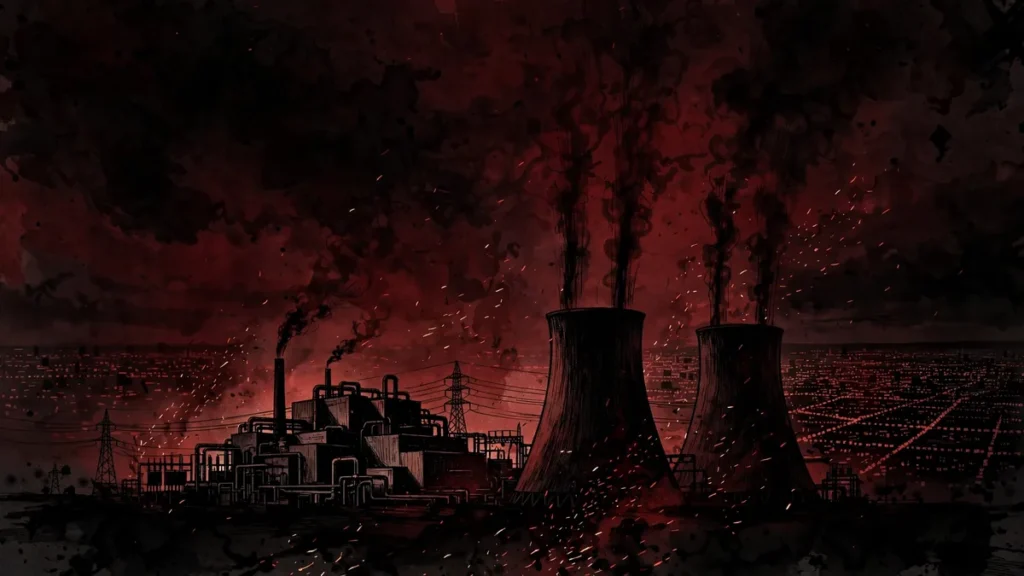
Early on Wednesday, October 14, 2026, Russia launched one of the largest assaults of its war on Ukraine’s energy infrastructure, firing 39 ballistic missiles and more than 120 attack drones at Kyiv, the Kyiv region, and Kharkiv. More than 600,000 people were left without electricity as dozens of power facilities burned, according to Ukrainian officials. The barrage came just three days after U.S. President Donald Trump announced an “energy ceasefire” that he said both sides had agreed to — an arrangement neither Moscow nor Kyiv has publicly confirmed.
Key Takeaways
- Russia fired 39 ballistic missiles and 120+ attack drones at Ukrainian energy and critical infrastructure overnight, President Volodymyr Zelensky said — the largest such wave since Trump announced an “energy ceasefire” on October 11.
- At least 600,000 people lost power, three were killed and 21 injured in Kyiv, and all three of the capital’s combined heat and power plants were hit, Ukrainian officials reported.
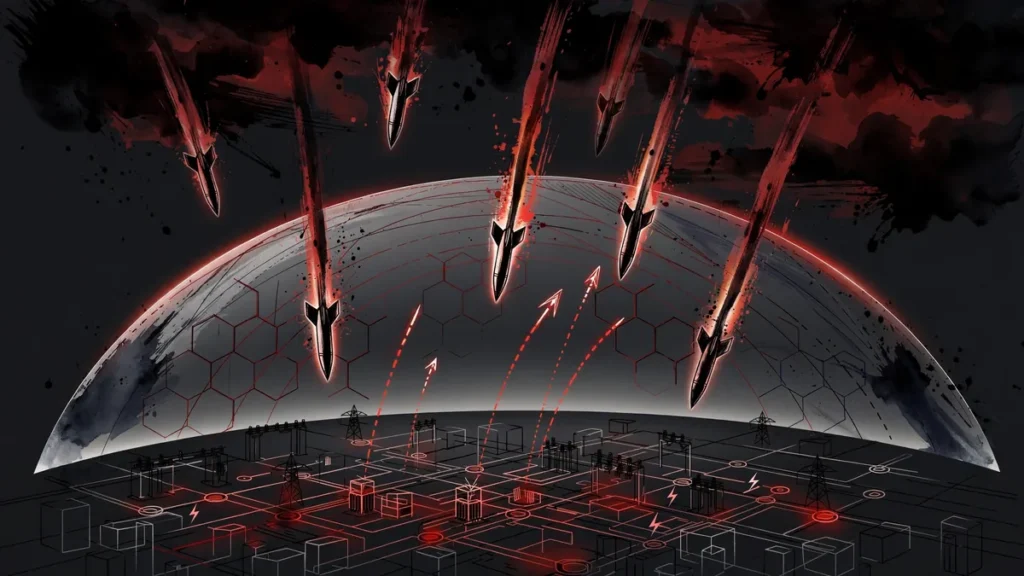
- Ukraine intercepted just 4 of the 39 missiles, exposing a growing air-defense gap against fast-moving ballistic weapons.
- Zelensky called the strike “ostentatious disrespect” toward Trump’s peace effort and urged Washington to impose new sanctions and send more Patriot interceptor missiles.
What happened in Russia’s October 14, 2026 strikes on Ukraine?
The hours-long attack began overnight on Tuesday and ran into the early hours of Wednesday, October 14. According to Zelensky’s statement, “the Russians used 39 ballistic missiles and more than 120 attack drones and loitering munitions against our energy and critical infrastructure in Kyiv, the Kyiv region, and Kharkiv.” CNN journalists in the capital reported hearing multiple explosions through the night.
The main targets were the facilities that keep Kyiv running. Prime Minister Sergii Koretskyi said all three of the capital’s city thermal power plants (CHPs) were attacked, along with critical energy facilities in the Kyiv region that supply the capital and central Ukraine. One of the main targets was the CHPP-4 combined heat and power plant, a major facility serving Kyiv, Ukrainian media reported. Hromadske cited the State Emergency Service’s account of the damage across the capital’s districts.
The attack was not confined to the power grid. Koretskyi said Russian forces also struck railway infrastructure in five regions — Kharkiv, Kyiv, Vinnytsia, Khmelnytskyi, and Ternopil. Ukraine’s state railway operator said significant material damage was recorded at the facilities, though early evacuation of workers meant no injuries there.
The human cost fell hardest on Kyiv. Ukraine’s State Emergency Service (DSNS) said two people were killed and 21 injured when a missile struck a nine-story residential building in the capital’s Desnianskyi district, where firefighters extinguished a large blaze and evacuated 16 residents. Another person was killed and one injured when a nonresidential building was hit in the Holosiivskyi district. Fires were reported in several other parts of the capital, and Mayor Vitali Klitschko said emergency power outages were imposed across several districts. Reuters reported a total of three killed in Kyiv.
Russia’s defense ministry confirmed the scale of the operation from its own side, saying it had struck four power plants in and around Kyiv and two in Kharkiv, among other targets. It separately claimed to have downed 902 Ukrainian drones overnight — a figure carried by Russian state media that has not been independently verified.
Background and timeline
The October 14 barrage did not come out of nowhere. It is the latest and largest escalation in a week of strikes that have shadowed Trump’s ceasefire diplomacy:
- October 11, 2026: Trump announced that Ukraine and Russia had agreed to an “energy ceasefire,” effective immediately, adding a warning to both sides: “Do not break it!” Neither Moscow nor Kyiv publicly confirmed the agreement.
- October 12, 2026: Zelensky said Russia had struck at least six Ukrainian energy facilities since the announcement — including a power plant in Kharkiv, a gas-production facility, and a civilian petrol station — injuring 33 people. Trump insisted on Monday that the ceasefire held. “Well, they agreed,” he told reporters. “Because I said, ‘You agree.’ That’s why they agreed, because I said they agree.” Kremlin spokesman Dmitry Peskov declined to confirm any agreement, saying only that “contacts are ongoing.”
- October 13, 2026: A deadly Russian ballistic missile attack hit a major power plant in Kyiv and damaged a residential building. Hours later, Zelensky publicly warned that his government had received “no early warning from our partners” before the strike, saying Ukraine’s air defenses had detected the missiles only as they were “virtually on approach to Kyiv.” Read our earlier coverage of this week’s strikes and Trump’s energy ceasefire.
- October 14, 2026: Overnight, Russia launched the 39-missile, 120-drone barrage on Kyiv, the Kyiv region, and Kharkiv — the biggest single wave against the grid since the ceasefire announcement.
The energy war has a longer fuse. Russia stepped up systematic strikes on Ukrainian cities and energy facilities through the autumn ahead of winter, part of what analysts describe as a “weaponise winter” strategy aimed at collapsing power, heat, and water in major cities. On the other side, Ukraine has increasingly attacked Russian oil refineries and logistics hubs deep inside Russia — including a major strike on the Omsk refinery — which Trump has partly blamed for high U.S. diesel prices. Trump temporarily lifted sanctions on Russian diesel last week in a bid to lower fuel costs ahead of November’s midterm elections, a move Zelensky criticized as a reversal of years of Western policy. See our Conflict Zones hub for continuing coverage of the war.
By the numbers: the overnight barrage
| Metric | Figure | Source |
|---|---|---|
| Ballistic missiles launched | 39 | Zelensky statement (Reuters, CNN, ANI) |
| Attack drones / loitering munitions | 120+ | Zelensky statement (Reuters, CNN, ANI) |
| People without power | 600,000+ | Zelensky (Reuters, BBC, ANI) |
| Power-system facilities damaged | 26 (Zelensky) / 30 (Reuters) | Zelensky / Reuters |
| Oil and gas facilities damaged | 4 | Zelensky |
| Killed in Kyiv | 3 | Ukraine State Emergency Service (Reuters) |
| Injured | 21–22 | State Emergency Service (Reuters, Hromadske) |
| Missiles intercepted by Ukraine | 4 of 39 | Ukrainian officials (Reuters) |
| Railway regions targeted | 5 | PM Sergii Koretskyi |
| Drones “downed” per Moscow | 902 | Russian defense ministry (Interfax) — unverified claim |
Caveat: figures attributed to Ukrainian officials are CONFIRMED where reported by two or more reputable outlets; casualty and damage tallies may change as rescue and repair work continues. The 902-drone figure is a Russian claim and is UNVERIFIED.
Why is Russia hitting Ukraine’s power grid before winter?
Analysts at the Institute for the Study of War and other think tanks have warned for weeks that Russia may be running a systematic winter campaign: intensify long-range attacks on cities and energy facilities before Ukraine can harden its grid, increase pressure ahead of any serious peace talks, and undermine civilian morale. The New York Times has reported on what Ukrainian officials describe as an intercepted Russian plan to knock out up to 15 gigawatts of generating capacity — roughly Ukraine’s entire current output — with Kyiv, Kharkiv, and Odesa as top targets. Ukrainian officials call this the “weaponisation of winter”: deny civilians power, heat, and running water until public resistance wears down.
Timing also looks like a signal. The October 14 barrage landed three days after Trump’s ceasefire announcement and one week after the U.S. temporarily eased sanctions on Russian diesel. Zelensky has already argued that Moscow answers American concessions with escalation: on October 12 he described strikes on Kharkiv’s energy sites as “Putin’s answer to President Trump,” and earlier he called Russian strikes Moscow’s “thanks” for the diesel deal.
A third factor is air-defense math. Ukraine reported downing just 4 of 39 ballistic missiles — about 10 percent — which Reuters linked to Kyiv’s weakened defenses against fast-moving ballistic missiles and jet-powered drones amid a shortage of interceptor weapons. Unconfirmed Ukrainian monitoring-channel reports also claimed a record number of hypersonic Zircon missiles were used overnight, but Ukraine’s Air Force has not verified that claim.
Is Trump’s energy ceasefire dead?
On paper, the ceasefire barely existed. Trump announced it on Sunday, October 11, saying both sides had agreed “not to hit each other’s energy systems” and posting “Do not break it!” But neither Moscow nor Kyiv confirmed the arrangement. Peskov would say only that “contacts are ongoing,” and Zelensky — while saying Ukraine had refrained from striking Russian energy sites since the announcement and was ready to honor it as “a good first step” — said he was “not sure that [Russian President Vladimir] Putin is ready.”
The events of October 12–14 have answered that question. Monday brought at least six strikes on Ukrainian energy facilities. Tuesday brought the deadly Kyiv power-plant missile attack — followed by Zelensky’s extraordinary complaint that Ukraine’s partners gave no early warning before it. Wednesday brought the largest barrage yet, which Zelensky framed as a direct message to Washington: “Russia has never before shown such ostentatious disrespect toward the United States,” he wrote. “Russia does not consider the American President’s statements strong.”
Zelensky paired the accusation with two concrete demands: strong new sanctions on Moscow — pointing to legislation sponsored by Senator Lindsey Graham that was recently signed into law as a legal framework for them — and additional interceptor missiles for Ukraine’s Patriot air-defense batteries, “first and foremost,” in his words.
Different perspectives
Ukraine’s view: the strikes are deliberate escalation, a rejection of Trump’s peace initiative, and proof that Moscow only respects force. Zelensky’s ask is explicit: sanctions pressure plus air-defense hardware.
Russia’s view: the defense ministry framed the operation as strikes on power infrastructure supporting Ukraine’s military effort, while state media touted 902 Ukrainian drones allegedly downed overnight. Russian Foreign Minister Sergey Lavrov has dismissed any pause in the campaign, saying of Zelensky that “I do not think he deserves a respite.”
Washington’s view: on Monday, Trump maintained the ceasefire was intact and suggested violations occurred “on both sides.” The White House had not publicly responded to the October 14 barrage at the time of writing.
Europe’s view: Kyiv’s allies face a fast-closing window before winter. The strikes add urgency to air-defense deliveries and to EU discussions on protecting critical infrastructure — and they land just as Europe prepares its own winter energy planning.
What this means for US/UK/EU readers
Energy prices: the attacks cut directly at the context of Trump’s diesel deal. The U.S. president temporarily lifted sanctions on Russian diesel to bring down politically sensitive fuel prices before the November midterms; Russia’s diesel exports and the Strait of Hormuz tensions are both feeding pump prices. More grid attacks — and any Ukrainian retaliation against Russian refineries — add volatility to diesel and gas markets. (Educational context only — not financial advice.)
Security policy: Zelensky’s demand for more Patriot interceptors puts air-defense supply chains squarely on the NATO agenda. The 4-of-39 interception figure will sharpen debates in Washington and European capitals about weapons stocks and production.
Travel and daily life: there is no direct travel impact for most readers, but 600,000 Ukrainians now face emergency blackouts as temperatures fall — and the World Health Organization has warned that war-disrupted infrastructure is compounding humanitarian pressure across the region. Watch for updates on power restoration in Kyiv and Kharkiv.
What to watch next
Four things will decide what this barrage means: (1) how fast Ukrainian engineers restore power — Zelensky warned outages could spread further; (2) whether Trump answers Zelensky’s call for new sanctions and Patriot interceptors, and whether the diesel deal survives the political fallout; (3) whether Ukraine’s partners fill the early-warning gap Zelensky exposed on October 13; and (4) whether Russia escalates further as winter deepens, or treats this barrage as its statement of the week. WarBrief Live will update this analysis as verified information arrives.
Frequently asked questions
What happened in Russia’s October 14, 2026 strikes on Ukraine?
Overnight into Wednesday, October 14, Russia launched 39 ballistic missiles and more than 120 attack drones at energy and critical infrastructure in Kyiv, the Kyiv region, and Kharkiv, according to President Volodymyr Zelensky. The strikes left more than 600,000 people without power, killed three people in Kyiv, and damaged dozens of energy facilities.
How many people lost power in the October 14 strikes?
At least 600,000 people were left without electricity, according to Zelensky, who warned outages could become even more widespread as engineers assess significant damage to 26 power-system facilities and four oil and gas facilities. That figure has been reported by Reuters, the BBC, and other outlets.
Did Ukraine’s air defenses stop the missiles?
Ukraine reported downing just 4 of the 39 ballistic missiles — roughly a 10 percent interception rate. Reuters linked the low rate to Kyiv’s weakened air defenses against fast-moving ballistic missiles and jet-powered drones amid a shortage of interceptor weapons. Russia separately claimed to have downed 902 Ukrainian drones overnight, a claim that is unverified.
What is Trump’s energy ceasefire, and is it still in place?
On October 11, 2026, Donald Trump announced that Ukraine and Russia had agreed to stop striking each other’s energy infrastructure, effective immediately. Neither Moscow nor Kyiv publicly confirmed the agreement, and Russia struck Ukrainian energy sites on October 12, October 13, and again in the large October 14 barrage. In practice, analysts consider the ceasefire non-binding and effectively dead.
Why does Russia keep attacking Ukraine’s energy grid?
Ukrainian officials and analysts describe a deliberate “weaponise winter” strategy: destroying power, heat, and water infrastructure to wear down civilian resistance and pressure Ukraine ahead of winter and any peace talks. The Institute for the Study of War has warned Russia may intensify such attacks through the cold months, and Zelensky has framed the timing — days after Trump’s ceasefire announcement — as a deliberate signal to Washington.
Sources
- CNN: Russia batters Ukraine’s energy facilities hours after Zelensky appeals for early warnings from partners
- Reuters (via ThePrint): Russian strikes kill three, damage dozens of power facilities
- ANI (via The Tribune): Russia strikes Ukraine’s energy infrastructure despite “energy ceasefire”; Zelenskyy says Moscow ignores Trump’s statements


Discussion 0
Share analysis, corrections, or context. Be civil — comments are moderated.