
WarBrief Live | October 23, 2026 | Global Security
On October 22, 2026, United States President Donald Trump told reporters that Elon Musk had restored Ukraine’s access to Starshield, the military-grade satellite communications service operated by SpaceX. “I guess the bottom line, he put it back,” Trump said, referring to Musk. The same day, Ukrainian President Volodymyr Zelensky, speaking alongside Finland’s prime minister, said the speed of the military’s satellite internet connection had not yet returned to normal — suggesting the restoration was still incomplete.
What is confirmed: the two presidents’ public statements, Musk’s October 14 claim that Starshield limits are “decided by the US military and ultimately POTUS,” and the denials issued by Defense Secretary Pete Hegseth and Secretary of State Marco Rubio. What is not confirmed: who actually ordered the restrictions in the first place. The account that Trump personally called Musk rests on unnamed US officials quoted by the Wall Street Journal, and Trump declined to confirm the call. This analysis separates what investigators and reporters have confirmed from what remains unverified.
Key Takeaways
- Trump said on October 22 that Musk had restored Ukraine’s Starshield service, but declined to confirm a reported phone call with Musk.
- Zelensky countered the same day that speeds on Ukraine’s military satellite systems had not been restored, and said he hopes to discuss it with Marco Rubio.
- The Wall Street Journal reported, citing unnamed US officials, that Trump called Musk on October 21, frustrated by a reported ~100 mph (160 km/h) speed cap — and that service improved afterward but not to full functionality.
- Who ordered the restrictions is still unconfirmed: Musk pointed at the Pentagon and the president; Hegseth and Trump denied it; Rubio said the terms are a private SpaceX contract matter.
What did Trump actually say about Starshield?
Trump made his remarks on Thursday, October 22, when reporters asked him about the Wall Street Journal’s report that he had called Musk and asked him to lift restrictions on Ukraine’s use of the system. He refused to be drawn on whether the conversation happened at all:
“I don’t want to comment on it, you know, whether I called or whether somebody else called – doesn’t make any difference, I guess. The bottom line, he put it back.” — US President Donald Trump, October 22, 2026
That quote was carried verbatim by the Kyiv Post, Al Jazeera, and an AFP dispatch published by the Malay Mail. Note the precision gap: Trump asserted the outcome — the service is back — while explicitly declining to confirm the process. That leaves open whether the improvement came from a presidential request, a Pentagon instruction, a SpaceX decision, or some other chain of events.
What is Zelensky’s side of the dispute?
Zelensky’s position is narrower and operational: he is not disputing Trump’s words so much as reporting what Ukrainian units experience on the ground. Speaking earlier on October 22 alongside Finland’s prime minister, he said the speed of the military’s satellite internet connection had not yet been restored, according to the Times of India, and added that he hoped to discuss the issue with Rubio in the coming days.
A person familiar with the Starlink issue told reporters the problem was continuing, with the same curbs largely remaining in place, and some Ukrainian drone units reported speeds of only around 200 km/h — otherwise unchanged conditions. In the strongest version of Kyiv’s claim, carried by the WSJ’s reporting, Ukrainian officials said the network performed better on Thursday after the reported Trump–Musk conversation, but cautioned that it had not returned to full functionality.
Zelensky has also made a broader accusation about attribution. On NBC’s Meet the Press on October 18, he said he believed the US government was behind the disruption, claiming SpaceX imposed the restrictions in response to a “message from [the] American government.” He added that the consequences for Ukraine’s ability to intercept Russian weapons had been “very painful and unpleasant.” Treasury Secretary Scott Bessent, appearing on the same program, called the allegation reckless and said Trump and Rubio had “categorically” denied that anyone in the administration ordered restrictions.
How did Ukraine’s Starshield link get capped?
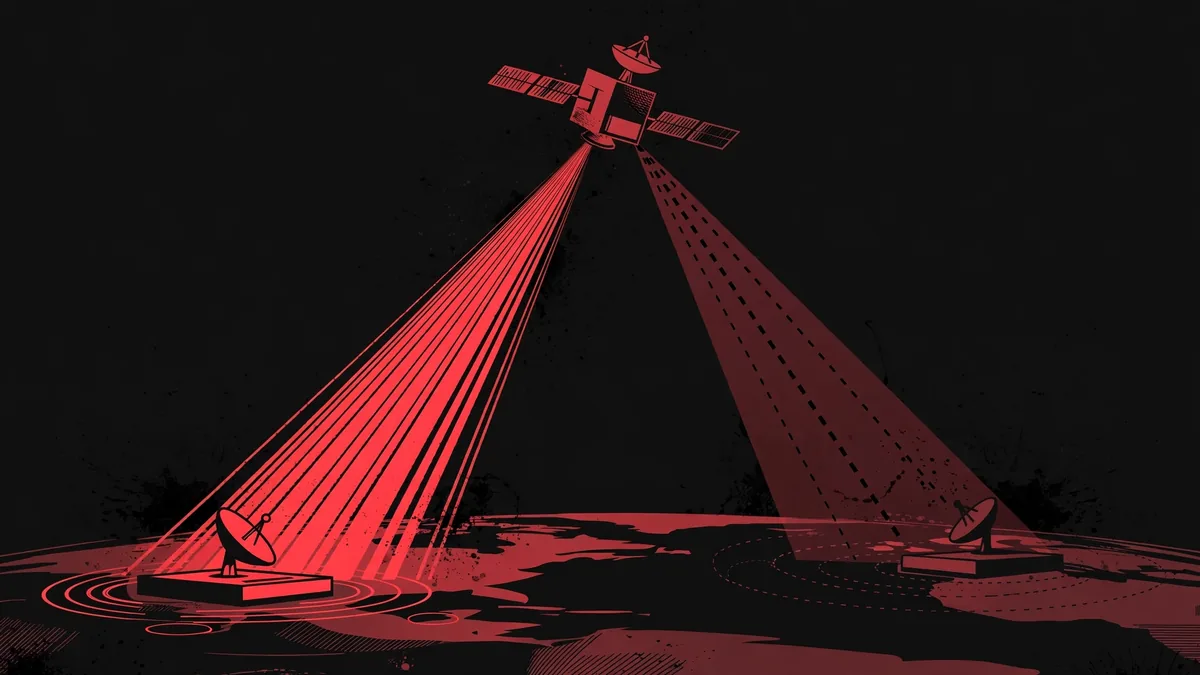
The controversy began on October 13–14, when Ukrainian officials reported sudden restrictions on the Starshield service that left military units scrambling. Unlike ordinary Starlink terminals, Starshield supports specialized military communications and can be used aboard high-speed unmanned aircraft, so speed caps quickly translated into dropped connectivity on fast-moving platforms — disrupting missions and limiting Ukraine’s ability to coordinate strikes and air-defense operations.
- October 14: Musk posts on social media that Starshield is “owned and controlled by the US government” and that “any limits on speed or usage are decided by the US military and ultimately POTUS,” using the acronym for president of the United States (Al Jazeera).
- October 16: Trump denies ordering any reduction: “It wasn’t me. And I don’t think it was Elon,” adding that “what I understand is, (it’s) the same as it’s always been” (AFP via Malay Mail). Zelensky says the service is being restored and that partners told him the administration sent a message to SpaceX.
- October 18: Zelensky tells NBC he believes Washington is behind the limits; Bessent denies it on the same program.
- October 21: Hegseth says the Pentagon did not direct any changes to Starshield; Rubio says speed and access terms are “governed by a private commercial contract” and up to SpaceX (AFP).
- October 22: The Wall Street Journal, citing US officials, reports Trump called Musk and expressed frustration that the service remained capped at approximately 100 miles per hour (160 km/h); Trump then tells reporters “the bottom line, he put it back.” Zelensky says speeds are still not restored.
This timeline is the same dispute WarBrief tracked in its October 16 explainer on the Starshield speed limit; the new development is the restoration dispute itself — competing claims about whether the service is actually back.
By the numbers: the Starshield dispute
Only a handful of hard figures exist in this story, and almost all of them come with attribution caveats.
| Metric | Figure | Source |
|---|---|---|
| Reported speed cap on Ukrainian terminals | ~100 mph (160 km/h) | Wall Street Journal, via unnamed US officials (REPORTED) |
| Speeds reported by some Ukrainian drone units on Oct 22 | ~200 km/h | Unnamed source via press pool (REPORTED) |
| Onset of restrictions | October 13–14 | Ukrainian officials via AFP (CONFIRMED) |
| Musk’s “ultimately POTUS” post | October 14 | Al Jazeera (CONFIRMED) |
| Trump’s “he put it back” statement | October 22 | Kyiv Post, AFP, Al Jazeera (CONFIRMED) |
| Zelensky’s “speeds not restored” statement | October 22 | Times of India (CONFIRMED) |
| Official confirmations of who ordered the limits | 0 | WarBrief count of public statements (CONFIRMED) |
Caveat: the speed-cap figure and the claim that service improved after the reported call come from anonymous sourcing and have not been officially confirmed by SpaceX, the Pentagon, or the White House. Treat figures labeled REPORTED as attributed claims, not verified facts.
Why the Starshield fight matters for the war
Starshield is not a minor utility. Ukraine uses the military-grade system for battlefield coordination, mid-range strikes on Russian-occupied territory, and its interceptor drones — the aircraft sent up to kill incoming Russian attack drones. It also uses the parallel civilian Starlink system. When connectivity degrades on fast-moving platforms, drone missions fail and air-defense coverage thins; the drone-heavy phase of Ukraine’s strike campaign makes the timing particularly sensitive.
There is also a structural problem the dispute exposes. Ukraine’s most critical wartime communications link is owned by a private company, operated under Pentagon contract, and switched at the discretion of a billionaire who publicly disagrees with parts of the war policy — while Washington and Kyiv argue over who holds the kill switch. Intelligence coverage of the war keeps returning to this single point of failure: no other Western-supplied system gives Ukraine comparable low-latency coverage over the battlefield.
The political backdrop makes the dispute worse. Relations between Washington and Kyiv have been tense: Trump has called for Zelensky to be replaced after the Ukrainian leader criticized a US deal allowing more Russian diesel into global markets (AFP). The same week, Kyiv accused Washington of delaying interceptor missiles European allies had already paid for. Each unresolved episode — tracked across the conflict zones desk — hardens the suspicion in Kyiv that military support is being quietly throttled as political leverage.
What the Starshield dispute means for US/UK/EU readers
For Western readers, the dispute is a window into three things that directly touch their own security and wallets. First, aid dependency. If Ukraine’s battlefield communications can be capped without a public order anyone will own, European governments building their own support packages have to price in that uncertainty — and European taxpayers ultimately fund the alternatives, from additional interceptor missiles to sovereign satellite capacity. Second, energy markets. The backdrop to the spat is Trump’s criticism of Ukraine for striking Russian oil refineries and his push to allow more Russian diesel onto global markets — moves that feed directly into pump prices in the US and EU. Third, escalation risk. Degraded Ukrainian air defense means more Russian missiles and drones get through, which means more pressure on European borders, refugee flows, and the defense budgets of NATO states.

What to watch next in the Starshield dispute
Four things will resolve this story, roughly in order of likelihood. 1. The Rubio meeting. Zelensky said he hopes to discuss the issue with Secretary of State Marco Rubio — watch for any joint statement on service levels. 2. SpaceX confirmation. Any on-the-record SpaceX statement about terminal speeds for Ukraine would settle the “restored or not” question in a day. 3. The Pentagon line. Hegseth denied ordering changes, but the Defense Department has not explained what did cause them — a technical briefing would close the attribution gap. 4. Ukrainian operational reporting. If Ukraine’s long-range strike tempo and interceptor coverage recover in the coming weeks, the hardware question answers itself regardless of the rhetoric.
Frequently asked questions
Is Starshield the same as Starlink?
No. Starshield is the military-grade version of SpaceX’s satellite network, built for US government use — Musk himself has said it is “owned and controlled by the US government.” Ukraine also uses the parallel civilian Starlink system, but Starshield supports specialized military communications and can operate aboard high-speed unmanned aircraft.
Did Trump really call Elon Musk about Starshield?
That remains unverified. The Wall Street Journal reported, citing unnamed US officials, that Trump called Musk on October 21. Trump declined to confirm the call, saying only that “the bottom line, he put it back.” Treat the call as a reported claim, not a confirmed fact.
Why does Ukraine need Starshield so badly?
Ukraine relies on it for battlefield communications between units, coordination of drone operations, early warning during Russian missile attacks, and its interceptor drones that destroy incoming Russian attack drones. Speed restrictions caused terminals to lose connectivity aboard fast-moving platforms, directly degrading strike and air-defense missions.
Who controls Starshield access for Ukraine?
That is the unanswered question. Musk said limits are “decided by the US military and ultimately POTUS”; Trump said he did not order any limits and did not think Musk did; Hegseth said the Pentagon directed no changes; Rubio said the terms are governed by a private commercial contract and up to SpaceX. There are currently zero official confirmations of who ordered the restrictions.
Has Starshield been fully restored for Ukraine?
Trump says yes; Zelensky says speeds have not returned to normal; the Wall Street Journal’s sources say service improved after the reported Trump–Musk conversation but has not reached full functionality. Until an official statement or Ukrainian operational data confirms it, treat restoration as partially confirmed at best.
Sources
- Malay Mail (AFP): Trump says Musk has restored Ukraine’s access to Starshield military communications
- Kyiv Post: Trump Says Musk Restored Ukraine’s Starshield Service
- Al Jazeera: Trump says Musk restored Ukraine’s Starlink access amid Russia war
- Straits Times: Trump asks Musk to lift Ukraine Starlink restrictions, WSJ reports
- The Hindu: Trump claims Starshield is back in Ukraine
- Times of India: ‘He put it back’: Trump says Ukraine’s Starlink access restored, stays silent on Musk



Discussion 0
Share analysis, corrections, or context. Be civil — comments are moderated.