
WarBrief Live | October 22, 2026 | International Security
When the news says a country faces “sanctions” one day and a “blockade” the next, the two words can sound interchangeable. They are not. The naval blockade vs sanctions difference comes down to a single question: is anyone being shot at? Sanctions are economic pressure applied without armed force. A naval blockade is armed force applied at sea – and under international law, that distinction turns a diplomatic tool into an act of war.
The distinction is not academic in October 2026. Iran’s Revolutionary Guard Navy says three oil tankers struck its naval mines in the Strait of Hormuz within three days, the United States is reported to maintain a naval counter-blockade on Iranian oil exports, and one of the heaviest sanctions regimes in modern history runs in parallel. Reading those headlines correctly starts with knowing which tool is which.
Key Takeaways
- Sanctions are non-kinetic. Article 41 of the UN Charter authorizes “measures not involving the use of armed force”: trade interruptions, asset freezes, and severed diplomatic ties.
- An embargo is a type of sanction. It is a broad government ban on trade with a country or sector, enforced by customs and treasuries – not warships.
- A naval blockade is kinetic. Warships physically stop vessels from entering or leaving a coast. International law treats it as an act of war, and the San Remo Manual (paragraphs 93-104) requires it to be declared, effective, and impartially enforced.
- All three are in play around Iran. Western sanctions, a reported US naval counter-blockade of Iranian ports, and IRGC-claimed mine strikes in the Strait of Hormuz overlap – but the mine-strike claims are Iranian assertions without independent confirmation.
What is the difference between a naval blockade and sanctions?
The cleanest way to see the difference is as a legal ladder written into the United Nations Charter. Article 41 of the UN Charter gives the Security Council the power to decide “what measures not involving the use of armed force are to be employed” – including the complete or partial interruption of economic relations and of rail, sea, air, postal, telegraphic, radio, and other means of communication, plus the severance of diplomatic relations. That is the legal home of sanctions.
Article 42 is the next rung. If the Council considers Article 41 measures inadequate, “it may take such action by air, sea, or land forces as may be necessary to maintain or restore international peace and security” – and the article names “demonstrations, blockade, and other operations” explicitly. A blockade therefore sits on the armed-force side of the Charter’s dividing line; sanctions sit on the non-armed side.
In practice the enforcement machinery is entirely different. Sanctions are enforced by banks, customs agencies, courts, and treasury departments: accounts are frozen, transactions blocked, shipments seized at ports by inspectors with paperwork. A blockade is enforced by warships, aircraft, and mines: vessels are stopped, boarded, captured, or turned back by crews with weapons. Sanctions strangle money and goods through rules; a blockade strangles them through physical control of the sea.
| Dimension | Sanctions | Embargo | Naval blockade |
|---|---|---|---|
| Legal basis | UN Charter Article 41 (non-force measures) | Article 41; often also national law | Article 42 or law of armed conflict; San Remo Manual paras 93-104 |
| Use of armed force | None | None | Yes – warships, aircraft, mines |
| Enforced by | Banks, customs, courts, treasuries | Customs and treasury authorities | Naval forces |
| What it stops | Money, trade, technology flows | All or most trade with the target | Physical movement of vessels to or from a coast |
| Legal character | Coercive diplomacy | Coercive diplomacy, more severe | Act of war |
Is a naval blockade an act of war?
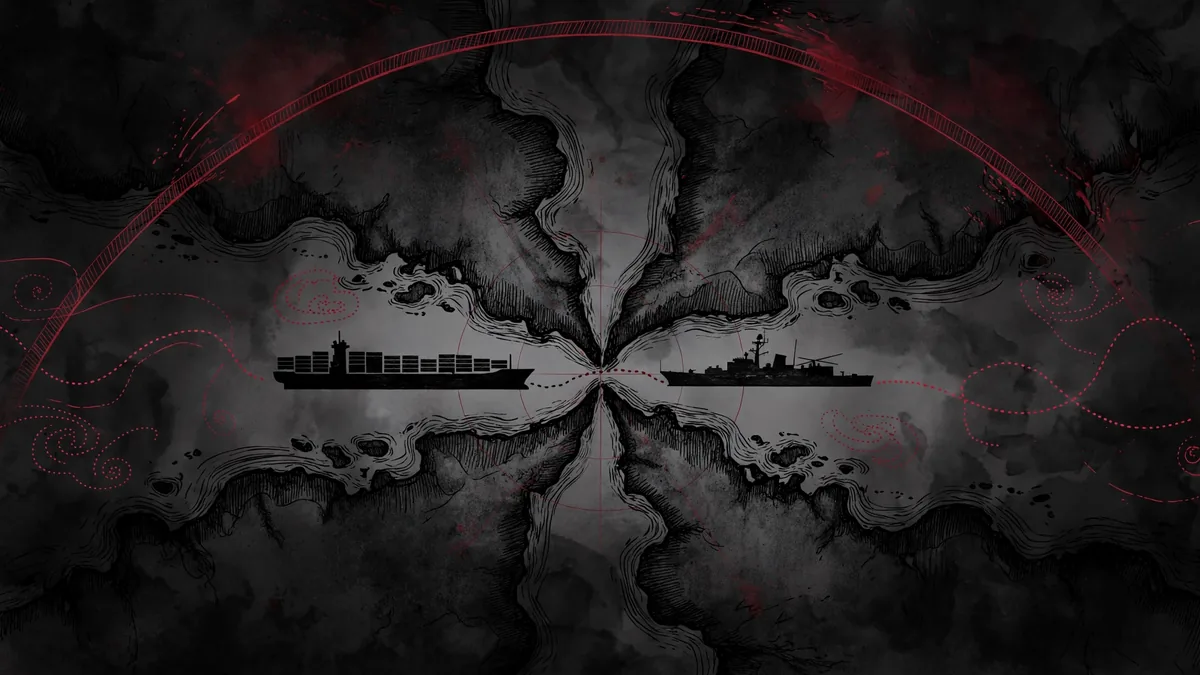
Yes. Under international law, a naval blockade is widely recognized as an act of war. Britannica defines a blockade as “an act of war whereby one party blocks entry to or departure from a defined part of an enemy’s territory, most often its coasts,” and notes that blockades are regulated by international law and custom, requiring advance warning to neutral states and impartial application. A British government memorandum prepared for the London Naval Conference of 1908-09 put it even more directly: a blockade is “an act of war carried out by the warships of a belligerent, detailed to prevent access to or departure from a defined part of the enemy’s coast.”
That is precisely why governments often avoid the word. When President John F. Kennedy ordered the US Navy to intercept Soviet ships bound for Cuba in 1962, he called the operation “a strict quarantine” rather than a blockade – softer language for an action that had the same physical shape. The Wall Street Journal notes that because blockades are recognized in international law as acts of war, “governments more often characterize their efforts to isolate an adversary as sanctions, embargoes or quarantines that suggest narrower goals.”
There is one narrow exception worth knowing. International law distinguishes a full blockade from a so-called “pacific blockade” – a coercive naval measure taken outside a state of war. Britannica records that a pacific blockade “is not strictly an operation of war and cannot rightly be enforced against neutrals.” In practice, modern crises blur this line constantly, which is why lawyers argue over labels while warships hold station.
What is an embargo, and where does it sit between the two?
An embargo is the middle rung of the ladder: harsher than ordinary sanctions, but still on the non-kinetic side. Think of sanctions as the broader category and an embargo as a type of sanction – a broad, often near-total prohibition of trade with a country, a region, or a sector. Targeted sanctions may freeze one oligarch’s assets or restrict one technology; an embargo typically shuts down all or most commerce.
The classic examples are the decades-long US embargo on Cuba, which restricted most trade and financial dealings, and UN arms embargoes that prohibit weapons sales to specific conflict zones. Enforcement stays firmly in the civilian realm: customs agencies seize illegal shipments, and treasury departments such as the US Treasury’s Office of Foreign Assets Control go after financial violations. No warships are required – though navies enter the picture at the blockade end of the spectrum, which is a step toward war.
The contrast with a blockade is therefore mechanical, not just verbal. An embargo is a legal barrier to trade – a ban enforced through inspections, fines, and prosecutions. A blockade is a physical barrier – warships and mines that stop vessels regardless of what the paperwork says. As one legal summary puts it, embargoes “are generally considered legal barriers to trade, not to be confused with blockades, which are often considered to be acts of war.”
Why do governments choose sanctions before blockades?
Governments almost always reach for sanctions first because the costs of a blockade are so much higher. Sanctions are reversible, can be imposed multilaterally through the Security Council, require no deployment of forces, and carry no risk of a naval clash. A blockade, by contrast, is an open act of coercion by armed force: it invites an armed response, demands a continuous naval presence to stay legally valid, and puts civilian shipping – and civilian lives – directly at risk.
The legal bar is deliberately high. Under the San Remo Manual on International Law Applicable to Armed Conflicts at Sea, the recognized restatement of naval warfare law, a blockade must be declared and notified to all belligerents and neutral states, specifying its commencement, duration, location, and extent. It must be effective – a “paper blockade” proclaimed without the force to enforce it has been illegal since the Declaration of Paris of 1856. It must be applied impartially to the vessels of all states, and it must not bar access to neutral ports and coasts. A blockade whose sole purpose is starving the civilian population, or whose expected civilian harm is excessive relative to the concrete military advantage, is prohibited.
That framework explains why blockades are rare and sanctions are routine. Declaring a blockade is a government publicly accepting the legal and military consequences of an act of war. Imposing sanctions is a government asking banks and customs officers to do the coercing instead.
How the Iran-Hormuz crisis shows all three tools at once
The 2026 Iran war has become a live demonstration of the full ladder. On the sanctions rung, Iran labors under one of the most comprehensive sanctions regimes in the world – oil export restrictions, financial blacklisting, and technology controls layered over decades. Our guide to how oil sanctions work explains the price caps, shadow fleets, and enforcement machinery in detail.
On the blockade rung, the Strait of Hormuz has seen both Iranian and American naval coercion. In October 2026, Iran’s Revolutionary Guard Navy said two oil tankers caught fire after striking naval mines while crossing the strait on October 17, Reuters reported, noting there was no independent confirmation of the reports. Two days later, the IRGC said a third tanker had struck a mine south of the strait, triggering an explosion and fire in its engine room, and warned that vessels switching off their navigation systems would face a “firm response” – the story we covered in Third Tanker Struck in Hormuz: Iran’s ‘Firm Response’ Doctrine and Two Supertankers Hit Mines in the Strait of Hormuz, Iran Says. Separately, reporting on October 19 stated that the United States had imposed a naval counter-blockade on Iranian oil exports in response to Tehran’s actions in the waterway. Analysts at Lloyd’s List Intelligence have described the resulting situation as a “double blockade.”
Read through the ladder, the picture is legible: sanctions squeeze Iran’s revenue through banks and insurers, the reported American counter-blockade squeezes it through warships at its ports, and Iran’s mine campaign attempts its own form of sea denial in reverse. Same strategic goal – economic strangulation – pursued from opposite ends of the legal spectrum.
| Metric | Figure | Source |
|---|---|---|
| Share of global oil transiting the Strait of Hormuz | About one-fifth | Free Malaysia Today, October 19, 2026 – CONFIRMED |
| Tankers Iran says hit mines, October 17 | 2 | Reuters, October 17, 2026 (IRGC claim; no independent confirmation) – REPORTED |
| Tanker Iran says hit mine, October 19 | 1 (third in three days) | IRNA, October 19, 2026 (IRGC claim) – REPORTED |
| Reported crude cargo per supertanker | About 2 million barrels | Iranian state media – REPORTED |
| San Remo Manual blockade provisions | Paragraphs 93-104 | ICRC – CONFIRMED |
| UN Charter: sanctions / armed force | Article 41 / Article 42 | United Nations – CONFIRMED |
Caveat: figures marked CONFIRMED are corroborated by multiple independent sources. Figures marked REPORTED rest on single-source claims – mostly from the IRGC and Iranian state media – and should be read as claims, not established facts.
What does the blockade-vs-sanctions distinction mean for US/UK/EU readers?
For readers in the United States, Britain, and Europe, the distinction shows up first at the fuel pump and in the shipping market. Sanctions on Iranian oil work slowly, through compliance departments and insurance contracts; blockades and mine campaigns work instantly, through physical risk to hulls. When tankers start hitting mines or being turned back by warships, war-risk insurers reprice the entire waterway overnight – a mechanism explained in our guide to how war risk insurance works – and those surcharges flow into diesel, jet fuel, and freight rates within weeks. Reuters has reported that disruptions around the strait have already boosted global energy prices and inflation.
The distinction also shapes what escalation looks like. New sanctions packages are announced in press releases and take months to bite; naval moves – a counter-blockade declared, a minefield laid, a tanker seized – can redraw the risk map in a single afternoon. Travelers should watch airspace and maritime advisories rather than sanctions lists for near-term disruption, while investors and businesses should treat sanctions designations as the slow-moving structural risk and naval incidents as the fast-moving shock risk. For the broader regional picture, see our conflict zones hub and sanctions hub.
Frequently asked questions
What is the difference between a blockade and sanctions?
Sanctions are non-kinetic economic and financial pressure – trade restrictions, asset freezes, and banking cutoffs authorized under UN Charter Article 41. A naval blockade is kinetic: warships physically preventing vessels from entering or leaving a coast. International law treats a blockade as an act of war; sanctions are an act of coercive diplomacy.
Is a naval blockade an act of war?
Yes. International law and custom recognize a naval blockade as an act of war – a British government memorandum for the 1908-09 London Naval Conference defined it as “an act of war carried out by the warships of a belligerent.” Under the San Remo Manual, a lawful blockade must be declared and notified, effective, impartially enforced, and must not target civilians. That is why leaders sometimes use euphemisms like “quarantine,” as President Kennedy did around Cuba in 1962.
What is the difference between an embargo and a blockade?
An embargo is a broad ban on trade with a country or sector – a type of sanction enforced by customs agencies and treasuries through inspections, fines, and prosecutions. A blockade is enforced by warships and mines that physically stop vessels. An embargo is a legal barrier to trade; a blockade is a physical one, and it is generally considered an act of war.
Why do countries use sanctions instead of blockades?
Sanctions are reversible, can be imposed multilaterally, require no military deployment, and carry no risk of a naval clash. A blockade is an open act of armed coercion: it invites an armed response, demands continuous naval presence to remain legally valid, and endangers civilian shipping. Governments climb the ladder from sanctions to blockades only when they accept those costs.
Can sanctions be enforced without any military force?
Yes. Asset freezes, banking restrictions, customs seizures, export controls, and secondary sanctions that penalize third-country dealings are all enforced by financial and legal institutions, not warships. Military force enters the picture only at the far end of the coercion ladder – interdiction operations and full naval blockades.
Sources
- United Nations: Chapter VII of the UN Charter (Articles 39-51)
- ICRC: San Remo Manual on International Law Applicable to Armed Conflicts at Sea
- Britannica: Blockade – Definition, Examples, and International Law
- Reuters: Iran’s Guards say two tankers hit mines in Strait of Hormuz (October 17, 2026)
- IRNA: IRGC Navy – Violating oil tanker hits mine in Strait of Hormuz (October 19, 2026)
- Free Malaysia Today: Oil tanker on fire after hitting mine in Hormuz (October 19, 2026)
- The Wall Street Journal: Naval Blockades Have Won Wars but Sometimes at Great Cost
- GovFacts: The Differences Between Sanctions and Embargoes

Discussion 0
Share analysis, corrections, or context. Be civil — comments are moderated.