
WarBrief Live | October 22, 2026 | Cyber Warfare
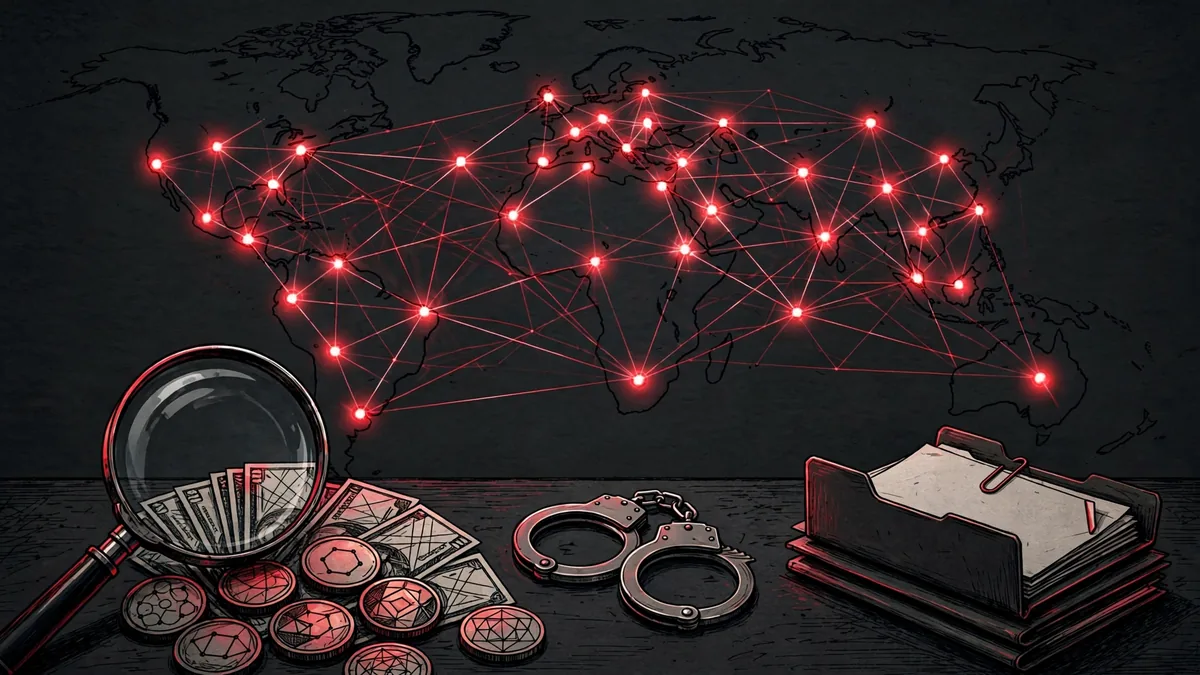
Operation Confrontation Ghost explained: the United Arab Emirates has revealed the results of a three-month, 30-country crackdown on organized digital fraud that identified more than $39 billion in fraud-linked funds and digital assets, thwarted 123.71 million online fraud attempts, and led to more than 960 arrests. The results were announced on October 21, 2026, at a UAE-organized event in Vienna on the sidelines of the 13th session of the Conference of the Parties to the United Nations Convention against Transnational Organized Crime.
Led by the UAE Ministry of Interior, the operation brought together law enforcement authorities from 30 countries, Interpol, the Global Anti-Scam Alliance, and 13 private-sector partners spanning technology, digital platforms, and financial services. It is one of the largest coordinated anti-fraud actions ever publicly disclosed — and it signals how seriously governments now treat AI-enabled scams as a national-security problem, not just a consumer-protection nuisance.
Key Takeaways
- Operation Confrontation Ghost ran from July 1 to September 30, 2026, targeting AI-enabled fraud, digital financial fraud, and online sextortion across 30 countries.
- Authorities identified $39 billion-plus in fraud-linked funds and digital assets, arrested 960+ defendants, blocked 4,126 bank accounts, and raided 29 fraud centres.
- The UAE Ministry of Interior led the effort with Interpol, the Global Anti-Scam Alliance, and companies including Meta, TikTok, Mastercard, and Crypto.com.
- The $39 billion figure means assets identified, not seized — recovery by national judicial authorities is still underway.
What is Operation Confrontation Ghost?
Operation Confrontation Ghost (Arabic: Amaliyat Muwajahat al-Shabah) was a three-month international law-enforcement operation against organized digital fraud, overseen by the UAE Ministry of Interior. According to the UAE’s official account, carried by state news agency WAM, the operation ran from July 1 to September 30, 2026, and focused on three categories of crime: fraud enabled by artificial intelligence, financial fraud conducted through digital platforms, and online sextortion.
The scale of participation is what sets it apart. Thirty countries sent law enforcement authorities, joined by two international organizations — Interpol and the Global Anti-Scam Alliance — and 13 private-sector partners specializing in technology, digital platforms, and financial services, as The National reported. Named corporate participants include Meta, TikTok, Mastercard, Crypto.com, Huawei, Group-IB, Feedzai, Trend Micro, and the UAE’s own Bayut and Dubizzle platforms.
The results were unveiled in Vienna, Austria, at a UAE-organized event held alongside the UN’s transnational organized crime conference — a deliberate choice of stage, putting the operation in front of the global law-enforcement community rather than announcing it from Abu Dhabi alone.
By the numbers: what the crackdown achieved
| Metric | Figure | Source |
|---|---|---|
| Fraud-linked funds and digital assets identified | $39 billion+ | UAE Ministry of Interior via WAM |
| Online fraud attempts thwarted | 123.71 million | WAM; The National |
| Defendants arrested | 960+ | WAM; The National |
| Suspects identified | 3,500+ | WAM |
| Victims identified | 15,500 | WAM |
| Bank accounts blocked | 4,126 | WAM |
| Social media accounts closed | 570+ | WAM |
| Fraud centres raided | 29 | WAM |
| Pieces of intelligence exchanged | 9,000+ | WAM |
| Countries participating | 30 | UAE Ministry of Interior |
All figures are CONFIRMED: reported identically by WAM, The National, Gulf News, and Arabian Business. Caveat: the $39 billion figure refers to fraud-linked assets identified, not funds seized or recovered — participating countries, judicial authorities, and private-sector companies are now working to recover the assets, and recovery totals have not been disclosed.
How did investigators trace $39 billion in fraud?
The operation’s method was intelligence-sharing at industrial scale. More than 9,000 pieces of intelligence were exchanged between the 30 participating countries, Interpol, and the private-sector partners, allowing investigators to follow money across borders, platforms, and cryptocurrencies in near real time.
That public-private structure matters. Fraud networks exploit online platforms, financial services, and emerging technologies to move money and hide its origins — the same rails the private partners operate. Meta and TikTok could flag and close more than 570 social media accounts linked to fraudulent activity; Mastercard and Crypto.com could help trace flows through card networks and digital-asset exchanges; threat-intelligence firms such as Group-IB and Feedzai could map infrastructure. It is the same playbook used in other recent multinational takedowns, such as the dismantling of the KillSec ransomware-as-a-service network, but applied to fraud rather than ransomware.
The UAE says the operation also hardened payment infrastructure itself: tokenization technology helped secure more than four billion financial transactions each month, strengthening user-data protection and reducing fraud risk at the rails level rather than only chasing criminals after the fact.

Who took part in the operation?
The 30 participating countries span the Gulf, Europe, Asia, Africa, and the Americas: the UAE, the Philippines, Canada, Norway, Japan, the United Kingdom, Ecuador, Romania, Kuwait, Nepal, Uzbekistan, Denmark, Myanmar, Brazil, Jordan, Italy, the Maldives, Singapore, Sweden, China, Senegal, France, Bahrain, Kazakhstan, Indonesia, Slovakia, Kenya, Morocco, the Netherlands, and South Korea.
The list contains some notable inclusions. The United Kingdom, France, the Netherlands, and Canada — all major financial centres — participated alongside Gulf states. Myanmar’s presence is striking given the country’s well-documented scam-compound industry, suggesting the operation reached into jurisdictions where fraud infrastructure physically sits, not only where victims live. China, home to both major technology platforms and significant fraud operations, also took part.
On the institutional side, Interpol provided the cross-border policing backbone while the Global Anti-Scam Alliance — the international organization coordinating the fight against online scams — joined as the second international organization. The United Nations took notice: the UN commended the UAE’s leadership role in the operation, according to Emirates 247.
What did officials say about the crackdown?
“The operation demonstrated the importance of international partnerships in addressing fraud networks that seek to exploit online platforms, financial services and emerging technologies to conduct cross-border criminal activities.” — Col Dana Al Marzouqi, director-general of the International Affairs Bureau, UAE Ministry of Interior
Al Marzouqi added that the Ministry of Interior would continue strengthening cooperation with countries, international organizations, and technology and financial-services companies to combat transnational digital fraud and protect the public.
Dr Monica Juma, executive director of the UN Office on Drugs and Crime, described Operation Confrontation Ghost as “a model of international co-operation in addressing emerging forms of crime,” stressing that the growing use of digital technologies and artificial intelligence in fraud — alongside the exploitation of digital platforms, bank accounts, and cryptocurrencies to transfer funds and conceal their origins — highlighted the need to keep strengthening counter-measures and global collaboration.
The framing from both officials is consistent: fraud is no longer a scattered consumer complaint but an industrialized, AI-accelerated criminal economy — and the response has to be equally industrialized. For broader context on how artificial intelligence is reshaping the cyber threat landscape, see our explainer on AI-driven cyber warfare.
What Operation Confrontation Ghost means for US/UK/EU readers
For readers in the United States, Britain, and Europe, the operation lands in three practical ways. First, several of the participating countries — the UK, France, the Netherlands, Canada — are the financial and platform jurisdictions through which much Western fraud flows, so the 4,126 blocked bank accounts and 570 closed social-media accounts should translate into fewer scam messages, fake investment pitches, and sextortion attempts reaching inboxes in the coming months.
Second, the tokenization push matters for anyone who pays by card: securing more than four billion transactions a month raises the baseline safety of digital payments, including cross-border e-commerce that US and European shoppers use daily.
Third, the AI angle is a warning. The operation explicitly targeted AI-enabled fraud — deepfake voices, synthetic identities, and automated scam scripts of the kind examined in recent reporting on AI’s dual role in cyber operations. As generative tools get cheaper, the volume and persuasiveness of scams aimed at English-speaking targets will keep rising; multinational operations like this one are now the main line of defense.
What it does not mean: no market or price impact is expected — this was a law-enforcement action, not an economic event — and victims should not assume their losses will be recovered quickly. Asset recovery across 30 legal systems will take months or years, and recovered sums have not been disclosed.
What happens next: asset recovery and the road ahead
The immediate next phase is recovery. Participating countries, judicial authorities, and private-sector companies are now working to recover the $39 billion-plus in identified funds and digital assets — a process that will test mutual legal-assistance treaties and crypto-tracing capabilities across very different legal systems. Watch for the first disclosed recovery figures; they, more than the headline identification number, will measure the operation’s real-world impact.
Longer term, the Vienna unveiling suggests the UAE intends this as a template, not a one-off. Framing a national Ministry of Interior operation as a UN-showcased model of cooperation is classic norm-setting: expect follow-on operations under the same brand, and expect the Global Anti-Scam Alliance’s role in coordinating them to grow. The other open question is deterrence — whether 960 arrests and 29 raided fraud centres dent an industry that generates tens of billions a year, or whether the networks simply reconstitute under new names. WarBrief’s intelligence reports hub and conflict zones coverage will track both the recovery figures and any successor operations.
Frequently asked questions
What is Operation Confrontation Ghost?
It was a three-month international law-enforcement operation (July 1 to September 30, 2026) against organized digital fraud, led by the UAE Ministry of Interior with 30 countries, Interpol, the Global Anti-Scam Alliance, and 13 private-sector partners. Results were announced on October 21, 2026, in Vienna.
How much money was involved in Operation Confrontation Ghost?
Authorities identified more than $39 billion in funds and digital assets linked to fraudulent activities. That figure means assets identified, not cash seized — recovery efforts by national judicial authorities are still underway and no recovered total has been disclosed.
Which countries took part in Operation Confrontation Ghost?
Thirty countries, including the UAE, the UK, France, the Netherlands, Canada, Japan, South Korea, China, Brazil, Myanmar, and others across the Gulf, Europe, Asia, Africa, and the Americas, alongside Interpol, the Global Anti-Scam Alliance, and companies such as Meta, TikTok, Mastercard, and Crypto.com.
What kinds of fraud did the operation target?
Three categories: AI-enabled fraud, financial fraud conducted through digital platforms, and online sextortion. Enforcement included 960+ arrests, 4,126 blocked bank accounts, 570+ closed social-media accounts, and raids on 29 fraud centres.
Will scam victims get their money back?
Possibly, but slowly. Participating countries, judicial authorities, and private-sector companies are working to recover the identified assets, but cross-border recovery takes months or years, and no recovered sums have been announced. Victims should contact their national law-enforcement agency rather than expecting automatic restitution.
Sources
- The National: UAE leads $39 billion global digital fraud crackdown with more than 900 arrests
- Aletihad (WAM): UAE-led Operation Confrontation Ghost identifies over $39 billion in fraud-linked assets
- Gulf News: UAE-led global crackdown uncovers $39 billion in fraud-linked assets, 960 arrested
- Arabian Business: UAE-led crackdown stops 123m online fraud attempts as 960 arrested
- Emirates 247: UAE leads Operation Confrontation Ghost across 30 countries


Discussion 0
Share analysis, corrections, or context. Be civil — comments are moderated.