WarBrief Live | October 20, 2026 | Intelligence Report
On the night of October 18–19, 2026, Russia fired one of its heaviest combined strikes of the war at Ukraine’s power grid — and President Volodymyr Zelensky says Kyiv walked into it without the advance notice it had come to expect, blaming an alleged US intelligence sharing freeze for Ukraine. “Another Russian ballistic missile attack came in several waves overnight, and once again, there was no early warning from our partners,” he said on October 19, claiming three US intelligence “blackouts” in the previous week alone.
What is confirmed: the strike’s scale is verified by multiple outlets and the Institute for the Study of War, and Zelensky’s accusations were made on the record. What remains disputed: whether the US deliberately withheld intelligence — Washington flatly denies a pause.
Key Takeaways
- Zelensky says Ukraine got no early warning before the October 18–19 ballistic waves, claiming three US intelligence blackouts in a week.
- He told US senators the Pentagon is delaying European-paid Patriot interceptors pending Defense Secretary Pete Hegseth’s signature.
- Washington denies any pause: “There has been no pause,” Secretary of State Marco Rubio said.
| Metric | Figure | Source |
|---|---|---|
| Ballistic missiles fired at Kyiv and Kyiv region, Oct 18–19 | 16 | Zelensky via The Hindu — CONFIRMED |
| Strike and decoy drones | 269 (incl. 59 jet-powered) | Ukrainian Air Force via ISW — CONFIRMED |
| Energy facilities damaged | 10+ | Zelensky — CONFIRMED |
| Households without power | 550,000+ | Zelensky — CONFIRMED |
| Ballistic waves with partner warning | 1 of 2 | Col. Yuriy Ihnat via ISW — CONFIRMED |
| Alleged US intelligence blackouts in one week | 3 | Zelensky’s claim — UNCONFIRMED |
What is Zelensky accusing Washington of?
Two things. First, withholding the warning. Ukrainian Air Force spokesman Colonel Yuriy Ihnat said partners gave advance warning only for the second of two ballistic waves overnight on October 18–19 — the first arrived blind, per ISW’s October 19 assessment. Second, holding up hardware. In a virtual call with bipartisan US lawmakers organized by Senators Richard Blumenthal and Thom Tillis, Zelensky said “the Pentagon is delaying the delivery of missiles” already paid for by European countries, News18 reported — the shipment awaiting Hegseth’s signature, with European states ready to transfer Patriot interceptors from their own stockpiles but still lacking US approval. “The missiles are ready, and they could already be in Ukraine,” he said. “But unfortunately, there is still no approval.”
How is Washington answering the accusations?
With blanket denial. President Donald Trump said on October 19 the US continued to share intelligence with Ukraine, Reuters reported. Secretary of State Marco Rubio said “there has been no pause,” adding the next day in India that “nothing is being deliberately denied” — framing it as a balance between partner obligations and US requirements.
A senior Pentagon official said on condition of anonymity there had been no policy shift; a US official told the Kyiv Independent the Patriot holdup allegation was “not true”; NATO officials said PURL deliveries continue. One silence stands out: Hegseth has made no on-record statement, and the Pentagon did not answer the Kyiv Independent’s specific question on the Patriot transfers. The two accounts cannot both be fully true, and no independent adjudicator exists.
Why does the early-warning feed matter so much?
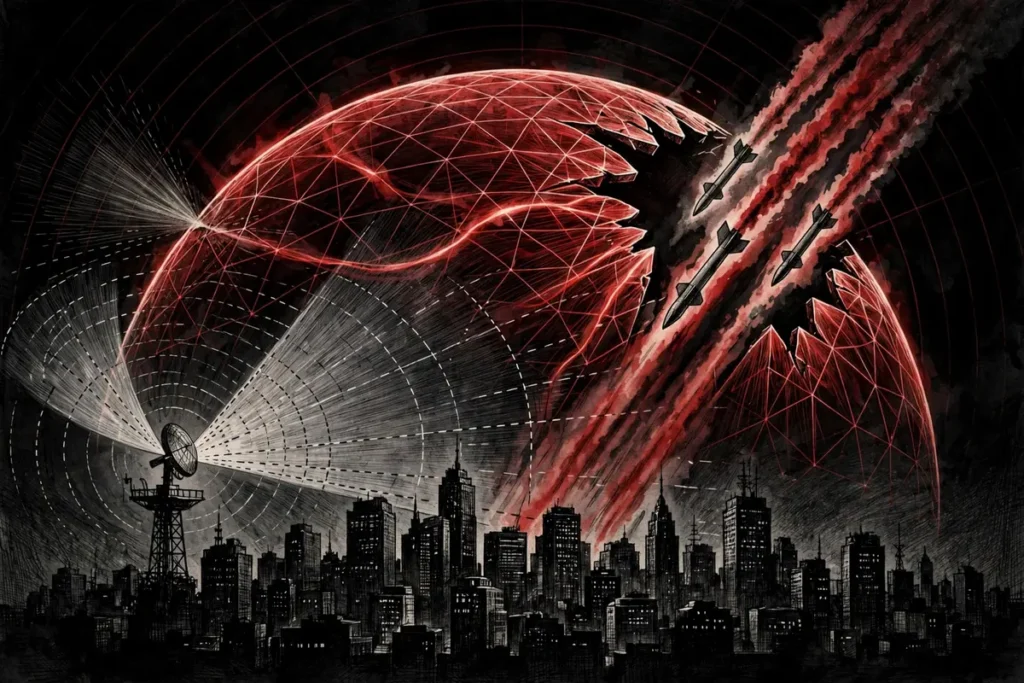
Ballistic missiles compress the decision cycle to minutes; US intelligence supplies launcher locations and data on where strikes are heading, and when, CNN reported on October 11. Without the first-wave warning, interceptors cannot be tasked in time — the shield arrives after the impact. The irreplaceable piece is orbital: the US Space-Based Infrared System detects missile-launch heat, giving the earliest possible warning. “That is fairly unique… There is nothing equivalent in Europe,” Chatham House’s Marc DeVore told Reuters on October 14. France’s foreign minister says two-thirds of Ukraine’s intelligence now comes from Europe — but early warning is the slice only America provides.
What happened the last time Washington switched the feed off?
After the February 28, 2025 Oval Office confrontation, the US paused intelligence sharing on March 6 — halting “everything,” including targeting data, per Reuters’ sourcing. The pause ended March 11 after Ukraine signaled openness to a 30-day ceasefire in Saudi Arabia. The episode is now the template Kyiv fears is repeating: conditionality as leverage.
The 2026 conditionality is explicit. On October 11, CNN reported the administration had threatened to suspend intelligence sharing and PURL purchases unless Kyiv stopped striking Russian oil refineries — a threat reportedly raised by envoys Steve Witkoff and Jared Kushner in Miami talks on October 9. Zelensky confirmed on October 13: “They told my generals, not me.”
Assessment: what the US intelligence sharing freeze costs Ukraine’s air defense
If Zelensky’s account is accurate, Ukraine is defending its grid against winter-scale ballistic attacks while its early-warning feed flickers and Patriot resupply sits unsigned in Washington — a degradation compounding with every wave. If Washington’s account is accurate, the pipeline is intact and the dispute is political theater. Neither is fully verifiable from public reporting — but twelve interceptors a month, a missing first-wave warning, and an approaching winter make even a partial freeze a strategic event.
Three things to watch: whether Hegseth ever goes on record about the Patriot transfers; whether the next strike wave arrives with partner warning; and the diplomacy around it. On October 20, Witkoff heads to Oslo for talks with Zelensky and the Norwegian and Finnish leaders, then to Moscow to brief Putin — while Trump has reupped his call for Zelensky to find “somebody else to negotiate.” The widening Trump–Zelenskyy rift frames every lever, including intelligence. Track the wider war and the latest intelligence reporting.
Frequently asked questions
Is the US actually withholding intelligence from Ukraine?
Zelensky alleges a freeze; Washington denies it. No independent adjudication exists.
What happened in the October 18–19, 2026 strike?
16 ballistic missiles hit Kyiv and the Kyiv region plus 269 drones across 11 oblasts; 10+ energy facilities damaged, 550,000+ households lost power. A strike in Nova Vodolaha, Kharkiv Oblast, killed six people (ISW).
Why are Patriot interceptors allegedly delayed?
Zelensky says the Pentagon is delaying European-paid interceptors pending Hegseth’s signature; a US official called the claim “not true” and NATO says PURL deliveries continue.
What is SBIRS and why can’t Europe replace it?
The Space-Based Infrared System is a US satellite constellation detecting missile-launch heat for the earliest possible warning. Chatham House’s Marc DeVore told Reuters there is “nothing equivalent in Europe.”
Sources
- New York Post: Zelensky says Ukraine received no warning from partners as Russia hits power grid again
- The Hindu: Zelenskyy says Ukraine got no early warning from partners as Russia hits power grid again
- Institute for the Study of War: Russian Offensive Campaign Assessment, October 19, 2026
- News18: Zelenskyy Says US Holding Up Missile Interceptor Delivery; Trump Calls For New Ukraine Negotiator
- Reuters: Trump says Zelenskiy should get somebody else to negotiate end of war
- CNN: Trump administration threatens to suspend intelligence sharing, weapons over refinery strikes
- Reuters: Ukraine struggles with Starlink, US satellite data — Europe has no quick fix
- Al Jazeera: Are Russia’s satellites stalking the ones helping Ukraine from space?
- Business Standard: Ukraine suspects US restricting intelligence sharing on Russian attacks