WarBrief Live | October 20, 2026 | Intelligence Report
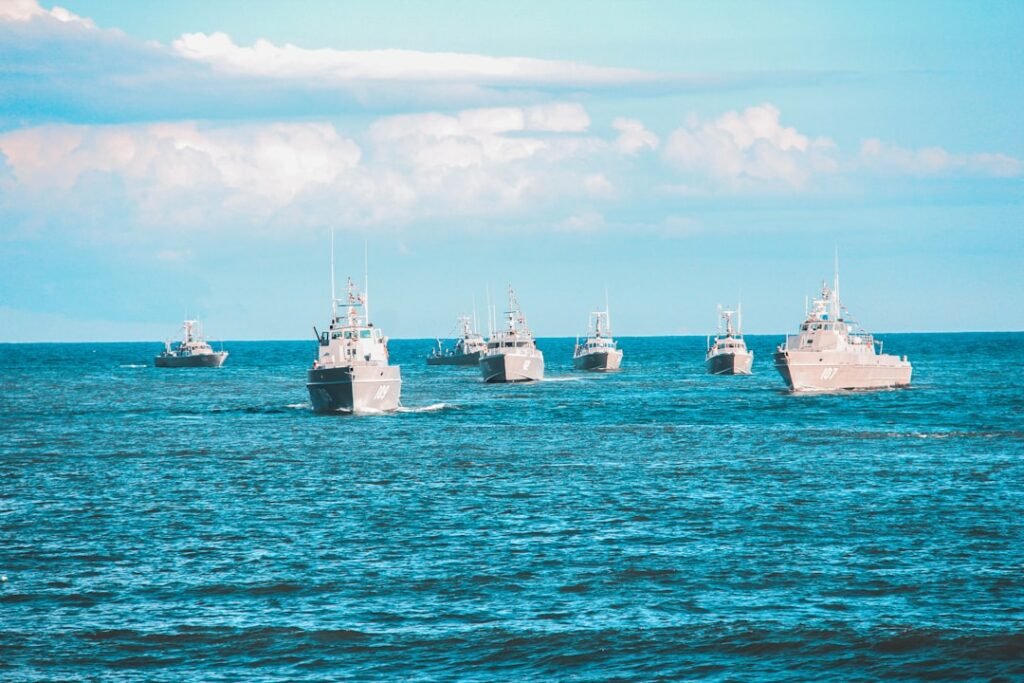
China’s coast guard patrols east of Taiwan have quietly built a persistent presence there since June, and Washington is now calling it a direct threat to stability. Speaking at a forum in Taipei on October 20, 2026, Randall Schriver, chair of the U.S. Congress’s U.S.-China Economic and Security Review Commission, called the patrols “highly destabilising” and an extension of Beijing’s legal, political and information warfare. Two days earlier, Taiwan’s coast guard said it had driven away 16 Chinese vessels in coordinated operations around the island and Pratas.
What is confirmed: the patrols, Schriver’s warning, and the October 18 incident are verified by multiple outlets. What remains an assessment: Taiwan’s judgment that China is rehearsing a maritime blockade. Beijing calls its activity “legitimate, lawful and beyond reproach.”
Key Takeaways
- Schriver said on October 20 that China’s coast guard patrols east of Taiwan are “highly destabilising” legal warfare.
- China has run regular east-coast patrols since June 2026; Taiwan says Beijing is practising for a possible maritime blockade.
- On October 18, Taiwan’s coast guard drove away 16 Chinese coast guard, research and fishing vessels it called coordinated “maritime harassment.”
- Beijing says the waters are Chinese and its activity is lawful; Taipei says China has no legal claim there.
| Metric | Figure | Source |
|---|---|---|
| Vessels driven away, October 18 | 16 (coast guard, research, fishing) | Taiwan Coast Guard via AFP — CONFIRMED |
| Of which fishing boats | 4 | Taiwan Coast Guard via AFP — CONFIRMED |
| Taiwan water-cannon use near Pratas | October 1, 2026 | AFP — CONFIRMED |
| East-coast patrol buildup began | June 2026 | Reuters — CONFIRMED |
Why is China running coast guard patrols east of Taiwan now?
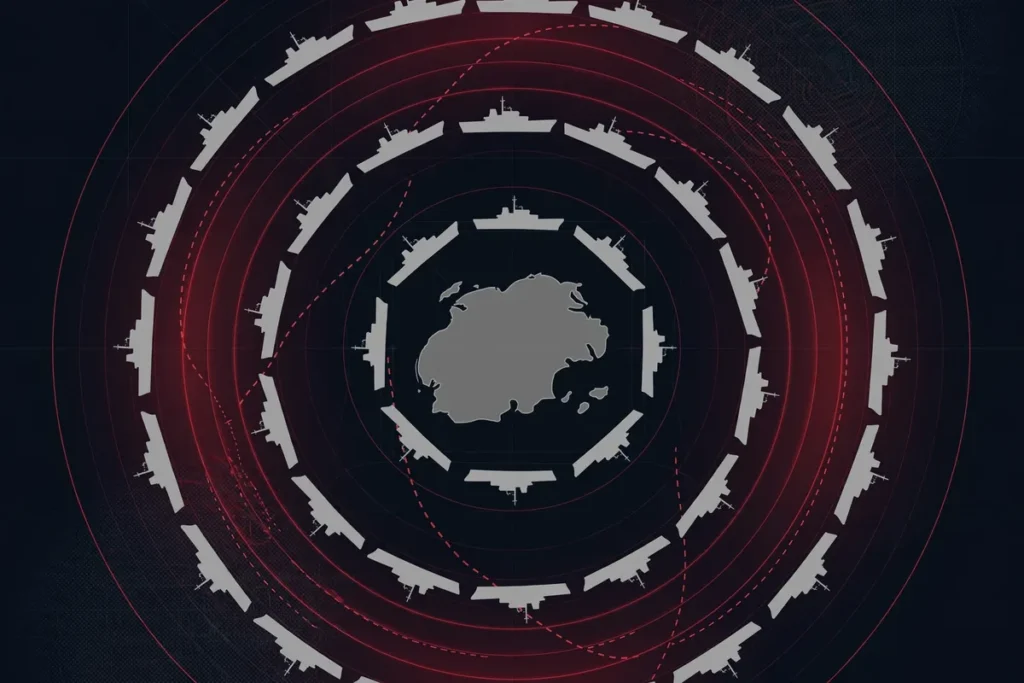
The move is a geographic escalation. For years, Chinese pressure concentrated in the Taiwan Strait to the island’s west. The east coast faces the Philippine Sea, where Taiwan keeps its most survivable military assets. A persistent coast guard presence there means Beijing is building a law-enforcement footprint on the side of the island where a blockade would need to close off outside access.
According to Reuters, China stepped up activity off Taiwan’s east coast in June with regular coast guard patrols, layering them onto the gray-zone pressure campaign Taiwan’s coast guard has been fighting as China’s “second navy”. The vessels are officially civilian, but they operate in coordination with China’s navy, maritime militia and research fleets.
What is legal warfare, and how do the patrols fit the playbook?
Schriver’s phrase “legal warfare” is the key analytic frame: by conducting ostensibly routine law-enforcement patrols in waters it claims, China normalizes its jurisdiction claim without firing a shot. As he put it in Taipei: “This is an extension of legal warfare and political and information warfare. This is highly destabilising if they continue to operationalise this law enforcement role.”
Beijing is explicit about the claim. China’s foreign ministry said the waters were Chinese and that it was “therefore legitimate, lawful and beyond reproach for China to carry out activities” there. Taiwan’s National Security Council Secretary-General Joseph Wu said at the same event that China had no legal claim to the waters off the island’s east. Each patrol thus doubles as a legal argument made at sea.
Is China really rehearsing a maritime blockade?
That is Taipei’s assessment, and it should be read as exactly that. Officials in Taiwan say they believe China is practising for a possible maritime blockade using overlapping military, paramilitary and civilian assets. No official has claimed a blockade is imminent or under way.
What the record shows is rehearsal-shaped behavior. A blockade would need to close the island’s eastern approaches, where outside resupply would arrive. The October 18 operation, which drew Taiwan’s coast guard into “forceful action” across the east, south, southwest and Pratas simultaneously, tested exactly the coordination a real quarantine would require. Pratas itself, which Taiwan controls and Beijing also claims as Dongsha, is a pressure point: on October 1, Taiwan’s coast guard used a water cannon against a Chinese recreational fishing vessel near the island, drawing an angry response from Beijing.
What does the pressure campaign mean for the region?
The patrols mark a steady erosion of the status quo rather than a single crisis. If coast guard vessels become a fixture east of Taiwan, every future crisis can begin from an established patrol line rather than a visible military surge, shortening warning time for Taiwan and its partners.
The economic exposure is a contingency, not a current fact: no shipping disruption has been reported in the transpacific flows that pass east of Taiwan, and commercial traffic continues normally. For Washington, Schriver’s intervention signals that the U.S. policy community now treats the east-coast patrols as a named problem. Follow the wider Indo-Pacific pressure campaign in WarBrief’s conflict zones hub, and read the latest intelligence reporting in the intel section.
Assessment: how the pressure campaign is likely to evolve
The most likely trajectory is persistence, not sudden escalation. Beijing has invested in making the east-coast patrols routine, and routine is the point: each unchallenged patrol strengthens the legal-warfare claim Schriver flagged. Expect coordinated multi-vessel operations to continue through the winter, stretching Taipei’s coast guard across more axes.
Three things to watch. First, whether Chinese vessels move from presence to enforcement — boarding or “inspecting” Taiwan-flagged vessels would cross a major threshold. Second, whether patrols push further into the Philippine Sea toward allied naval routes. Third, whether Washington answers with its own named operational pattern, such as publicized transits east of Taiwan, to contest the claim the patrols are designed to build.
Frequently asked questions
What did Randall Schriver say about China’s patrols near Taiwan?
At a Taipei forum on October 20, 2026, Schriver, who chairs the U.S. Congress’s U.S.-China Economic and Security Review Commission, said Chinese coast guard patrols east of Taiwan were “highly destabilising” and an extension of Beijing’s “legal warfare and political and information warfare.”
What happened in the October 18, 2026 incident?
Taiwan’s coast guard said it drove away 16 Chinese coast guard, research and fishing vessels, including four fishing boats, in simultaneous “maritime harassment” operations it described as hybrid warfare, taking “forceful action” to neutralize the threats.
What is Pratas (Dongsha) Island and why does it matter?
Pratas, also known as Dongsha, is a disputed island southwest of Taiwan controlled by Taipei and claimed by Beijing. On October 1, 2026, Taiwan used a water cannon against a Chinese fishing vessel near the island, drawing a sharp Chinese response weeks before the October 18 incident.
Is a blockade of Taiwan imminent?
There is no evidence of an imminent blockade. Taipei’s assessment is that China is practising for a possible one; Beijing says its activity is lawful. Treat the rehearsal framing as an official assessment, not a confirmed fact.
Sources
- SRN News (Reuters): Chinese patrols to Taiwan’s east are ‘destabilising’, US Congress-appointed official says
- AsiaOne: Chinese patrols to Taiwan’s east are destabilising, US Congress-appointed official says
- Malay Mail (AFP): Taiwan says it drove away 16 Chinese vessels in coordinated ‘maritime harassment’
- The Straits Times (AFP): Taiwan says it drove away 16 Chinese ships involved in ‘maritime harassment’