WarBrief Live | October 1, 2026 | Explainer
On October 1, 2026, Taiwan’s President Lai Ching-te announced the transfer of a senior naval commander into the leadership of the island’s Coast Guard Administration — the clearest signal yet that the Taiwan Coast Guard “second navy” concept is moving from rhetoric to command structure. Yuan Sheng-hua, previously vice chief of staff at navy headquarters, will become the Coast Guard’s deputy head, a move Lai said would tighten navy–coast guard coordination as China expands its maritime presence around the island. The build-up combines armed patrol ships, upgraded outposts, and joint anti-blockade drills into one strategy: answer gray-zone coercion that stays deliberately below the threshold of war.
Key Takeaways
- On October 1, 2026, President Lai Ching-te transferred naval commander Yuan Sheng-hua from vice chief of staff at navy headquarters to deputy head of the Coast Guard Administration.
- Lai said the military and Coast Guard “must collaborate more closely” and share maritime intelligence as China ramps up its maritime presence around Taiwan.
- Taiwan’s military modernisation plan explicitly casts the Coast Guard as a wartime “second navy” — in September 2026 an Anping-class catamaran fired a surface-to-surface missile in a drill.
- The move responds to China’s gray-zone pressure, including China Coast Guard patrols off Taiwan’s east coast since June 2026 and stepped-up activity around the Pratas Islands.
- Taipei’s strategy is to meet civilian-painted coercion with law-enforcement assets, avoiding the escalation trap of answering coast guard ships with warships.
On this page: What happened | Background and timeline | Why it matters | Different perspectives | What to watch next | FAQ | Sources
What happened: a naval commander takes the Coast Guard’s helm
Speaking at a promotion ceremony at the presidential office on October 1, 2026, Lai announced that Yuan Sheng-hua was moving from vice chief of staff at navy headquarters to deputy head of the Coast Guard Administration, which operates under Taiwan’s Ocean Affairs Council. Lai said he expected Yuan to use his naval experience to promote coordination between the two services.
“For Taiwan, the military and Coast Guard must collaborate more closely to respond to rapidly changing maritime situations. Both must share maritime intelligence and ensure stable command and communication operations under all circumstances.” — President Lai Ching-te, October 1, 2026 (via the presidential office)
The appointment is unusual in degree, not in kind: Taiwan’s Coast Guard has long drawn personnel from the navy, but placing a serving naval vice chief of staff directly into the service’s number-two post is a public statement of intent. Ocean Affairs Council chief Kuan Bi-ling said in a separate statement that Yuan’s combat training would bring the navy’s tactical thinking into the Coast Guard and give “new momentum” to managing any future “peacetime-to-wartime” transition, Reuters reported.
The context is Taipei’s military modernisation programme, which gives the Coast Guard unusual prominence. The government has said openly that in wartime, Coast Guard ships would be pressed into action to help the navy — the origin of the “second navy” shorthand. The Coast Guard’s vessels generally do not openly carry weapons in peacetime, which is precisely why installing a navy commander at its helm sends a message to Beijing: the institution that shadows your patrols today could fight beside the fleet tomorrow.
Background and timeline: the gray-zone squeeze
Gray-zone operations are coercive actions designed to change the status quo without crossing the threshold of open war — patrols, inspections, harassment, and legal claims that each fall short of an act of war but add up to pressure. China has used its coast guard and maritime militia for years around Taiwan and its offshore islands; since June 2026, the pressure has intensified and spread to Taiwan’s Pacific-facing east coast. The following timeline tracks how Taipei has answered.
- June 2026: The China Coast Guard begins patrols off Taiwan’s east coast. Beijing says the patrols strengthen law enforcement in China’s “jurisdictional waters.” Taiwan’s Coast Guard is regularly deployed to shadow and warn away the Chinese vessels.
- July 2026: A new wharf project is completed at the Pratas Islands in the South China Sea, and a newly built 100-tonne-class patrol boat is formally stationed there — part of what the Coast Guard calls a “comprehensive upgrade” of its capacity in Pratas waters.
- August 2026: During Taiwan’s annual Han Kuang war games, the Coast Guard takes part alongside the navy in an anti-blockade drill simulating the escort of a merchant ship.
- September 2026: One of the Coast Guard’s new Anping-class catamarans fires a surface-to-surface missile during a drill, publicly demonstrating that the “patrol” fleet can be fully armed.
- September 24, 2026: Taiwan’s Coast Guard announces its overall patrol and enforcement capacity around the Pratas Islands has been “comprehensively upgraded,” with large patrol vessels regularly deployed for “multi-layered deterrence.” It also says it has confiscated nine Chinese fishing boats around Pratas since the start of the year, repurposing them for reef patrol and marine conservation.
- October 1, 2026: President Lai announces Yuan Sheng-hua’s transfer from the navy to the Coast Guard’s deputy leadership.
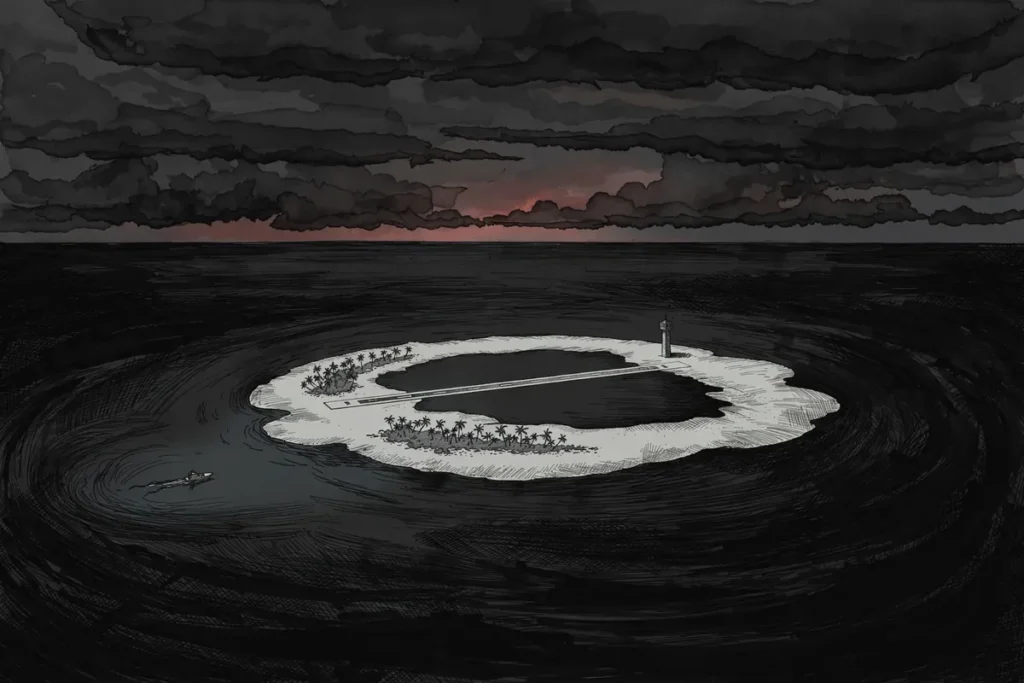
The Pratas Islands sit roughly between southern Taiwan and Hong Kong, more than 400 kilometers (250 miles) from Taiwan, which security experts say makes them vulnerable to Chinese attack. The Taiwan-controlled islands have an airstrip but no permanent civilian population, and — unusually — the Coast Guard rather than the military is in charge of their security. Taiwan’s other South China Sea outpost is Itu Aba in the contested Spratly Islands, near the uninhabited Zhongzhou Reef. The September upgrade announcement also noted the Pratas are a national park with largely untouched reefs, a reminder that the contest there is fought as much through fisheries enforcement as through warships. Taipei’s build-up is expensive: read our analysis of global defense spending trends in 2026 for how the island’s outlays fit the wider rearmament picture.
Why it matters: the “second navy” logic
The hardware behind the slogan is the Anping-class: a fleet of 12 catamaran patrol vessels based on the navy’s Tuo Chiang-class fast-attack corvettes — stealthy, highly maneuverable craft designed to take out larger warships while operating close to Taiwan’s shores. Defense reporting puts the class at a dozen ships, with the final vessel commissioned in May 2026, and estimates each could carry up to 16 Hsiung Feng anti-ship missiles if fully armed. Taipei does not publish official armament counts, so treat the missile figures as informed estimates rather than confirmed inventories.
The strategic logic has three layers. First, peacetime-to-wartime conversion: hulls that conduct fisheries patrols and shadow Chinese coast guard ships today can embark missiles and fight as part of the fleet tomorrow — a reserve of combat power that does not look like one until it matters. Second, escalation management: when China sends nominally civilian coast guard cutters, Taiwan answering with gray-hulled warships would hand Beijing the escalation ladder. Matching coast guard with coast guard keeps encounters in the law-enforcement lane, where Taiwan can shadow, warn away, and document without firing a shot. Third, intelligence sharing: Lai’s emphasis on shared maritime intelligence points to a fused picture of the waters around the island, fed by both services’ patrols.
For readers in the US, Europe, and the wider Indo-Pacific, the stakes are commercial as well as military. Taiwan’s east coast — the side China began patrolling in June — faces the Pacific sea lanes that carry the island’s trade and the semiconductor shipments the global economy depends on. Even unarmed patrols that stop and question merchant ships collect traffic data useful in any future blockade, while raising the risk premiums shippers quietly price into routes. See our analysis of naval dominance in the Indo-Pacific and the conflict zones hub for the wider maritime picture.
Different perspectives: law enforcement vs. coercion
Beijing’s position is that its coast guard patrols — including the east-coast patrols announced again this week — strengthen law enforcement in China’s “jurisdictional waters.” China claims democratically governed Taiwan as its own territory and recognizes no Taiwanese sovereignty claims, including over the Pratas Islands. China’s Taiwan Affairs Office did not immediately respond to a request for comment on the Pratas patrol upgrade.
Taipei’s position is that China has no right to claim any sovereignty or jurisdiction in Taiwanese waters, and that the patrols are coercion dressed as policing. The shadowing, the Pratas upgrade, and now the leadership transfer are framed as defensive: preserve the status quo in the waters Taiwan administers without giving Beijing a pretext for escalation.
Analysts are split on how far the gray-zone logic goes. Some describe the east-coast patrols and cargo-ship interrogations as rehearsals for a maritime quarantine — collecting the traffic intelligence and legal precedents a formal blockade would need. Others urge caution: ACLED-cited analysis notes the increase is real but that a permanent strategic reorientation is “not proven,” and that Beijing may be testing how far it can push before Taipei or Washington redraws a red line. The truth both camps share: the contest is being fought in the space between peace and war, which is exactly why both sides are investing in coast guards rather than just navies. For country-by-country context, see our regional country profiles.
What to watch next
- East-coast patrol tempo: whether China Coast Guard patrols off Taiwan’s east continue through the fourth quarter of 2026 — persistence would signal normalization.
- Pratas enforcement: further large-vessel deployments and the running count of confiscated Chinese fishing boats.
- Anping-class live fire: whether missile-firing drills become routine, and whether any Anping hulls begin openly carrying weapons in peacetime.
- Joint navy–Coast Guard exercises under Yuan’s deputy leadership — the first real test of the “collaborate more closely” mandate.
- Beijing’s response: diplomatic protest, counter-deployments, or an uptick in the military aircraft and warships operating around the island on a near-daily basis.
- Itu Aba and Zhongzhou Reef: whether the Pratas upgrade model extends to Taiwan’s Spratly outposts.
Frequently asked questions
Why is Taiwan’s Coast Guard called a “second navy”?
Taipei’s military modernisation plan assigns the Coast Guard an explicit wartime role: missile-capable patrol ships, joint anti-blockade drills with the navy, and shared maritime intelligence. In peacetime it remains a law-enforcement agency whose ships generally do not openly carry weapons; in war, its hulls would fight alongside the fleet. The October 1, 2026 transfer of a serving naval commander into the Coast Guard’s deputy leadership is meant to manage that peacetime-to-wartime transition.
Why does China use its coast guard instead of its navy near Taiwan?
Nominally civilian vessels let Beijing frame encounters as domestic law enforcement rather than military action, which lowers the legal and diplomatic thresholds for coercion. Taipei calls this “lawfare” — using legal categories to achieve effects the military could not achieve without provoking a formal response.
What is the Anping-class and why does it matter?
The Anping-class is a fleet of 12 Taiwanese catamaran patrol vessels based on the navy’s Tuo Chiang-class fast-attack corvettes: stealthy, fast, and designed to strike larger warships near Taiwan’s shores. In September 2026 one fired a surface-to-surface missile in a drill, and defense reporting estimates each hull could carry up to 16 anti-ship missiles if fully armed — though Taipei publishes no official armament counts.
What are the Pratas Islands and why are they vulnerable?
The Pratas are Taiwan-controlled islands in the South China Sea between southern Taiwan and Hong Kong, more than 400 kilometers from Taiwan — a distance security experts say makes them hard to defend. They have an airstrip but no permanent civilian population, and the Coast Guard rather than the military handles their security. On September 24, 2026, Taiwan announced a comprehensive upgrade of its patrol capacity there.
Could China’s gray-zone pressure turn into a blockade?
Analysts describe the current pattern — patrols, cargo-ship interrogations, traffic-data collection — as potential rehearsal for a maritime quarantine, which would stop short of a declared blockade while still disrupting trade. A formal blockade would be a major escalation. Taiwan rehearsed its answer in August 2026, when the Coast Guard joined the navy in an anti-blockade drill escorting a merchant ship during the Han Kuang exercises.
Sources
- Reuters: Taiwan transfers naval commander to Coast Guard to boost deterrence against China (October 1, 2026)
- Reuters: Taiwan upgrades maritime patrol capacity for vulnerable South China Sea outpost (September 24, 2026)
- ADbytes Media: China Extends Maritime Pressure East of Taiwan as Gray-Zone Tactics Escalate (citing ACLED data)
- Domino Theory: From Peacetime Sovereignty Assertion to Wartime Sea Denial — Taiwan’s “Spear and Shield” Navy (analysis)